April 14, 2011

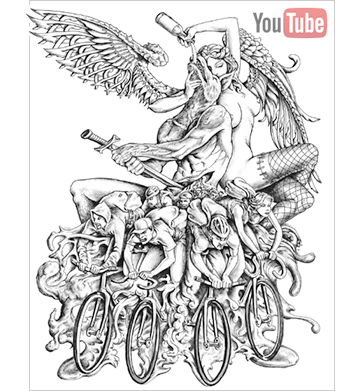
An Alleycat race is an informal bicycle race. Alleycats almost always take place in cities, and are often organized by bicycle messengers. The informality of the organization is matched by the emphasis on taking part, rather than simple competition. Many Alleycats present prizes for the last competitor to finish (sometimes known as Dead Friggin’ Last or DFL).
The first race to be called ‘Alleycat’ was held in Toronto in 1989. Regularly organized Alleycats can be found in cities across North America, Europe and Asia. Many smaller cities with no cycle messenger population are also home to alleycats run by the burgeoning urban cyclist subculture.
read more »
Posted in Games, Humor |
Leave a Comment »
March 23, 2011

The Bocuse d’Or [bo-kyewz dor] is a biennial world chef championship. Named for the chef Paul Bocuse, the event takes place during two days near the end of January in Lyon, France, and is frequently referred to as the culinary equivalent of the Olympic Games. The initial competition took place in 1987.
The audience atmosphere of the Bocuse d’Or evolved in 1997 when the support for the Mexican candidate included a mariachi band, foghorns, cowbells, cheering and yelling from the stands, marking the beginning of a tradition of noisy spectator presence. Originally the reigning champion nation was not permitted to participate in the following contest, but that rule was removed after the 1999 event when France was competing and did not win gold for the first time.
Posted in Food, Games, Money |
Leave a Comment »
March 6, 2011

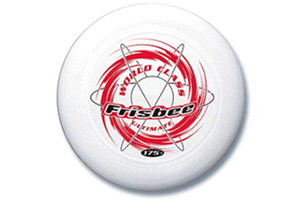
Ultimate is a sport similar to football or rugby, played with a 175 gram flying disc (otherwise known as a Frisbee). The object of the game is to score points by passing the disc to a player in the opposing end zone, similar to an end zone in football or rugby.
Players may not run with the disc, and may only move one foot while holding the disc (pivoting). While originally called Ultimate Frisbee, it is now officially called Ultimate because Frisbee is the trademark, albeit genericized, for the line of discs made by the Wham-O toy company.
read more »
Posted in Games |
Leave a Comment »
February 24, 2011


The ear pull is a traditional Inuit game which tests the competitors’ ability to endure pain. In the ear pull, two competitors sit facing each other, their legs straddled and interlocked. A two-foot-long loop of string, similar to a thick, waxed dental floss, is looped behind their ears, connecting right ear to right ear, or left to left.
The competitors then pull upon the opposing ear using their own ear until the cord comes free or one player quits from the pain. The game has been omitted from some Arctic sports competitions due to safety concerns and the squeamishness of spectators; the event can cause bleeding and competitors sometimes require stitches.
Posted in Games |
Leave a Comment »
February 24, 2011
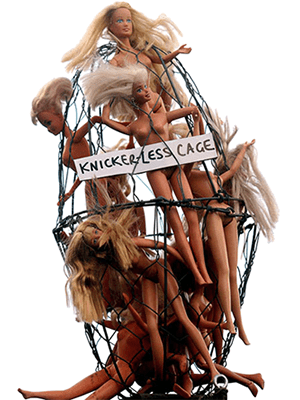
The Turnip Prize is a spoof UK award that satirises the Tate Gallery’s Turner Prize by rewarding deliberately bad modern art. It was started mainly as a joke in 1999, but has gained national media attention and inspired other similar prizes. Credit is given for entries that have bad puns as titles, display ‘lack of effort’ and pass the crucial test of ‘is it shit?’; conversely, entries which show ‘too much effort’ or are ‘not shit enough’ are disqualified. The first prize is a turnip nailed to a block of wood.
Posted in Art, Humor |
Leave a Comment »
February 17, 2011

An ultramarathon is any sporting event involving running longer than the traditional marathon length. There are two types of ultramarathon events: those that cover a specified distance, and events that take place during specified time (with the winner covering the most distance in that time). The most common distances are 50 km, 100 km, 50 mi, and 100 miles. Other distances/times include double marathons, 24-hour races, and multiday races of 1000 miles or even longer. The format of these events and the courses vary, ranging from single or multiple loops (some as short as a 400-meter track), to point-to-point road or trail races, to cross-country rogaines.
Many ultramarathons, especially trail challenges, have severe course obstacles, such as inclement weather, elevation change, or rugged terrain. Many of these races are run on dirt roads or mountain paths, though some are run on paved roads as well. Usually, there are aid stations every 5 to 15 km apart, where runners can replenish food and drink supplies or take a short break. Timed events range from 6, 12, and 24 hours to 3 and 6 days (known as multi-day events). Timed events are generally run on a track or a short road course, often one mile or less.
Posted in Games, Health |
Leave a Comment »
February 8, 2011
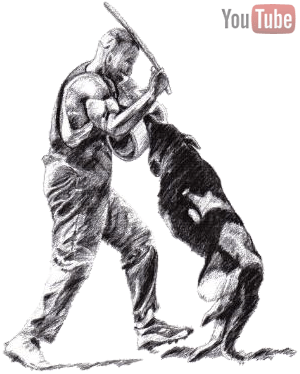
Schutzhund (German for protection dog) is a dog sport that was developed in Germany in the early 1900s to test whether German Shepherd Dogs exhibit the traits necessary for police-type work, rather than simply evaluating a dog’s appearance. Today, many breeds other than German Shepherds can compete in Schutzhund, but it is a demanding test for any dog and few are able to pass successfully.
Posted in Games, Language, World |
Leave a Comment »
January 31, 2011

Photoshop tennis is a game played through sequential alternating photoshopping of an image. Photoshop tennis originated in graphics-related internet forums in the late-1990s/early-2000s. The game was made popular by art director Jim Coudal, and the matches on coudal.com have since been renamed Layer Tennis, as they are no longer restricted to the use of Adobe Photoshop. Each match of Photoshop tennis is generally played with two competing players. The players pick a starting image, or one is ‘served’ by a player, then another player makes some sort of alteration to the image in any chosen image editor (matches are not exclusive to Adobe Photoshop).
He or she then sends that altered image to the other player or players, usually via e-mail or by posting the image to a Photoshop tennis forum, who then edits that image and sends it back to the first player. This process goes back and forth until a predetermined number of rounds have elapsed, or the players otherwise wish to end the game. When the final round is over, there may be an independent judge who determines who has played the best shots, and declares that person the winner, or players may play without a clear winner. Sometimes extra rules can be enforced, such as sticking to one particular software package, or keeping to a particular theme.
Posted in Art, Games, Humor |
Leave a Comment »
January 25, 2011

Speed Golf is a sport started in California in 1979 by American runner Steve Scott and which involves completing a golf course in the lowest combination of strokes and time. Players run between shots and generally carry one to six clubs. A player’s score is calculated by adding minutes plus strokes, so a round of 90 completed in 50 minutes and 30 seconds would compute to a score of 140:30. The lowest score in competition is believed to have been shot by professional Christopher Smith at the Chicago Speedgolf Classic in 2005. Smith shot 65 in just 44:06 for a speed golf score of 109:06.
Rules and etiquette are generally the same for speed golf and regular golf with minor exceptions. Speed golfers are allowed to putt with the flagstick left in the hole, but are expected to rake bunkers, fix ball marks and conform to the dress code. Speed Golf is sometimes contrasted with Cross-country BigBall, in which players use soccer balls and baseball bats. Both sports require substantial physical stamina.
Posted in Games, Humor |
Leave a Comment »
November 30, 2010
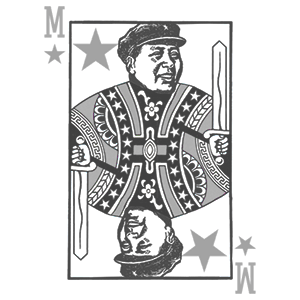
Mao (also known as Chairman, Dictator, Point of Order, Bjorn, and Peebo among many others) is a card game of the Shedding family, in which the aim is to get rid of all of the cards in hand without breaking certain unspoken rules. The game is from a subset of the Stops family, and is similar in structure to the card game Uno or Crazy Eights. The game forbids its players from explaining the rules, and new players are often told only ‘the only rule you may be told is this one.’
The ultimate goal of the game is to be the first player to get rid of all the cards in their hand. Specifics are discovered through trial and error. A player who breaks a rule is penalized by being given an additional card from the deck. The person giving the penalty must state what the incorrect action was, without explaining the rule that was broken.
Posted in Games |
Leave a Comment »
November 22, 2010

Gymkhana is a type of motorsport involving complex tracks and obstacles such as cones, tires, and barrels. The driver must maneuver through a predetermined course performing many different driving techniques. The name gymkhana derives from an equestrian event consisting of speed pattern racing and timed games for riders on horses.
Gymkhana requires drivers to perform reversals, 180 degree spins, 360 degree spins, parking boxes, figure 8s and other advanced skills. Drifting is also encouraged where helpful or necessary. Gymkhana courses typically involve only the use of first and second gear, whereas autotesting in the UK and Ireland add the use of reverse gear. A gymkhana course will typically be from 0:45 to 1:30 in length. The driver will use many techniques to effectively navigate a course. Handbrake technique, drifting and sliding and Left-foot braking are all necessary skills for gymkhana.
Posted in Games |
Leave a Comment »
October 28, 2010
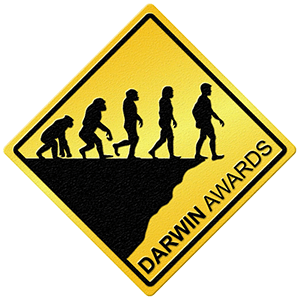
The Darwin Award are a tongue-in-cheek honor, originating in Usenet newsgroup discussions circa 1985. They recognize individuals who have contributed to human evolution by self-selecting themselves out of the gene pool via death or sterilization due to their own (unnecessarily foolish) actions. The project became more formalized with the creation of a website in 1993, and followed up by a series of books starting in 2000, authored by Wendy Northcutt. The criterion for the awards states, ‘In the spirit of Charles Darwin, the Darwin Awards commemorate individuals who protect our gene pool by making the ultimate sacrifice of their own lives. Darwin Award winners eliminate themselves in an extraordinarily idiotic manner, thereby improving our species’ chances of long-term survival.’
Accidental self-sterilization also qualifies; however, the site notes: ‘Of necessity, the award is usually bestowed posthumously.’ But the candidate is disqualified if ‘innocent bystanders,’ who might have contributed positively to the gene pool, are killed in the process. The Darwin Awards books state that an attempt is made to disallow known urban legends from the awards, but some older ‘winners” have been ‘grandfathered’ to keep their awards. The Darwin Awards site does try to verify all submitted stories, but many similar sites, and the vast number of circulating ‘Darwin awards’ emails, are largely fictional.
read more »
Posted in Death, Humor |
Leave a Comment »



 The Daily Omnivore