July 9, 2012

The Atomic Cafe is a 1982 American documentary film produced and directed by Jayne Loader, Kevin Rafferty, and Pierce Rafferty.
The film covers the beginnings of the era of nuclear warfare, created from a broad range of archival film from the 1940s, 1950s, and early 1960s – including newsreel clips, television news footage, U.S. government-produced films (including military training films), advertisements, television and radio programs. News footage reflected the prevailing understandings of the media and public.
read more »
Posted in Humor, Politics, War |
Leave a Comment »
July 5, 2012

American Pop is a 1981 American animated musical drama film produced and directed by Ralph Bakshi. The film tells the story of four generations of a Russian Jewish immigrant family of musicians whose careers parallel the history of American popular music. The majority of the film’s animation was completed through rotoscoping, a process in which live actors are filmed and the subsequent footage is used for animators to draw over.
However, the film also uses a variety of other mixed media including water colors, computer graphics, live-action shots, and archival footage. Michael Barrier, an animation historian, described ‘American Pop’ as one of two films that demonstrated ‘that Bakshi was utterly lacking in the artistic self-discipline that might have permitted him to outgrow his limitations.’
read more »
Posted in Art |
Leave a Comment »
July 3, 2012

Allegro Non Troppo is a 1976 Italian animated film directed by Bruno Bozzetto. Featuring six pieces of classical music, the film is a parody of Disney’s ‘Fantasia,’ two of its episodes being arguably derived from the earlier film. The classical pieces are set to color animation, ranging from comedy to deep tragedy. At the beginning, in between the animation, and at the end are black and white live-action sequences, displaying the fictional animator, orchestra, conductor and filmmaker, with many humorous scenes about the fictional production of the film.
Some of these sections mix animation and live action. In music, an instruction of ‘allegro ma non troppo’ means to play ‘fast, but not overly so.’ In the context of this film, and without the ‘ma,’ it means ‘Not So Fast!’, an interjection meaning ‘slow down’ or ‘think before you act.’ The common meaning of ‘allegro’ in Italian is ‘joyful.’ The title reveals therefore a catch with the dual meaning of ‘allegro,’ and can also be read as ‘joyful, but not so much’ or ‘not overly joyful.’
read more »
Posted in Art, Humor, World |
Leave a Comment »
April 12, 2012

Good Copy Bad Copy is a documentary about copyright and culture in the context of Internet, peer-to-peer file sharing and other technological advances, directed by Andreas Johnsen, Ralf Christensen, and Henrik Moltke. It features interviews with copyright lawyers, producers, artists, and filesharing service providers.
A central point of the documentary is that ‘creativity itself is on the line’ and that a balance needs to be struck, or that there is a conflict, between protecting the right of those who own intellectual property and the rights of future generations to create. Artists interviewed include Girl Talk and Danger Mouse, popular musicians of the mashup scene who cut and remix sounds from other songs into their own. The interviews with these artists reveal an emerging understanding of digital works and the obstacle to their authoring copyright presents.
read more »
Posted in Money, Politics, Technology |
1 Comment »
April 9, 2012

Orgasm Inc. (2009) is the first feature documentary by award-winning director Liz Canner. It premiered at the Hot Docs Documentary Film Festival. In the documentary, filmmaker Liz Canner takes a job editing erotic movies for a drug trial for a pharmaceutical company called Vivus. Her employer is developing what they hope will be the first Viagra drug for women that wins FDA approval to treat a new disease: female sexual arousal disorder (FSD). Initially, she plans to create a movie about science and pleasure but she soon begins to suspect that her employer, along with a cadre of other medical companies, might be trying to take advantage of women (and potentially endanger their health) in pursuit of billion dollar profits.
The film continues from Vivus onto the more general question of whether there is a solid scientific foundation to medical industry claims about what constitutes ‘healthy’ female sexuality and whether drugs and surgery are a suitable first-line approach to obtaining it. The film documents an emerging medical industry intent on convincing women that they have medical problems, and that those problems are best solved by expensive and dangerous medical treatments.
Posted in Drugs, Money, Sex |
1 Comment »
March 25, 2012

‘A Night at the Roxbury‘ is a 1998 American comedy film based on a recurring skit on television’s long-running ‘Saturday Night Live’ called ‘The Roxbury Guys.’ SNL regulars Will Ferrell, Chris Kattan, Molly Shannon, and Colin Quinn star.
The film is about wealthy Yemeni-American brothers Steve (Will Ferrell) and Doug Butabi (Chris Kattan) who enjoy frequenting nightclubs, where they bob their heads in unison to dance music (specifically Haddaway’s hit song ‘What Is Love’) and fail miserably at picking up women. Their dream is to party at the famous L.A. nightclub The Roxbury, where they are continually denied entrance by a hulking bouncer (Michael Clarke Duncan).
Posted in Art, Humor |
Leave a Comment »
March 25, 2012

Heavy Metal is a 1981 Canadian fantasy-animated film directed by Gerald Potterton and produced by Ivan Reitman and Leonard Mogel, who also was the publisher of ‘Heavy Metal magazine,’ the basis for the film. The screenplay was written by Daniel Goldberg and Len Blum.
The film is an anthology of various science fiction and fantasy stories adapted from the magazine and original stories in the same spirit. Like the magazine, it has a great deal of graphic violence, nudity, and sexuality. Its production was expedited by having several animation houses working simultaneously on different segments, including CinéGroupe and Atkinson Film-Arts.
Posted in Art, Sex |
Leave a Comment »
March 24, 2012
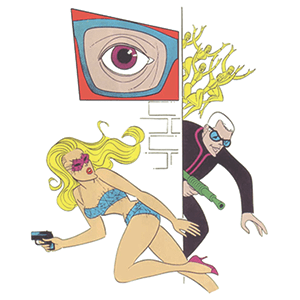
The 10th Victim (Italian: ‘La decima vittima’) is a 1965 Italian/French international co-production science fiction film directed by Elio Petri. It is based on Robert Sheckley’s 1953 short story ‘Seventh Victim.’ Sheckley later published a novelization of the film in 1966. In the near future, big wars are avoided by giving individuals with violent tendencies a chance to kill in the ‘Big Hunt.’ The Hunt is the most popular form of entertainment in the world and also attracts participants who are looking for fame and fortune. It includes ten rounds for each competitor, five as the hunter and five as the victim. The survivor of ten rounds becomes extremely wealthy and retires.
Scenes switch between the pursuit, romance between the hunter and the victim, and a narrator explaining the rules and justification of the Hunt. Caroline Meredith (Ursula Andress) is the huntress armed with a high caliber Bosch shotgun looking for her tenth victim. Marcello Poletti (Marcello Mastroianni) is the victim. He is reluctant to kill Meredith as he is not sure whether she is his hunter, but then later because they become romantically involved. To maximize financial gain, Meredith wants to get a perfect kill in front of the cameras as she has negotiated a major sponsor from the Ming Tea Company.
Posted in Art, Games, Money |
Leave a Comment »
March 24, 2012
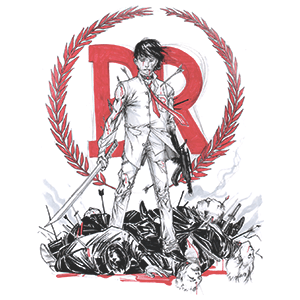
Battle Royale is a 2000 Japanese thriller film based on the novel of the same name by Koushun Takami. It was directed by Kinji Fukasaku. The film tells the story of a high-school student struggling with the death of his father who is forced by the government to compete in a deadly game, where the students must kill each other in order to win. The film aroused international controversy and was either banned or excluded from distribution in many countries, but was a domestic blockbuster, and is one of the 10-highest grossing films in Japan.
Kinji Fukasaku stated that he decided to direct the film because the novel it was adapted from reminded him of his time as a 15-year-old munitions factory worker during World War II. At that time, his class was made to work in a munitions factory. In July 1945, the factory came under artillery fire. The children could not escape so they dived under each other for cover. The surviving members of the class had to dispose of the corpses. At that point, Fukasaku realized that the Japanese government was lying about World War II, and he developed a burning hatred of adults in general that he maintained for a long time afterwards.
Posted in Art, Death, World |
1 Comment »
March 22, 2012

‘Dirty Hands: The Art and Crimes of David Choe’ is a 2008 documentary film about painter and graffiti artist David Choe, directed by his long time friend Harry Kim. Over more than a decade, Kim filmed the most intimate and dramatic moments of his best friend David Choe’s colorful life as an artist.
Dirty Hands began as a film school project, but gradually expanded into a half-hour film entitled ‘Whales and Orgies,’ then a feature-length documentary. The film premiered at the Los Angeles Film Festival in 2008, and had a theatrical premiere at the Roxie Theater in San Francisco in 2010.
Posted in Art, Politics |
Leave a Comment »
March 14, 2012
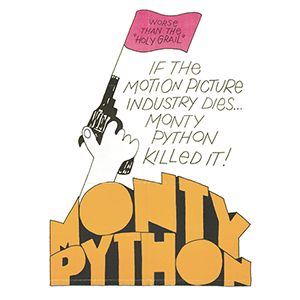
And Now for Something Completely Different is a film spin-off from the television comedy series ‘Monty Python’s Flying Circus’ featuring favorite sketches from the first two seasons. The title was used as a catchphrase in the television show. The film, released in 1971, consists of 90 minutes of the best sketches seen in the first two series of the television show. The sketches were remade on film without an audience, and were intended for an American audience which had not yet seen the series. The announcer (John Cleese) uses the phrase ‘and now for something completely different’ several times during the film, in situations such as being roasted on a spit and lying on top of the desk in a small, pink bikini.
This was the Pythons’ first feature film, of sketches re-shot on an extremely low budget (and often slightly edited) for cinema release. Some famous sketches included are: the ‘Dead Parrot’ sketch, ‘The Lumberjack Song,’ ‘Upperclass Twits,’ ‘Hell’s Grannies,’ and the ‘Nudge Nudge’ sketch. Financed by Playboy’s UK executive Victor Lownes, it was intended as a way of breaking Monty Python in America, and although it was ultimately unsuccessful in this, the film did good business in the UK. The group did not consider the film a success, but it enjoys a cult following today.
read more »
Posted in Art, Humor, World |
1 Comment »
March 11, 2012
Synthetic Pleasures (1995) is a documentary film by Iara Lee that explores the implications of virtual reality, digital and biotechnology, plastic surgery and mood-altering drugs.
Posted in Drugs, Health, Technology |
Leave a Comment »


 The Daily Omnivore