September 26, 2011
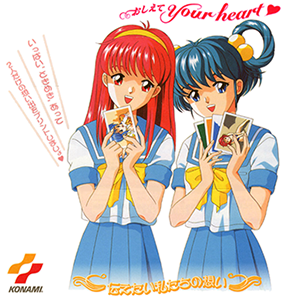
Dating sims (or dating simulations) are a video game subgenre, usually Japanese, with romantic elements. They are also sometimes put under the category of ‘neoromance.’ The most common objective of dating sims is to date, usually choosing from among several characters, and to achieve a romantic relationship. They can involve several technical elements such as a time limit, several statistics such as looks and charm which can be boosted through exercise, or an ‘attraction meter’ which can increase or decrease depending on one’s decisions.
The term dating sim is also often used incorrectly as a synonym for the visual novel genre. While the two genres often share a common visual presentation, dating sims are sometimes considered to be more statistically based than the ‘choose your own adventure’ style of visual novels.
read more »
Posted in Games, Love, Sex |
Leave a Comment »
September 26, 2011

A ‘shoot ’em up’ is a subgenre of video games in which the player controls a lone character, often in a spacecraft or aircraft, facing large numbers of enemies while dodging their attacks. A variation arose in the early 1990s called ‘maniac shooters’ and ‘bullet hell,’ which required the player to dodge overwhelming numbers of enemy projectiles and called for still faster reactions. Bullet hell games arose from the need for 2D shoot ’em up developers to compete with the emerging popularity of 3D games: huge numbers of missiles on screen were intended to impress players. Toaplan’s ‘Batsugun’ (1993) provided the prototypical template for this new breed, with ‘Cave’ (formed by former employees of Toaplan, including ‘Batsugun’ creator Tsuneki Ikeda, after the latter company collapsed) inventing the type proper with 1995’s ‘DonPachi.’
Manic shooter games marked another point where the shoot ’em up genre began to cater to more dedicated players. Games such as ‘Gradius’ had been more difficult than ‘Space Invaders’ or ‘Xevious,’ but bullet hell games were yet more inward-looking and aimed at fans of the genre looking for greater challenges. Treasure’s shoot ’em up, ‘Radiant Silvergun’ (1998), introduced an element of narrative to the genre. It was lavished with critical acclaim for its refined design, though it was never released outside of Japan and remains a much sought after collectors’ item. Its successor ‘Ikaruga’ (2001) featured improved graphics and was again acclaimed as one of the best games in the genre. The genre has undergone something of a resurgence with the release of the Xbox 360 and Wii online services, and games like ‘Geometry Wars: Retro Evolved,’ while in Japan arcade shoot ’em ups retain a deep-rooted niche popularity.
Posted in Games, Money, Technology |
Leave a Comment »
August 15, 2011
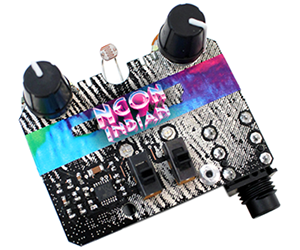

Chillwave, sometimes also referred to as Glo-Fi, is a genre of music where artists are often characterized by their heavy use of effects processing, synthesizers, looping, sampling, and heavily filtered vocals with simple melodic lines.
The genre combines the larger 2000s trends towards 80s retro music and (in indie music) use of ambient sound, with modern pop. The term is said to have been originated on the Hipster Runoff blog.
read more »
Posted in Art, Language, Technology |
Leave a Comment »
August 9, 2011

Taqwacore [tok-wah-kor] is a genre of punk music dealing with Islam and its culture, originally conceived in Michael Muhammad Knight’s 2003 novel, ‘The Taqwacores.’ The name is a portmanteau of hardcore and the Arabic word Taqwa, which is usually translated as ‘piety’ or the quality of being ‘God-fearing,’ and thus roughly denotes fear and love of the divine. The scene is composed mainly of young Muslim artists living in the US and other western countries, many of whom openly reject traditionalist interpretations of Islam.
Although Muslim punk music dates at least to the 1979 founding of British band Alien Kulture, and in the 90’s, Nation Records act Fun-Da-Mental and Asian Dub Foundation, this is the first example of US Muslim generated punk. Knight’s novel was instrumental in encouraging the growth of a contemporary North American Muslim punk movement. There is not a definitive ‘taqwacore sound,’ and the scene is much more diverse now than the fictional one portrayed in Knight’s novel, with artists incorporating various styles, ranging from punk to hip-hop, and musical traditions from the Muslim world; the Kominas describe their sound as ‘Bollywood punk,’ Sagg Taqwacore Syndicate is rap and techno inspired, and Al-Thawra uses the term ‘raicore,’ based on Arabic Raï music.
Posted in Art, Philosophy, Politics |
Leave a Comment »
August 9, 2011
Moombahton is a genre of electronic dance music that was created by American dj/producer Dave Nada (aka Dave Villegas) at a high school homecoming ‘skipping party’ for his younger cousin in Washington, D.C., in the fall of 2009.
The specific event that stimulated NADA’s development of the Moombahton genre was his slowing the Afrojack remix of the Silvio Ecomo and DJ Chuckie song ‘Moombah’ to 108 beats per minute. Because that tempo nears that of the reggaeton, Nada created the neologism ‘Moombahton.’
Posted in Art, Technology |
Leave a Comment »
July 30, 2011
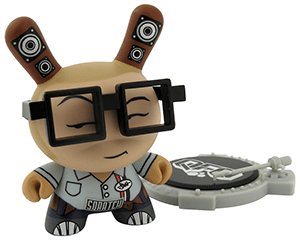
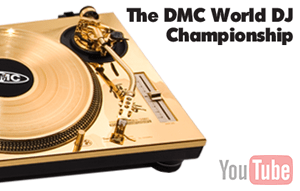
Turntablism is the art of manipulating sounds and creating music using phonograph turntables and a DJ mixer. The word ‘turntablist’ was coined in 1995 by DJ Babu to describe the difference between a DJ who just plays records, and one who performs by touching and moving the records, stylus and mixer to manipulate sound. The new term co-occurred with a resurgence of the art of hip hop style DJing in the 1990s.
Composer John Oswald described the art: ‘A phonograph in the hands of a ‘hiphop/scratch’ artist who plays a record like an electronic washboard with a phonographic needle as a plectrum, produces sounds which are unique and not reproduced — the record player becomes a musical instrument.’
read more »
Posted in Art, Games, Technology |
Leave a Comment »
July 29, 2011

New Wave is a subgenre of rock music that emerged in the mid to late 1970s alongside punk rock. The term at first generally was synonymous with punk rock before being considered a genre in its own right that incorporated aspects of electronic and experimental music, mod subculture, and disco, rock and 1960s pop music.
While it incorporated much of the original punk rock sound and ethos, such as an emphasis on short and punchy songs, it was characterized by greater complexity in both music and lyrics.
read more »
Posted in Art, Language, Money |
Leave a Comment »
July 26, 2011


Dub is a genre of music which grew out of 1960’s reggae. Music in this genre consists predominantly of instrumental remixes of existing recordings which have been manipulated and reshaped, usually by removing the vocals, and emphasizing the drum and bass elements (this stripped down track is sometimes referred to as a ‘riddim’). Other techniques include dynamically adding extensive echo, reverb, panoramic delay, and occasional dubbing of vocal or instrumental snippets from the original version or other works. Dub also sometimes features electronically generated sound effects, or the use of distinctive instruments such as the melodica by artists such as Augustus Pablo.
Dub was pioneered by Osbourne ‘King Tubby’ Ruddock, Lee ‘Scratch’ Perry, Errol Thompson and others in the late 1960s. Similar experiments with recordings at the mixing desk outside of the dancehall environment were also done by producers Clive Chin and Herman Chin Loy. These producers, especially Ruddock and Perry, looked upon the mixing desk as an instrument, manipulating tracks to come up with something new and different. Dub has influenced many genres of music, including punk, hip hop, disco, house, and trip hop, and has become a basis for jungle/drum’n’bass and dubstep music.
read more »
Posted in Art, Language, World |
Leave a Comment »
July 23, 2011
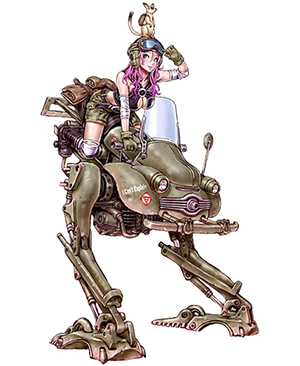
Dieselpunk is a sub-genre of the pop surrealist art movement, as well as a budding subculture, that combines the aesthetics of the interbellum period through the early 1950s with postmodern technology and sensibilities. First coined in 2001 as a marketing term by game designer Lewis Pollak to describe his role-playing game ‘Children of the Sun,’ dieselpunk has grown to describe a distinct style.
The name ‘dieselpunk’ is a derivative of the 1980s science fiction genre cyberpunk, and is used to represent the time period – or ‘era’- when diesel-based locomotion was the main technological focus of Western culture. The ‘-punk’ suffix attached to the name is representative of the counterculture nature of the genre with regards to its opposition of contemporary aesthetics. The term also refers to the tongue-in-cheek name given to a similar cyberpunk derivative, ‘steampunk,’ which focuses on science fiction set within the Victorian era.
read more »
Posted in Art, Language, Technology |
2 Comments »
July 22, 2011

Steampunk is a sub-genre of science fiction, alternate history, and speculative fiction that came into prominence during the 1980s and early 1990s. It involves a setting where steam power is still widely used—usually the Victorian era Britain—that incorporates elements of either science fiction or fantasy.
Works of steampunk often feature anachronistic technology or futuristic innovations as Victorians may have envisioned them; based on a Victorian perspective on fashion, culture, architectural style, art, etc. This technology may include such fictional machines as those found in the works of H. G. Wells and Jules Verne.
read more »
Posted in Art, Language, Technology |
Leave a Comment »
July 22, 2011

Sexploitation describes a class of independently produced, low budget feature films generally associated with the 1960s, and serving largely as a vehicle for the exhibition of non-explicit sexual situations and gratuitous nudity. Sexploitation films were generally exhibited in urban grindhouse theatres, the precursor to the adult movie theaters of the 1970s and ’80s that featured hardcore content. The term soft-core is often used to designate non-explicit sexploitation films after the general legalization of hardcore content.
A series of United States Supreme Court rulings in the late 50s and 60s had enabled increasingly explicit sex films to be distributed.There were initially three broad types; ‘nudie cuties’ such as ‘The Immoral Mr. Teas’ (1959), films set in nudist camps like ‘Daughter of the Sun’ (1962), and somewhat more ‘artistic’ foreign pictures such as ‘The Twilight Girls’ (1961). Nudie cuties were popular in the early 60s, and were a development from the nudist camp films of the 50s.
read more »
Posted in Art, Politics, Sex |
Leave a Comment »
July 4, 2011

Indie electronic (also called indietronica) is a music genre that combines indie, electronica, rock and pop music. Typical instruments used in indietronica music are electronic keyboard, synthesizer, sampler and drum machine.
Indie electronic began in the early ’90s with bands like Stereolab and Disco Inferno, took off in the new millennium as the new digital technology developed, with acts including Broadcast from the UK, Justice from France, Lali Puna from Germany and The Postal Service, and Ratatat from the US, mixing a variety of indie sounds with electronic music, largely produced on small independent labels.
Posted in Art, Money, Technology |
Leave a Comment »



 The Daily Omnivore