June 30, 2011


A chiptune, also known as chip music, is synthesized electronic music often produced with the sound chips of old computers and video game consoles, as well as with other methods such as emulation. In the early 1980s, home computers became cheaper and more accessible; this led to a proliferation of personal computers and gaming consoles that were abandoned as users moved on to the next generation of software, and the hardware to run it. Small groups of artists and musicians continue to use these forgotten computers to produce audio and visual work.
The game technologies that are typically used in chip music production are those produced from the 1980s up until the early to mid 1990s. These systems, including the NEC PC-8801, Commodore 64, Nintendo Entertainment System, and Nintendo Game Boy, were aimed at the domestic consumer market. These systems were unique in that they marked a period in the technological development of game audio in which dedicated hardware sub-systems or sound chips were used to create sound.
read more »
Posted in Art, Games, Technology |
Leave a Comment »
June 30, 2011


The Bildungsroman [bil-doongz-roh-mahn] (German: ‘education novel’) is a genre of novel which focuses on the psychological and moral growth of the protagonist from youth to adulthood, and in which character change is thus extremely important. The term was coined by philologist (scholar of language in written historical sources) Karl Morgenstern in 1819, and later famously reprised by German historian Wilhelm Dilthey in 1905. The birth of the genre is normally dated to the publication of Goethe’s ‘The Apprenticeship of Wilhelm Meister’ in 1795 in Germany. A Bildungsroman tells about the growing up or coming of age of a sensitive person who is looking for answers and experience. The genre evolved from folklore tales of a dunce or youngest son going out in the world to seek his fortune.
Typically, in the beginning of the story there is an emotional loss which makes the protagonist leave on his journey. In a Bildungsroman, the goal is maturity, and the protagonist achieves it gradually and with difficulty. The genre often features a main conflict between the character and society. Typically, the values of society are gradually accepted by the protagonist who is in turn welcomed back into the fold. There are many variations and subgenres: An Entwicklungsroman (‘development novel’) is a story of general growth rather than self-cultivation. An Erziehungsroman (‘education novel’) focuses on training and formal schooling, while a Künstlerroman (‘artist novel’) is about the development of an artist and shows a growth of the self.
Posted in Art, Language, World |
Leave a Comment »
June 10, 2011

The term ‘Live Cinema‘ formerly described the live musical accompaniment of silent movies, but has grown to include the simultaneous creation of sound and image in real time by sonic and visual artists who collaborate to elaborate concepts on equal terms.
The traditional parameters of narrative cinema are expanded by a much broader conception of cinematographic space, the focus of which is no longer the photographic construction of reality as seen by the camera’s eye, or linear forms of narration. The term ‘Cinema’ is now to be understood as embracing all forms of configuring moving images, beginning with the animation of painted or synthetic images.
Posted in Art |
Leave a Comment »
June 7, 2011

Tecnocumbia [tek-noh-koom-bee-uh] is a style of Cumbia (Latin American folk music) were there is a fusion between electronic sounds generated by electronic musical instruments and traditional instruments. The term ‘tecnocumbia’ was coined in Mexico to describe this type of music, but the style of music was developed throughout South America with different names given to it. In Mexico, it developed as a variant of the Mexican cumbia that started in the early 80s. The style added electronic instruments along with samplers to the Mexican cumbia music. One of the first musical groups with electrical 80’s sounds was Super Show de los Vazkez from Veracruz, formed in 1981. In the early 90s Selena the ‘Tex-mex queen’ had hits in U.S. and Mexico in the tecnocumbia style.
In South America, where the Colombian Cumbia most easily expanded in popularity, different ‘modern’ styles of the original Colombian rhythm were started mainly in the countries of Peru, Ecuador and Bolivia. The Peruvian cumbia, developed in the early 60s, used electric guitars and synthesizers along with the other classical instruments of the Colombian cumbia in order to create a kind of tropical sound. Variations within the Peruvian cumbia added more tropical rhythms along with a more Andean flavor, which eventually resulted in the creation of the Andean cumbia (Commonly called ‘Chicha music’ in Peru).
Posted in Art, Technology, World |
Leave a Comment »
June 7, 2011


Cumbia [koom-bee-uh] is a Latin American music style that originated in Colombia’s Caribbean coastal region. Traditional cumbia and its associated dance is considered to be representative of Colombia, along with Vallenato, Bambuco and Pasillo. Cumbia originated in the Caribbean coast of eastern Colombia, but there are also folkloric variants in Panama.
During the mid-20th century, Colombian band leaders such as Pacho Galan and Lucho Bermudez orchestrated this Caribbean folklore and brought it to different parts of Latin America, where it gained particular popularity in Mexico, Argentina, and the Andean region. Cumbia began as a courtship dance practiced among the African slave population that was later mixed with European instruments and musical characteristics. Cumbia is very popular in the Andean region and the Southern Cone and was until the early 1980’s more popular in these regions than the salsa.
Posted in Art, Sex, World |
Leave a Comment »
May 26, 2011

Lowbrow describes an underground visual art movement that arose in Los Angeles in the late 1970s. Lowbrow is a widespread populist art movement with origins in the underground comix world, punk music, hot-rod street culture, and other subcultures. It is also often known by the name pop surrealism. Lowbrow art often has a sense of humor – sometimes the humor is gleeful, sometimes impish, and sometimes it is a sarcastic comment.
Some of the first artists to create what came to be known as lowbrow art were underground cartoonists like Robert Williams and Gary Panter. Early shows were in alternative galleries in New York and Los Angeles such as Psychedelic Solutions Gallery in Greenwich Village, La Luz de Jesus, and 01 gallery. The lowbrow magazine Juxtapoz by Robert Williams, first published in 1994, has been a mainstay of writing on lowbrow art and has helped direct and grow the movement.
read more »
Posted in Art, Money |
1 Comment »
May 24, 2011


Bauhaus [bou-hous] is the common term for the Staatliches Bauhaus, an art and architecture school in Germany that operated from 1919 to 1933 in Germany and in the United States from 1937-1938. The most natural meaning for its name (related to the German verb for ‘build’) is Architecture House.
The Bauhaus school was founded by Walter Gropius in Weimar. In spite of its name, and the fact that its founder was an architect, the Bauhaus did not have an architecture department during the first years of its existence. Nonetheless it was founded with the idea of creating a ‘total’ work of art in which all arts, including architecture would eventually be brought together.
read more »
Posted in Art, World |
Leave a Comment »
April 3, 2011


In music, a concept album is an album that is unified by a theme, which can be instrumental, compositional, narrative, or lyrical. Commonly, concept albums tend to incorporate preconceived musical or lyrical ideas rather than being improvised or composed in the studio, with all songs contributing to a single overall theme or unified story.
This is in contrast to the practice of an artist or group releasing an album consisting of a number of unconnected (lyrically or otherwise) songs performed by the artist.
read more »
Posted in Art, Money |
Leave a Comment »
March 22, 2011

Kustom Kulture is an an aesthetic and lifestyle born out of the hot rod culture of Southern California of the 1960s, associated with artists such as Kenny Howard (also known as Von Dutch), custom car builders such as ‘Big Daddy’ Ed Roth and Dean Jeffries, hot rod and lowrider customizers such as the Barris Brothers, along with numerous tattoo artists, automobile painters, and movies and television shows such as ‘American Graffiti,’ ‘Happy Days,’ ‘The Munsters’ and ‘The Monkees.’
Kustom Kulture is usually identified with the greasers of the 1950s, the drag racers of the 1960s, and the lowriders of the 1970s. Other subcultures that have had an influence on Kustom Kulture are the Skinheads, mods and rockers of the 1960s, the punks of the 1970s, metal and rockabilly music, the scooterboys of the 1980s, and psychobilly of the 1990s. Each has its own style, but common themes include wild pinstriped paintjobs, choptop Mercurys, custom Harley-Davidson and Triumph Motorcycles, metalflake and black primer paint jobs, and monster movies.
Posted in Art, Politics, Technology |
1 Comment »
March 16, 2011
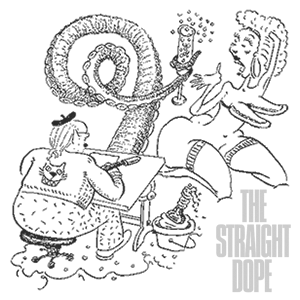
Tentacle rape, or shokushu goukan, is a concept found in some horror hentai titles (pornographic comics and animation), where various tentacled creatures (usually fictional monsters) rape or otherwise penetrate women, anthropomorphous creatures, Futanari (hermaphrodites) and, less commonly, men.
The genre is quite popular in Japanese erotica, and is even the subject of much parody. For Western audiences, tentacle erotica often symbolizes hentai as a phenomenon. Tentacled creatures appeared in Japanese erotica long before animated pornography.
read more »
Posted in Art, Sex, World |
Leave a Comment »
March 16, 2011

Hentai is a Japanese word that literally means ‘strange appearance,’ but is also used to mean ‘perverted.’ Hentai, because of this, is a word used by countries outside of Japan to show pornographic and sex-related anime, manga, and video games. The word is not used to mean this in Japan. In Japan, terms such as ‘ecchi’ are used. Since hentai is anime, the performers are not bound by physical laws. Makers of hentai often use this in very creative ways.
Censorship is practiced differently in Japan and in the US. Japanese law discourages showing of genitals in hentai, while the United States is more concerned about forbidding the display of sex acts involving people under 18. Hence, there are censoring mosaics in Japan, and scene removals and different ages of characters in America.
read more »
Posted in Language, Sex, World |
2 Comments »
March 8, 2011

Kwaito is a music genre that emerged in Johannesburg, South Africa, during the late 1990s. It is house music combined with local African sounds. Typically at a slower tempo, Kwaito often contains catchy melodic and percussive loop samples, deep bass lines, and vocals. Although bearing similarities to hip hop music, a distinctive feature of Kwaito is the manner in which the lyrics are often shouted, ‘blabbered,’ and chanted. American music producer, Diplo described Kwaito as ‘slowed-down garage music,’ popular among the black youth of South Africa.
The word kwaito riginates from the Afrikaans word kwaai, which traditionally means strict or angry, although in its more common and contemporary use, the word is a translation of the loose English term ‘cool.’ Despite the fact that the Afrikaans language is associated with the apartheid regime and racial oppression, Afrikaans words are often drawn into the indigenous vocabulary, typically reshaped and used in a related or new context.
Posted in Art, World |
Leave a Comment »





 The Daily Omnivore