December 6, 2010

Skiffle is a type of popular music with jazz, blues, folk, roots and country influences, usually using homemade or improvised instruments. Originating as a term in the United States in the first half of the twentieth century, it became popular again in the UK in the 1950s, where it was mainly associated with musician Lonnie Donegan and played a major part in beginning the careers of later eminent jazz, pop, blues, folk and rock musicians.
Improvised jug bands playing blues and jazz were common across the American South in the early decades of the twentieth century. They used instruments such as the washboard, jugs, tea chest bass, cigar-box fiddle, musical saw, and comb-and-paper kazoos, as well as more conventional instruments such as acoustic guitar and banjo.The term skiffle was originally one of many slang phrases for a rent party, a social event with a small charge designed to pay rent on a house.
Posted in Art, Language |
Leave a Comment »
November 30, 2010

Anti-humor (also known as unjokes) are a kind of humor based on the surprise factor of absence of an expected joke or of a punch line in a narration which is set up as a joke. This kind of anticlimax is similar to that of the shaggy dog story. In anti-comedy the gist of the humor is in how poor the joke is or how poorly it was told. A popular kind of unjoke involves any seemingly humorous setup leading to the non-sequitur punchline of ‘No soap, radio’ or the joke ‘A man walks into a bar. He is an alcoholic and it’s destroying his family.’ Another form of anti-humor is poking fun at bad humor by the way of parody. An example is Jim’s Journal, a comic strip by Scott Dikkers, co-founder of The Onion, whose four-panel strips end without any sort of punchline.
Alternative comedy, among its other aspects, parodies the traditional idea of the joke as a form of humor. Andy Kaufman saw himself as a practitioner of anti-humor. Other comedians known for their anti-humor are Tim and Eric of Tim and Eric Awesome Show, Great Job!, Norm Macdonald, Ted Chippington, Neil Hamburger, Corey Mystyshyn, Jimmy Carr, and Bill Bailey.
Posted in Humor |
Leave a Comment »
October 13, 2010

Controllerism is the art and practice of using musical software controllers (e.g. MIDI) to build upon, mix, scratch, remix, effect, modify, or otherwise create music, usually by a DJ or ‘Controllerist.’ Often on the side of Virtuoso performance art, Controllerism is also a nod to traditional musicianship and instrumental-ism paired with modern computer sequencing software such as Ableton Live and Native Instruments Traktor.
However a working knowledge of Scale and Chords is not necessarily required as the performers typically focus their efforts more on sequencing events, software effect and instrument manipulations using buttons, knobs, faders, keys, foot switches and pedals than on instrumental notes played in real time. The term was coined by musician Matt Moldover in 2007 and popularized by DJ Ean Golden to describe the process while paying homage to and giving respect to the art of turntablism.
Posted in Art, Technology |
Leave a Comment »
September 27, 2010
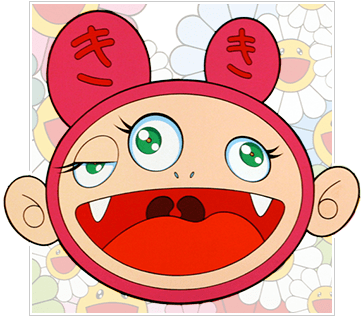
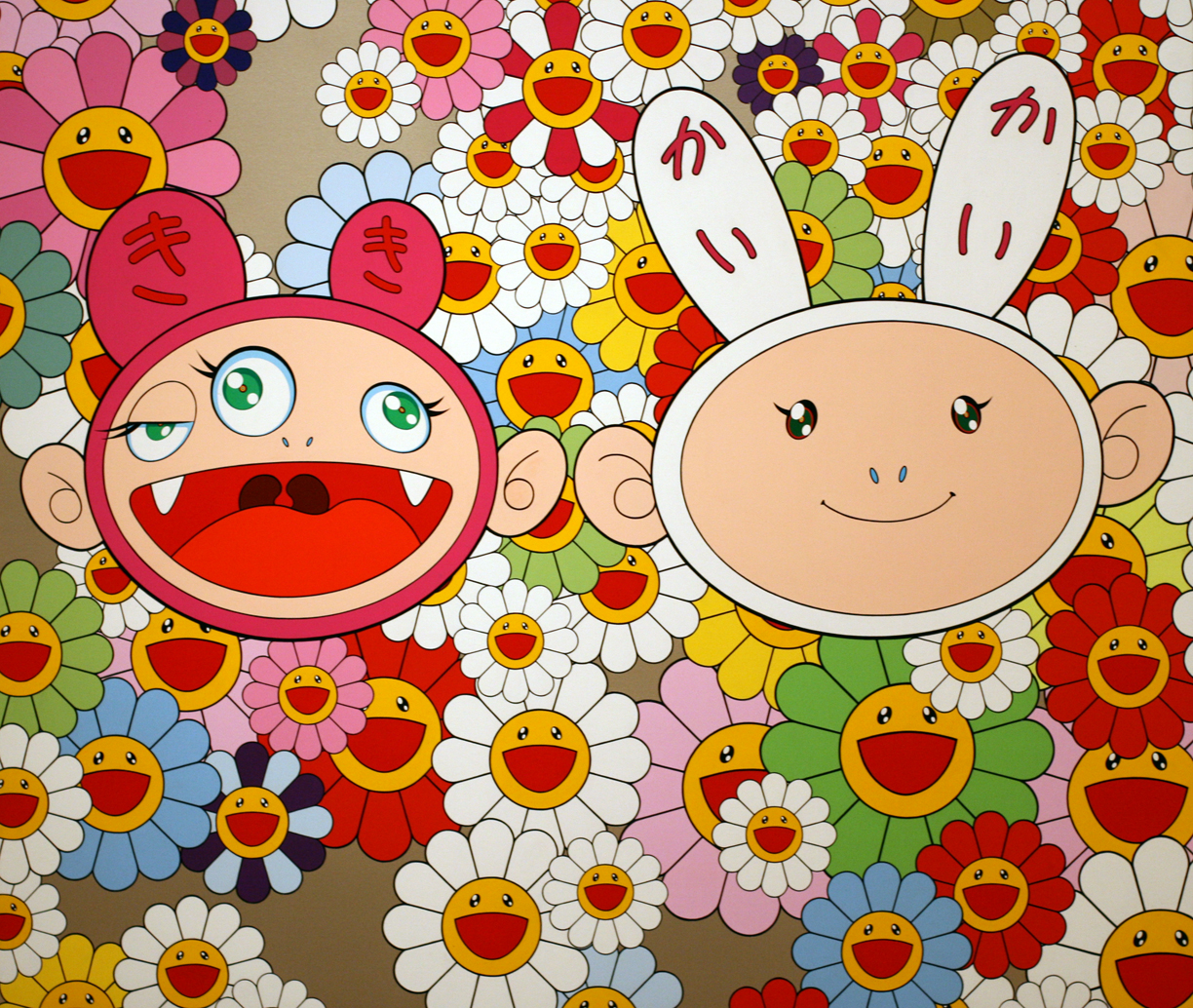
Superflat is a postmodern art movement, founded by Japanese artist Takashi Murakami, which is influenced by manga and anime. Superflat is used by Murakami to refer to various flattened forms in Japanese graphic art, animation, pop culture and fine arts, as well as the ‘shallow emptiness of Japanese consumer culture.’ A self-proclaimed art movement, it was a successful piece of niche marketing, a branded art phenomenon designed for Western audiences.
Murakami defines Superflat in broad terms, so the subject matter is very diverse. Often the works take a critical look at the consumerism and sexual fetishism that is prevalent in post-war Japanese culture. One target of this criticism is lolicon art, which is satirized by works such as those by Henmaru Machino. These works are an exploration of otaku sexuality through grotesque and/or distorted images. Other works are more concerned with a fear of growing up. For example, Yoshitomo Nara’s work often features playful graffiti on old Japanese ukiyo-e executed in a childish manner. And some works focus on the structure and underlying desires that comprise otaku and overall post-war Japanese culture.
Posted in Art, World |
Leave a Comment »
September 24, 2010
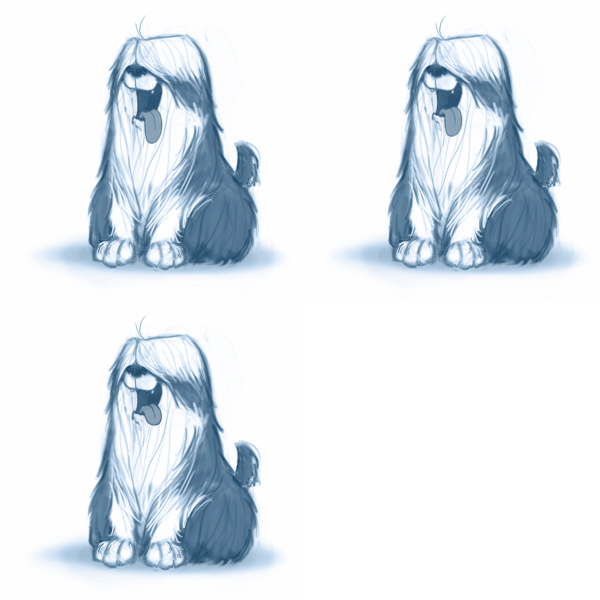
In its original sense, a shaggy dog story is an extremely long-winded tale featuring extensive narration of typically irrelevant incidents, usually resulting in a pointless or absurd punchline. These stories are a special case of yarns, coming from the long tradition of campfire yarns. Shaggy dog stories play upon the audience’s preconceptions of the art of joke telling. The audience listens to the story with certain expectations, which are either simply not met or met in some entirely unexpected manner.
A boy owned a dog that was uncommonly shaggy. Many people remarked upon its considerable shagginess. When the boy learned that there are contests for shaggy dogs, he entered his dog. The dog won first prize for shagginess in both the local and the regional competitions. The boy entered the dog in ever-larger contests, until finally he entered it in the world championship for shaggy dogs. When the judges had inspected all of the competing dogs, they remarked about the boy’s dog: ‘He’s not so shaggy.’
Posted in Art, Humor |
Leave a Comment »
September 14, 2010

Italo disco is a broad term, encompassing much of the dance music output in Europe during the 1980s. It is one of the world’s first forms of completely electronic dance music and evolved during the late 1970s and early 1980s in Italy, Germany, the Netherlands and other parts of Europe. Italo disco music has a distinct, futuristic and spacey sound, which was created using synthesizers, drum machines and vocoders. The term ‘Italo disco’ was marketed only in Europe in the early 1980s by the German record label ZYX Music. Prior to 1983, the music was simply considered dance or disco music from Europe.
Posted in Art, World |
Leave a Comment »
September 12, 2010

Bebop [bee-bop] or bop is a style of jazz characterized by fast tempo, instrumental virtuosity and improvisation based on the combination of harmonic structure and melody. It was developed in the early and mid-1940s. It first surfaced in musicians’ argot some time during the first two years of American involvement in WWII. This style of jazz ultimately became synonymous with modern jazz, as either category reached a certain final maturity in the 1960s.
read more »
Posted in Art, Language |
Leave a Comment »
August 7, 2010
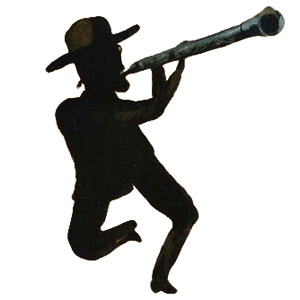
Klezmer [klez-mer] is a musical tradition of the Ashkenazic Jews of Eastern Europe. Played by professional musicians called klezmorim, the genre consists largely of dance tunes and instrumental display pieces for weddings and other celebrations. Although the genre has its origins in Eastern Europe, the particular form now known as klezmer developed in the United States in the milieu of Yiddish-speaking Jewish immigrants who arrived between 1880 and 1924.
Of all the musical styles which influenced the traditional Klezmer musicians, the Romanian influence seems to be the strongest and most enduring. Traditional Romanian music was heard, adopted and adapted by Klezmer musicians. This fact is reflected in the dance forms found throughout the entire surviving Klezmer music repertoire (e.g., Horas).
Posted in Art, World |
Leave a Comment »
August 7, 2010

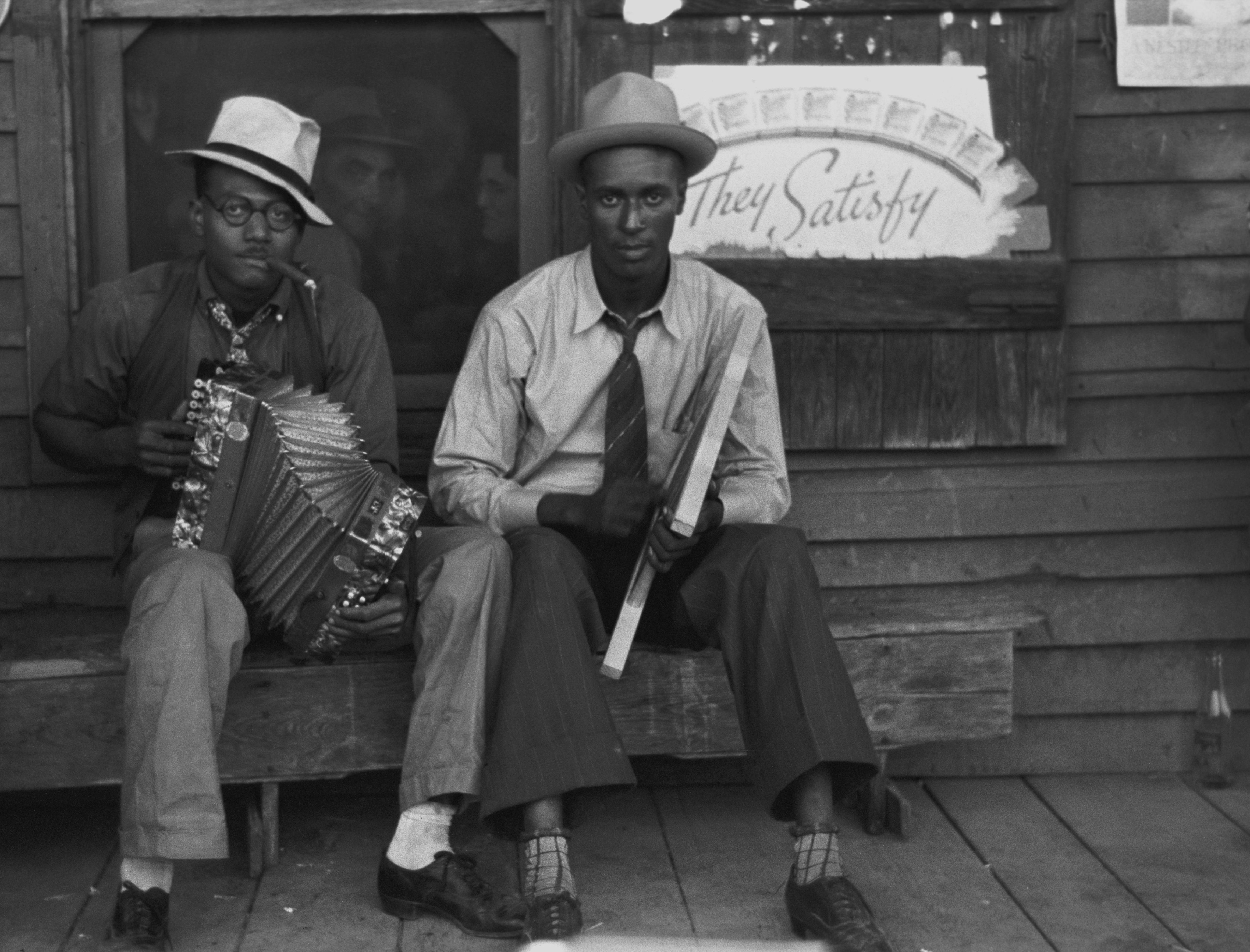
Zydeco [zahy-di-koh] is a form of American roots or folk music. It evolved in southwest Louisiana in the early 19th century from forms of Creole music. The rural black Creoles of southwest Louisiana and southeast Texas still sing in Louisiana Creole French. The word is derived from the French word le zaricot, which means ‘green beans’ or ‘snap beans.’
Usually fast tempo and dominated by accordion and a form of a washboard known as a ‘rub-board’ or frottoir, zydeco music was originally created at house dances, where families and friends gathered for socializing. Sometimes the music moved to the Catholic Church community center, as Creoles were mostly Catholic. Later it moved to rural dance halls and nightclubs. As a result, the music integrated waltzes, shuffles, two-steps, blues, rock and roll, and most dance music forms of the era. Today, the tradition of change and evolution in the music continues. It stays current while integrating even more genres such as R&B, soul, brass band, reggae, urban hip, ska, rock, Afro-Caribbean and other styles, in addition to the traditional forms.
Posted in Art |
Leave a Comment »
August 3, 2010
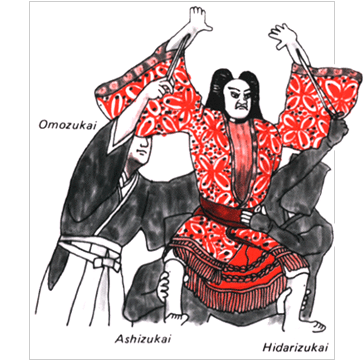
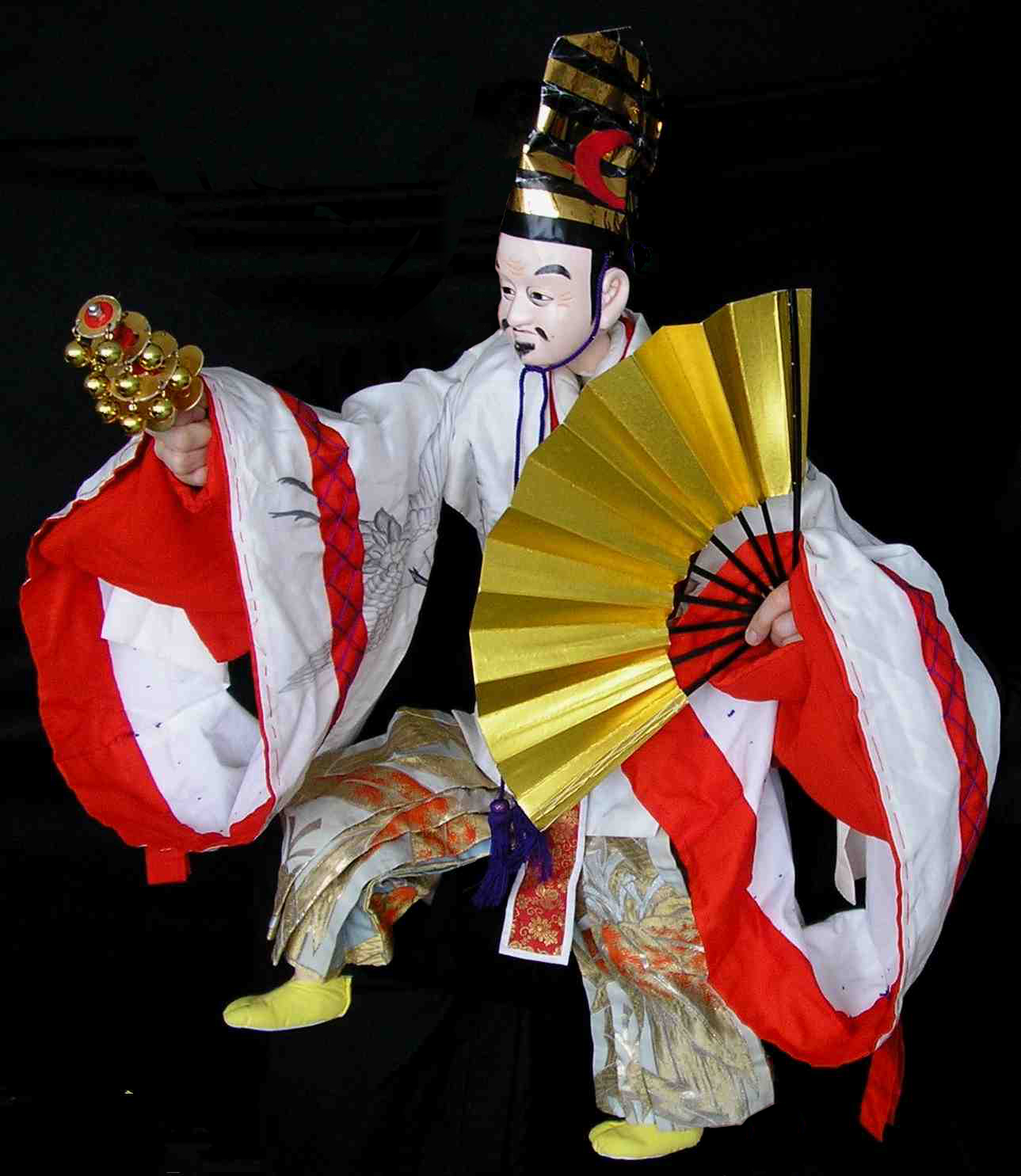
Bunraku [boon-rah-koo] is a form of traditional Japanese puppet theater, founded in Osaka in 1684. Bunraku puppets range in size from two-and-a-half to four feet tall or more, depending on the age and gender of the character and the conventions of the specific puppet troupe. All but the most minor characters require three puppeteers, who perform in full view of the audience, generally wearing black robes.
Originally, the term Bunraku referred only to a particular theater established in in Osaka, which was named the Bunrakuza. Today the term refers generically to any traditional puppet theater in Japan. Until the late 1800s there were hundreds of professional, semi-professional, and amateur troupes across Japan that performed traditional puppet drama. Since the end of World War II, the number of troupes has dropped to fewer than 30, most of which perform only once or twice a year, often in conjunction with local festivals.
Posted in Art, World |
Leave a Comment »
July 12, 2010

Battle records are vinyl records made up of brief samples from songs, film dialogue, sound effects, and drum loops for use by a DJ. The samples and drum loops are used for scratching and performances by turntablists. Battle records are often released by DJs banking on their celebrity or looking to capitalize on rare items in their collections. Creative, novel, or bizarre inclusions are especially prized. Often, the samples featured on these records do not have the blessing of the original copyright holders. Because of this, the use of pseudonyms and anonymous releases are common.
Posted in Art, Games |
Leave a Comment »
June 28, 2010
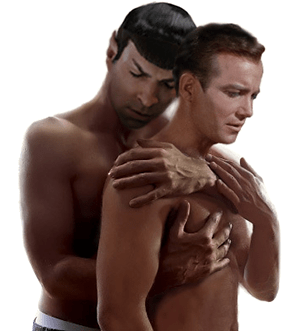
Slash fiction, or slashfic, is a genre of fan fiction that focuses on the depiction of romantic or sexual relationships between fictional characters. While the term was originally restricted to stories in which male media characters were involved in an explicit adult relationship as a primary plot element, it is now often used to refer to any fan story containing a pairing between same-sex characters, although many fans distinguish the female-focused variety as a separate genre commonly referred to as ‘femslash.’
Posted in Language, Love, Sex |
Leave a Comment »


 The Daily Omnivore