March 11, 2013

Lock On is a style of street art, where artists create installations by attaching sculptures to public furniture using lengths of chain and old bike locks. The sculptures are often arranged to give the impression that they are interacting with surroundings.
The Lock On style is a ‘non destructive’ form of underground art. Artist Tejn is considered the ‘founder’ of the style. Taking scrap metal from urban areas, he welds the material to create sculptures which he ‘returns to the street’ as art. The genre was introduced when he started placing his welded iron sculptures, chained and locked, throughout Copenhagen and Berlin.
Posted in Art, Humor |
Leave a Comment »
March 7, 2013
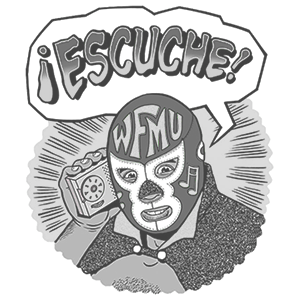
Freeform radio, is a radio station programming format in which the disc jockey is given total control over what music to play, regardless of music genre or commercial interests. Freeform radio stands in contrast to most commercial radio stations, in which DJs have little or no influence over programming structure or playlists. In the United States, freeform DJs are still bound by Federal Communications Commission regulations.
Many shows lay claim to be the first freeform radio program; the earliest is ‘Nightsounds’ on KPFA-FM in Berkeley, California, D.J.’d by John Leonard. Probably the best-remembered in the Midwest is ‘Beaker Street,’ which ran for almost 10 years on KAAY ‘The Mighty 1090’ in Little Rock, Arkansas, beginning in 1966, making it also probably the best-known such show on an AM station; its signal reached from Canada to Mexico and Cuba, blanketing the Midwest and Midsouth of the U.S.
read more »
Posted in Art, Money |
Leave a Comment »
January 31, 2013
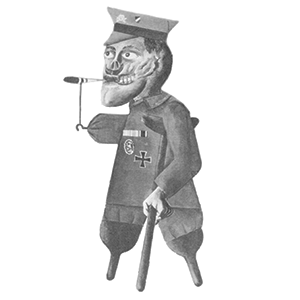
Degenerate [dih-jen-er-it] art is the English translation of the German ‘entartete Kunst,’ a term adopted by the Nazi regime in Germany to describe virtually all modern art. Such art was banned on the grounds that it was un-German or Jewish Bolshevist in nature, and those identified as degenerate artists were subjected to sanctions. These included being dismissed from teaching positions, being forbidden to exhibit or to sell their art, and in some cases being forbidden to produce art entirely.
‘Degenerate Art’ was also the title of an exhibition, mounted by the Nazis in Munich in 1937, consisting of modernist artworks chaotically hung and accompanied by text labels deriding the art. Designed to inflame public opinion against modernism, the exhibition subsequently traveled to several other cities in Germany and Austria. While modern styles of art were prohibited, the Nazis promoted paintings and sculptures that were traditional in manner and that exalted the ‘blood and soil’ values of racial purity, militarism, and obedience. Similarly, music was expected to be tonal and free of any jazz influences; films and plays were censored.
read more »
Posted in Art, Politics, War |
Leave a Comment »
October 28, 2012

Alt porn tends to involve members of such subcultures as goths, punks, or ravers and is often produced by small and independent websites or filmmakers. It often features models with body modifications such as tattoos, piercings, or scarifications, or temporary modifications such as dyed hair.
The term indie porn is also sometimes used, though this term is more generally used as a synonym for independent pornography, regardless of affinity with any kind of alternative subculture. While pornography specifically oriented toward alternative culture did not arise until the 1990s, the work of Gregory Dark, David Aaron Clark, Michael Ninn, and Stephen Sayadian are seen by some as predecessors of alt porn. ‘The Cinema of Transgression’ of Richard Kern and Nick Zedd (as well as Kern’s later photographic work) can also be viewed as early examples of alt porn.
read more »
Posted in Language, Sex |
2 Comments »
October 28, 2012
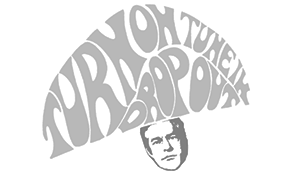

Psychedelia [sahy-ki-deel-yuh] is a name given to the subculture of people who use psychedelic drugs, and a style of psychedelic artwork and psychedelic music derived from the experience of altered consciousness that uses highly distorted and surreal visuals, sound effects and reverberation, and bright colors and full spectrums and animation (including cartoons) to evoke and convey to a viewer or listener the artist’s experience while using such drugs.
A psychedelic experience is characterized by the striking perception of aspects of one’s mind previously unknown, or by the creative exuberance of the mind liberated from its ostensibly ordinary fetters.
read more »
Posted in Art, Drugs, Language |
Leave a Comment »
October 10, 2012
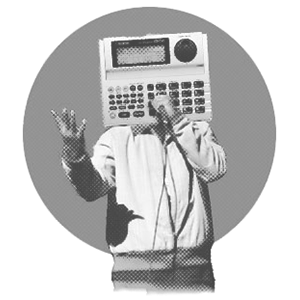
Beatboxing is a form of vocal percussion primarily involving the art of producing drum beats, rhythm, and musical sounds using one’s mouth, lips, tongue, and voice. It may also involve singing, vocal imitation of turntablism, and the simulation of horns, strings, and other musical instruments.
Beatboxing today is connected with hip-hop culture, being one of ‘the elements,’ although it is not limited to hip-hop music.
read more »
Posted in Art, Language |
Leave a Comment »
October 10, 2012

Freestyle is a style of a cappella rap, with instrumental beats, in which rap lyrics are improvised, i.e. performed with no previously composed lyrics, or ‘off the top of the head.’ It is similar to other improvisational music such as jazz – Myka 9 of Freestyle Fellowship describes it as being ‘like a jazz solo’ where there is a lead saxophonist acting as the improviser and the rest of the band providing the beat. Rap battles are sometimes improvised in this way.
It is similar in both form and function to the ancient practice of flyting (contest consisting of the exchange of insults). Originally, in old school hip hop of the 1980s, the term ‘freestyle’ referred to a pre-written rap verse that was not on any particular subject matter, but rather was written for the purpose of demonstrating skill. The term is still occasionally used in this way, though since the 1990s, the majority of today’s artists use it to mean improvised rapping.
read more »
Posted in Art, Games, Language |
Leave a Comment »
October 3, 2012
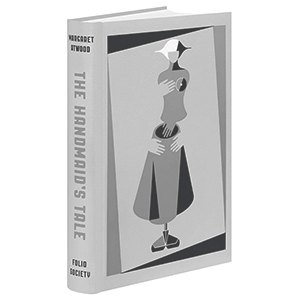
Feminist science fiction is a sub-genre of science fiction which tends to deal with women’s roles in society. Feminist science fiction poses questions about social issues such as how society constructs gender roles, the role reproduction plays in defining gender and the unequal political and personal power of men and women.
Some of the most notable feminist science fiction works have illustrated these themes using utopias to explore a society in which gender differences or gender power imbalances do not exist, or dystopias to explore worlds in which gender inequalities are intensified, thus asserting a need for feminist work to continue. According to professor Elyce Rae Helford: ‘Science fiction and fantasy serve as important vehicles for feminist thought, particularly as bridges between theory and practice. No other genres so actively invite representations of the ultimate goals of feminism: worlds free of sexism, worlds in which women’s contributions (to science) are recognized and valued, worlds in which the diversity of women’s desire and sexuality, and worlds that move beyond gender.’
read more »
Posted in Art, Sex, Technology |
1 Comment »
September 29, 2012
Hysterical realism, also called ‘recherché postmodernism,’ is a term coined in 2000 by the English critic James Wood in an essay for ‘The New Republic’ on Zadie Smith’s novel ‘White Teeth’ to describe what he sees as a literary genre typified by a strong contrast between elaborately absurd prose, plotting, or characterization and careful, detailed investigations of real specific social phenomena.
Wood uses the term to denote the contemporary conception of the ‘big, ambitious novel’ that pursues ‘vitality at all costs’ and consequently ‘knows a thousand things but does not know a single human being.’ He decried the genre as an attempt to ‘turn fiction into social theory,’ and an attempt to tell us ‘how the world works rather than how somebody felt about something.’ Wood points to Don DeLillo and Thomas Pynchon as the forefathers of the genre, which continues in writers like David Foster Wallace and Salman Rushdie.
read more »
Posted in Art, Language |
Leave a Comment »
September 26, 2012
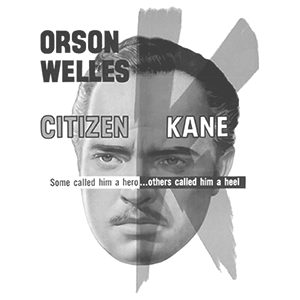
A film à clef [fil ma kle] (French for ‘film with a key’), is a film describing real life, behind a façade of fiction. ‘Key’ in this context means a table one can use to swap out the names. It is the film equivalent of the roman à clef (‘novel with a key’). Notable films à clef’s include ‘8½,’ based on Federico Fellini’s experience suffering from ‘director’s block.’ ‘Annie Hall,’ is believed to be a version of Woody Allen’s own relationship with Diane Keaton. Allen has denied this in interviews, however. ‘Citizen Kane,’ is a thinly disguised biographical film about publishing magnate William Randolph Hearst. ‘Dreamgirls,’ the musical film based on the career of The Supremes.
‘Magnolia’ is loosely inspired by Paul Thomas Anderson’s experience in dealing with his father’s death from cancer. ‘Adaptation’ is partially adapted from Susan Orlean’s non-fiction book ‘The Orchid Thief,’ but most of the film is a heavily fictionalized account of Charlie Kaufman’s difficulty in adapting the book into a screenplay. In ‘Lost in Translation’ Charlotte and John are believed to be based loosely on writer-director Sofia Coppola and her ex-husband, Spike Jonze. ‘The Life Aquatic with Steve Zissou’ features a protagonist based loosely on Jacques Cousteau.
Posted in Art |
Leave a Comment »
September 26, 2012
Roman à clef [raw-mah na kle] (French for ‘novel with a key’) is a phrase used to describe a novel about real life, overlaid with a facade of fiction. The fictitious names in the novel represent real people, and the ‘key’ is the relationship between the nonfiction and the fiction. This ‘key’ may be produced separately by the author, or implied through the use of epigraphs (a phrase, quotation, or poem that is set at the beginning of a document) or other literary devices.
Created by French writer Madeleine de Scudery in the 17th century to provide a forum for her thinly veiled fiction featuring political and public figures, roman à clef has since been used by writers as diverse as Victor Hugo, Phillip K. Dick, and Bret Easton Ellis.
read more »
Posted in Art, Language |
Leave a Comment »
September 14, 2012

Afrofuturism is an emergent literary and cultural aesthetic that combines elements of science fiction, historical fiction, fantasy, Afrocentricity, and magic realism with non-Western cosmologies in order to critique not only the present-day dilemmas of people of color, but also to revise, interrogate, and re-examine the historical events of the past.
Examples of seminal afrofuturistic works include the novels of Samuel R. Delany and Octavia Butler; the canvases of Jean-Michel Basquiat and the photography of Renée Cox; as well as the extraterrestrial mythos of Parliament-Funkadelic and Sun Ra, and the music of DJ Spooky.
read more »
Posted in Art, Language, World |
1 Comment »


 The Daily Omnivore