August 26, 2012

Electro house is a subgenre of house music influenced by 1980s music. The term has been used to describe the music of many of the world’s top DJs, such as David Guetta, deadmau5, Skrillex, and Tiësto. Electro house, sometimes resembling tech house (a hybrid of techno with house), typically retains elements of house music and can incorporate electro-influenced synths and samples.
It often has a ‘dirty’ bass sound created from saw waves with compression and distortion. The exact origins of the genre are uncertain; it has sometimes been seen as a fusion of electro and house; or a term using ‘electro’ as an adjective (meaning ‘futuristic’ or ‘hard’). French house, by artists such as Justice and especially Daft Punk, has also been considered a strong influence.
read more »
Posted in Art, Language, Technology |
Leave a Comment »
August 13, 2012
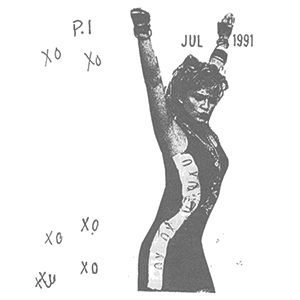
Riot grrrl is an underground feminist punk rock movement that originally started in Washington, D.C. and the Pacific Northwest in the early to mid-1990s. It is often associated with third-wave feminism which is sometimes seen as its starting point. Riot grrrl bands often address issues such as rape, domestic abuse, sexuality, racism, patriarchy, and female empowerment.
Bands associated with the movement include Bikini Kill, Jack Off Jill (and later Scarling), Bratmobile, Fifth Column, Sleater-Kinney, L7, and also queercore like Team Dresch. In addition to a music scene and genre, riot grrrl is a subculture: zines, the DIY ethic, art, political action, and activism are part of the movement.
read more »
Posted in Art, Politics, Sex |
Leave a Comment »
August 13, 2012
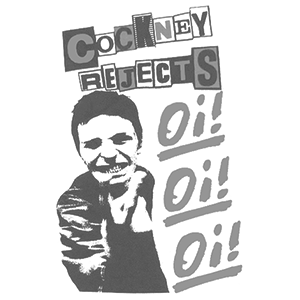
Oi! is a working class subgenre of punk rock that originated in the UK in the late 1970s. The music and its associated subculture had the goal of bringing together punks, skinheads and other working-class youths (sometimes called ‘herberts’).
The Oi! movement was partly a response to the perception that many participants in the early punk rock scene were, in the words of The Business guitarist Steve Kent, ‘trendy university people using long words, trying to be artistic…and losing touch.’ André Schlesinger, singer of The Press, said, ‘Oi shares many similarities with folk music, besides its often simple musical structure; quaint in some respects and crude in others, not to mention brutally honest, it usually tells a story based in truth.’
read more »
Posted in Art, Politics, World |
Leave a Comment »
August 9, 2012

Transgressive fiction is a genre of literature that focuses on characters who feel confined by the norms and expectations of society and who break free of those confines in unusual and/or illicit ways. Because they are rebelling against the basic norms of society, protagonists of transgressional fiction may seem mentally ill, anti-social, or nihilistic. The genre deals extensively with taboo subject matters such as drugs, sex, violence, incest, pedophilia, and crime.
The term ‘transgressive fiction’ was coined by Los Angeles Times literary critic Michael Silverblatt. Rene Chun, a journalist for ‘The New York Times,’ described is as, ‘A literary genre that graphically explores such topics as incest and other aberrant sexual practices, mutilation, the sprouting of sexual organs in various places on the human body, urban violence and violence against women, drug use, and highly dysfunctional family relationships, and that is based on the premise that knowledge is to be found at the edge of experience and that the body is the site for gaining knowledge.’
read more »
Posted in Language, Politics, Sex |
1 Comment »
July 23, 2012
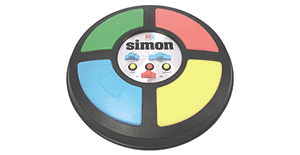

Rhythm game refers to a genre of music-themed action video games. Games in the genre typically focus on dance or the simulated performance of musical instruments, and require players to press buttons in a sequence dictated on the screen. Doing so causes the game’s protagonist or avatar to dance or to play their instrument correctly, which increases the player’s score.
Many rhythm games include multiplayer modes in which players compete for the highest score or cooperate as a simulated musical ensemble. While conventional control pads may be used as input devices, rhythm games often feature novel game controllers that emulate musical instruments. Certain dance-based games require the player to physically dance on a mat, with pressure-sensitive pads acting as the input device.
read more »
Posted in Games, Money, Technology |
Leave a Comment »
July 17, 2012
4X games are a genre of strategy video game in which players control an empire and ‘explore (reveal surrounding territories), expand (create new settlements), exploit (gather resources), and exterminate’ (eliminate rivals). The four elements often overlap with each other and vary in length depending on the game design.
For example, the ‘Space Empires’ series and ‘Galactic Civilizations II’ have lengthy expansion phases, because players must make large investments in research to explore and expand into every area. The term was first coined by video game critic Alan Emrich in his 1993 preview of ‘Master of Orion’ for ‘Computer Gaming World,’ in which he rated the game ‘XXXX’ as a pun on the rating for pornography.
read more »
Posted in Games, Money, Technology |
Leave a Comment »
July 17, 2012
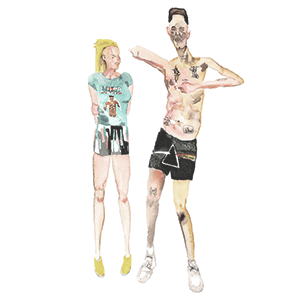
Zef is a South African counter-culture movement. Die Antwoord (Afrikaans: ‘The Answer’) is a South African rap-rave group whose style draws from the movement. The word ‘zef’ stems from an Afrikaans word, which roughly translates to the English word ‘common.’ South African rapper and Die Antwoord collaborator Jack Parow, describes the movement as ‘It’s kind of like posh, but the opposite of posh.’
It differs from the Australian term ‘bogan’ (pejorative f0r those from a low-class background) and the related British term ‘chav’ in that it is mostly a positive term used to describe oneself, rather than a derogatory term for someone else. It is also not typical of the poorest classes of the society, but rather a mostly white, lower-middle class subculture, albeit one that glorifies cheap stuff. Yolandi Visser of Die Antwoord is quoted as saying, ‘It’s associated with people who soup their cars up and rock gold and shit. Zef is, you’re poor but you’re fancy. You’re poor but you’re sexy, you’ve got style.’
read more »
Posted in Art, Money, World |
1 Comment »
July 11, 2012

Post-punk is a rock music movement with its roots in the late 1970s, following on the heels of the initial punk rock explosion of the mid-1970s. The genre retains its roots in the punk movement but is more introverted, complex, and experimental. Post-punk laid the groundwork for alternative rock by broadening the range of punk and underground music, incorporating elements of Krautrock (particularly the use of synthesizers and extensive repetition), Jamaican dub music (specifically in bass guitar), American funk, and studio experimentation into the genre.
It found a firm place in the 1980s independent scene, and led to the development of genres such as gothic rock, industrial music, and alternative rock. The term ‘post punk’ was used in 1977 by ‘Sounds’ to describe Siouxsie and the Banshees. In 1980 critic Greil Marcus referred to ‘Britain’s postpunk pop avant-garde’ in ‘Rolling Stone.’ He applied the phrase to such bands as Gang of Four, The Raincoats, and Essential Logic, which he wrote were ‘sparked by a tension, humor, and sense of paradox plainly unique in present day pop music.’
read more »
Posted in Art |
Leave a Comment »
July 11, 2012
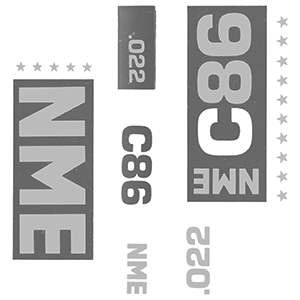
Indie pop is a genre of alternative rock music that originated in the United Kingdom in the mid-1980s, with its roots in Scottish post-punk bands on the Postcard Records label in the early ’80s (Josef K and Orange Juice) and the dominant UK independent band of the mid-’80s, The Smiths. Indie pop was inspired by punk’s DIY ethic and related ideologies, and it generated a thriving fanzine, label, and club and gig circuit.
Indie pop differs from indie rock to the extent that it is more melodic, less abrasive, and relatively angst-free. The term ‘indie’ had been used for some time to describe artists on independent labels (and the labels themselves), but the key moment in the naming of ‘indie pop’ as a genre was the release of NME’s ‘C86’ tape in 1986.
read more »
Posted in Art, Money |
Leave a Comment »
July 11, 2012
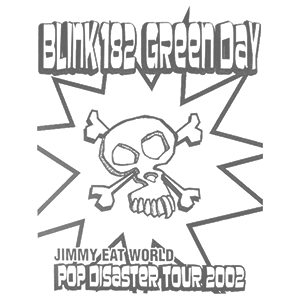
Pop punk is a sub genre of alternative rock, which typically merges pop melodies with speedy punk tempos, chord changes, and loud guitars. Contemporary pop punk bands have a radio friendly sheen to their music, but still maintain much of the speed and attitude of classic punk rock. It is not clear when the term ‘pop punk’ was first used, but pop-influenced punk rock had been around since the mid- to late-1970s.
An early use of the term appeared in a 1977 ‘New York Times’ article, ‘Cabaret: Tom Petty’s Pop Punk Rock Evokes Sounds of 60s.’ In the mid-1990s, the California pop punk bands Green Day and The Offspring, who were later followed by Blink-182, would all achieve worldwide commercial success. From the mid-1990s onwards, some bands associated with the genre have been described as happy punk, faux-punk, mall punk, pseudo-punk,or bubblegum punk.
read more »
Posted in Art, Money |
Leave a Comment »
July 11, 2012

Top 40 is a music industry shorthand for the currently most-popular songs in a particular genre. When used without qualification, it typically refers to the best-selling or most frequently broadcast popular music songs of the previous week. Top 40 became the dominant radio format of the 1960s, 1970s, and 1980s. Its popularity coincided with the rapid changes in recording technology in the 1950s and 1960s. In 1954, the recording industry agreed upon a standard recording format for higher fidelity music, so any new record player could play any new record.
Also in that year, new single records were released on 45 rpm records, and the Top 40 thereafter became a survey of the popularity of these records (and their airplay on the radio). Tape recording had become perfected, allowing artists more freedom as they composed songs, especially novelty songs. By the late 1980s and the early 1990s, the 45 rpm record would decrease in popularity and other means would be used to evaluate the popularity of new songs, such as cassette-single, CD single, and digital MP3/AAC sales (plus radio airplay).
Posted in Art, Money, Technology |
Leave a Comment »
July 3, 2012

New Weird America describes a subgenre of psychedelic and indie music, often psych folk, of the late 20th and early 21st centuries. The term is generally believed to have been coined by David Keenan in a 2003 issue of ‘The Wire,’ following the Brattleboro Free Folk Festival organized by Matt Valentine and Ron J. Schneiderman. It is a play on Greil Marcus’s phrase ‘Old Weird America’ as described in his book ‘Invisible Republic,’ which deals with the lineage connecting the pre-World War II folk performers on Harry Smith’s Anthology of American Folk Music to Bob Dylan and his milieu.
The musical style described as New Weird America is derived mainly from psychedelic rock and folk groups of the 1960s and 1970s, including American performers Holy Modal Rounders and English and Scottish groups, such as Pentangle, The Incredible String Band, Donovan, and Comus. It also finds inspiration in such disparate sources as heavy metal, free jazz, electronic music, noise music, ethnic musics, musique concrète, tropicália, and early- and mid-20th century American folk music. Another primary inspiration is outsider music, often played by technically naïve and/or socially estranged musicians, such as The Shaggs, Roky Erickson, and Jandek. Other genre classifications with similar aesthetics are psychedelic rock, psych folk, freakbeat, and freak folk.
Posted in Art |
Leave a Comment »


 The Daily Omnivore