April 17, 2012
Neo-psychedelia is music that emulates or is heavily influenced by the psychedelic music of the 1960s. It began to be revived among British post-punk bands of the later 1970s and early 1980s and was taken up by groups including bands of the Paisley Underground and Madchester scenes, as well as occasional interest from mainstream artists and bands into the new millennium.
Neo-psychedelic acts borrowed a variety of elements from 1960s psychedelic music. Some emulated the psychedelic pop of bands like The Beatles and early Pink Floyd, others adopted the jangly guitars of folk rock bands like the Byrds-influenced guitar rock, or distorted free-form jams and sonic experimentalism of late 1960s acid rock. Some neo-psychedelia has been explicitly focused on drug use and experiences, while other bands have used it to accompany surreal or political lyrics.
read more »
Posted in Art, Drugs, World |
Leave a Comment »
April 4, 2012

Girls with guns is a sub-genre of action films and animation, often Asian films and anime, that portray a strong female protagonist who makes use of firearms to defend against or attack a group of antagonists. The genre may typically involves gunplay, stunts and martial arts action. The genre started in the late 1950s and early 1960s in Asia. Suzuki Seijun’s 1958 film ‘Underworld Beauty’ is an early example from Japan.
In the 1966, Hong Kong actress Cheng Pei-pei starred in the Shaw Brothers Studio film ‘Come Drink with Me,’ an early Chinese film of the genre. Rival Hong Kong studio, Golden Harvest Studios, had their own female fighter, Angela Mao Ying, who also helped popularize the trend in Asia.
read more »
Posted in Art, Death, Sex |
1 Comment »
March 28, 2012
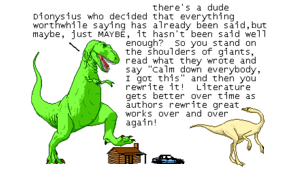
Dionysian imitatio is the influential literary method of imitation as formulated by Greek author Dionysius of Halicarnassus in the first century BCE, which conceived it as the rhetoric practice of emulating, adapting, reworking and enriching a source text by an earlier author. It marked the beginning of the doctrine of imitation, which dominated the Western history of art up until 18th century, when the notion of romantic originality was introduced.
The imitation literary approach is closely linked with the widespread observation that ‘everything has been said already,’ which was also stated by Egyptian scribes around 2000 BCE. The ideal aim of this approach to literature was not originality, but to surpass the predecessor by improving their writings and set the bar to a higher level.
read more »
Posted in Art, Language, Philosophy |
Leave a Comment »
March 28, 2012
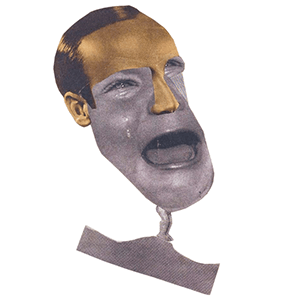
Photomontage is the process and result of making a composite photograph by cutting and joining a number of other photographs. The composite picture was sometimes photographed so that the final image is converted back into a seamless photographic print. A similar method, although one that does not use film, is realized today through image-editing software.
This latter technique is referred to by professionals as ‘compositing,’ and in casual usage is often called ‘photoshopping.’ Author Oliver Grau in his book ‘Virtual Art: From Illusion to Immersion’ notes that the creation of artificial immersive virtual reality, arising as a result of technical exploitation of new inventions, is a long-standing human practice throughout the ages. Such environments as dioramas were made of composited images.
read more »
Posted in Art, Technology |
Leave a Comment »
March 22, 2012
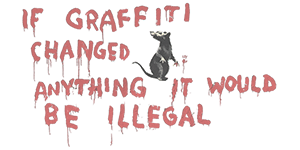
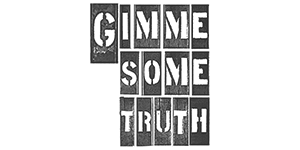
Street art is art, specifically visual art, developed in public spaces — that is, ‘in the streets’ — though the term usually refers to unsanctioned art, as opposed to government sponsored initiatives. The term can include traditional graffiti artwork, sculpture, stencil graffiti, sticker art, wheatpasting and street poster art, video projection, art intervention, guerrilla art, and street installations.
Typically, the term street art or the more specific post-graffiti is used to distinguish contemporary public-space artwork from territorial graffiti, vandalism, and corporate art. Artists have challenged art by situating it in non-art contexts. ‘Street’ artists do not aspire to change the definition of an artwork, but rather to question the existing environment with its own language. They attempt to have their work communicate with everyday people about socially relevant themes in ways that are informed by aesthetic values without being imprisoned by them. NYC based artist John Fekner defines street art as ‘all art on the street that’s not graffiti.’
read more »
Posted in Art, Politics, World |
Leave a Comment »
February 25, 2012
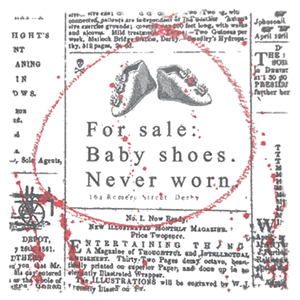
Flash fiction is a style of fictional literature or fiction of extreme brevity.
There is no widely accepted definition of the length of the category. Some self-described markets for flash fiction impose caps as low as three hundred words, while others consider stories as long as a thousand words to be flash fiction. In one particular format, established by Steve Moss, Editor of the New Times, the requirement is 55 words; no more and no fewer. Another, unspecified but frequently held, requirement is that the title may be no more than seven words.
read more »
Posted in Art, Language |
Leave a Comment »
February 24, 2012
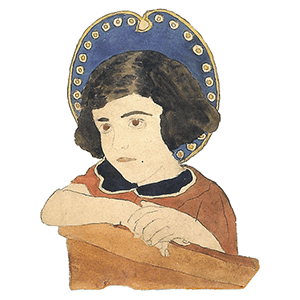
The term outsider art was coined by art critic Roger Cardinal in 1972 as an English synonym for ‘art brut’ (French: ‘raw art’), a label created by French artist Jean Dubuffet to describe art created outside the boundaries of official culture; Dubuffet focused particularly on art by insane-asylum inmates.
While Dubuffet’s term is quite specific, the English term ‘outsider art’ is often applied more broadly, to include certain self-taught or Naïve art makers who were never institutionalized. Typically, those labeled as outsider artists have little or no contact with the mainstream art world or art institutions. In many cases, their work is discovered only after their deaths. Often, outsider art illustrates extreme mental states, unconventional ideas, or elaborate fantasy worlds.
read more »
Posted in Art, Health |
Leave a Comment »
February 24, 2012
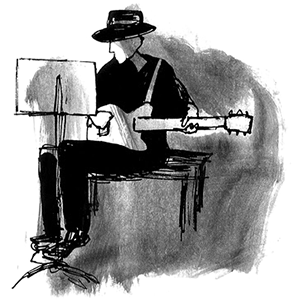
Outsider music, a term coined by music historian Irwin Chusid in the mid-1990s, are songs and compositions by musicians who are not part of the commercial music industry who write songs that ignore standard musical or lyrical conventions, either because they have no formal training or because they disagree with formal rules. This type of music, which often lacks typical structure and is emotionally stark, has few outlets; performers or recordings are often promoted by word of mouth or through fan chat sites, usually among communities of music collectors and music connoisseurs.
Outsider musicians usually have much ‘greater individual control over the final creative’ product either because of a low budget or because of their ‘inability or unwillingness to cooperate’ with modifications by a record label or producer. While a small number of outsider musicians became notable, such as Florence Foster Jenkins, an American soprano, the majority of outsider artists do not attain mainstream popularity.
read more »
Posted in Art, Language, Money |
1 Comment »
February 22, 2012
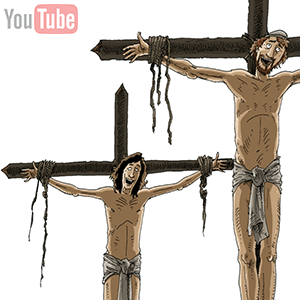
Gallows humor is a type of humor that still manages to be funny in the face of, and in response to, a hopeless situation. It arises from stressful, traumatic, or life-threatening situations, often in circumstances such that death is perceived as impending and unavoidable. The genre developed in Central Europe, and then moved to the US as part of Jewish humor. Gallows humor is offered by the person affected by the dramatic situation, an aspect that is missing in the derivative called black comedy. It is rendered with the German expression ‘Galgenhumor,’ and is comparable to the French ‘rire jaune’ (‘sickly smile’), and the Belgian Dutch ‘groen lachen’ (‘laugh desperately’). Italian comedian Daniele Luttazzi discussed gallows humor focusing on the particular type of laughter that it arouses, and said that grotesque satire, as opposed to ironic satire, is the one that most often arouses this kind of laughter.
In the Weimar era Kabaretts, this genre was particularly common; Karl Valentin and Karl Kraus were the major masters of it. Sigmund Freud in his 1927 essay ‘Humour (Der Humor)’ puts forth the following theory of the gallows humor: ‘The ego refuses to be distressed by the provocations of reality, to let itself be compelled to suffer. It insists that it cannot be affected by the traumas of the external world; it shows, in fact, that such traumas are no more than occasions for it to gain pleasure.’ Gallows humor has the social effect of strengthening the morale of the oppressed and undermines the morale of the oppressors. ‘To be able to laugh at evil and error means we have surmounted them.’
Posted in Death, Humor, Language |
Leave a Comment »
February 22, 2012

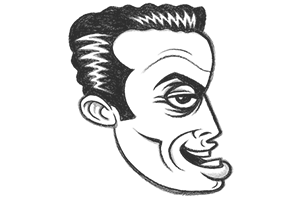
Blue comedy is comedy that is off-color, risqué, indecent or profane, largely about sex. It often contains profanity and/or sexual imagery that may shock and offend some audience members. ‘Working blue’ refers to the act of performing this type of material. A ‘blue comedian’ or ‘blue comic’ is a comedian who usually performs blue, or is known mainly for his or her blue material. Blue comedians often find it difficult to succeed in mainstream media.
Many comedians who are normally family-friendly might choose to work blue when off-camera or in an adult-oriented environment; Bob Saget exemplifies this dichotomy. A recording survives of one Masquers roast from the 1950s with Jack Benny, George Jessel, George Burns, and Art Linkletter all using highly risque material and, in some cases, obscenities. In the 1970s, CBS aired the ground-breaking sitcom ‘All in the Family,’ based on the British series ‘Till Death Us Do Part,’ which featured a ‘lovable’ bigot, Archie Bunker. The character’s dialogue usually contained racial prejudices and ethnic slurs, as well as derogatory comments against Jews, gays and women’s rights, but in a guise of blue humor against his own bigotry.
Posted in Humor, Politics, Sex |
1 Comment »
February 22, 2012
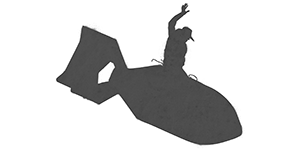

A black comedy is a comic work that employs black humor or gallows humor. The definition of black humor is problematic; it has been argued that it corresponds to the earlier concept of gallows humor (humor that still manages to be funny in the face of, and in response to, a hopeless situation); and that, as humor has been defined since Freud as a comedic act that anesthetizes an emotion, all humor is ‘black humor.’ The term ‘black humor’ (from the French ‘humour noir’) was coined by the Surrealist theoretician André Breton in 1935, to designate a sub-genre of comedy and satire in which laughter arises from cynicism and skepticism, often relying on topics such as death.
In black humor, topics and events that are usually regarded as taboo, specifically those related to death, are treated in an unusually humorous or satirical manner while retaining their seriousness; the intent of black comedy, therefore, is often for the audience to experience both laughter and discomfort, sometimes simultaneously.
read more »
Posted in Humor, Language, War |
Leave a Comment »
February 21, 2012

Hard-edge painting is painting in which abrupt transitions are found between color areas. The style is related to Geometric abstraction, Op Art, Post-painterly Abstraction, and Color Field painting. The term was coined by writer, curator and ‘LA Times’ art critic Jules Langsner, along with art historian Peter Selz, in 1959, to describe the work of painters from California, who, in their reaction to the more painterly or gestural forms of Abstract expressionism, adopted a knowingly impersonal paint application and delineated areas of color with particular sharpness and clarity.
This approach to abstract painting became widespread in the 1960s, though California was its creative center. Curated by Langsner, ‘Four Abstract Classicists’ opened at the Los Angeles County Museum of Art in 1959 featuring Karl Benjamin, Lorser Feitelson, Frederick Hammersley, and John McLaughlin. Other, earlier, movements, or styles have also contained the quality of hard-edgedness, for instance the Precisionists also displayed this quality to a great degree in their work.
Posted in Art |
Leave a Comment »


 The Daily Omnivore