February 21, 2012


Electronica includes a wide range of contemporary electronic music designed for a wide range of uses, including listening, dancing, and background music for other activities. Unlike electronic dance music, which is sub-genre in the category, all examples of electronica are not necessarily made for dancing. Genres such as techno, drum and bass, downtempo, and ambient are among those encompassed by the umbrella term, entering the American mainstream from ‘alternative’ or ‘underground’ venues during the late 1990s.
With newly prominent music styles such as reggaeton, and subgenres such as electroclash, indie pop, and favela funk, electronic music styles in the current decade are seen to permeate nearly all genres of the mainstream and indie landscape such that a distinct ‘electronica’ genre of pop music is rarely noted.
read more »
Posted in Art, Language, Technology |
1 Comment »
February 13, 2012
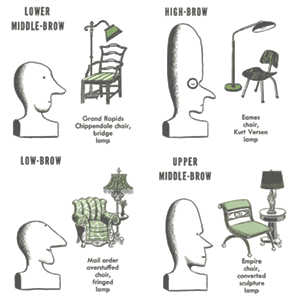
The term middlebrow describes both a certain type of easily accessible art, often literature, as well as the population that uses art to acquire culture and class that is usually unattainable. First used by the British satire magazine ‘Punch’ in 1925, middlebrow is derived as the intermediary between highbrow and lowbrow, terms derived from phrenology.
Middlebrow has famously gained notoriety from derisive attacks by Dwight Macdonald, Virginia Woolf, and to a certain extent, Russell Lynes. It has been classified as a forced and ineffective attempt at cultural and intellectual achievement, as well as characterizing literature that emphasizes emotional and sentimental connections rather than literary quality and innovation.
read more »
Posted in Art, Language |
Leave a Comment »
February 9, 2012

Divisionism [dih-vizh-uh-niz-uhm] (also called Chromoluminarism) was the characteristic style in Neo-Impressionist painting defined by the separation of colors into individual dots or patches which interacted optically. By requiring the viewer to combine the colors optically instead of physically mixing pigments, divisionists believed they were achieving the maximum luminosity scientifically possible.
Georges Seurat founded the style around 1884 as chromoluminarism, drawing from his understanding of the scientific theories of Michel Eugène Chevreul, Ogden Rood and Charles Blanc, among others. Divisionism developed along with another style, pointillism, which is defined specifically by the use of dots of paint and does not necessarily focus on the separation of colors.
Posted in Art |
1 Comment »
February 6, 2012
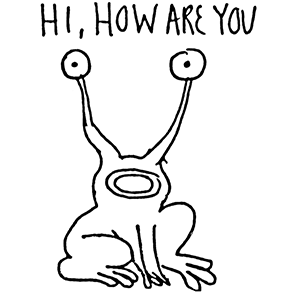
New sincerity is a term that has been used in music, aesthetics, film criticism, poetry, literary criticism and philosophy, generally to describe art or concepts that run against prevailing modes of postmodernist irony or cynicism. ‘New Sincerity’ was used as a collective name for a loose group of alternative rock bands, centered in Austin, Texas in the years from about 1985 to 1990, who were perceived as reacting to the ironic outlook of then-prominent music movements like punk rock and New Wave.
The use of ‘New Sincerity’ in connection with these bands began with an off-handed comment by Austin punk rocker/author Jesse Sublett to his friend, local music writer Margaret Moser: ‘All those new sincerity bands, they’re crap.’
read more »
Posted in Art, Humor, Language |
Leave a Comment »
February 6, 2012

A cult film, also commonly referred to as a cult classic, is a film that has acquired a highly devoted but specific group of fans. Often, cult movies have failed to achieve fame outside the small fanbases; however, there have been exceptions that have managed to gain fame among mainstream audiences. Many cult movies have gone on to transcend their original cult status and have become recognized as classics; others are of the ‘so bad it’s good’ variety and are destined to remain in obscurity.
Cult films often become the source of a thriving, obsessive, and elaborate subculture of fandom, hence the analogy to cults. However, not every film with a devoted fanbase is necessarily a cult film. Usually, cult films have limited but very special, noted appeal. Cult films are often known to be eccentric, often do not follow traditional standards of popular cinema and usually explore topics not considered in any way mainstream—yet there are examples that are relatively normal. Many are often considered controversial because they step outside standard narrative and technical conventions.
read more »
Posted in Art, Language, Money |
1 Comment »
February 6, 2012
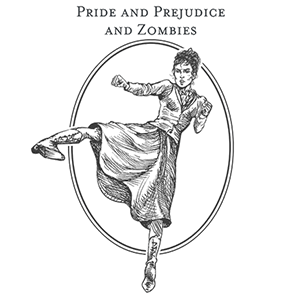
A mashup novel is a work of fiction which combines a pre-existing text, often a classic work of fiction, with a certain popular genre such as vampire or zombie narratives. ‘Pride and Prejudice and Zombies,’ which combines Jane Austen’s classic novel ‘Pride and Prejudice’ with elements of modern zombie fiction, is arguably the first, and certainly one of the most famous and successful works in the genre, and has been credited with spawning a rash of imitations. The term ‘Mashup’ was borrowed from the world of computers and music. Mashup books are seen as distinct from parody novels like ‘Bored of the Rings,’ and parallel novels like ‘The Wind Done Gone’ or ‘Wicked’ since they do not merely make fun of the original text, or tell an alternative version of it, but also introduce the themes and characteristics of a wholly different genre.
While most works in this genre (or cross-genre trend) rely on fictional texts as their basis, other works like ‘Abraham Lincoln, Vampire Hunter’ superimpose the popular genres over historical figures and events. A more recent phenomenon within the genre is the combination of more than two original works, or genres, as in the case of ‘Robinson Crusoe (The Eerie Adventures of the Lycanthrope),’ which combines the original novel with elements borrowed from the works of H.P. Lovecraft as well as the popular genre of werewolf fiction, and is accordingly attributed to three authors – Daniel Defoe, H.P. Lovecraft, and Peter Clines.
Posted in Art, Humor, Language |
Leave a Comment »
January 26, 2012


Livetronica, a portmanteau of the words ‘live’ and ‘electronica,’ is a sub-genre of the jam band movement that blends such musical styles as rock, jazz, funk, and electronica. It consists primarily of instrumental music. The terms ‘Jamtronica’ and ‘Trance fusion’ are also used to refer to this style of music.
Artists like the Disco Biscuits, Lake Trout, and The New Deal are credited as founding fathers of the genre, but recently up-and-coming bands such as The Werks, Pnuma Trio, and the Histronic of Minneapolis have started to inject new life and young blood into the scene.
Posted in Art, Technology |
Leave a Comment »
January 26, 2012
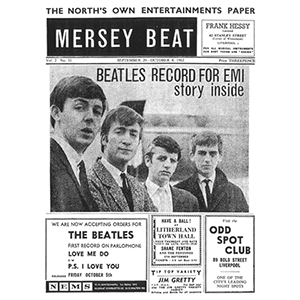
Beat music, British beat, or Merseybeat (for bands from Liverpool beside the River Mersey) is a pop and rock music genre that developed in the United Kingdom in the early 1960s. Beat music is a fusion of rock and roll, doo wop, skiffle, R&B and soul. The beat movement provided most of the bands responsible for the British invasion of the American pop charts in the period after 1964, and provided the model for many important developments in pop and rock music, including the format of the rock group around lead, rhythm and bass guitars with drums.
The exact origins of the terms Beat music and Merseybeat are uncertain. Beat music seems to have had little to do with the Beat Generation literary movement of the 1950s, and more to do with driving rhythms, which the bands had adopted from their rock and roll, rhythm and blues and soul music influences. As the initial wave of rock and roll declined in the later 1950s ‘big beat’ music, later shortened to ‘beat,’ became a live dance alternative to the balladeers like Tommy Steele who was dominating the charts.
read more »
Posted in Art, Money, World |
Leave a Comment »
December 20, 2011
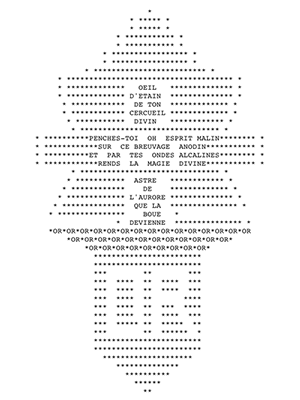
Internet art (often referred to as net art) is a form of digital artwork distributed via the Internet. Artists working in this manner are sometimes referred to as net artists. Internet art can happen outside the technical structure of the Internet, such as when artists use specific social or cultural Internet traditions in a project outside of it. Internet art is often—but not always—interactive, participatory, and multimedia-based. Internet art can be used to spread a message, either political or social, using human interactions.
The term Internet art typically does not refer to art that has been simply digitized and uploaded to be viewable over the Internet. Rather, this genre relies intrinsically on the Internet to exist, taking advantage of such aspects as an interactive interface and connectivity to multiple social and economic cultures and micro-cultures. Theoriest and curator Jon Ippolito defines it as distinct from commercial web design, and touching on issues of permanence, archivability, and collecting in a fluid medium.
read more »
Posted in Art, Technology |
Leave a Comment »
December 20, 2011
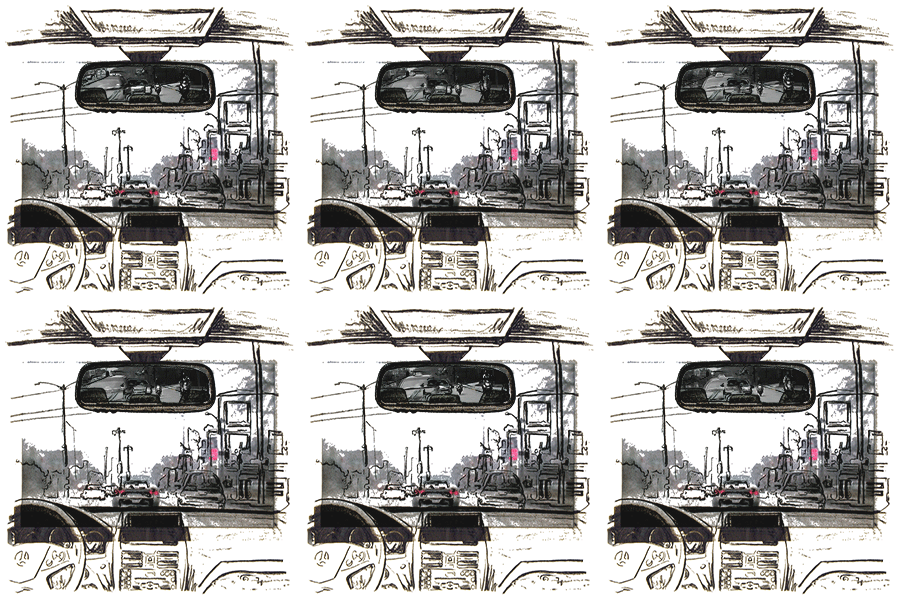
Tradigital art most commonly refers to art (including animation) that combines both traditional and computer-based techniques to implicate an image.
Artist and teacher Judith Moncrieff first coined the term in the early 1990s, while an instructor at the Pacific Northwest College of Art. The school held a competition of Moncrieff’s students, who used the medium to electronically combine everything from photographs of costumes to stills from videotapes of performing dancers.
read more »
Posted in Art, Language, Technology |
Leave a Comment »
December 20, 2011
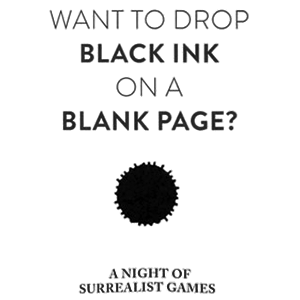
Bulletism is an artistic process that involves shooting ink at a blank piece of paper. The result is a type of ink blot. The artist can then develop images based on what is seen.
Salvador Dalí claimed to have invented this technique. Leonardo da Vinci, however, suggested that ‘just as one can hear any desired syllable in the sound of a bell, so one can see any desired figure in the shape formed by throwing a sponge with ink against the wall.’
Posted in Art, Language |
1 Comment »
December 20, 2011

Space opera is a subgenre of science fiction that emphasizes romantic, often melodramatic adventure, set mainly or entirely in outer space, generally involving conflict between opponents possessing advanced technologies and abilities. The term has no relation to music and it is analogous to ‘soap opera.’ Perhaps the most significant trait of space opera is that settings, characters, battles, powers, and themes tend to be very large-scale.
Sometimes the term is used pejoratively to denote bad quality science fiction, but its meaning can differ, often describing a particular science fiction genre without any value judgement. The genre’s varying definitions were affected by literary politics, ‘what used to be science fantasy is now space opera, and what used to be space opera is entirely forgotten.’
read more »
Posted in Art, Language, Technology |
Leave a Comment »


 The Daily Omnivore