January 30, 2025
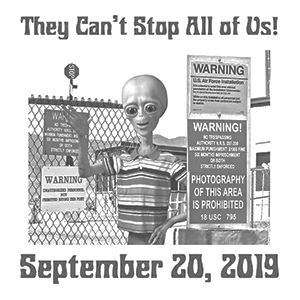
“Storm Area 51, They Can’t Stop All of Us” event began as a satirical Facebook post by Matty Roberts in June 2019, which jokingly proposed raiding the classified military base in search of aliens and garnered over 2 million RSVPs. Roberts later stated his intentions for the event had been purely comedic, and disavowed responsibility for any casualties had there been any actual attempt to raid the military base.
On the day of the event, only about 150 people were reported to have shown up at the two entrances to Area 51, with none succeeding in entering the site. Two music festivals were planned to coincide with the event: Alienstock in Rachel, Nevada, and Storm Area 51 Basecamp in Hiko, Nevada. An estimated 1,500 people attended these festivals, according to state and local law enforcement. Air Force spokeswoman Grace Manock stated government officials were briefed on the event and discouraged people from attempting to enter military property. Nevada law enforcement also warned potential participants against trespassing.
read more »
Posted in Humor, War |
Leave a Comment »
October 22, 2024

The crayon-eating Marine is a humorous trope (or meme) associated with the United States Marine Corps, emerging online in the early 2010s. Playing off of a stereotype of Marines as unintelligent, the trope supposes that they frequently eat crayons and drink glue.
In an instance of self-deprecating humor, the crayon-eater trope was popularized by Marines through social media and in Maximilian Uriarte’s comic strip ‘Terminal Lance.’ The joke’s ubiquity has led to real-life humorous consumption of crayons and has been referenced by the Marine Corps itself in celebration of National Crayon Day. Multiple products have capitalized on the trend, including two lines of edible crayons created by former Marines and a coloring book by Uriarte.
read more »
Posted in Humor, War |
Leave a Comment »
October 19, 2022

Let’s Go Brandon is a political slogan and Internet meme, used as a substitute for the phrase ‘Fuck Joe Biden’ in reference to Joe Biden, the 46th president of the United States.
Chants of ‘Fuck Joe Biden’ began during sporting events in early September 2021. On October 2, 2021, during a televised interview of the Sparks 300 race winner Brandon Brown at Talladega Superspeedway, NBC Sports reporter Kelli Stavast incorrectly described the chant in the background as ‘Let’s Go Brandon,’ which sparked the meme. The slogan has become well known through use by Republican politicians and critics of Biden. The phrase quickly spread to popular culture.
read more »
Posted in Humor, Politics |
Leave a Comment »
June 15, 2022
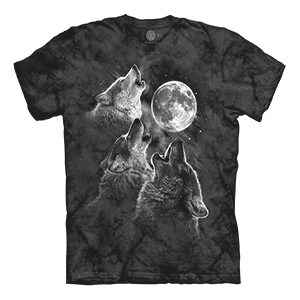
Three Wolf Moon is a T-shirt designed by artist Antonia Neshev featuring three wolves howling at the Moon. It gained popularity after attracting sarcastic reviews on Amazon.com attributing great power to it, such as making the wearer irresistible to women, striking fear into other males, and having magical healing abilities.
German scholar Melvin Haack considers it to be a notable example of a redneck joke. The reviews have been included in studies of such online sarcasm. The shirt has also been been described as parodic of the alpha male archetype.
Posted in Humor, Money |
Leave a Comment »
August 15, 2020
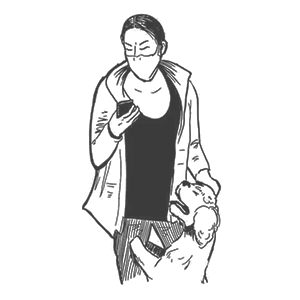
Karen is a pejorative term used in the United States and other English-speaking countries for a person perceived as entitled or demanding beyond the scope of what is appropriate or necessary. A common stereotype is that of a white woman who uses her privilege to demand her own way at the expense of others.
Depictions also include demanding to ‘speak to the manager,’ anti-vaccination beliefs, being racist, or sporting a particular bob cut hairstyle. As of 2020, the term was increasingly being used as a general-purpose term of disapproval for middle-aged white women.
read more »
Posted in Language, Politics |
1 Comment »
February 27, 2020
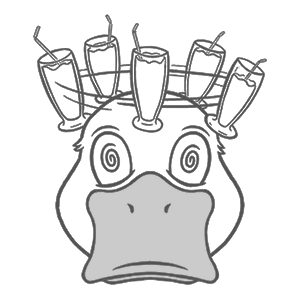
Milkshake Duck is an Internet meme that describes phenomena that are initially perceived as positive but later revealed to be flawed. Oxford Dictionaries defined the term as ‘a person or character on social media that appears to be endearing at first, but is found to have an unappealing back story,’ but did not consider usage of the neologism to be sufficiently long-lived or widespread to warrant inclusion in their dictionaries.
The term has been connected to ‘cancel culture,’ a growing trend of call-out culture on social media resulting in celebrities being ostracized and careers abruptly derailed by publicized misconduct.
read more »
Posted in Humor, Politics, Technology |
1 Comment »
December 16, 2019
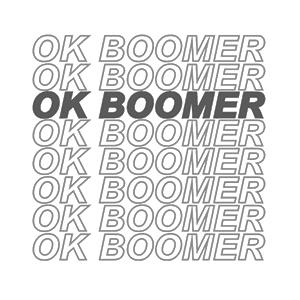
OK Boomer is a catchphrase and internet meme that gained popularity among younger cohorts throughout 2019, used to dismiss or mock attitudes stereotypically attributed to the baby boomer generation. The phrase first drew widespread attention in a 2019 TikTok video in response to an older man, though the phrase was coined years before that. It is considered by some to be ageist.
The phrase is a pejorative retort used to dismiss or mock perceived narrow-minded, outdated, negatively-judgemental, or condescending attitudes of older people, particularly baby boomers. The term has been used as a retort for perceived resistance to technological change, climate change denial, marginalization of minorities or opposition to younger generations’ ideals.
read more »
Posted in Humor, Politics |
Leave a Comment »
October 3, 2018

Florida Man is an Internet meme that typically consists of links to news stories and articles about unusual or strange crimes or events occurring in Florida, particularly those where the headline refers to the subject as ‘Florida Man,’ calling attention to Florida’s apparent notoriety for strange and unusual activity. It also implies that the consumer is to consider this ‘Florida Man’ to be an individual wreaking havoc rather than multiple people being referred to by the same title.
‘Miami New Times’ noted that freedom of information laws in Florida make it easier for journalists to obtain information about arrests from the police than in other states and that this is responsible for the large number of news articles.
read more »
Posted in Humor |
Leave a Comment »
September 9, 2018
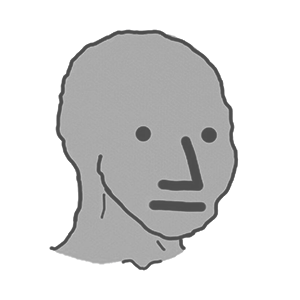
Wojak (Polish: ‘warrior, soldier’), also known as ‘feels guy,’ is a popular internet meme. Depicting a nondescript white man, it is used to generically express emotions such as melancholy, regret, or loneliness. It is often paired with Pepe the Frog.
A variation of Wojak with a gray face, pointy nose and blank expression became a popular visual representation of the ‘NPC meme,’ which gained online notoriety in late 2018. The meme began as a mockery of individuals who appear to lack an internal monologue, comparing them to non-playable characters in video games. The meme gained media attention due to its later usage parodying the alleged herd mentality of liberal activists. This controversial usage of the meme has been attributed to Donald Trump supporters.
read more »
Posted in Humor, Politics, Technology |
Leave a Comment »
February 21, 2017
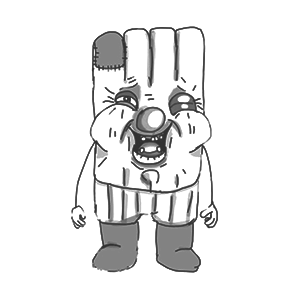
Vatnik (Russian: ‘cotton-padded jacket’), a derivative of and often shortened to ‘vata’ (Russian: ‘batting’), is a derogatory social slang neologisms in Russian and Ukrainian languages, and an internet meme used in reference to individuals with pro-Russian jingoist and chauvinist views. In the original meaning, ‘vatnik’ (also ‘telogreika’) is a cheap cotton-padded jacket.
The meme was created by Anton Chadskiy under the pseudonym ‘Jedem das Seine.’ His associated picture of an anthropomorphic square-shaped quilted jacket similar to the cartoon character ‘Spongebob Squarepants’ was first posted on Russian social network ‘VK’ September 9, 2011. The meme went viral in 2012, but became much more widespread in society after the Russian military intervention in Ukraine started in 2014. Chadskiy, claiming he feared political persecution, left Russia in late 2014.
read more »
Posted in Language, Politics, World |
Leave a Comment »
February 18, 2013

‘Harlem Shake‘ is a song recorded by American DJ and producer Baauer. It was released as a free digital download by Mad Decent imprint label Jeffree’s in 2012. The song incorporates samples of growling-lion sounds and Plastic Little’s 2001 song ‘Miller Time,’ specifically its line ‘then do the Harlem shake.’
In 2013, a user-submitted video set to ‘Harlem Shake’ became a viral hit on YouTube. The song features an undulating synth, harsh snares, and a mechanical bassline. It is categorized by Resident Advisor’s Andrew Ryce as a hip hop and bass song, while David Wagner of ‘The Atlantic’ describes its music as trap, a sub-genre with stylistic origins in EDM and Southern hip hop.
read more »
Posted in Art, Games, Humor |
Leave a Comment »
March 27, 2012

The Baidu 10 Mythical Creatures was initially a humorous hoax from the interactive encyclopedia ‘Baidu Baike’ which became a popular and widespread Internet meme in China in early 2009. These hoaxes, ten in number, originated in response to increasingly pervasive and draconian online censorship in China, and have become an icon of citizens’ resistance to censorship. The meme initially began as a series of vandalized contributions to ‘Baidu Baike,’ through the creation of humorous articles describing a series of fictional creatures, each with names vaguely referring to Chinese profanities (utilizing homophones and characters using different tones). Eventually, images, videos (such as faux-documentaries) and even a song regarding aspects of the meme were released.
It was thought that the Baidu hoaxes were written in response to recent strict enforcements of keyword filters in China, introduced in 2009, which attempted to eliminate all forms of profanity. The ‘Baidu Baike’ ‘articles’ initially began with ‘Four Mythical Creatures’ (‘Grass Mud Horse,’ ‘French-Croatian Squid,’ ‘Small Elegant Butterfly,’ and ‘Chrysanthemum Silkworms’), and were later extended to ten. The memes became widely discussed on Chinese Internet forums, and most netizens concluded that the initial aim of the hoaxes were to satirize and ridicule the pointlessness of the new keyword filters. The meme is interpreted by most Chinese online as a form of direct protest rather than motiveless intentional disruption to ‘Baidu’ services. After the hoaxes were posted, news of the articles spread quickly online on joke websites, popular web portals and forums.
Posted in Humor, Politics |
Leave a Comment »


 The Daily Omnivore