May 16, 2012
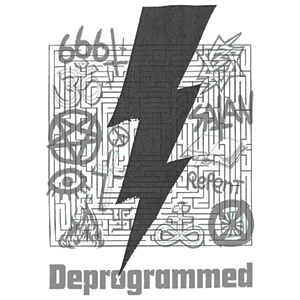
The anti-cult movement (ACM) refers to groups and individuals who oppose cults and new religious movements (NRM). Sociologists David G. Bromley and Anson Shupe initially defined the ACM in 1981 as a collection of groups embracing brainwashing-theory, but later observed a significant shift in ideology towards a ‘medicalization’ of the memberships of new religious movements.
This countermovement has reportedly recruited from family members of ‘cultists’; former cult members, (or apostates); church groups; and associations of health professionals. A significant minority opinion suggests that analysis should treat the secular anti-cult movement separately from the religiously motivated (mainly Christian) groups. The anti-cult movement might be divided into four classes: secular counter-cult groups; Christian evangelical counter-cult groups; groups formed to counter a specific cult; and organizations that offer some form of exit counseling.
read more »
Posted in Philosophy, Politics |
Leave a Comment »
December 30, 2011
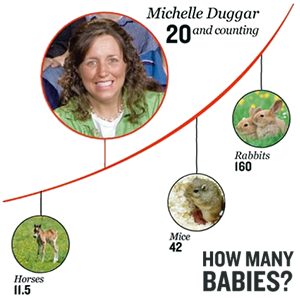
Quiverfull is a movement among some conservative evangelical Christian couples chiefly in the United States, but with some adherents in Canada, Australia, New Zealand, Britain and elsewhere. It promotes procreation, and sees children as a blessing from God, eschewing all forms of birth control, including natural family planning and sterilization. The movement derives its name from Psalm 127:3-5, where many children are metaphorically referred to as the arrows in a full quiver.
Some refer to the Quiverfull position as Providentialism (the belief that God’s will is evident in all occurrences), while other sources have referred to it as a manifestation of natalism (the promotion of child-bearing). Some of the beliefs held among Quiverfull adherents have been held among various Christians during prior eras of history. As birth control methods advanced during the late 19th and early 20th centuries, many conservative Christian movements issued official statements against their use.
read more »
Posted in Philosophy, Sex |
Leave a Comment »
October 20, 2011

Occupy Wall Street (OWS) is an ongoing series of demonstrations in New York City based in Zuccotti Park in the Wall Street financial district. Initiated by the Canadian activist group Adbusters, the protests were inspired by the Arab Spring movement, especially Cairo’s Tahrir Square protests, and the Spanish Indignants. The participants’ slogan ‘We are the 99%’ refers to the difference in wealth between the top 1% and the other citizens of the United States.
They are mainly protesting social and economic inequality, corporate greed, and the power and influence of corporations, particularly from the financial service sector, and of lobbyists, over government. The protest began in September, and by October similar demonstrations were either ongoing or had been held in 70 major cities in the US. Internationally, other ‘Occupy’ protests have modeled themselves after Occupy Wall Street, in over 900 cities worldwide.
read more »
Posted in Money, Politics |
Leave a Comment »
June 28, 2011
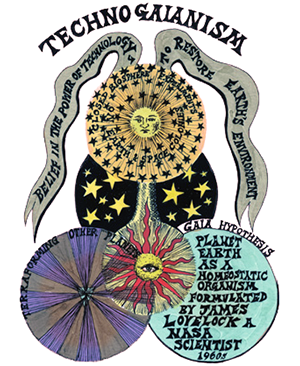

Bright green environmentalism is an ideology based on the belief that the convergence of technological change and social innovation provides the most successful path to sustainable development.
The term, first coined in 2003 by writer Alex Steffen, refers to the fast-growing new wing of environmentalism, distinct from traditional forms. Bright green environmentalism aims to provide prosperity in an ecologically sustainable way through the use of new technologies and improved design.
read more »
Posted in Science, Technology, World |
1 Comment »
June 15, 2011


The Brights Movement is a social movement that aims to promote public understanding and acknowledgment of the naturalistic worldview (disbelief of the supernatural), including equal civil rights and acceptance for people who hold a naturalistic worldview. It was co-founded by Paul Geisert and Mynga Futrell in 2003.
The movement aims to create an Internet constituency that will pursue the following aims: Promote public understanding and acknowledgment of the naturalistic worldview, which is free of supernatural and mystical elements. Gain public recognition that persons who hold such a worldview can bring principled actions to bear on matters of civic importance. Educate society toward accepting the full and equitable civic participation of all such people.
read more »
Posted in Philosophy, Politics, Science |
Leave a Comment »
June 6, 2011

Topfreedom is a cultural and political movement seeking to advance gender equality by the recognition of the right of women and girls to be topless in public on the same basis that men and boys are permitted to be barechested. In addition, topfreedom advocates seek recognition of the right of nursing mothers to openly breastfeed in public, and of women to sun bathe topless.
The Topfree Equal Rights Association (TERA) also assists women in Canada who have been charged for being topless, while GoTopless organizes demonstrations in the United States to protest against the legal and public attitude to the inequality. In Sweden, Bara Bröst is active in advancing topfreedom, as is Topless Front in Denmark.
read more »
Posted in Politics, Sex, World |
Leave a Comment »
January 29, 2011

Islamism is a set of ideologies holding that Islam is not only a religion but also a political system; that modern Muslims must return to the roots of their religion, and unite politically. It is a controversial term and definitions sometimes vary. Leading Islamist thinkers emphasized the enforcement of sharia (Islamic law) on Muslims; of pan-Islamic political unity; and of the elimination of non-Muslim, particularly western military, economic, political, social, or cultural influences in the Muslim world, which they believe to be incompatible with Islam.
Some observers suggest Islamism’s tenets are less strict and can be defined as a form of identity politics or support for Muslim authenticity, broader regionalism, and revivalism. Still others define it as an Islamic militant, anti-democratic movement, bearing a holistic vision of Islam whose final aim is the restoration of the ‘caliphate.’ Many described as ‘Islamists’ disfavor the term, and claim their political beliefs and goals are simply an expression of Islamic religious belief. Similarly, some scholars favor the term activist ‘Political Islam’ instead.
Posted in Language, Philosophy, Politics |
Leave a Comment »
November 18, 2010

The Goddess movement is a loose grouping of social and religious phenomena growing out of second-wave feminism, predominantly in North America, Western Europe, Australia and New Zealand in the 1970s, which spread to the metaphysical community as well.
Spurred by the perception that women were not treated equitably by mainstream religions, many women turned to a female deity, as more in tune with their beliefs and spiritual needs. Masculine gender and male imagery were, at the time, attached to deity to the exclusion of female gender and female imagery. A unifying theme of this diverse movement is the female-ness of the deity (as opposed and contrasted to a patriarchal, male God).
Posted in Philosophy, Politics, Sex |
Leave a Comment »
October 18, 2010


Freeganism is the practice of reclaiming and eating food that has been discarded. Freegans and Freeganism are often seen as part of a wider ‘anti-consumerist’ ideology, and freegans often employ a range of alternative living strategies based on limited participation in the conventional economy and minimal consumption of resources. Freegans ’embrace community, generosity, social concern, freedom, cooperation, and sharing in opposition to a society based on materialism, moral apathy, competition, conformity, and greed.’
The word ‘freegan’ is a portmanteau of ‘free’ and ‘vegan’; not all dumpster divers are vegan, but the ideology of veganism is inherent in freeganism. Freeganism started in the mid 1990s, out of the antiglobalization and environmentalist movements. The movement also has elements of Diggers, an anarchist street theater group based in Haight-Ashbury in San Francisco in the 1960s, that gave away rescued food.
read more »
Posted in Food, Money, Philosophy |
Leave a Comment »
July 17, 2010


The fat acceptance movement (also known as the size acceptance movement, fat liberation movement, and fat power) is a grassroots effort to change societal attitudes towards obese people. The movement argues that overweight people are targets of hatred, discrimination, and undue social pressure. Critics worry that fat acceptance encourages obesitiy, which is linked to heart disease, diabetes, high blood pressure, and joint problems.
Posted in Health, Politics |
Leave a Comment »


 The Daily Omnivore