December 1, 2011

Leet (or ‘1337’), short for ‘elite,’ also known as leetspeak, is an alternative alphabet for the English language that is used primarily on the Internet. It uses various combinations of ASCII characters to replace Latinate letters. For example, leet spellings of the word leet include 1337 and l33t; eleet may be spelled 31337 or 3l33t.
The term is derived from the word ‘elite.’ Leet may also be considered a substitution cipher, although many dialects or linguistic varieties exist in different online communities. The term ‘leet’ is also used as an adjective to describe formidable prowess or accomplishment, especially in the fields of online gaming and in its original usage, computer hacking.
read more »
Posted in Language, Technology |
Leave a Comment »
December 1, 2011

Netnography is the branch of ethnography (the study and recording of human cultures) that analyzes the free behavior of individuals on the Internet that uses online marketing research techniques to provide useful insights.
The term was coined by market research expert Robert Kozinets. It provides information on the symbolism, meanings, and consumption patterns of online consumer groups.
read more »
Posted in Money, Technology, World |
Leave a Comment »
November 30, 2011
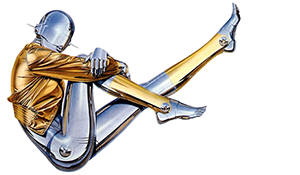

A gynoid refers to female robots. Android is a gender neutral term for humanoid robots, but which has male connotations. The term ‘gynoid’ was used by Gwyneth Jones in her 1985 novel ‘Divine Endurance’ to describe a robot slave in a futuristic China, that is judged by her beauty.
The tongue-in-cheek portmanteau ‘fembot’ (female robot) was used in the ‘Austin Powers films,’ a cultural play on the fembots originating in the TV series ‘The Bionic Woman.’ Robotess is the oldest gender-specific term, originating in 1921 from the same source as robot, a 1920 Czech play: ‘R.U.R. (Rossum’s Universal Robots).’
read more »
Posted in Politics, Sex, Technology |
Leave a Comment »
November 30, 2011

Roblog is a neologism for a blog written by a robot with no human intervention. Roblogs were made possible with a new generation of robots which are capable of uploading images and texts automatically to the Web. The first roblogs to appear, late 2005, were written by AIBO robots, the dog-like robotic pets once manufactured by Sony.
AIBO diaries are roblogs produced by AIBO model ERS-7, running a bundled software called Mind in either version 2 or 3. Depending on the language of the Mind software, the AIBO blogs in either English or Japanese. To be able to blog on its own, an ERS-7M2 or ERS-7M3 must be linked to the Internet through its Wi-Fi connection capability, and its e-mail sending capability must be correctly configured, for which an SMTP server not requiring authentication nor alternate ports is needed. Posts, consisting of pictures taken with the AIBO’s color camera built into its nose, are then sent by e-mail to the blog.
Posted in Humor, Technology |
Leave a Comment »
November 24, 2011

Shovelware is a derogatory computer jargon term that refers to software noted more for the quantity of what is included than for the quality or usefulness. The term is also used to refer to software that is ported from one computer platform or storage medium to another with little thought given to adapting it for use on the destination platform or medium, resulting in poor quality. The metaphor implies that the creators showed little care for the original software, as if the new compilation or version had been indiscriminately created / ported with a shovel, without any care shown for the condition of the software on the newly created product. The term ‘shovelware’ is coined with semantic analogy to phrases like shareware and freeware, which describe methods of software distribution.
Shovelware was often used to refer to conversions in the manner floppy disc collections were aggregated onto CD-ROMs. Today there is potential for similar shovelware in converting PC websites into mobile websites with little thought to optimizing for the new platform or the conversion of console games to PC games. The practice of shovelware has largely decreased due to the wide availability of high speed networking and software downloading and the limited capacity of removable media in modern computers compared to the growing massive file sizes of newer software packages. It continues in some cases with bundled or pre-installed software, where many extra programs of dubious quality and usefulness are included with a piece of hardware, often called derisively ‘crapware.’
Posted in Games, Money, Technology |
Leave a Comment »
November 19, 2011

Hacktivism (a portmanteau of hack and activism) is the use of computers and computer networks as a means of protest to promote political ends. The term was first coined in 1998 by a member of the Cult of the Dead Cow hacker collective. If hacking as ‘illegally breaking into computers’ is assumed, then hacktivism could be defined as ‘the nonviolent use of illegal or legally ambiguous digital tools in pursuit of political ends.’ These tools include web site defacements, redirects, denial-of-service (DoS) attacks, information theft, web site parodies, virtual sit-ins, typosquatting, and virtual sabotage.
If hacking as ‘clever computer usage/programming’ is assumed, then hacktivism could be understood as the writing of code to promote political ideology: promoting expressive politics, free speech, human rights, and information ethics through software development. Acts of hacktivism are carried out in the belief that proper use of code will be able to produce similar results to those produced by regular activism or civil disobedience.
read more »
Posted in Humor, Politics, Technology |
Leave a Comment »
November 17, 2011

Skweee is a musical style, with origin in Sweden and Finland. Skweee combines simple synth leads and basslines with funk, r’n’b or soul-like rhythms, overall rendering a stripped-down funky sound. The tracks are mostly entirely instrumental, though there are exceptions. The name Skweee was coined by Daniel Savio, one of the originators of the emerging sound. The name refers to the use of vintage synthesizers in the production process, where the aim is to ‘squeeze out’ the most interesting sounds possible.
The major outlets of skweee music are the Swedish record label Flogsta Danshall and Finnish record label Harmönia. The preferred media format of skweee enthusiasts is the 7″ vinyl record. Early releases were exclusively released in this format. More recently, however, a series 12″ vinyl records, digital releases and CD compilations have been released through these outlets as well. Skweee has during late 2008 and early 2009 started to influence the sound of dubstep. Producers such as Rusko, Gemmy, Joker, Zomby, Rustie, and Jamie Vex’d, among others, have given their take on the sound resulting in several interesting releases on the boundary between skweee and dubstep.
Posted in Art |
Leave a Comment »
November 17, 2011

Allophilia [al-oh-fil-ee-u] is having a positive attitude for a group that is not one’s own. The term derived from Greek words meaning ‘liking or love of the other.’ It is a framework for understanding effective intergroup leadership and is conceptualized as a measurable state of mind with tangible consequences. The term was coined by Harvard sociologist Todd L. Pittinsky in 2006, after he was unable to find an antonym for prejudice in any dictionary. Studied by social scientists, allophilia is the antonym of negative prejudices and the antonym of a host of ‘–isms’ (e.g. ageism, sexism, racism), ‘-phobias’ (e.g. homophobia, islamophobia, xenophobia), and ‘anti-s’ (e.g. anti-communism, anti-intellectualism).
Allophilia has five statistical factors: affection, comfort, engagement, enthusiasm, kinship. The Allophilia Scale measures each of these factors. The typical remedy for prejudice is to bring conflicting groups into a state of tolerance. However, tolerance is not the logical antithesis of prejudice, but rather is the midpoint between negative feelings and positive feelings toward others. Allophilia enhancement should serve as complement to prejudice reduction. In one study, symhedonia (empathic joy) has been shown to be more closely associated with allophilia, while sympathy (empathic sorrow) has been shown to be more strongly associated with prejudice.
Posted in Philosophy, Politics, World |
Leave a Comment »
November 10, 2011

Microblogging is a broadcast medium in the form of blogging. A microblog differs from a traditional blog in that its content is typically smaller in both actual and aggregate file size. Microblogs ‘allow users to exchange small elements of content such as short sentences, individual images, or video links.’ As with traditional blogging, microbloggers post about topics ranging from the simple, such as ‘what I’m doing right now,’ to the thematic, such as ‘sports cars.’ Commercial microblogs also exist, to promote websites, services and/or products, and to promote collaboration within an organization. Some microblogging services offer features such as privacy settings, which allow users to control who can read their microblogs, or alternative ways of publishing entries besides the web-based interface. These may include text messaging, instant messaging, E-mail, or digital audio.
The first microblogs were known as tumblelogs. The term was coined by ‘why the lucky stiff’ in a blog post in 2005, while describing Christian Neukirchen’s Anarchaia: ‘Blogging has mutated into simpler forms (specifically, link- and mob- and aud- and vid- variant), but I don’t think I’ve seen a blog like Chris Neukirchen’s Anarchaia, which fudges together a bunch of disparate forms of citation (links, quotes, flickrings) into a very long and narrow and distracted tumblelog.’
read more »
Posted in Money, Politics, Technology |
1 Comment »
October 31, 2011

Straight edge is a subculture of hardcore punk whose adherents refrain from using alcohol, tobacco, and other recreational drugs. It was a direct reaction to the sexual revolution, hedonism, and excess associated with punk rock. For some, this extends to not engaging in promiscuous sex, following a vegetarian or vegan diet, and not using caffeine or prescription drugs.
The term was coined by the 1980s hardcore punk band Minor Threat in their song ‘Straight Edge.’ Since then, a wide variety of beliefs and ideas have been incorporated into straight edge including vegetarianism, animal rights, communism, and Hare Krishna beliefs. In many parts of the United States, straight edge is treated as a gang by law enforcement officials.
read more »
Posted in Drugs, Language, Sex |
Leave a Comment »
October 23, 2011


A factoid [fak-toid] is a questionable or spurious (unverified, false, or fabricated) statement presented as a fact, but without supporting evidence. The word can also be used to describe a particularly insignificant or novel fact, in the absence of much relevant context. The word is defined as ‘an item of unreliable information that is repeated so often that it becomes accepted as fact.’
The term was coined by Norman Mailer in his 1973 biography of Marilyn Monroe. He described a factoid as ‘facts which have no existence before appearing in a magazine or newspaper,’ and created the word by combining ‘fact’ and the ending -‘oid’ to mean ‘similar but not the same.’ ‘The Washington Times’ described Mailer’s new word as referring to ‘something that looks like a fact, could be a fact, but in fact is not a fact.’
read more »
Posted in Education, Humor, Language |
1 Comment »
October 20, 2011

The digerati [dij-uh-rah-tee] are people highly skilled in the processing and manipulation of digital information; wealthy or scholarly techno-geeks. They are the elite of the computer industry and online communities. The word is a portmanteau, derived from ‘digital’ and ‘literati,’ and reminiscent of the earlier coinage glitterati (wealthy or famous people who conspicuously or ostentatiously attend fashionable events). Famous computer scientists, tech magazine writers and well-known bloggers are included among the digerati. The word is used in several related but different ways. It can mean: Opinion leaders who, through their writings, promoted a vision of digital technology and the Internet as a transformational element in society; people regarded as celebrities within the Silicon Valley computer subculture, particularly during the dot-com boom years; and anyone regarded as influential within the digital technology community.
The first mention of the word Digerati on USENET occurred in 1992, and referred to an article by George Gilder in ‘Upside’ magazine. According to William Safire, the term was coined by New York Times editor Tim Race in a 1992. In Race’s words: ‘Actually the first use of ‘digerati’ was in a article, ‘Pools of Memory, Waves of Dispute,’ by John Markoff, into which I edited the term. The article was about a controversy engendered by a George Gilder article that had recently appeared in ‘Upside’ magazine.’
Posted in Language, Money, Technology |
Leave a Comment »



