December 11, 2012

Trypophobia [try-poe-phobia] (sometimes called repetitive pattern phobia) is fear of or revulsion from clustered geometric shapes, especially small holes. It is not recognized in the Diagnostic and Statistical Manual of Mental Disorders, however thousands of people claim to be fearful of objects with small holes, such as beehives, ant holes, and lotus seed heads.
Research is limited and Arnold Wilkins and Geoff Cole, who claim to be the first to scientifically investigate, believe the reaction to be based on a biological revulsion, rather than a learned cultural fear. The term was coined in 2005, a combination of the Greek ‘trypo’ (punching, drilling or boring holes) and phobia.
Posted in Health, Science |
4 Comments »
December 5, 2012

The term roboethics was coined by roboticist Gianmarco Veruggio in 2002, who also served as chair of an Atleier (workshop) funded by the European Robotics Research Network to outline areas where research may be needed. The road map effectively divided ethics of artificial intelligence into two sub-fields to accommodate researchers’ differing interests:
Machine ethics is concerned with the behavior of artificial moral agents (AMAs); and Roboethics is concerned with the behavior of humans, how humans design, construct, use and treat robots and other artificially intelligent beings.
read more »
Posted in Philosophy, Politics, Technology |
Leave a Comment »
November 13, 2012

The uncanny valley is a hypothesis regarding the field of robotics. The theory holds that when robots and other facsimiles of humans look and act almost like actual humans, it causes a response of revulsion among human observers.
The ‘valley’ in question is a dip in a proposed graph of the positivity of human reaction as a function of a robot’s lifelikeness. People are not as affected in an emotional way by an object if it is easy to tell it is not human. After a certain point, they start to feel emotionally about it, but feel bad emotions because it is so nonhuman. As it gets closer to looking human, they start to feel more positive emotions towards it.
read more »
Posted in Philosophy, Technology |
Leave a Comment »
October 29, 2012

Game brain is a term coined by Japanese physiologist Akio Mori referring to the long term effects of video games on the human brain. Mori originally coined the term and presented the concept in his 2002 book ‘The Terror of Game Brain.’ Mori performed an experiment at Tokyo’s Nihon University designed to measure the effect of video games on human brain activity by examining beta waves (brainwaves associated with normal waking consciousness).
Mori claims his study revealed that people who spend long periods playing video games have reduced activity in the brain’s pre-frontal region, which governs emotion and creativity. Mori asserts that side effects can include loss of concentration, an inability to control temper, and problems socializing or associating with others. His theory has gained some recognition in popular culture, especially among parents who believe that video gaming can have detrimental effects on child development.
read more »
Posted in Games, Health, World |
Leave a Comment »
October 26, 2012
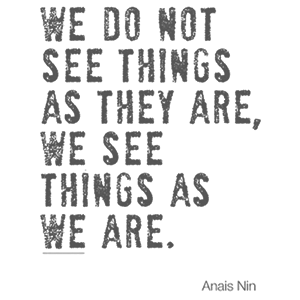
Reality tunnel is a term coined by Timothy Leary and popularized by Robert Anton Wilson, akin to the idea of representative realism (equivalent to the accepted view of ‘perception’ in natural science that states that we do not and cannot perceive the external world as it really is but know only our ideas and interpretations of the way the world is). The theory states that, with a subconscious set of mental ‘filters’ formed from their beliefs and experiences, every individual interprets the same world differently, hence ‘Truth is in the eye of the beholder.’ According to Wilson, ‘Every kind of ignorance in the world all results from not realizing that our perceptions are gambles.
We believe what we see and then we believe our interpretation of it, we don’t even know we are making an interpretation most of the time. We think this is reality.’ The idea does not necessarily imply that there is no objective truth; rather that our access to it is mediated through our senses, experience, conditioning, prior beliefs, and other non-objective factors. The implied individual world each person occupies is said to be their reality tunnel. The term can also apply to groups of people united by beliefs: we can speak of the fundamentalist Christian reality tunnel or the ontological naturalism reality tunnel.
read more »
Posted in Philosophy, Science |
Leave a Comment »
October 24, 2012
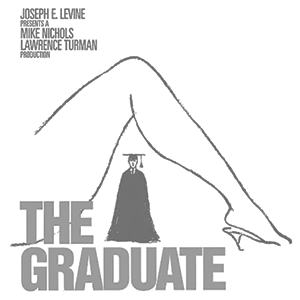
The quarterlife crisis is a period of life following the major changes of adolescence, usually ranging from the late teens to the early thirties, in which a person begins to feel doubtful about their own lives, brought on by the stress of becoming an adult. The term was coined by analogy with mid-life crisis. It occurs shortly after a young person enters the ‘real world.’ Austrian psychologist Erik H. Erikson, who described eight crises that humans face during their development, proposed the existence of a life crisis occurring at this age.
The conflict he associated with young adulthood is the ‘Intimacy vs. Isolation’ crisis. According to him, after establishing a personal identity in adolescence, young adults seek to form intense, usually romantic relationships with other people. The notion of the quarter-life crisis is explored by the 1967 film ‘The Graduate,’ one of the first film depictions of this issue. Other notable films that also do so are ‘Garden State,’ ‘High Fidelity,’ and ‘Lost in Translation.’ The 2008 web series ‘Quarterlife’ was so named for the phenomenon.
Posted in Education, Health |
Leave a Comment »
October 10, 2012

Rockism is a term referring to perceived biases in popular music criticism, coined by UK singer songwriter Pete Wylie in the early 1980s. The fundamental tenet of rockism is that some forms of popular music, and some musical artists, are more authentic than others. While there are many vague interpretations of it, rockism is essentially believed to treat rock music as normative.
From a rockist view, rock is the standard state of popular music. Interestingly, it is not entirely rockist to love rock, or to write about it. One may also care about R&B or norteño or bubblegum pop, but discuss them in a rockist way. The idea is built into the way people talk informally about what kinds of popular music interest them. Rockism is often suspicious of the use of computer-based production systems.
read more »
Posted in Art, Language, Money |
1 Comment »
October 9, 2012

Repressive desublimation [dih-suhb-luh-mey-shuhn] is a term first coined by philosopher and sociologist Herbert Marcuse in his 1964 work ‘One-Dimensional Man, ‘that refers to the way in which, in advanced capitalism, ‘sexuality is liberated (or rather liberalized) in socially constructive forms’ so as to serve, rather than to challenge, forms of social control.
Instead of acting against the social order (as the repressive hypothesis would suggest), sexual liberation was thus co-opted to support the status quo, through the undoing of sublimations (the conversion of negative impulses into positive behavior) and the release of pleasure in socially approved forms.
read more »
Posted in Politics |
Leave a Comment »
October 7, 2012


In a 2006 episode of the satirical news show ‘The Colbert Report,’ Stephen Colbert announced the neologism ‘Wikiality‘ (a portmanteau of the words ‘Wiki’ and ‘reality’) defined as ‘truth by consensus’ (rather than fact), modeled after the approval-by-consensus format of Wikipedia. He ironically praised Wikipedia for following his philosophy of ‘truthiness,’ in which intuition and consensus is a better reflection of reality than fact:
‘You see, any user can change any entry, and if enough other users agree with them, it becomes true. … If only the entire body of human knowledge worked this way. And it can, thanks to tonight’s word: ‘Wikiality.’ Now, folks, I’m no fan of reality, and I’m no fan of encyclopedias. I’ve said it before. Who is Britannica to tell me that George Washington had slaves? If I want to say he didn’t, that’s my right. And now, thanks to Wikipedia, it’s also a fact. We should apply these principles to all information. All we need to do is convince a majority of people that some factoid is true. … What we’re doing is bringing democracy to knowledge.’
read more »
Posted in Humor, Language, Technology |
Leave a Comment »
October 1, 2012

Nensha (Chinese: ‘spirit photography’ literally ‘sense inception’), better known to English speakers as ‘thoughtography’ or ‘projected thermography’ or ‘nengraphy,’ is the ability to psychically ‘burn’ images from one’s mind onto surfaces, or even into the minds of others.
It is common in fiction, and made noteworthy by ‘The Ring’ media franchise. While the term ‘thoughtography’ has been in the English lexicon since 1913, the more recent term ‘projected thermography’ is a neologism originating from the 2002 U.S. remake of ‘The Ring.’
read more »
Posted in Death, Philosophy, Science |
Leave a Comment »
October 1, 2012

Chimerica is a neologism and portmanteau coined in 2006 by historian Niall Ferguson and economist Moritz Schularick describing the symbiotic relationship between China and the United States, with incidental reference to the legendary chimera. In 2010, anticipating the risk of tensions between the two nations escalating into a currency war, Ferguson published a paper forecasting that Chimerica would soon unravel.
They argue that saving by the Chinese and overspending by Americans led to an incredible period of wealth creation that contributed to the global financial crisis of 2008–2009. For years, China accumulated large currency reserves and channeled them into U.S. government securities, which kept nominal and real long-term interest rates artificially low in the United States.
read more »
Posted in Money, Politics, World |
1 Comment »
September 15, 2012

Limerence [lim-rens] is a term coined in 1977 by American psychologist Dorothy Tennov to describe an involuntary state of mind which seems to result from a romantic attraction to another person combined with an overwhelming, obsessive need to have one’s feelings reciprocated. The concept grew out of Tennov’s mid-1960s work, when she interviewed over 500 people on the topic of love, and was first published in her 1979 book ‘Love and Limerence: The Experience of Being in Love.’
Though there are no established preconditions for limerence, there is a high rate of coincidence between limerence, depersonalization/derealization disorders, and dysfunctional attachment environments in childhood. This might suggest that sustained exposure to a psychologically unstable environment in childhood, or unhealthy/incomplete attachment between a child and their caretakers in early life, may make an individual more susceptible to limerence. There is also a statistically significant correlation between limerence and post traumatic stress disorder.
read more »
Posted in Health, Love, Sex |
1 Comment »



