August 25, 2013
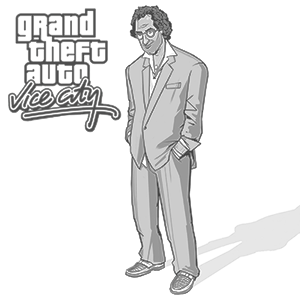
A shyster [shahy-ster] is a slang word for someone who acts in a disreputable, unethical, or unscrupulous way, especially in the practice of law, politics or business. The etymology of the word is not generally agreed upon. The Merriam-Webster Dictionary says it is based on the German ‘Scheißer’ (literally ‘defecator’ but also used to refer to deceivers), but the Oxford English Dictionary describes it as ‘of obscure origin,’ possibly deriving from a historical sense of ‘shy’ meaning disreputable. Various false etymologies have suggested an anti-Semitic origin, but there is no proof for that. One source claims that the term originated in Philadelphia in 1843 from a disreputable attorney named ‘Schuster.’
Notable ‘shysters’ of fiction include Sylvester Shyster (a Walt Disney cartoon character introduced in 1930), a disbarred attorney who schemes to deprive Minnie Mouse of her inheritance; and Dave Kleinfeld, a mob lawyer in ‘Carlito’s Way’ (1993) who was parodied in ‘Grand Theft Auto: Vice City’ as Ken Rosenberg.
Posted in Language, Money, Politics |
1 Comment »
August 15, 2013
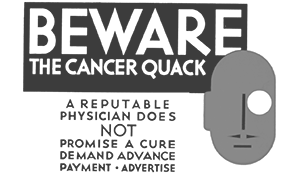

Quackery [kwak-uh-ree] is the promotion of unproven or fraudulent medical practices. Random House Dictionary describes a ‘quack’ as a ‘fraudulent or ignorant pretender to medical skill’ or ‘a person who pretends, professionally or publicly, to have skill, knowledge, or qualifications he or she does not possess; a charlatan.’ The word ‘quack’ derives from the archaic word ‘quacksalver,’ of Dutch origin, literally meaning ‘hawker of salve.’ In the Middle Ages the word ‘quack’ meant ‘shouting.’ The quacksalvers sold their wares on the market shouting in a loud voice.
‘Health fraud’ is often used as a synonym for quackery, but quackery’s salient characteristic is aggressive promotion (‘quacks quack!’) rather than fraud, greed or misinformation. ‘Pseudo-medicine’ is a term for treatments known to be ineffective, regardless of whether their advocates themselves believe in their effectiveness.
read more »
Posted in Health, Language, Money |
Leave a Comment »
August 7, 2013

Guido [gwee-doh] is a slang term for a lower-class or working-class urban Italian American. Originally, it was used as a demeaning term for Italian Americans in general. More recently, it has come to refer to Italian Americans who conduct themselves in a thuggish, overtly macho manner.
The time period in which it obtained the latter meaning is not clear, but some sources date it to the 1970s or 1980s. The term is derived from either the proper name ‘Guido’ or the Italian verb ‘guidare’ (‘to drive’). Fishermen of Italian descent were once often called ‘Guidos’ in medieval times.
read more »
Posted in Language, Politics |
Leave a Comment »
August 7, 2013
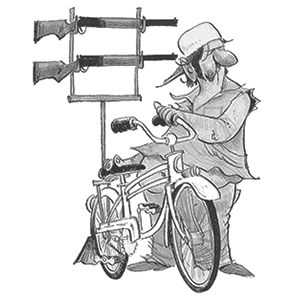
Redneck is a derogatory slang term used in reference to poor, uneducated white farmers, especially from the southern United States. It is similar in meaning to ‘cracker’ (especially regarding Georgia and Florida), ‘hillbilly’ (especially regarding Appalachia and the Ozarks), and ‘white trash’ (but without the last term’s suggestions of immorality).
By the 2000s, the term had expanded in meaning to refer to bigoted, loutish reactionaries who are opposed to modern ways, and has often been used to attack white Southern conservatives. The term is also used broadly to degrade working class and rural whites that are perceived by urban progressives to be insufficiently liberal. At the same time, some Southern whites have reclaimed the word, using it with pride and defiance as a self-identifier.
read more »
Posted in Language, Money, Politics |
Leave a Comment »
August 7, 2013
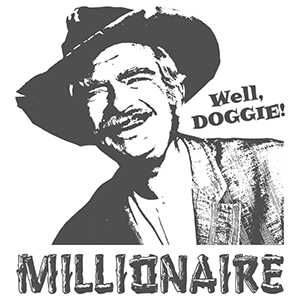
Hillbilly is a term (often derogatory) for people who dwell in rural, mountainous areas of the United States, primarily Appalachia in the east but also the Ozarks in the center of the country. Owing to its strongly stereotypical connotations, the term can be offensive to those Americans of Appalachian heritage.
Origins of the term are obscure. According to Anthony Harkins in ‘Hillbilly: A Cultural History of an American Icon,’ it first appeared in print in a 1900 ‘New York Journal’ article, with the definition: ‘a Hill-Billie is a free and untrammeled white citizen of Alabama, who lives in the hills, has no means to speak of, dresses as he can, talks as he pleases, drinks whiskey when he gets it, and fires off his revolver as the fancy takes him.’
read more »
Posted in Language, Politics |
Leave a Comment »
August 7, 2013

Honky is a racial slur for white people, predominantly heard in the United States. The first recorded use of honky in this context may date back to 1946, although the use of ‘Honky Tonk’ (a type of bar common in the South) appeared in films well before that time.
The exact origins of the word are generally unknown and postulations about the subject vary. Honky may derive from the term ‘xonq nopp’ which, in the West African language Wolof, literally means ‘red-eared person’ or ‘white person.’ The term may have been brought to the US by slaves.
read more »
Posted in Language, Politics |
Leave a Comment »
August 7, 2013
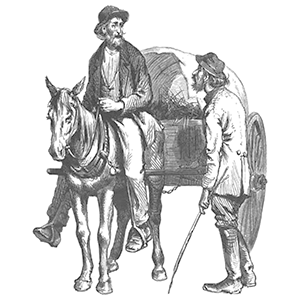
Cracker is a derogatory term for white people, especially poor rural whites in the Southern United States. In reference to a native of Florida or Georgia, however, it is sometimes used in a neutral or positive context and is sometimes used self-descriptively with pride as a form of reappropriation. There are multiple suggested etymologies for ‘cracker,’ most dating its origin to the 18th century or earlier.
One theory holds that the term derives from the ‘cracking’ of whips, either by slave foremen in the antebellum South against African slaves, or by rustics to guide their cattle. Those white foremen or rural poor who cracked their whips theoretically became known as ‘crackers.’ Another whip-derived theory is based on Florida’s ‘cracker cowboys’ of the 19th and early 20th centuries; distinct from the Spanish ‘vaquero’ and the Western ‘cowboy.’ Cracker cowboys did not use lassos to herd or capture cattle. Their primary tools were cow whips and dogs.
read more »
Posted in Language, Politics |
Leave a Comment »
June 27, 2013

Pseudorationalism [soo-doh-rash-uh-nl-iz-uhm] was the label given by economist and philosopher Otto Neurath to a school of thought that he was heavily critical of, throughout many of his writings but primarily in his 1913 paper ‘The lost wanderers of Descartes and the auxiliary motive’ and later to a lesser extent in his 1935 ‘Pseudorationalismus der Falsifikation,’ a review of and attack on philosopher of science Karl Popper’s first book, ‘Logik der Forschung’ (‘The Logic of Scientific Discovery’), contrasting this approach with his own view of what rationalism should properly be.
Neurath aimed his criticism at a Cartesian belief that all actions can be subject to rational analysis, saying that: ‘Once reason has gained a certain influence, people generally show a tendency to regard all their actions as reasonable. Ways of action which depend on dark instincts receive reinterpretation or obfuscation.’
read more »
Posted in Money, Philosophy, Science |
Leave a Comment »
June 26, 2013
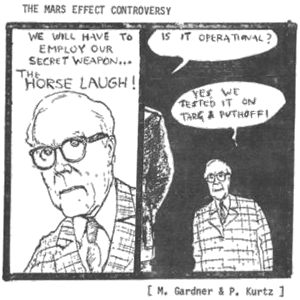
Pseudoskepticism [soo-doh-skep-tuh-siz-uhm] refers to a philosophical or scientific position which appears to be that of skepticism or scientific skepticism but which in reality fails to be so, for whatever reason.
The term is usually used pejoratively.
read more »
Posted in Language, Philosophy, Science |
Leave a Comment »
April 29, 2013

An angry white male (AWM) is a pejorative reference to someone with what is typically known as a traditional conservative viewpoint, especially in the context of U.S. politics, characterized by opposition to racial quotas, political correctness, affirmative action, and other liberal policies.
The movies ‘Joe,’ ‘Falling Down,’ and Clint Eastwood’s performances in both the ‘Dirty Harry’ series and ‘Gran Torino’ have been described as definitive explorations of the angry white male. The protagonist of ‘Falling Down,’ a former defense worker who descends into a spiral of increasing rage and violence, was widely reported upon as a representative of the stereotype.
Posted in Language, Politics |
Leave a Comment »
April 24, 2013
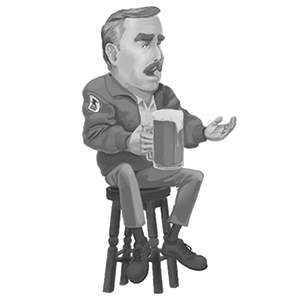
Bullshit (also bullcrap) is a common English expletive which may be shortened to the euphemism bull or the initialism BS. In British English, ‘bollocks’ is a comparable expletive, although bullshit is commonly used in British English. It is a slang profanity term meaning either (literally) bovine excrement or, more commonly, ‘nonsense,’ especially in a rebuking response to communication or actions viewed as deceiving, misleading, disingenuous, or false. As with many expletives, the term can be used as an interjection or as many other parts of speech, and can carry a wide variety of meanings.
It can be used either as a noun or as a verb. While the word is generally used in a deprecating sense, it may imply a measure of respect for language skills, or frivolity, among various other benign usages. In philosophy, Harry Frankfurt, among others, analyzed the concept of bullshit as related to but distinct from lying. Outside of the philosophical and discursive studies, the everyday phrase bullshit conveys a measure of dissatisfaction with something or someone, but does not generally describe any role of truth in the matter.
read more »
Posted in Humor, Language, Philosophy |
Leave a Comment »
April 9, 2013

In psychology-related slang, control freak is a derogatory term for a person who attempts to dictate how everything around them is done. The phrase was first used in the late 1960s — an era when great stress was laid on the principle of ‘doing one’s own thing’ and letting others do the same.
Control freaks are often perfectionists defending themselves against their own inner vulnerabilities in the belief that if they are not in total control they risk exposing themselves once more to childhood angst. Such persons manipulate and pressure others to change so as to avoid having to change themselves, and use power over others to escape an inner emptiness. When a control freak’s pattern is broken, ‘the Controller is left with a terrible feeling of powerlessness … But feeling their pain and fear brings them back to themselves.’
read more »
Posted in Health, Money |
1 Comment »


 The Daily Omnivore