November 16, 2011


Wigger [wig-er] is a pejorative slang term for a white person who emulates mannerisms, language, and fashions associated with African-American culture, particularly hip hop in the United States or the Grime/Garage scene in Britain. The term is a portmanteau of either wannabe or white and n****r. The term is considered derogatory, reflecting stereotypes of African-American or Black British culture, and can be used pejoratively, because of its connotations of cultural appropriation. It is also often used in a racist manner, not only belittling the person perceived as acting black, but also demeaning black people and culture by proxy. Some, however, use the term neutrally, or as a light joke, without any racism intended.
The phenomenon of white people adopting stereotypical black mannerisms, speech, and apparel – which in the general case is called allophilia – has appeared in several generations since slavery was abolished in the western world. The concept has been documented in the United States, Canada, United Kingdom, Australia and other white-majority countries. An early form of this was the ‘white negro’ in the jazz and swing music scenes of the 1920s and 1930s; as examined in the 1957 Norman Mailer essay, ‘The White Negro.’ It was later seen in the Zoot suiter of the 1930s and 1940s; the hipster of the 1940s; and the beatnik and rock and roller of the 1950s.
Posted in Language, Politics, World |
1 Comment »
November 16, 2011

Plastic Paddy is a slang term used to describe some members of the Irish diaspora, or those with no ancestral connection to Ireland, who appropriate (often stereotypical) Irish customs and identity. A Plastic Paddy may know little of actual Irish culture, but nevertheless assert an Irish identity. The term is pejoratively used to refer to people on the basis of their perceived lack of authenticity as Irish.
People who were not born in Ireland, and who did not grow up in Ireland, but nonetheless possess Irish citizenship and an Irish passport are often labelled as Plastic Paddies. The term came into common use in the 1980s when it was frequently employed as a term of abuse by recently-arrived middle class Irish migrants to London. It ‘became a means of distancing themselves from established Irish communities.’ And the use was a part of the process by which the second-generation Irish are positioned as inauthentic within the two identities, of Englishness and Irishness.
read more »
Posted in Language, Politics, World |
Leave a Comment »
November 16, 2011
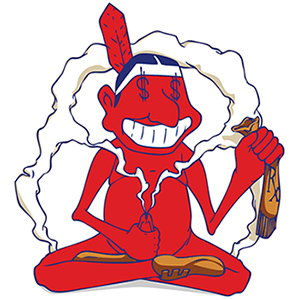
Plastic shaman [shey-muhn] is a pejorative colloquialism applied to individuals who are attempting to pass themselves off as shamans, holy people, or other traditional spiritual leaders, but who have no genuine connection to the traditions or cultures they claim to represent. In some cases, the ‘plastic shaman’ may have some genuine cultural connection, but is seen to be exploiting that knowledge for ego, power or money.
They are believed by their critics to use the mystique of these cultural traditions, and the legitimate curiosity of sincere seekers, for personal gain. In some cases, exploitation of students and traditional culture may involve the selling of fake ‘traditional’ spiritual ceremonies, fake artifacts, fictional accounts in books, illegitimate tours of sacred sites, and often the chance to buy spiritual titles. In Nepal, the term ‘Chicken Shaman’ is used.
read more »
Posted in Money, Philosophy, Sex |
Leave a Comment »
October 31, 2011
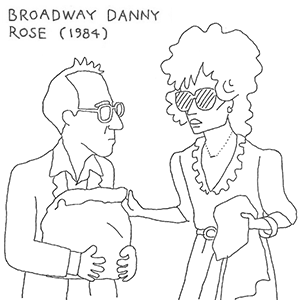
Beard is a slang term describing a person who is used, knowingly or unknowingly, as a date, romantic partner (Boyfriend or Girlfriend), or spouse either to conceal infidelity or to conceal one’s sexual orientation.
The term can be used in heterosexual and homosexual contexts, but with increasing acceptance of gay culture, references to beards are seen in mainstream television and movies as well as other entertainment.
read more »
Posted in Art, Language, Sex |
Leave a Comment »
October 27, 2011
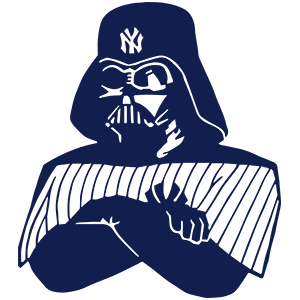
The evil empire is a term which was used by the US president Ronald Reagan to describe the Soviet Empire in 1983, which consisted of the republics of the Soviet Union and the Council for Mutual Economic Assistance (Comecon). Members of this council were satellite states, which where formally independent, but were steered by the Soviet Union with military pressure, if they considered it as necessary.
Reagan, took an aggressive, hard-line stance that favored matching and exceeding the Soviet Union’s strategic and global military capabilities, in calling for a rollback strategy that would, in his words, write the final pages of the history of the Soviet Union. The characterization demeaned the Soviet Union and angered Soviet leaders; it represented the rhetorical side of the escalation of the Cold War.
read more »
Posted in Politics, War, World |
Leave a Comment »
October 18, 2011

Plop art (or Plonk art) is a pejorative slang term for public art (usually large, abstract, modernist or contemporary sculpture) made for government or corporate plazas, spaces in front of office buildings, skyscraper atriums, parks, and other public venues. The term connotes that the work is unattractive or inappropriate to its surroundings – that is, it has been thoughtlessly ‘plopped’ where it lies.
The very word ‘plop’ suggested something falling wetly and heavily in the manner of excrement — extruded, as it were, from the fundament of the art world, and often at public expense. Plop art is a play on the term pop art. The term was coined by architect James Wines in 1969. Wines was critical of the failure of much public art to take an environmentally-oriented approach to the relationship between public art and architecture.
Posted in Art, Humor, Language |
Leave a Comment »
October 7, 2011

Name-dropping is the practice of mentioning important people or institutions within a conversation, story, song, online identity, or other communication. The term often connotes an attempt to impress others; it is usually regarded negatively, and under certain circumstances may constitute a breach of professional ethics. When used as part of a logical argument it can be an example of the false authority fallacy. A shout-out is a type of name-dropping where a list of names is spoken out expressly to direct attention at these groups or individuals, often as a means of expressing kudos or making a referral.
Name-dropping is used to position oneself within a social hierarchy. It is often used to create a sense of superiority by raising one’s status. By implying (or directly asserting) a connection to people of high status, the name-dropper hopes to raise his or her own social status to a level closer to that of those whose names he or she has dropped, and thus elevate himself or herself above, or into, present company. Name-dropping can also be used to identify people with a common bond. By indicating the names of people one knows, one makes known his or her social circle, providing an opportunity for others with similar connections to relate. As a form of appeal to authority, name-dropping can be an important form of informal argumentation, as long as the name being dropped is of someone expert on the subject of the argument and that person’s views are accurately represented.
Posted in Language |
Leave a Comment »
August 11, 2011
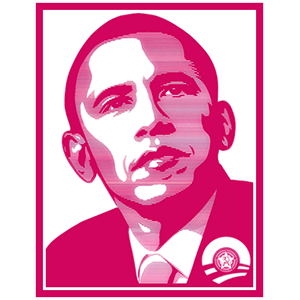
Pinko is a term for a person regarded as sympathetic to communism, though not necessarily a Communist Party member. The term has its origins in the notion that pink is a lighter shade of red, the color associated with communism. The word was coined by Time magazine in 1925 as a variant on the noun and adjective pink, which had been used along with ‘parlor pink’ since the beginning of the 20th century to refer to those of leftish sympathies, usually with an implication of ‘effeteness.’
In the 1920s, for example, a Wall Street Journal editorial described supporters of the progressive politician Robert La Follette as ‘visionaries, ne’er do wells, parlor pinks, reds, hyphenates [Americans with divided allegiance], soft handed agriculturalists and working men who have never seen a shovel.’
read more »
Posted in Language, Politics |
Leave a Comment »
June 14, 2011


Vaporware is a term in the computer industry that describes a product, typically computer hardware or software, that is announced to the general public but is never actually released nor officially canceled. The term also generally applies to a product that is announced months or years before its release, and for which public development details are lacking.
The word has been applied to a growing range of products including consumer electronics, automobiles, and some stock trading practices. At times, vendors are criticized for intentionally producing vaporware in order to keep customers from switching to competitive products that offer more features.
read more »
Posted in Money, Technology |
Leave a Comment »
June 7, 2011

Glittering generalities are emotionally appealing words so closely associated with highly-valued concepts and beliefs that they carry conviction without supporting information or reason. Such highly-valued concepts attract general approval and acclaim. Their appeal is to emotions such as love of country and home, and desire for peace, freedom, glory, and honor. They ask for approval without examination of the reason. They are typically used by politicians and propagandists.
Words and phrases such as ‘common good,’ ‘reform,’ ‘courage,’ ‘democracy,’ ‘freedom,’ ‘hope,’ ‘patriotism,’ ‘strength,’ are terms with whom people all over the world have powerful associations, and they may have trouble disagreeing with them. However, these words are highly abstract and ambiguous, and meaningful differences exist regarding what they actually mean or should mean in the real world. George Orwell described such words at length in his essay ‘Politics and the English Language’
read more »
Posted in Language, Politics |
Leave a Comment »
May 18, 2011

Tartanry [tahr-tn-ree] is a word used to describe the kitsch elements of Scottish culture that have been overemphasized or superimposed on the country first by the emergent Scottish tourist industry in the 18th and 19th centuries, and later by an American film industry. The earliest use of the word ‘tartanry’ itself is said to have been in 1976.
It refers to often misrepresented or invented aspects of Scotland such as clan tartans, kilts, bagpipes, Scottish Gaelic and Highland culture more generally.
Posted in Language, Money, World |
Leave a Comment »
April 11, 2011

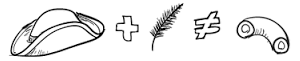
A macaroni [mak-uh-roh-nee] in mid-18th century England, was a fashionable fellow who dressed and spoke in an outlandishly affected and effeminate manner.
The term pejoratively referred to a man who ‘exceeded the ordinary bounds of fashion’ in terms of clothes, fastidious eating and gambling.
read more »
Posted in Art, Humor, Language |
Leave a Comment »



 The Daily Omnivore