August 16, 2011


Henry Dreyfuss (1904 – 1972) was an American industrial designer. Dreyfuss was a native of Brooklyn, New York. As one of the celebrity industrial designers of the 1930s and 1940s, Dreyfuss dramatically improved the look, feel, and usability of dozens of consumer products.
As opposed to Raymond Loewy and other contemporaries, Dreyfuss was not a stylist: he applied common sense and a scientific approach to design problems. His work both popularized the field for public consumption, and made significant contributions to the underlying fields of ergonomics, anthropometrics, and human factors.
Posted in Art, Money, Technology |
Leave a Comment »
August 16, 2011
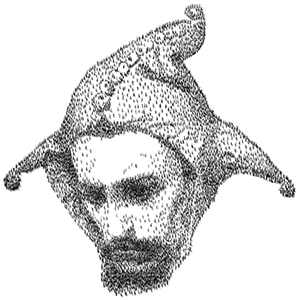
Stańczyk (c. 1480–1560) was the most famous court jester in Polish history. He is remembered as a man of great intelligence and a political philosopher gifted with formidable insight into Poland’s current and future situation. He used his job to criticize and warn his contemporaries through satire. His witty jokes often pertained to current political or court matters.
The best known anecdote about Stańczyk is that of a hunting incident. In 1533 King Sigismund the Old had a huge bear brought for him from Lithuania. The bear was released in the forest of Niepołomice near Kraków so that the king could hunt it. During the hunt, the animal charged at the king, the queen and their courtiers which caused panic and mayhem. Queen Bona fell from her horse which resulted in her miscarriage. Later, the king criticized Stańczyk for having run away instead of attacking the bear. The jester is said to have replied that ‘it is a greater folly to let out a bear that was locked in a cage.’ This remark is often interpreted as an allusion to the king’s policy toward Prussia which was defeated by Poland but not fully incorporated into the Crown.
Posted in Humor, Politics, World |
Leave a Comment »
August 15, 2011
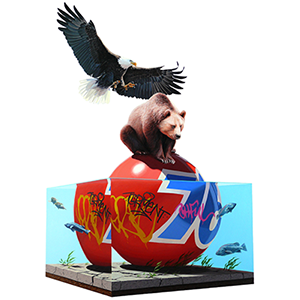
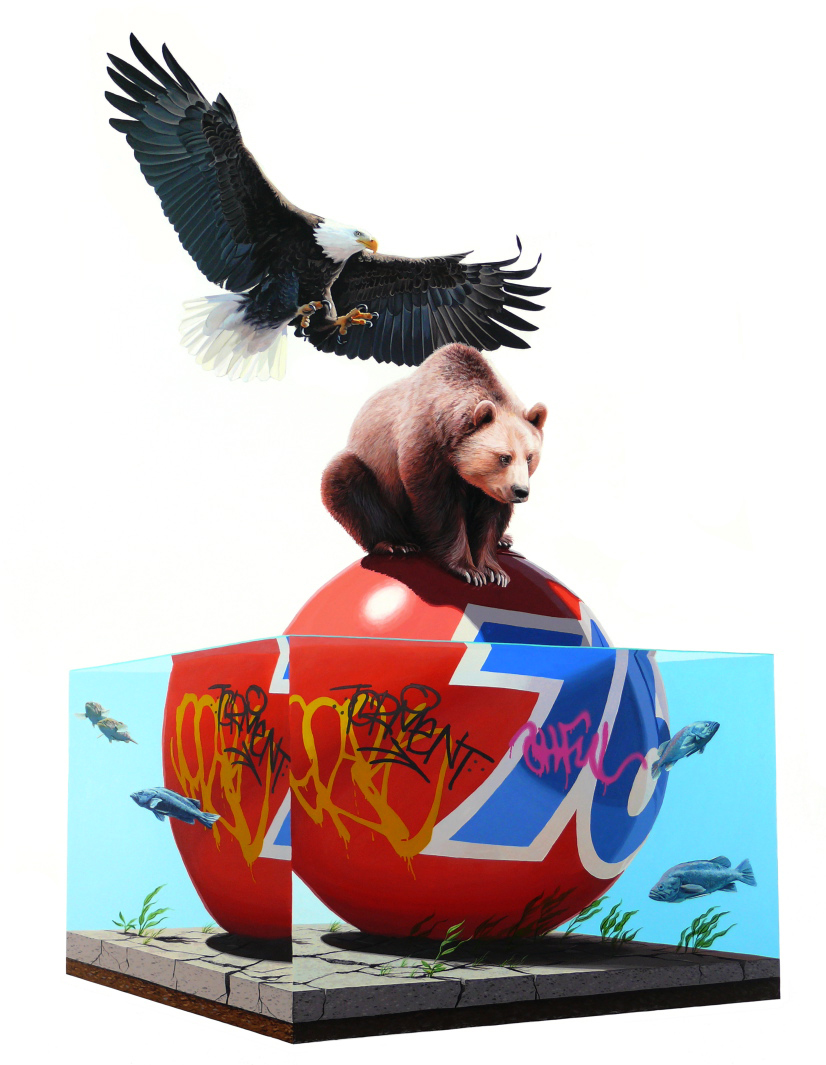
Josh Keyes (b. 1969) is an American contemporary artist who works with painting, drawing, and installation art. He currently works out of Portland, Oregon. His work has been described as ‘a satirical look at the impact urban sprawl has on the environment and surmises, with the aid of scientific slices and core samples, what could happen if we continue to infiltrate and encroach on our rural surroundings.’
Josh’s work brings to mind the detail and complexity of natural history dioramas, and the color and diagrammatic complexity one might find in cross section illustrations from a vintage science textbook. His work has developed over the past years into a complex personal vocabulary of imagery that creates a mysterious and sometimes unsettling juxtaposition between the natural world and the man made landscape.
read more »
Posted in Art, Politics, Technology |
Leave a Comment »
August 11, 2011

Ferdinand Cheval (1836 – 1924) was a French postman who spent thirty-three years of his life building Le Palais Idéal (‘The Ideal Palace’) in Hauterives. The structure is regarded as an extraordinary example of naïve art architecture. Cheval began the building in April 1879. He claimed that he had tripped on a stone and was inspired by its shape. He returned to the same spot the next day and started collecting stones. For the next thirty-three years, Cheval picked up stones during his daily mail round and carried them home to build with. He spent the first twenty years building the outer walls. At first, he carried the stones in his pockets, then switched to a basket. Eventually, he used a wheelbarrow. He often worked at night, by the light of an oil lamp.
The Palais is a mix of different styles with inspirations from Christianity to Hinduism. Cheval bound the stones together with lime, mortar and cement. He also wanted to be buried in his palace. However, since that is illegal in France, he proceeded to spend eight more years building a mausoleum for himself in the Hauterives cemetery. He died one year after he had finished building it, and is buried there. Just prior to his death, Cheval began to receive some recognition from luminaries like André Breton and Pablo Picasso. His work is commemorated in an essay by Anaïs Nin. In 1932, the German artist Max Ernst created a collage titled ‘The Postman Cheval.’ The work belongs to the Peggy Guggenheim Collection and is on display there.
Posted in Art, Humor, World |
Leave a Comment »
August 4, 2011

Jack Herer (1939 – 2010) was an American cannabis activist and the author of ‘The Emperor Wears No Clothes,’ a book which has been used in efforts to decriminalize cannabis. A former Goldwater Republican, he believed that the cannabis plant should be decriminalized because it has been shown to be a renewable source of fuel, food, and medicine that can be grown in virtually any part of the world. A specific strain of cannabis has been named after Herer that has won several awards, including the 7th High Times Cannabis Cup. He ran for US President twice, in 1988 (1,949 votes) and 1992 (3,875 votes) as the Grassroots Party candidate. In July 2000, he suffered a minor heart attack and a major stroke, resulting in difficulties speaking and moving the right side of his body. He mostly recovered, and claimed in 2004 that treatment with amanita muscaria, a psychoactive mushroom had cured him. He died six years later, aged 70.
European experts on hemp, like Dr. Hayo Van der Werf and Dr. Ivan Bûcsa, criticized Herer’ for making unrealistic claims regarding the potential of hemp, for example: Herer claimed that hemp produces higher yields than other crops. Van der Werf argue that is simply wrong. Under most favorable growing conditions, other crops such as maize, sugar beet or potato produced similar dry matter yields. Herer also claimed that hemp hurds, which make up 60 to 80 % of the stem dry weight, contain 77 % cellulose. Van der Werf argue that is wrong. Cellulose content of hemp hurds has been found to vary between 32 and 38 %. Possibly, Herer confused the hurds, which form the woody core of the hemp stem, with the bark, which forms the outer layer of the hemp stem. The bark contains the long bast fibers which are used in textile manufacturing.
Posted in Drugs, Money, Politics |
1 Comment »
August 2, 2011
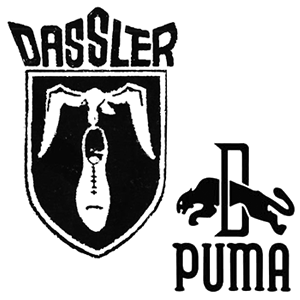
Rudolf Dassler (1898 – 1974) was the German founder of the sportswear company PUMA and the older brother of Adidas founder, Adolf ‘Adi’ Dassler. The brothers were partners in a shoe company Adi started, Gebrüder Dassler Schuhfabrik (Dassler Brothers Shoe Factory). Rudi joined in 1924, however the brothers became rivals following World War II and started their own companies in 1948. Initially calling the new company ‘Ruda,’ it was soon changed to its present name of Puma. Puma is the word for cougar in German as well as other languages. Under his direction, Puma remained a small provincial company. Only under the direction of his son, Armin Dassler, did it become the worldwide known company it remains today.
With the rise of Adolf Hitler in the 1930s, both Dassler brothers joined the Nazi Party, with Rudolf reputed as being the more ardent National Socialist. Rudolf was drafted, and later captured, while Adi stayed behind to produce boots for the Wehrmacht (Nazi military). During the war, a growing rift between the pair reached a breaking point after an Allied bomb attack in 1943 when Adi and his wife climbed into a bomb shelter that Rudolf and his family were already in: ‘The dirty bastards are back again,’ Adi said, apparently referring to the Allied war planes, but Rudolf was convinced his brother meant him and his family. Rudolf, upon his capture by American troops, was suspected of being a member of the SS, information supposedly supplied by none other than his brother Adi.
Posted in Games, Money, War |
Leave a Comment »
August 2, 2011

Adolf Dassler (1900 – 1978), known as ‘Adi,’ was the founder of the German sportswear company Adidas. Trained as a cobbler, Dassler started to produce his own sports shoes in his mother’s laundry after his return from World War I. His father, Christoph, who worked in a shoe factory, and the Zehlein brothers, who produced the handmade spikes for track shoes in their blacksmith’s shop, supported Dassler in starting his own business. In 1924, his older brother Rudolf joined the business, which became the Gebrüder Dassler Schuhfabrik (Dassler Brothers Shoe Factory). At the 1928 Olympics, Dassler equipped several athletes, laying the foundation for the international expansion of the company. During the 1936 Summer Olympics in Berlin, Dassler equipped Jesse Owens of the USA with his shoes. Owens went on to win four gold medals in that Olympics.
With the rise of Adolf Hitler in the 1930s, both Dassler brothers joined the Nazi Party, with Rudolf reputed as being the more ardent National Socialist. Rudolf was drafted, and later captured, while Adi stayed behind to produce boots for the Wehrmacht (Nazi military). The war exacerbated the differences between the brothers and their wives. Rudolf, upon his capture by American troops, was suspected of being a member of the SS, information supposedly supplied by none other than his brother Adi. By 1948, the rift between the brothers widened. Rudolf left the company to found Puma on the other side of town (across the Aurach River), and Adolf Dassler renamed the company Adidas after his own nickname (Adi Dassler).
Posted in Games, Money, War |
Leave a Comment »
August 1, 2011

Billy Preston (1946 – 2006) was an African American rhythm and blues musician from Houston, Texas, raised mostly in Los Angeles. In addition to his career as a solo artist, Preston collaborated with some of the greatest names in the music industry, including The Beatles, The Rolling Stones, Nat King Cole, Little Richard, Ray Charles, Elton John, Eric Clapton, Bob Dylan, Aretha Franklin, and Johnny Cash. He played the Fender Rhodes electric piano and the Hammond organ on the Get Back sessions in 1969.
Preston began playing piano while sitting on his mother’s lap at age three, and he was considered something of a child prodigy on piano and organ. By the age of 10 he was performing in the bands of gospel singers Mahalia Jackson, James Cleveland, and Andrae Crouch. In the 1960s he performed with Little Richard and Ray Charles, and in 1963, aged just 16, he played organ on the Sam Cooke album ‘Night Beat.’ He also began a recording career as a solo artist with the 1965 album ‘The Most Exciting Organ Ever.’
read more »
Posted in Art |
Leave a Comment »
August 1, 2011

Stephen LaBerge (born 1947) is a psychophysiologist and a leader in the scientific study of lucid dreaming. In 1967 he received his Bachelor’s Degree in mathematics. He received his Ph.D. in Psychophysiology at Stanford University in 1980.
He developed a technique to enable himself and other researchers to enter a lucid dream state at will, MILD (mnemonic induction of lucid dreams), which was necessary for many forms of dream experimentation. In 1987, he founded The Lucidity Institute, an organization that promotes research into lucid dreaming, as well as running courses for the general public on how to achieve a lucid dream.
read more »
Posted in Health, Science |
1 Comment »
July 30, 2011

Max Hattler (b. 1976) is a German video artist and experimental filmmaker best-known for his kaleidoscopic political short films ‘Collision’ (2005) and ‘Spin’ (2010), abstract stop motion work ‘Aanaatt’ (2008), and psychedelic animation loops ‘1923 aka Heaven’ and ‘1925 aka Hell’ (2010).
He also works extensively in the field of audiovisual performance, and has created concert visuals for Basement Jaxx, Diplo, Jovanotti, The Egg, and Ladyscraper.
Posted in Art, Technology |
Leave a Comment »
July 29, 2011

Grace Jones (b. 1948) is a Jamaican-American singer, model and actress. She secured a record deal with Island Records in 1977, which resulted in a string of dance-club hits. In the late 1970s, she adapted the emerging electronic music style and adopted a severe, androgynous look with square-cut hair and angular, padded clothes. Jones is a contralto, the deepest female classical singing voice. Although her image became equally as notable as her voice, she is a highly stylized vocalist. She sings in two modes: in her monotone speak-sing as in songs such as and in an almost-soprano mode in songs such as ‘La Vie en rose’ and ‘Slave to the Rhythm.’ Her voice spans two and a half octaves.
In 1981, her ‘Pull Up to the Bumper’ became a Top 5 single on the US R&B chart. Jones is also an actress. Her acting occasionally overshadowed her musical output in America; but not in Europe, where her profile as a recording artist was much higher. She appeared in some low-budget films in the 1970s and early 1980s. Her work as an actress in mainstream film began in the 1984 fantasy-action film ‘Conan the Destroyer’ alongside Arnold Schwarzenegger, and the 1985 James Bond movie ‘A View to a Kill.’
read more »
Posted in Art, World |
Leave a Comment »
July 29, 2011


Berry Gordy, Jr. (b. 1929) is an American record producer, and the founder of the Motown record label, which played an important role in the racial integration of popular music. Motown achieved a crossover success. In the 1960s, Motown and its soul-based subsidiaries were the most successful proponents of what came to be known as The Motown Sound, a style of soul music with a distinct pop influence.
The Motown Sound typically used tambourines to accent the back beat, prominent and often melodic electric bass-guitar lines, distinctive melodic and chord structures, and a call-and-response singing style that originated in gospel music. Pop production techniques such as the use of orchestral string sections, charted horn sections, and carefully arranged background vocals were also used. Complex arrangements and elaborate, melismatic vocal riffs were avoided. Motown producers believed steadfastly in the ‘KISS principle’ (keep it simple, stupid).
read more »
Posted in Art, Money |
Leave a Comment »



 The Daily Omnivore