March 2, 2011

Kenneth Knowlton (b. 1931), is a computer graphics pioneer, artist, mosaicist and portraitist, who worked at Bell Labs. In 1963, Knowlton developed the BEFLIX (Bell Flicks) programming language for bitmap computer-produced movies, created using an IBM 7094 computer and a Stromberg-Carlson 4020 microfilm recorder. Each frame contained eight shades of grey and a resolution of 252 x 184. In 1966, Knowlton and Leon Harmon were experimenting with photomosaic, creating large prints from collections small symbols or images.
In Studies in Perception I they created an image of a reclining nude (the dancer Deborah Hay), by scanning a photograph with a camera and converting the analog voltages to binary numbers which were assigned typographic symbols based on halftone densities. It was printed in The New York Times on 11 October 1967, and exhibited at one of the earliest computer art exhibitions, The Machine as Seen at the End of the Mechanical Age, held Museum of Modern Art in New York City in 1968.
Posted in Art, Technology |
Leave a Comment »
March 2, 2011
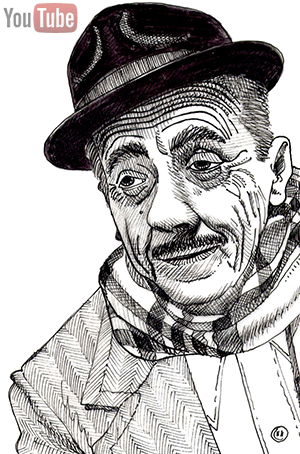
Adoniran Barbosa (1910 – 1982) was a famous Brazilian traditional samba singer and composer. The themes of his songs are drawn from the life of low-wage urban workers, the unemployed and the vagabonds. His first big hit was Saudosa Maloca (‘Shanty of Fond Memories,’ 1951), where three homeless friends recall with nostalgia their improvised shanty, which was torn down by the landowner to make room for a building. His next hit ‘Joga a Chave’ (‘Throw me the Doorkey,’ 1952) was inspired by his own frequent experiences of arriving late at home and finding the door locked by his wife, Matilde.
In his ‘Trem das Onze’ (‘The 11 PM Train,’ 1964), the protagonist explains to his lover that he cannot stay any longer because he has to catch the last train to the Jaçanã suburb, and besides his mother will not sleep before he arrives. Unlike the samba songs of the previous decades, which generally used the formal Portuguese of the educated class, Adoniran’s lyrics are a realistic record of the informal speech of São Paulo’s lower classes. He once said ‘I only write samba for the common people. That is why I write lyrics in ‘wrong’ Portuguese, because that is how the common people speak.’
Posted in Art, World |
Leave a Comment »
March 2, 2011

Eliot Lipp is a Los Angeles based electronic music artist. He made a name for himself in the genre of electro when his work was picked up by Scott Herren of Prefuse 73 (Warp Records). His most recent project is a collaboration with Leonardo Ciccone (also known as Leo 123) called ‘Dark Party.’
Posted in Art, Technology |
Leave a Comment »
March 2, 2011

Bernard Arnault (b. 1949) is a French businessman. He is the founder, chairman, and CEO of LVMH, a large luxury goods conglomerate consisting of over fifty luxury brands, including Louis Vuitton, Dior, and Fendi. According to Forbes Magazine, Arnault is the world’s 7th and Continental Europe’s richest person, with a 2010 net worth of $US27.5 billion.
Posted in Money |
Leave a Comment »
March 2, 2011

John Galliano (b. 1960) is a British fashion designer who was head designer of French haute couture houses Givenchy and Christian Dior. He led Dior from 1996 to 2011, when he was abruptly dismissed following his arrest over an alleged anti-Semitic tirade in a Paris bar.
The same day, a video surfaced of Galliano on a similar rant in the same bar the previous December. He was convicted of making ‘public insults based on origin, religious affiliation, race or ethnicity,’ and fined €6,000.
read more »
Posted in Art, Money, Politics |
1 Comment »
March 2, 2011
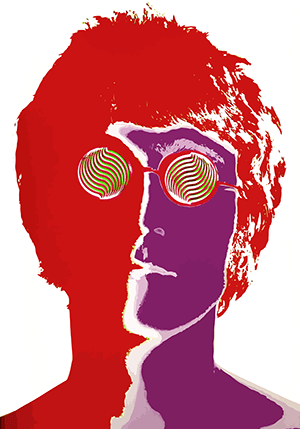
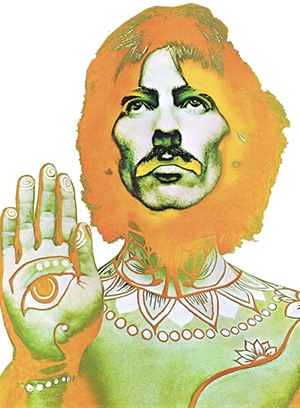
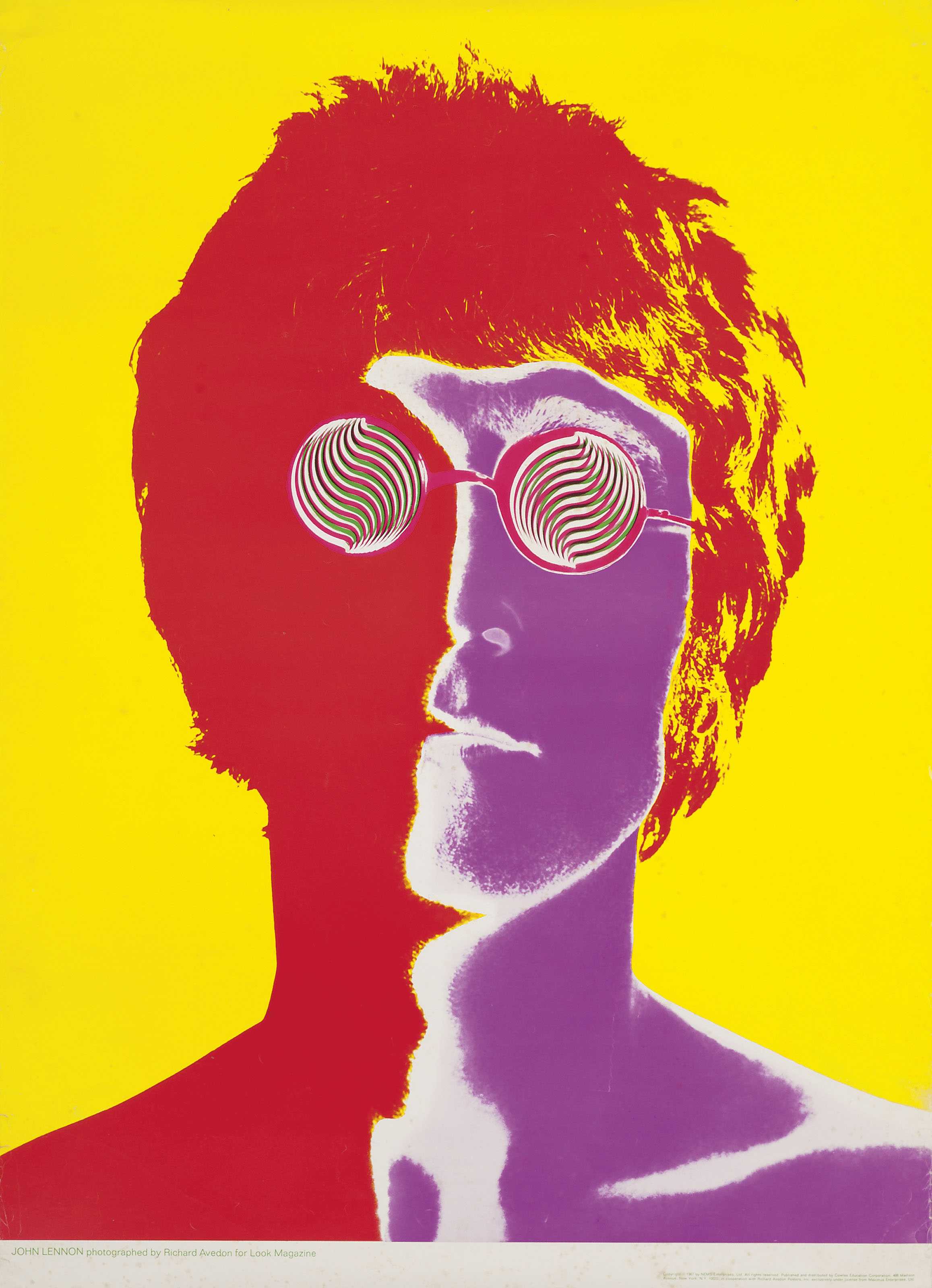
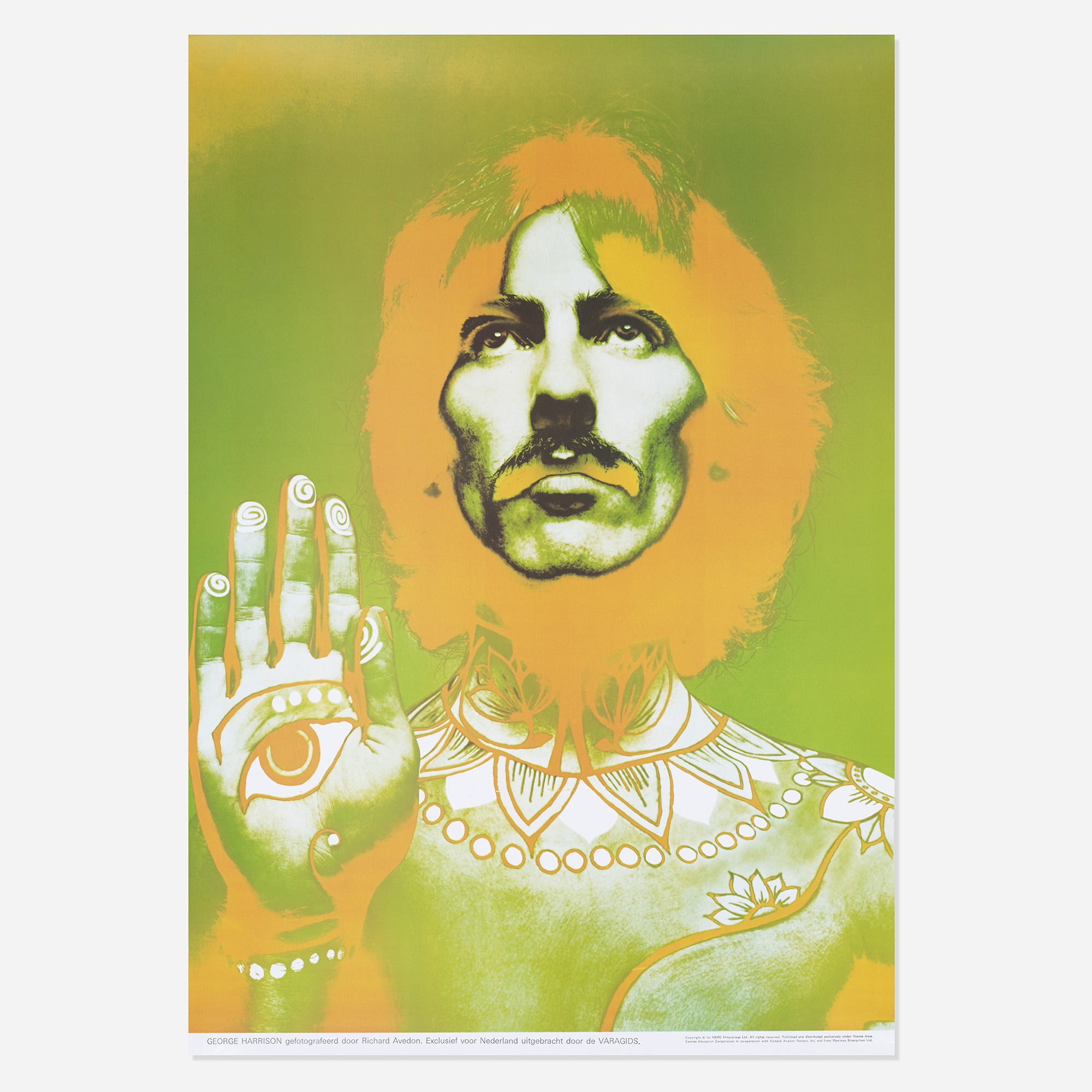
Richard Avedon [av-i-don] (1923 – 2004) was an American photographer born in New York City to a Jewish-Russian family. In 1946, Avedon had set up his own studio and began providing images for magazines including Vogue and Life. He soon became the chief photographer for Harper’s Bazaar.
Avedon did not conform to the standard technique of taking fashion photographs, where models stood emotionless and seemingly indifferent to the camera. Instead, he showed models full of emotion, smiling, laughing, and, many times, in action.
read more »
Posted in Art |
Leave a Comment »
March 2, 2011
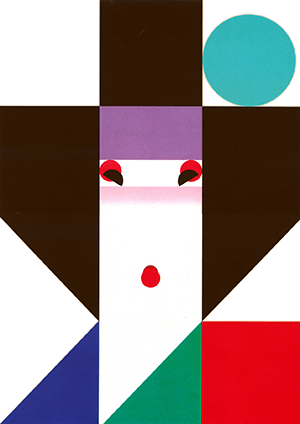
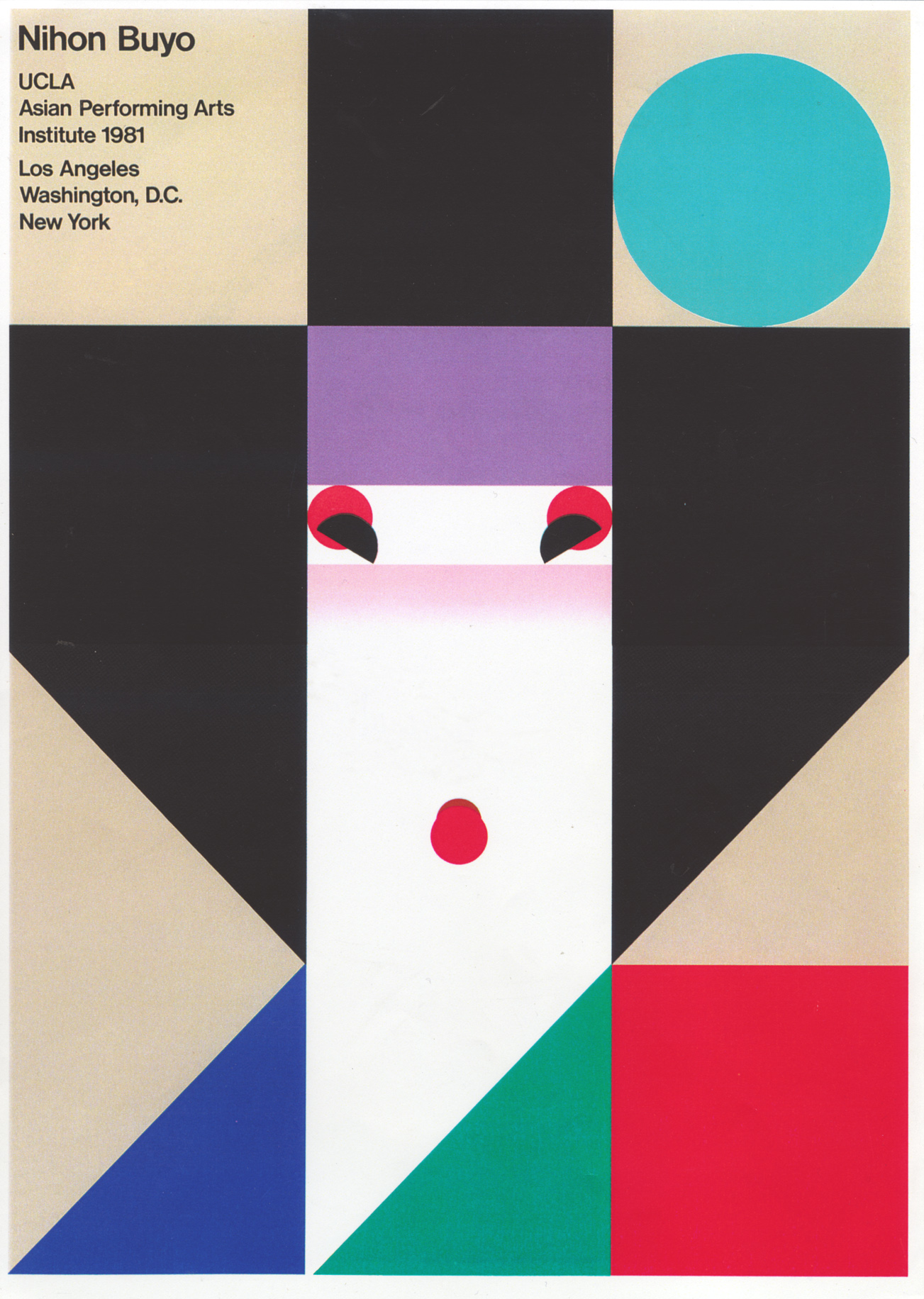
Ikko Tanaka (1930 – 2002) a Japanese graphic designer. The characteristic of his designs is a blending of deeply rooted Japanese traditions with western modernism to produce contemporary visual expression.
Posted in Art |
Leave a Comment »
March 2, 2011

Piet [peet] Mondrian [mawn-dree-ahn] (1872 – 1944), was a Dutch painter, and an important contributor to the De Stijl art movement (Dutch for ‘The Style,’ which advocated pure abstraction and universality by a reduction to the essentials of form and color; they simplified visual compositions to the vertical and horizontal directions, and used only primary colors along with black and white).
He evolved a non-representational form which he termed Neo-Plasticism. This consisted of white ground, upon which was painted a grid of vertical and horizontal black lines and the three primary colors.
Posted in Art, World |
Leave a Comment »
March 2, 2011

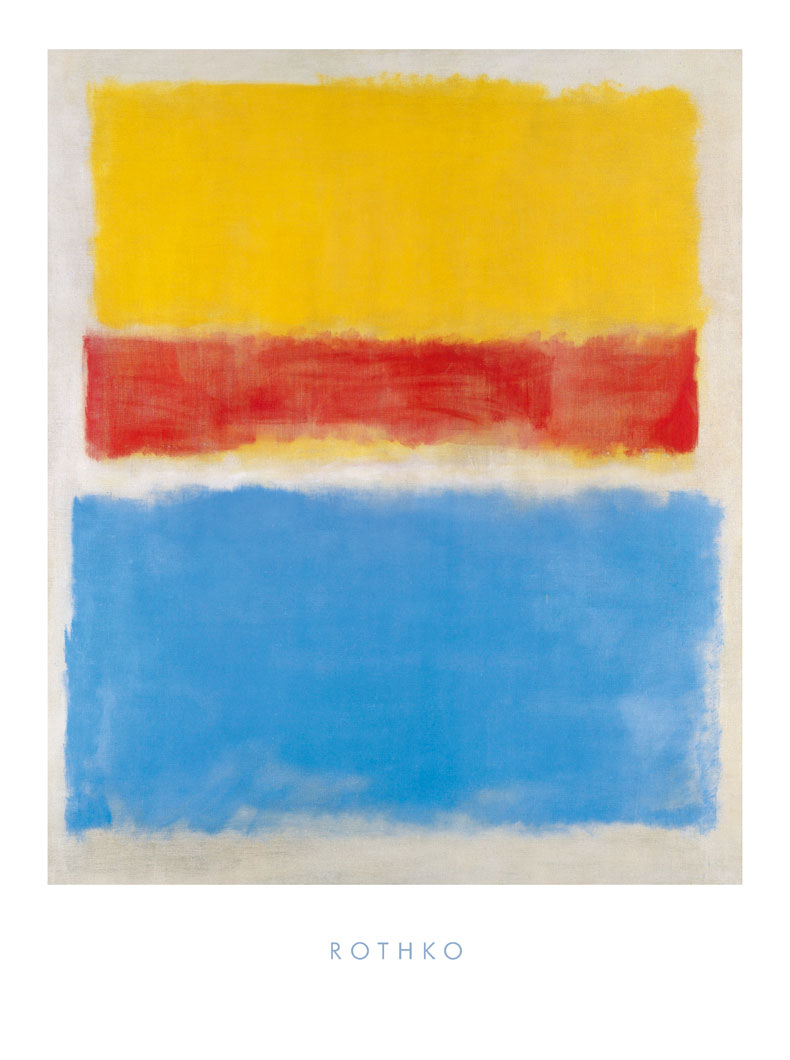
Mark Rothko (1903 – 1970) was a Latvian-born American painter. He is classified as an abstract expressionist, although he rejected the label, and even resisted classification as an ‘abstract painter.’ 1946 saw the creation of Rothko’s transitional ‘multiform’ paintings. He gradually transitioned from surrealistic, myth-influenced works of the early part of the decade to the highly abstract, Clyfford Still-influenced forms of pure color. For Rothko, these blurred blocks of various colors, devoid of landscape or human figure, let alone myth and symbol, possessed their own life force. They contained a ‘breath of life’ he found lacking in most figurative painting of the era.
He started with the application of a thin layer of binder mixed with pigment directly onto uncoated and untreated canvas on which he painted significantly thinned oils, creating a dense mixture of overlapping colors and shapes. His brush strokes were fast and light. Rothko used several original techniques that he tried to keep secret even from his assistants. Electron microscopy and ultraviolet analysis showed that he employed natural substances such as egg and glue, as well as artificial materials including acrylic resins, phenol formaldehyde, and modified alkyd. One of his objectives was to make the various layers of the painting dry quickly, without mixing of colors, such that he could soon create new layers on top of the earlier ones.
Posted in Art, Money |
Leave a Comment »
March 1, 2011

Com Truise is the stage name of Seth Haley, an American electronic musician originally from Oneida, New York, and later, Princeton, New Jersey. The name is a spoonerism of Tom Cruise. Originally an Art Director, he turned in his resignation prior to his first release as Com Truise. Prior to this, Seth Haley was a Drum and Bass DJ until he fell into the 80’s style that he is known for today.
His synthesizer-heavy production work, influenced by 1980s musical styles, was first offered on the ‘Cyanide Sisters’ EP, which was initially a free download from the AMDISCS label and was reissued digitally by Ghostly International. A remix of his appeared on the ‘Tron: Legacy Reconfigured’ album soon after. In 2011 he released his first full-length album, ‘Galactic Melt.’ Haley also performs with a live drummer, Rory O’Connor.
Posted in Art, Technology |
Leave a Comment »
March 1, 2011

Muammar Gaddafi [guh-dah-fee] (1942 – 2011) was the leader of Libya since a coup in 1969 until he was killed in a popular uprising in 2011. His regime was associated with numerous acts of state-sponsored terrorism in the 1970s, 80s and early 90s.
With the death of Omar Bongo of Gabon in 2009, he became the longest serving of all current non-royal national leaders and he was one of the longest serving rulers in history. Gaddafi is alleged to have amassed a multi-billion fortune for himself and his family.
read more »
Posted in Politics, War, World |
Leave a Comment »
February 24, 2011


Takashi Miike (b. 1960) is a highly prolific and controversial Japanese filmmaker. He has directed over seventy theatrical, video, and television productions since his debut in 1991. In the years 2001 and 2002 alone, Miike is credited with directing fifteen productions.
His films range from violent and bizarre to dramatic and family-friendly. He gained international fame in 2000 when his romantic horror film Audition (1999) played at international film festivals. He has since gained a strong cult following in the West that is growing with the increase in DVD releases of his works.
Posted in Art |
1 Comment »





 The Daily Omnivore