March 13, 2014

Satoshi Nakamoto is the person or group that created the Bitcoin protocol and reference software, Bitcoin-Qt. It is not known whether the name is real or a pseudonym. In 2008, Nakamoto published a paper on ‘The Cryptography Mailing’ list at metzdowd.com describing his digital currency. In 2009, he released the first Bitcoin software that launched the network and the first units currency, called bitcoins. Nakamoto is said to have continued to contribute to his Bitcoin software release with other developers until contact with his team and the community gradually began to fade in mid-2010.
Near this time, he handed over control of the source code repository and alert key functions of the software to Gavin Andresen, chief scientist at the Bitcoin Foundation (a non-profit founded in 2012 to promote Bitcoin). Also around this same time, he handed over control of the Bitcoin.org domain and several other domains to various prominent members of the Bitcoin community. Nakamoto is believed to be in possession of roughly one million bitcoins. At one point in December 2013, this was the equivalent of US$1.1 billion.
read more »
Posted in Money, Politics, Technology |
Leave a Comment »
March 11, 2014

Florentijn Hofman (b. 1977) is a Dutch artist known for playful urban installations such as the ‘Rubber Duck’ (a giant floating sculpture). They were built in various sizes, including one created in 2007 that is the largest rubber duck in the world at 105 feet long. Hofman’s tour was named ‘Spreading joy around the world.’ He aimed to recall everyone’s childhood memories by exhibiting the duck in 14 cities. The ducks are constructed with more than 200 pieces of PVC. There is an opening at the back of the body so that staff can perform maintenance. In addition, there is an electric fan in its body so that it can be inflated at any time, in either good or bad weather.
Since 2007, the ducks have been on display in Amsterdam, Belgium, Osaka, Sydney, Sao Paulo, Hong Kong, and Pittsburg. In 2009, while it was on display in Belgium, vandals stabbed the duck 42 times. The duck on display in Hong Kong was damaged and deflated in Taiwan after an earthquake, before bursting a few weeks later. In 2013, Sina Weibo, China’s most popular microblog, blocked the terms ‘Big Yellow Duck.’ The censorship occurred because a photoshopped version of ‘Tank Man’ (the Tiananmen Square protester), which swapped all tanks with this sculpture, had been circulating.
Posted in Art, Humor, World |
Leave a Comment »
February 27, 2014

Bill Watterson (b. 1958) is an American artist and the author of the comic strip ‘Calvin and Hobbes,’ which was syndicated from 1985 to 1995. Watterson stopped drawing the strip at the end of 1995 with a short statement to newspaper editors and his readers that he felt he had achieved all he could in the medium.
Watterson is known for his views on licensing (he refused to merchandise his creations on the grounds that displaying their images on commercially sold mugs, stickers and T-shirts would devalue the characters and their personalities) and his move back into private life after ‘Calvin and Hobbes.’
read more »
Posted in Art, Humor, Language |
1 Comment »
February 25, 2014

Robert H. Lustig is an American pediatric endocrinologist at the University of California, San Francisco (UCSF) where he is a Professor of Clinical Pediatrics. He practices in the field of neuroendocrinology, with an emphasis on the regulation of energy balance by the central nervous system. He also has a special interest in childhood obesity.
Lustig came to public attention through his efforts to establish that fructose can have serious deleterious effects on human (especially children’s) health if consumed excessively. In 2009, he delivered a lecture called ‘Sugar: The Bitter Truth’ that spread virally on YouTube, in which he calls fructose a ‘poison’ and equates its metabolic effects with those of ethanol.
read more »
Posted in Food, Health |
Leave a Comment »
February 24, 2014

Gregory Clark (b. 1957) is an economic historian at UC, Davis. His grandfathers were migrants to Scotland from Ireland, and he was born in Bellshill, Scotland. In 1974 he and a fellow pupil won the ‘Scottish Daily Express’ school debate competition. After school he earned his B.A. in economics and philosophy at King’s College, Cambridge in 1979 and his Ph.D. at Harvard in 1985. He has also taught as an Assistant Professor at Stanford and the University of Michigan. At Davis his areas of research are long term economic growth, the wealth of nations, and the economic history of England and India.
Clark is most well known for his book, ‘A Farewell to Alms: A Brief Economic History of the World.’ He argued that the current divide between rich and poor nations came about as a result of the Industrial Revolution originating in Britain. Prior to 1790, Clark asserts, man faced a Malthusian trap: new technology enabled greater productivity and more food, but was quickly gobbled up by higher populations. In Britain, however, as disease continually killed off poorer members of society, their positions in society were taken over by the sons of the wealthy.
read more »
Posted in Money, Science |
Leave a Comment »
February 19, 2014
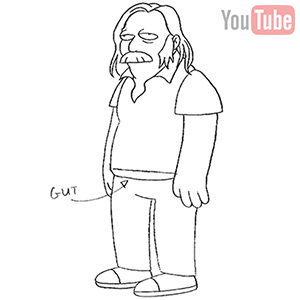
John Swartzwelder (b. 1950) is an American comedy writer and novelist, best known for his work on the animated television series ‘The Simpsons,’ as well as a number of novels. He is credited with writing the largest number of ‘Simpsons’ episodes by a large margin (59 full episodes, with contributions to several others). Swartzwelder was one of several writers recruited to show from the pages of George Meyer’s ‘Army Man’ magazine (a short-lived comedy periodical published in the late 1980s; Meyer would also go on to become an acclaimed ‘Simpsons’ writer).
Swartzwelder has been animated in the background of several episodes of ‘The Simpsons.’ His animated likeness closely resembles musician David Crosby, which prompted Matt Groening to state that anytime that David Crosby appears in a scene for no apparent reason, it is really John Swartzwelder. Additionally, Matt Groening has stated that the recurring character ‘Herman Hermann’ (the owner of Herman’s Military Antiques) was originally physically based on Swartzwelder–with the exception of his one arm.
read more »
Posted in Art, Humor, Language |
Leave a Comment »
January 28, 2014

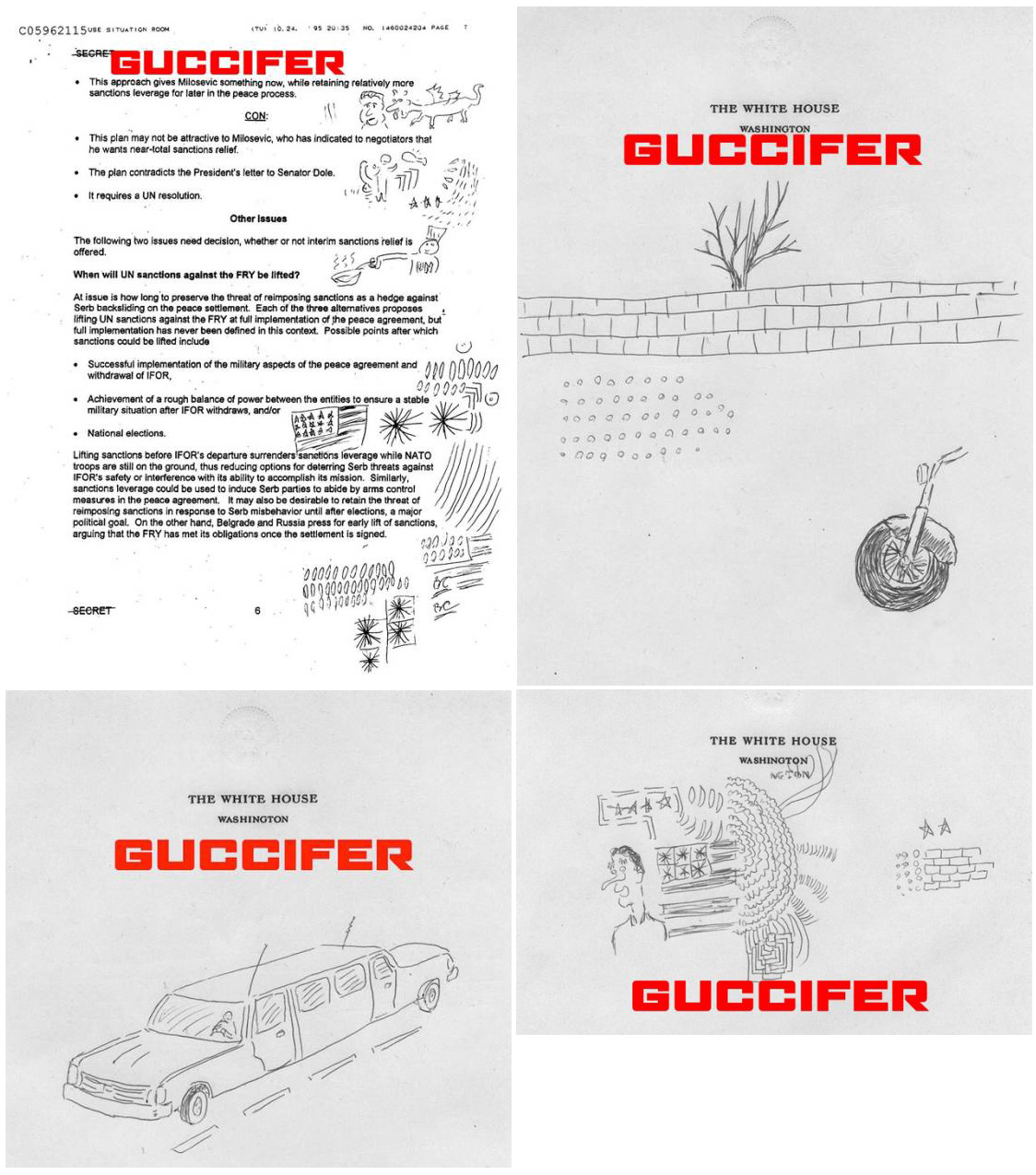
Marcel Lazăr Lehel (b. 1974) is a Romanian hacker known as Guccifer, who was responsible for a number of high-level security breaches involving both current and former members of the United States government. He was arrested in early 2014 by Romanian authorities. The hacker first appeared in news media in 2013 after ‘The Smoking Gun’ reported he was responsible for hacking the AOL account of Dorothy Bush Koch, sister of former president George W. Bush.
Family photos of former president George H. W. Bush, who was in the hospital at the time, were circulated to the internet. He also circulated a self-portrait painted by George W. Bush, depicting the former president taking a shower. Guccifer went on to hack a number of AOL, Yahoo, Flickr and Facebook accounts, giving him access to information about current and former high-level government officials.
read more »
Posted in Politics, Technology, World |
Leave a Comment »
January 23, 2014
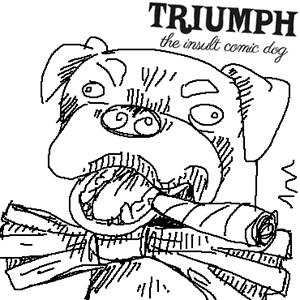
Robert Smigel [smy-guhl] (b. 1960) is an American actor, humorist, comedian and writer known for his ‘Saturday Night Live’ ‘TV Funhouse’ cartoon shorts and as the puppeteer and voice behind ‘Triumph, the Insult Comic Dog.’
read more »
Posted in Humor |
Leave a Comment »
January 16, 2014

Spike Jonze (b. 1969) is an American filmmaker best known for his collaborations with writer Charlie Kaufman, which include the 1999 film ‘Being John Malkovich’ and the 2002 film ‘Adaptation,’ and as the co-writer and director of the 2009 film ‘Where the Wild Things Are.’ He is also well known for his music video collaborations with Fatboy Slim, Weezer, Beastie Boys, and Björk.
He was also a co-creator and executive producer of ‘MTV’s Jackass.’ Since 2007, he has been the creative director at VBS.tv, an online television network supplied by Vice and funded by MTV. He is also part owner of skateboard company Girl Skateboards with riders Rick Howard and Mike Carroll. He also co-founded Directors Label, with filmmakers Chris Cunningham and Michel Gondry, and the Palm Pictures company
read more »
Posted in Art |
Leave a Comment »
January 13, 2014
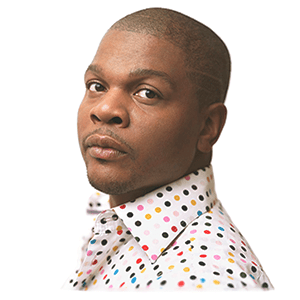
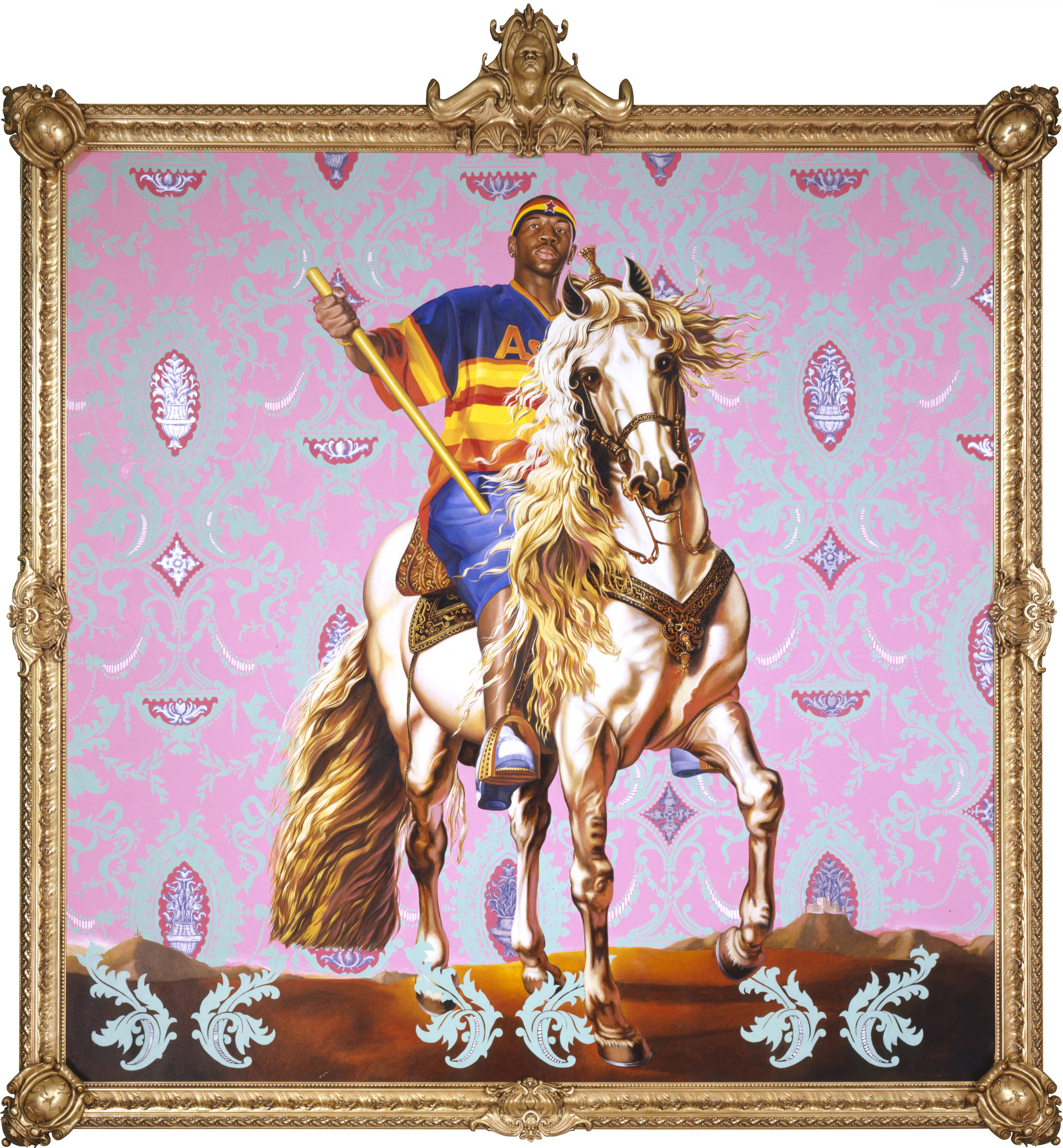
Kehinde [keh-hin-day] Wiley (b. 1977) is a New York-based portrait painter, who is known for his highly naturalistic paintings of people with black and brown skin in heroic poses. His portraits are based on photographs of young men who Wiley sees on the street. He painted men from Harlem’s 125th Street, then South Central neighborhood where he was born.
Dressed in street clothes, his models were asked to assume poses from the paintings of Renaissance masters, such as Tiziano Vecellio and Giovanni Battista Tiepolo. The artist describes his approach as ‘interrogating the notion of the master painter, at once critical and complicit.’ His figurative paintings ‘quote historical sources and position young black men within that field of power.’
read more »
Posted in Art, Politics, World |
Leave a Comment »
January 7, 2014
Carl Safina (b. 1955) is the author of several books about oceans and environmentalism, including ‘Song for the Blue Ocean,’ ‘Eye of the Albatross,’ and ‘The View From Lazy Point; A Natural Year in an Unnatural World.’ He is founding president of the Blue Ocean Institute at Stony Brook University in NY where he is active both in Marine Sciences and as co-chair of the Journalism School’s Alan Alda Center for Communicating Science. Safina is host of the PBS series, ‘Saving the Ocean with Carl Safina.’
Carl Safina works to show that nature and human dignity require each other. His current research is focused on the ways in which our relationship with the natural world affects human relations, and how the scientific facts imply the need for moral and ethical responses. His early research focused on seabird ecology. In the 1990s he brought fisheries issues into the environmental mainstream. He lead campaigns to ban high-seas driftnets, to re-write U.S. federal fisheries law, to work toward international conservation of tunas, sharks, and other fishes, and to achieve passage of a United Nations global fisheries treaty.
Posted in Science |
Leave a Comment »
November 25, 2013
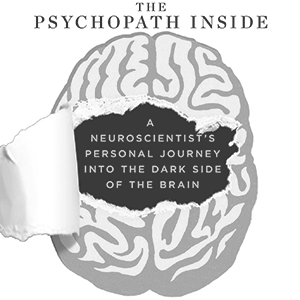
James Fallon (b. 1947) is a neuroscientist studying brain imaging as a professor of psychiatry and human behavior in the School of Medicine at the UC, Irvine. He prominently featured in the BBC production ‘Are You Good or Evil?’, where he is revealed to have discovered that he, himself, has the neurological and genetic correlates of psychopathy. Fallon stated that he is not concerned by the findings and believes that his positive experiences in childhood negated any potential genetic vulnerabilities to violence and emotional issues. He categorizes himself as a ‘pro-social psychopath.’
Fallon sits on several corporate boards and national think tanks for science, biotechnology, the arts, and the US military. He is a Subject Matter Expert in the field of ‘cognition and war’ to the Pentagon’s Joint Command. He has made significant scientific contributions in several areas, including discoveries of TGF alpha and epidermal growth factor, and he was the first experimenter to attempt large-scale stimulation of an injured brain with growth factors. He has also made contributions in the fields of schizophrenia, Parkinson’s disease, Alzheimer’s disease, and the roles of hostility and gender in nicotine and cocaine addiction.
Posted in Science |
Leave a Comment »


 The Daily Omnivore