April 4, 2012


Gun fu, a portmanteau of ‘gun’ and ‘kung fu,’ is the style of sophisticated close-quarters gunplay seen in Hong Kong action cinema and in Western films influenced by it. It often resembles a martial arts battle played out with firearms instead of traditional weapons. It may also be described by other terms such as ‘bullet ballet,’ ‘gun kata,’ or ‘gymnastic gunplay.’
The focus of gun fu is both style and the usage of firearms in ways that they were not designed to be used. Shooting a gun from each hand, shots from behind the back, as well as the use of guns as melee weapons are all common. Other moves can involve shotguns, Uzis, rocket launchers, and just about anything else that can be worked into a cinematic shot. It is often mixed with hand-to-hand combat maneuvers. Gun fu has become a staple factor in modern action films due to its visually appealing nature (regardless of its actual practicality in a real-life combat situation). This is a contrast to American action movies of the 1980s which focused more on heavy weaponry and outright brute-force in firearm-based combat.
read more »
Posted in Art, Death |
Leave a Comment »
April 3, 2012

Mockney (a portmanteau of ‘mock’ and ‘Cockney’) is an affected accent and form of speech in imitation of Cockney or working class London speech, or a person with such an accent. A stereotypical Mockney comes from a middle or upper-middle class background in England’s Home Counties (the counties encircling London).
Mockney is distinct from Estuary English by being the deliberate affectation of the working-class London (Cockney) accent. A person speaking with a Mockney accent might adopt Cockney pronunciation but retain standard grammatical forms where the Cockney would use non-standard forms (e.g. negative concord / double negative). The first published use of the word according to the Oxford English Dictionary was in 1989.
read more »
Posted in Language, Money, Politics |
Leave a Comment »
March 12, 2012
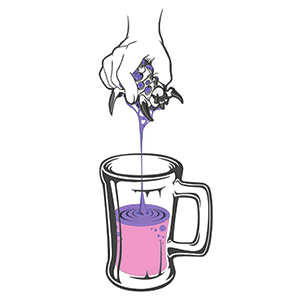
BarCraft is a portmanteau name for watching ‘StarCraft’ at bars. This phenomenon popped up in the spring of 2011 in the United States, with the start of North American Star League. It is often attributed to Team Liquid user ‘primadog,’ the redditor ‘_Oskar,’ and the Chao Bistro in Seattle. In May 2011, the user o_Oskar posted a topic on reddit saying that on the 11th of that month, people could go to Chao in Seattle to watch that day’s North American Star League games while drinking a few beers and enjoying the company of other ‘StarCraft’ fans.
Since then, the BarCraft phenomenon has grown exponentially, with BarCrafts in the United States, Canada, Sweden, Australia, and many more countries around the world, covering a variety of eSports events, not just StarCraft. New initiatives have recently sprouted from the barcraft trend. Namely, barcrafts have been used to raise money for the charity Child’s Play. Additionally, while not a charity in the strictest sense, One Nation of Gamers -a network of barcrafts composed of volunteers- pools all the money they raise to fund online starcraft tournaments for the community to watch.
Posted in Drugs, Food, Games |
1 Comment »
February 9, 2012

A squircle [skwer-kul] is a mathematical shape with properties between those of a square and those of a circle. It is a special case of superellipse. The word ‘squircle’ is a portmanteau of the words ‘square’ and ‘circle.’ A shape similar to a squircle, called a rounded square, may be generated by arranging four quarters of a circle and connecting their loose ends with straight lines. Although constructing a rounded square may be conceptually and physically simpler, the squircle has the simpler equation and can be generalized much more easily. One consequence of this is that the squircle and other superellipses can be scaled up or down quite easily. This is useful where, for example, one wishes to create nested squircles.
Squircles are useful in optics. If light is passed through a two-dimensional square aperture, the central spot in the diffraction pattern can be closely modeled by a squircle (also called a supercircle). If a rectangular aperture is used, the spot can be approximated by a superellipse. Squircles have also been used to construct dinner plates. A squircular plate has a larger area (and can thus hold more food) than a circular one with the same radius, but still occupies the same amount of space in a rectangular or square cupboard. The same is true of a square plate, but there are various problems (such as wiping up sauce) associated with the corners of square plates.
Posted in Science, Technology |
1 Comment »
January 26, 2012


Livetronica, a portmanteau of the words ‘live’ and ‘electronica,’ is a sub-genre of the jam band movement that blends such musical styles as rock, jazz, funk, and electronica. It consists primarily of instrumental music. The terms ‘Jamtronica’ and ‘Trance fusion’ are also used to refer to this style of music.
Artists like the Disco Biscuits, Lake Trout, and The New Deal are credited as founding fathers of the genre, but recently up-and-coming bands such as The Werks, Pnuma Trio, and the Histronic of Minneapolis have started to inject new life and young blood into the scene.
Posted in Art, Technology |
Leave a Comment »
December 6, 2011

The Tweel (a portmanteau of tire and wheel) is an experimental tire design developed by the French tire company Michelin. The tire uses no air, and therefore cannot burst or become flat.
Instead, the Tweel’s hub connects to flexible polyurethane spokes which are used to support an outer rim and assume the shock-absorbing role of a traditional tire’s pneumatic properties.
read more »
Posted in Money, Technology |
Leave a Comment »
November 19, 2011

Hacktivism (a portmanteau of hack and activism) is the use of computers and computer networks as a means of protest to promote political ends. The term was first coined in 1998 by a member of the Cult of the Dead Cow hacker collective. If hacking as ‘illegally breaking into computers’ is assumed, then hacktivism could be defined as ‘the nonviolent use of illegal or legally ambiguous digital tools in pursuit of political ends.’ These tools include web site defacements, redirects, denial-of-service (DoS) attacks, information theft, web site parodies, virtual sit-ins, typosquatting, and virtual sabotage.
If hacking as ‘clever computer usage/programming’ is assumed, then hacktivism could be understood as the writing of code to promote political ideology: promoting expressive politics, free speech, human rights, and information ethics through software development. Acts of hacktivism are carried out in the belief that proper use of code will be able to produce similar results to those produced by regular activism or civil disobedience.
read more »
Posted in Humor, Politics, Technology |
Leave a Comment »
November 16, 2011


Wigger [wig-er] is a pejorative slang term for a white person who emulates mannerisms, language, and fashions associated with African-American culture, particularly hip hop in the United States or the Grime/Garage scene in Britain. The term is a portmanteau of either wannabe or white and n****r. The term is considered derogatory, reflecting stereotypes of African-American or Black British culture, and can be used pejoratively, because of its connotations of cultural appropriation. It is also often used in a racist manner, not only belittling the person perceived as acting black, but also demeaning black people and culture by proxy. Some, however, use the term neutrally, or as a light joke, without any racism intended.
The phenomenon of white people adopting stereotypical black mannerisms, speech, and apparel – which in the general case is called allophilia – has appeared in several generations since slavery was abolished in the western world. The concept has been documented in the United States, Canada, United Kingdom, Australia and other white-majority countries. An early form of this was the ‘white negro’ in the jazz and swing music scenes of the 1920s and 1930s; as examined in the 1957 Norman Mailer essay, ‘The White Negro.’ It was later seen in the Zoot suiter of the 1930s and 1940s; the hipster of the 1940s; and the beatnik and rock and roller of the 1950s.
Posted in Language, Politics, World |
1 Comment »
October 27, 2011

Cocacolonization is a term that refers to globalization or cultural colonization. It is a portmanteau of the name of the multinational soft drink maker Coca-Cola and the word colonization. The term is used to imply either: the importation of Western (particularly American) goods; or, an invasion by Western and especially American cultural values that threatens local culture. While it is possible to use the term benignly, it has been used pejoratively to liken globalization to Westernization or Americanization.
In explaining the role of Coca-Cola as a universal influence of the ‘American way’ in the Cold War period, scholar Richard Kuisel states, ‘Perhaps no commercial product is more thoroughly identified with the United States… Coca Cola was fast becoming a universal drink.’ The dangers of cocacolonization were evoked after World War II by the French press, which regarded Coca-Cola as an American affront to the French culture. A typical cold war joke stated that, following the moon landing, the USSR leapfrogged the U.S. by painting the moon red, whilst the U.S. retaliated by going back and writing Coca-Cola in white on the red background. Seen as ‘too American’ for Communists, Pepsi was the main exported soft drink to Europe for much of the Cold War.
read more »
Posted in Food, Money, World |
Leave a Comment »
October 20, 2011

The digerati [dij-uh-rah-tee] are people highly skilled in the processing and manipulation of digital information; wealthy or scholarly techno-geeks. They are the elite of the computer industry and online communities. The word is a portmanteau, derived from ‘digital’ and ‘literati,’ and reminiscent of the earlier coinage glitterati (wealthy or famous people who conspicuously or ostentatiously attend fashionable events). Famous computer scientists, tech magazine writers and well-known bloggers are included among the digerati. The word is used in several related but different ways. It can mean: Opinion leaders who, through their writings, promoted a vision of digital technology and the Internet as a transformational element in society; people regarded as celebrities within the Silicon Valley computer subculture, particularly during the dot-com boom years; and anyone regarded as influential within the digital technology community.
The first mention of the word Digerati on USENET occurred in 1992, and referred to an article by George Gilder in ‘Upside’ magazine. According to William Safire, the term was coined by New York Times editor Tim Race in a 1992. In Race’s words: ‘Actually the first use of ‘digerati’ was in a article, ‘Pools of Memory, Waves of Dispute,’ by John Markoff, into which I edited the term. The article was about a controversy engendered by a George Gilder article that had recently appeared in ‘Upside’ magazine.’
Posted in Language, Money, Technology |
Leave a Comment »
September 16, 2011

A bokode is a type of data tag which holds thousands of times more information than a barcode. They were developed by a team at the MIT Media Lab. The bokode pattern is a tiled series of Data Matrix codes. The name is a portmanteau of the words bokeh (a photographic term) and barcode – rewritable bokodes are called bocodes. They are much smaller than a barcode and are circular in shape with a diameter of 3mm. A bokode consists of an LED covered with a mask and a lens. They are readable from different angles and from 4 meters (13 feet) away by an SLR camera.
Currently they are expensive to produce as the LED requires power, but there are prototypes which manage with reflected light. Bokodes represent a privacy advantage compared to Radio-frequency identification tags (RFID): bokodes can be covered up, whereas active as well as passive RFID tags can be read from a distance with equipment that can receive radio signals.
Posted in Money, Technology |
Leave a Comment »
August 9, 2011

Taqwacore [tok-wah-kor] is a genre of punk music dealing with Islam and its culture, originally conceived in Michael Muhammad Knight’s 2003 novel, ‘The Taqwacores.’ The name is a portmanteau of hardcore and the Arabic word Taqwa, which is usually translated as ‘piety’ or the quality of being ‘God-fearing,’ and thus roughly denotes fear and love of the divine. The scene is composed mainly of young Muslim artists living in the US and other western countries, many of whom openly reject traditionalist interpretations of Islam.
Although Muslim punk music dates at least to the 1979 founding of British band Alien Kulture, and in the 90’s, Nation Records act Fun-Da-Mental and Asian Dub Foundation, this is the first example of US Muslim generated punk. Knight’s novel was instrumental in encouraging the growth of a contemporary North American Muslim punk movement. There is not a definitive ‘taqwacore sound,’ and the scene is much more diverse now than the fictional one portrayed in Knight’s novel, with artists incorporating various styles, ranging from punk to hip-hop, and musical traditions from the Muslim world; the Kominas describe their sound as ‘Bollywood punk,’ Sagg Taqwacore Syndicate is rap and techno inspired, and Al-Thawra uses the term ‘raicore,’ based on Arabic Raï music.
Posted in Art, Philosophy, Politics |
Leave a Comment »



 The Daily Omnivore