February 3, 2025

The phantom time conspiracy theory is a pseudohistorical conspiracy theory first asserted by Heribert Illig in 1991. It hypothesizes a conspiracy by the Holy Roman Emperor Otto III, Pope Sylvester II, and possibly the Byzantine Emperor Constantine VII, to fabricate the Anno Domini dating system retroactively, in order to place them at the special year of AD 1000, and to rewrite history to legitimize Otto’s claim to the Holy Roman Empire.
Illig suggested this was achieved through the alteration, misrepresentation and forgery of documentary and physical evidence. According to this scenario, the entire Carolingian period, including the figure of Charlemagne, is a fabrication, with a ‘phantom time’ of 297 years (614–911) added to the Early Middle Ages. Substantial evidence contradicts the hypothesis and it failed to gain the support of historians, and calendars in other European countries, most of Asia and parts of pre-Columbian America contradict this.
read more »
Posted in Politics |
Leave a Comment »
January 11, 2024

According to a false conspiracy theory, medbeds (an abbreviation of ‘medical bed’ or ‘meditation bed’) are secret beds that can miraculously heal humans and extend life. The plausibility of such devices is pseudoscience. Medbed conspiracy theories often involve claims that the devices are utilized by members of a ‘deep state’ and billionaires and that the former President of the United States, John F. Kennedy, is still alive, lying on a medbed.
Belief in these devices is popular among QAnon influencers such as Michael Protzman, Romana Didulo, and YamatoQ. Various companies sell devices or access to beds that supposedly heal ailments via imaginary technologies while also including fine print on their websites disclaiming that no diagnoses, treatment, or cures are provided.
Posted in Health, Politics, Technology |
Leave a Comment »
February 25, 2023


Pseudolaw consists of statements, beliefs, or practices that are claimed to be based on accepted law or legal doctrine, but which deviate significantly from most conventional understandings of law and jurisprudence, or which originate from non-existent statutes or legal principles the advocate or adherent incorrectly believes exist.
Canadian legal scholar Donald J. Netolitzky defined pseudolaw as ‘a collection of legal-sounding but false rules that purport to be law,’ a definition that distinguishes pseudolaw from arguments that fail to conform to existing laws such as novel arguments or an ignorance of precedent in case law.
read more »
Posted in Language, Money, Politics |
1 Comment »
March 12, 2018
Precognition (Latin: ‘acquiring knowledge’), also called ‘prescience,’ ‘future vision,’ or ‘future sight’ is an alleged psychic ability to see events in the future.
As with other forms of extrasensory perception (ESP), there is no reliable scientific evidence that precognition is a real ability possessed by anyone and it is widely considered to be pseudoscience. Specifically, precognition appears to violate the principle that an effect cannot occur before its cause.
read more »
Posted in Philosophy, Science |
Leave a Comment »
March 3, 2016

Drapetomania [drah-pay-too-mey-nee-uh] was a supposed mental illness described by American physician Samuel A. Cartwright in 1851 that caused black slaves to flee captivity. Today, drapetomania is considered an example of pseudoscience and part of the edifice of scientific racism. The term derives from the Greek ‘drapetes’ (‘runaway [slave]’) and ‘mania’ (‘madness, frenzy’). In ‘Diseases and Peculiarities of the Negro Race,’ Cartwright points out that the Bible calls for a slave to be submissive to his master, and by doing so, the slave will have no desire to run away.
Cartwright described the disorder – which, he said, was ‘unknown to our medical authorities, although its diagnostic symptom, the absconding from service, is well known to our planters and overseers’– in a paper delivered before the Medical Association of Louisiana that was widely reprinted. He stated that the malady was a consequence of masters who ‘made themselves too familiar with [slaves], treating them as equals.’
read more »
Posted in Health, Politics |
1 Comment »
August 23, 2014
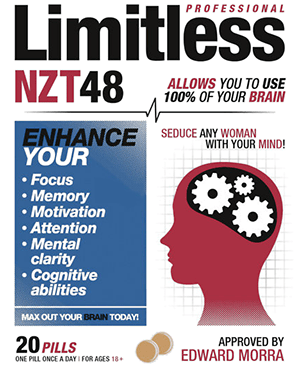
The 10% of brain myth is the widely perpetuated urban legend that the average human can only make use of 10% (or some other small percentage) of their brain. It has been misattributed to many people, including Albert Einstein. By association, it is suggested that a person may harness this unused potential and increase intelligence by spiritual, chemical, or technological means.
Though factors of intelligence can increase with training, the popular notion that large parts of the brain remain unused, and could subsequently be ‘activated,’ rests more in popular folklore than scientific theory. Though mysteries regarding brain function remain—e.g. memory, consciousness—the physiology of brain mapping suggests that all areas of the brain have a function.
read more »
Posted in Health, Science |
1 Comment »
August 15, 2013
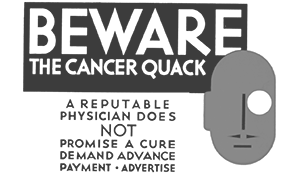

Quackery [kwak-uh-ree] is the promotion of unproven or fraudulent medical practices. Random House Dictionary describes a ‘quack’ as a ‘fraudulent or ignorant pretender to medical skill’ or ‘a person who pretends, professionally or publicly, to have skill, knowledge, or qualifications he or she does not possess; a charlatan.’ The word ‘quack’ derives from the archaic word ‘quacksalver,’ of Dutch origin, literally meaning ‘hawker of salve.’ In the Middle Ages the word ‘quack’ meant ‘shouting.’ The quacksalvers sold their wares on the market shouting in a loud voice.
‘Health fraud’ is often used as a synonym for quackery, but quackery’s salient characteristic is aggressive promotion (‘quacks quack!’) rather than fraud, greed or misinformation. ‘Pseudo-medicine’ is a term for treatments known to be ineffective, regardless of whether their advocates themselves believe in their effectiveness.
read more »
Posted in Health, Language, Money |
Leave a Comment »
June 27, 2013
Pseudorationalism [soo-doh-rash-uh-nl-iz-uhm] was the label given by economist and philosopher Otto Neurath to a school of thought that he was heavily critical of, throughout many of his writings but primarily in his 1913 paper ‘The lost wanderers of Descartes and the auxiliary motive’ and later to a lesser extent in his 1935 ‘Pseudorationalismus der Falsifikation,’ a review of and attack on philosopher of science Karl Popper’s first book, ‘Logik der Forschung’ (‘The Logic of Scientific Discovery’), contrasting this approach with his own view of what rationalism should properly be.
Neurath aimed his criticism at a Cartesian belief that all actions can be subject to rational analysis, saying that: ‘Once reason has gained a certain influence, people generally show a tendency to regard all their actions as reasonable. Ways of action which depend on dark instincts receive reinterpretation or obfuscation.’
read more »
Posted in Money, Philosophy, Science |
Leave a Comment »
June 26, 2013
Pseudoskepticism [soo-doh-skep-tuh-siz-uhm] refers to a philosophical or scientific position which appears to be that of skepticism or scientific skepticism but which in reality fails to be so, for whatever reason.
The term is usually used pejoratively.
read more »
Posted in Language, Philosophy, Science |
Leave a Comment »
March 10, 2013

Pseudoarchaeology refers to pseudoscientific theories about the past. Some of these revolve around the idea that prehistoric and ancient human societies were aided in their development by intelligent extraterrestrial life, an idea propagated by Swiss author Erich von Däniken in books such as ‘Chariots of the Gods?’ (1968) and Italian author Peter Kolosimo. Others instead hold that there were human societies in the ancient period that were significantly technologically advanced, such as Atlantis, and this idea has been propagated by figures like Graham Hancock in his ‘Fingerprints of the Gods’ (1995).
Many alternative archaeologies have been adopted by religious groups. Academic archaeologists have heavily criticized pseudoarchaeology, with one of the most vocal critics, John R. Cole, characterizing it as relying on ‘sensationalism, misuse of logic and evidence, misunderstanding of scientific method, and internal contradictions in their arguments.’
read more »
Posted in Philosophy |
Leave a Comment »
January 17, 2013
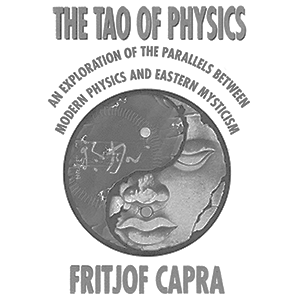
Quantum mysticism [mis-tuh-siz-uhm] is a term that has been used to refer to a set of metaphysical beliefs and associated practices that seek to relate consciousness, intelligence, or mystical world-views to the ideas of quantum mechanics and its interpretations. The term originally emerged from the founders of quantum theory in the early twentieth century as they debated the interpretations and implications of their nascent theories, which would later evolve into quantum mechanics, and later after WWII, with publications such as Schrödinger’s and Eugene Wigner’s 1961 paper.
The essential qualities of early quantum theory, and the ontological (related to the nature of being) questions that emerged from it, made a distinction between philosophical and scientific discussion difficult as quantum theory developed into a strong scientific theory. Quantum Mysticism is usually considered pseudoscience. Many of the leading Quantum physicists did however give mystical interpretations to their findings.
read more »
Posted in Philosophy, Science |
Leave a Comment »
November 13, 2012

According to ancient astronaut theories, intelligent extraterrestrial beings visited Earth during the origins or development of human cultures, technologies, and/or religions. Some of these theories propose that deities from most – if not all – religions are actually extraterrestrials, and their technologies were taken as evidence of their divine status. Ancient astronaut theories have been widely used as a plot device in science fiction (e.g. ‘2001: A Space Odyssey,’ ‘Stargate’).
Such theories have not received support within the scientific community, and have received little or no attention in peer reviewed studies from scientific journals.
read more »
Posted in Art, Philosophy, Science |
Leave a Comment »


 The Daily Omnivore