July 3, 2012

‘The medium is the message‘ is a phrase coined by Marshall McLuhan meaning that the form of a medium embeds itself in the message, creating a symbiotic relationship by which the medium influences how the message is perceived. The phrase was introduced in his most widely known book, ‘Understanding Media: The Extensions of Man,’ published in 1964.
McLuhan proposes that a medium itself, not the content it carries, should be the focus of study. He said that a medium affects the society in which it plays a role not only by the content delivered over the medium, but also by the characteristics of the medium itself. McLuhan frequently punned on the word ‘message’ changing it to ‘mass age,’ ‘mess age,’ and ‘massage’; a later book, ‘The Medium is the Massage’ was originally to be titled ‘The Medium is the Message,’ but McLuhan preferred the new title which is said to have been a printing error.
read more »
Posted in Language, Politics, Technology |
1 Comment »
June 21, 2011

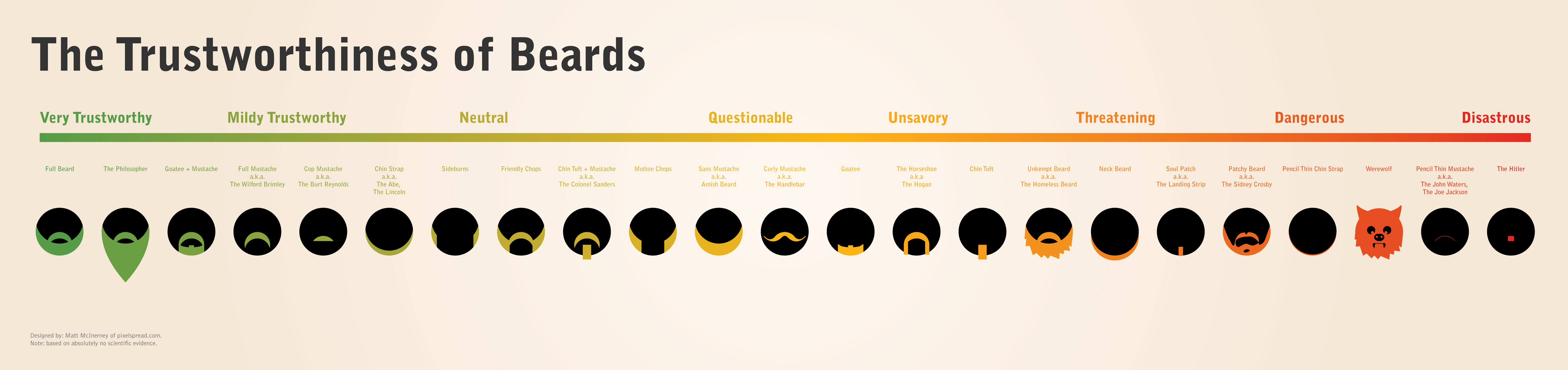
‘Barba non facit philosophum‘ is a Latin phrase meaning ‘A beard does not constitute a philosopher.’ According to the Latin author Aulus Gellius, who relates he was present at the episode, a man in a cloak, ‘with long hair and a beard that reached almost to his waist’ once came to the Athenian aristocrat, Herodes Atticus, who was renown for his ‘charm and his Grecian eloquence,’ and asked that money be given him for bread. When Herodes asked him who he was, the man, seemingly taking offense, replied that he was a philosopher, adding that he wondered why Herodes thought it necessary to ask what was obvious
‘I see,’ said Herodes, ‘a beard and a cloak; the philosopher I do not yet see.’ Some of Herodes’ companions informed him that the fellow was a actually a beggar ‘of worthless character,’ whose behavior was often abusive. Hearing which, Herodes said: ‘Let us give him some money, then, whatever his character may be, not because he is a man, but because we are men,’ and ordered that enough money be given to the man so that he could ‘buy bread for thirty days.’ The Athenian’s phrase, shortened to ‘A beard does not constitute a philosopher,’ has taken on a meaning similar to the proverb: ‘Clothes do not make the man,’ encountered in many cultures.
Posted in Humor, Language, Philosophy |
1 Comment »