May 11, 2011

Stephen Hawking (b. 1942) is an English theoretical physicist and cosmologist, whose scientific books and public appearances have made him an academic celebrity. He is known for his contributions to the fields of cosmology and quantum gravity, especially in the context of black holes (he first predicted that black holes emit radiation, which is today known as Hawking radiation).
He has also achieved success with works of popular science in which he discusses his own theories and cosmology in general. Hawking has a motor neurone disease that is related to ALS (Lou Gehrig’s disease), a condition that has progressed over the years and has left him almost completely paralyzed.
read more »
Posted in Language, Science |
Leave a Comment »
May 3, 2011
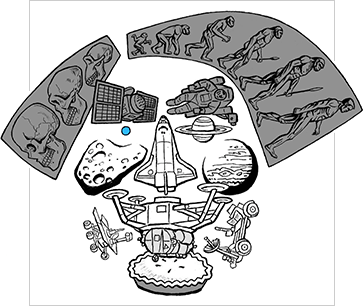
Carl Sagan (1934 – 1996) was an American astronomer. He devoted his life to popularizing science. He speculated about what life from other planets would be like, and promoted the search for extraterrestrial life. He is world famous for his popular science books and the television series Cosmos, which he co-wrote and presented.
He was born in Brooklyn New York where his father, Sam Sagan, was a Jewish clothes maker and his mother, Rachel Molly Gruber, was a housewife. Sagan attended the University of Chicago earning two degrees in physics. He followed with a doctorate in Astronomy in 1960 and taught at Harvard University until 1968, when he moved to Cornell University.
read more »
Posted in Language, Philosophy, Science |
Leave a Comment »
April 21, 2011

Andrew Wakefield (b. 1957) is a British former surgeon and medical researcher known for his fraudulent claims of a causative connection between the measles, mumps and rubella (MMR) vaccine and autism. He also created the term ‘autistic enterocolitis’ to describe an unproven form of inflammatory bowel disease (not to be confused with irritable bowel syndrome).
In January 2011, an article by British investigative reporter, Brian Deer and its accompanying editorial in the British Medical Journal identified Wakefield’s work as an ‘elaborate fraud.’ In a follow-up article, Deer said that Wakefield had planned to launch a venture on the back of an MMR vaccination scare that would profit from new medical tests and ‘litigation driven testing.’ Wakefield’s study and public recommendations against the use of the combined MMR vaccine were linked to a steep decline in vaccination rates in the United Kingdom and a corresponding rise in measles cases, resulting in serious illness and several fatalities.
Posted in Health, Money, Politics |
Leave a Comment »
April 6, 2011

Isaac Asimov (b. 1920 – 1992) was an American author and professor of biochemistry at Boston University, best known for his works of science fiction and for his popular science books. Asimov was one of the most prolific writers of all time, having written or edited more than 500 books. His works have been published in nine of the ten major categories of the Dewey Decimal System (The sole exception being the 100s: philosophy and psychology). Isaac Asimov is widely considered a master of hard science fiction and, along with Robert A. Heinlein and Arthur C. Clarke, he was considered one of the ‘Big Three’ science fiction writers during his lifetime. Asimov’s most famous works are the ‘Foundation’ and ‘Robot’ series.
The prolific Asimov also wrote mysteries and fantasy, as well as much non-fiction. Most of his popular science books explain scientific concepts in a historical way, going as far back as possible to a time when the science in question was at its simplest stage. He often provides nationalities, birth dates, and death dates for the scientists he mentions, as well as etymologies and pronunciation guides for technical terms. Examples include his ‘Guide to Science,’ the three volume set ‘Understanding Physics,’ ‘Asimov’s Chronology of Science and Discovery,’ as well as numerous works on astronomy, chemistry, mathematics, the Bible, and William Shakespeare’s works.
Posted in Art, Language, Science |
Leave a Comment »
March 31, 2011
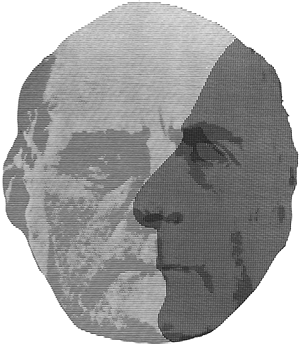
Francis Galton (1822 – 1911) was an English Victorian polymath: anthropologist, eugenicist, tropical explorer, geographer, inventor, meteorologist, and statistician. Galton had a prolific intellect, and produced over 340 papers and books throughout his lifetime. He also created the statistical concept of correlation. He was the first to apply statistical methods to the study of human differences and inheritance of intelligence, and introduced the use of questionnaires and surveys for collecting data on human communities.
He was a pioneer in eugenics, coining the term itself and the phrase ‘nature versus nurture.’ As the initiator of scientific meteorology, he devised the first weather map. He also invented the Dog Whistle for testing differential hearing ability.
Posted in Science, Technology, World |
Leave a Comment »
March 21, 2011

Vernor Vinge (b. 1944) is a computer scientist and science fiction author. He is best known for his Hugo Award-winning novels and novellas A Fire Upon the Deep (1992), as well as his 1993 essay ‘The Coming Technological Singularity,’ in which he argues that the creation of superhuman artificial intelligence will mark the point at which ‘the human era will be ended,’ such that no current models of reality are sufficient to predict beyond it.
Vinge came to prominence in 1981 with his novella ‘True Names,’ perhaps the first story to present a fully fleshed-out concept of cyberspace, which would later be central to cyberpunk stories by William Gibson, Neal Stephenson and others.
read more »
Posted in Art, Technology |
Leave a Comment »
February 14, 2011

Jaron Lanier [lah-neer] (b. 1960) is an American computer scientist and artist. In the early 1980s he popularized the term ‘Virtual Reality’ (VR) for a field in which he was a pioneer. At that time, he founded VPL Research, the first company to sell VR products. His current appointments include Interdisciplinary Scholar-in-Residence, CET, UC Berkeley. In what is probably his most famous paper ‘One-Half of a Manifesto’ (Wired, 2000) Lanier opposes the prospect of so called ‘cybernetic totalism,’ which is ‘a cataclysm brought on when computers become ultra-intelligent masters of matter and life.’
Lanier’s position is that humans may not be considered to be biological computers, i.e., they may not be compared to digital computers in any proper sense, and it is very unlikely that humans could be generally replaced by computers easily in few decades, even economically. While processor performance increases according to Moore’s law, overall performance rises only very slowly. This is because our productivity in developing software increases only slightly, and software becomes more bloated and remains as error-prone as it ever was. He warns that the biggest problem of any theory is not that it is false, ‘but when it claims to be the sole and utterly complete path to understanding life and reality.’
Posted in Philosophy, Politics, Technology |
Leave a Comment »
January 11, 2011


Avram Noam Chomsky (b. 1928) is an American linguist, philosopher, political activist, author, and lecturer. He is a professor emeritus of linguistics at MIT. Chomsky created one of the most important contributions to the field of linguistics made in the 20th century: the theory of generative grammar, a branch of theoretical linguistics that works to provide a set of rules that can accurately predict which combinations of words are able to make grammatically correct sentences. In the 1950’s he helped start the cognitive revolution in psychology through his review of B. F. Skinner’s work.
He challenged the behaviorist way of looking at behavior and language. His natural approach to the study of language also changed the philosophy of language and mind. He invented the Chomsky hierarchy, a way of looking at formal languages in terms of their power to explain language. In the 1960s he criticized the Vietnam War. Because of that, Chomsky became more widely known for his media criticism and politics. He is a key intellectual figure within the left wing of United States politics.
Posted in Language, Philosophy, Politics |
Leave a Comment »
January 1, 2011
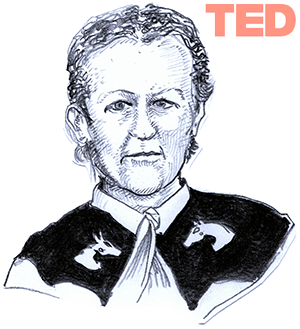
Temple Grandin (b. 1947) is an American doctor of animal science and professor at Colorado State University, bestselling author, and consultant to the livestock industry on animal behavior. As a person with high-functioning autism, Grandin is also widely noted for her work in autism advocacy and is the inventor of the ‘hug machine’ designed to calm hypersensitive persons.
Grandin became well known after being described by Oliver Sacks in the title narrative of his book ‘An Anthropologist on Mars’ (1995); the title is derived from Grandin’s description of how she feels around neurotypical people. She first spoke in public about autism in the mid-1980s at the request of Ruth C. Sullivan, one of the founders of the Autism Society of America.
read more »
Posted in Health, Science |
Leave a Comment »
December 3, 2010
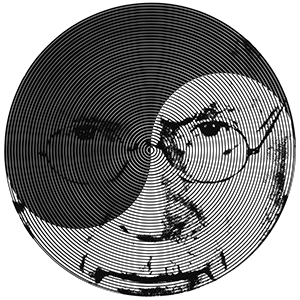
Carl Gustav Jung [yoong] (1875 – 1961) was a Swiss psychiatrist, an influential thinker, and the founder of analytical psychology. Jung is often considered the first modern psychologist to state that the human psyche is ‘by nature religious’ and to explore it in depth. Though not the first to analyze dreams, he has become perhaps one of the most well known pioneers in the field of dream analysis. Although he was a theoretical psychologist and practicing clinician, much of his life’s work was spent exploring other areas, including Eastern and Western philosophy, alchemy, astrology, sociology, as well as literature and the arts.
He considered the process of individuation necessary for a person to become whole. This is a psychological process of integrating the conscious with the unconscious while still maintaining conscious autonomy. Individuation was the central concept of analytical psychology. Many pioneering psychological concepts were originally proposed by Jung, including the Archetype, the Collective Unconscious, the Complex, and synchronicity. A popular psychometric instrument, the Myers-Briggs Type Indicator (MBTI), has been principally developed from Jung’s theories.
Posted in Health, Philosophy, Science |
Leave a Comment »





 The Daily Omnivore