March 20, 2012

The SynthAxe is a fretted, guitar-like MIDI controller, created by Bill Aitken, Mike Dixon, and Tony Sedivy and manufactured in England in the 1980s. It uses electronic synthesizers to produce sound and is controlled through the use of an arm resembling the neck of a guitar in form and in use.
The neck of the instrument is angled upwards from the body, and there are two independent sets of strings. The fretboard is continuously scanned and sends signals to synthesizers which produce the sound. The left set determine the pitch played, through contact with the frets on the neck and by sensing the side-to-side bending of the string. The right set of strings are velocity sensitive; these strings can be plucked, strummed or damped in the same manner as a guitar’s. A keyboard made up of nine keys can also be used to trigger notes instead of the strings. An electronic tremolo bar can be used for standard whammy bar effects, or can be redefined to produce different MIDI output (e.g., filter cutoffs, volume, etc).
Posted in Art, Money, Technology |
Leave a Comment »
March 20, 2012


The needle drop is a technique used in hip hop deejaying. The DJ sets a record spinning, then drops the stylus on the turntable at the exact point where he wants playback to begin without previously cuing up the record. Since there is no time wasted in cuing, the needle drop allows faster movements by the DJ. The needle drop method was developed in the 1970s by Grand Wizard Theodore at around the same time that he and Grandmaster Flash were pioneering scratching.
A DJ often uses colored ‘dot’ labels to mark the sample to be used. The first step is to locate the desired sample, the second step is much more critical. The sample is located, then the record is brought about an inch or two backwards from the beginning of the sample. A ‘dot’ label is carefully placed up against the stylus (needle) and a feather touch is applied to keep the label in place. Too hard of an application may lead to the needle being misplaced on the record, slipping to the next several grooves, an undesired result. After the needle is removed from the label, the label can be pressed into place more permanently. If the DJ ever wishes to remove the label, residue can be removed from the record with widely available record cleaner solutions.
Posted in Art |
Leave a Comment »
March 19, 2012
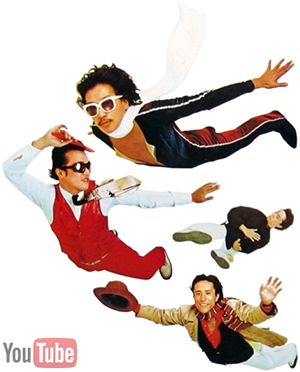
Sadistic Mika Band was a Japanese rock group formed in 1972. Its name is a parody of the ‘Plastic Ono Band.’ Produced by Masatoshi Hashiba on Toshiba-EMI Records (now EMI Music Japan), the band was led by the then husband and wife team of guitarist Kazuhiko Kato, and his wife, singer Mika Fukui. The word ‘sadistic’ is reported to be inspired by her insensitive sense of humor.
Kazuhiko Kato moved to London in 1972 and impressed by the burgeoning glam rock scene led by T. Rex and David Bowie, he set about forming a new group in Japan to emulate the style. Kato passed the album to Malcolm McLaren who at the time had a shop with Vivienne Westwood, and McLaren passed it on to Bryan Ferry, whose band Roxy Music would later support on a tour.
Posted in Art, Humor, World |
Leave a Comment »
March 18, 2012

The Space Traders is a science fiction short story by Derrick Bell (1930 – 2011), the first tenured African-American Professor of Law at Harvard Law School, and one of the originators of critical race theory (which argues that racism is engrained in the fabric and system of the American society). Published in 1992, its subject is the arrival of apparently benevolent and powerful extraterrestrials that offer the United States a wide range of benefits such as gold, clean nuclear power and other technological advances, in exchange for one thing: handing over all black people in the U.S. to the aliens. The story posits that the people and political establishment of the U.S. are willing to make this deal, passing a constitutional amendment to enable it.
‘The Space Traders’ was adapted for television in 1994 by director Reginald Hudlin and writer Trey Ellis. It aired on HBO as the leading segment of a three-part television anthology entitled ‘Cosmic Slop,’ which focused on minority-centric science fiction. In the run-up to the 2012 U.S. presidential election, the story became the subject of political controversy. A review of the TV adaptation on the conservative news site Breitbart.com argued that it ‘captures the stupidity, paranoia, and shameless race-hustling of the people that Obama embraces.’ In ‘The Atlantic,’ Conor Friedersdorf replied by arguing that the story’s critics ‘would do well to acknowledge that for many decades of American history, including years during Professor Bell’s life, a majority of Americans would have voted in favor of trading blacks for fantastic wealth, unlimited energy, and an end to pollutants.’
Posted in Art, Politics, World |
Leave a Comment »
March 12, 2012
Oxfam is the largest retailer of second hand books in Europe, selling around 12 million per year. Most of Oxfam’s 750 charity shops around the UK sell books, and around 100 are specialist bookshops or book and music shops. A typical Oxfam bookshop will have around 50 volunteers, as well as a small number of full-time staff. Books are donated directly to shops by the public, or through Oxfam ‘book banks’ in convenient locations around the country. The profits of the book sales support the work of Oxfam.
Oxfam has been trying to shake off the dusty image of its shops, and the rapid expansion of specialist bookshops has formed part of that strategy. Modern Oxfam bookshops typically boast professional fittings and a wide range of stock, including recent novels, specialist textbooks and out-of-print curios. However, charity bookshops, particularly those belonging to Oxfam, have been criticized for forcing traditional bookshops out of business. Small bookshops have complained that Oxfam receives unfair advantages in the form of favorable tax rates and cheaper waste disposal, amongst other things. In response to these criticisms, Oxfam has said that much of the damage to small book retailers has come from supermarkets and online retailers, particularly Tesco and Amazon.
Posted in Money, Politics, World |
Leave a Comment »
March 11, 2012

Pre-Millennium Tension is the third album from Tricky, released in 1996. Following the unexpected success of ‘Maxinquaye,’ Tricky made a much darker, more paranoid sonic landscape for this release, resulting in a more abrasive, and far less accessible album. It features longtime collaborator Martina Topley-Bird, and former Mama’s Boy’s guitarist Pat McManus. The album was recorded at Grove Studios in Jamaica, possibly explaining the heavy Rastafarian influence. Parts were also recorded at Platinum Islands Studio, New York.
Tricky said in an interview with ‘Raygun’ that he wanted to make an ‘out-an-out punk record’ and that ‘I thought it was going be heavier. I thought it was just going to be an out-an-out punk record. But you end up straying. What I wanted to do was a total fast album. Some of the tracks are fast and hard, but they didn’t come out like that.’ He also said that he hated being stuck with the trip-hop tag: ‘That’s why I did ‘Nearly God’, and that’s why I did ‘Pre-Millennium Tension.’ You can’t see them as trip-hop albums. So I just keep running away from it. But the farther you run, it’s still there. They’ll find you.’
Posted in Art, World |
1 Comment »
March 8, 2012
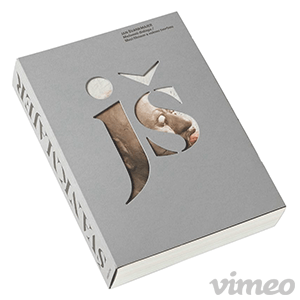
Dimensions of Dialogue (Czech: ‘Možnosti dialogu’) is a 1982 Czechoslovak animated short film directed by Jan Švankmajer. It is 14 minute long and created with stop motion. The animation is divided into three sections:
‘Exhaustive discussion’ shows Arcimboldo-like heads gradually reducing each other to bland copies; ‘Passionate discourse’ shows a clay man and woman who dissolve into one another sexually, then quarrel and reduce themselves to a frenzied, boiling pulp; and ‘Factual conversation’ consists of two elderly clay heads who extrude various objects on their tongues (toothbrush and toothpaste; shoe and shoelaces, etc.) and intertwine them in various combinations.
Posted in Art, Humor, Sex |
Leave a Comment »
February 29, 2012

The Century of the Self is a British television documentary film; it focuses on how Sigmund Freud, Anna Freud, and Edward Bernays influenced the way corporations and governments have analyzed, dealt with, and controlled people.
Director Adam Curtis said: ”This series is about how those in power have used Freud’s theories to try and control the dangerous crowd in an age of mass democracy.’
read more »
Posted in Money, Politics |
Leave a Comment »
February 27, 2012
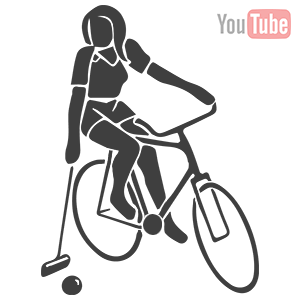
Cycle polo is a team sport invented in Ireland in 1891 by retired cyclist Richard J. Mecredy. It is similar to traditional polo, except that bicycles are used instead of horses. In recent years, an alternate form of the game known as ‘Hardcourt Bike Polo’ or ‘Urban Bike Polo’ has grown in popularity. In this variation, teams composed of three to five players compete on tennis courts, street hockey rinks, or whatever other surfaces are available.
The rules vary slightly by city. In the case of a ‘foot down’ or ‘dab’ (touching the ground with one’s foot) the player must ‘tap out’ by riding to mid-court and hitting a designated area with their mallet. There is usually a tap-out located on either side of the court. In order to score, the offensive player must hit the ball across the goal line using the narrow end of the mallet – this is called a ‘shot’ or ‘hit’ – hitting the ball across the goal line with the wide end of the mallet is called a ‘shuffle.’
Posted in Games, Humor |
Leave a Comment »
February 25, 2012

A monofin is a type of swimfin typically used in finswimming and free-diving. It consists of a single surface attached to footpockets for both of the free-diver’s feet. Monofins were introduced in 1972, by a Ukrainian finswimming club, and have been used for finswimming competitions since, allowing monofin swimmers to reach speeds of 12km/h. Monofins can be made of glass fiber or carbon fiber. The diver’s muscle power, swimming style, and the type of aquatic activity the monofin is used for determines the choice of size, stiffness, and materials.
To differentiate between the use of monofins and conventional fins, the latter are sometimes referred to as stereo fins or bi-fins. The monofin swimmer extends arms forward, locking hands together, locking the head between the biceps. The undulating movement starts in the shoulders, with maximum amplitude towards the hips, the legs almost don’t bend to transfer the movement to the monofin. This technique is called the dolphin kick.
Posted in Games, Technology |
Leave a Comment »
February 23, 2012

Poseur is a pejorative term which describes a person who copies the dress, speech, and mannerisms of a subculture without understanding the values or philosophy of the group they are mimicking. A poseur habitually pretends to be something they are not (an insincere person), or tries to impress others by behaving in an affected way (a pretentious person).
While the term is most associated with the 1970s- and 1980s-era punk and hardcore subculture, English use originates in the late 19th century. The English term is a loanword from French, where it refers to people who ‘affect an attitude or pose.’ One could say ‘poseur’ is merely the English word ‘poser’ in French garb and thus could itself be considered an affectation.
read more »
Posted in Art, Language |
Leave a Comment »
February 22, 2012

Gallows humor is a type of humor that still manages to be funny in the face of, and in response to, a hopeless situation. It arises from stressful, traumatic, or life-threatening situations, often in circumstances such that death is perceived as impending and unavoidable. The genre developed in Central Europe, and then moved to the US as part of Jewish humor. Gallows humor is offered by the person affected by the dramatic situation, an aspect that is missing in the derivative called black comedy. It is rendered with the German expression ‘Galgenhumor,’ and is comparable to the French ‘rire jaune’ (‘sickly smile’), and the Belgian Dutch ‘groen lachen’ (‘laugh desperately’). Italian comedian Daniele Luttazzi discussed gallows humor focusing on the particular type of laughter that it arouses, and said that grotesque satire, as opposed to ironic satire, is the one that most often arouses this kind of laughter.
In the Weimar era Kabaretts, this genre was particularly common; Karl Valentin and Karl Kraus were the major masters of it. Sigmund Freud in his 1927 essay ‘Humour (Der Humor)’ puts forth the following theory of the gallows humor: ‘The ego refuses to be distressed by the provocations of reality, to let itself be compelled to suffer. It insists that it cannot be affected by the traumas of the external world; it shows, in fact, that such traumas are no more than occasions for it to gain pleasure.’ Gallows humor has the social effect of strengthening the morale of the oppressed and undermines the morale of the oppressors. ‘To be able to laugh at evil and error means we have surmounted them.’
Posted in Death, Humor, Language |
Leave a Comment »


 The Daily Omnivore