June 14, 2011

Ben Wilson is a London-based artist who creates tiny works of art by painting onto chewing gum stuck to the pavement. Wilson started experimenting with occasional chewing-gum paintings in 1998, and in 2004 began working on them full time.
He has created more than 10,000 of these works on pavements all over the UK and parts of Europe. Wilson heats the gum with a small blow torch and then adds lacquer to harden it. He then uses special acrylic paints to create his designs. The paintings can take up to ten hours to produce. In 2005, he was arrested in Trafalgar Square, and in 2009 he was arrested by the City of London Police on suspicion of criminal damage, although the case was dropped a few months later.
Posted in Art, Humor, World |
1 Comment »
June 14, 2011
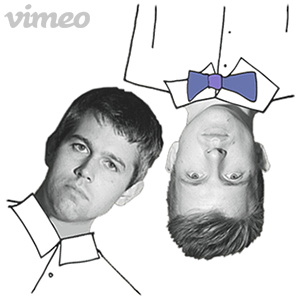
Bompas & Parr is a company specializing in food art using gelatin desserts. Named after the defunct food company of the same name, the company uses food molds to make edible decorations shaped like buildings and other architectural structures. The work of Bompas & Parr have been noted for their detail and have competed in culinary artwork competitions, an example being the Architectural Jelly Design Competition organized for the London Festival of Architecture.
The company claims their projects explore how the taste of food is altered through synaesthesia (a condition where the brain mixes up the senses), performance and setting. Currently the focus of their projects is gelatin based because they feel it is a perfect medium for an examination of food and architecture due to its plastic form and the historic role it has played in exploring notions of taste.
Posted in Art, Food, Humor |
Leave a Comment »
June 13, 2011

Rudolf Hess (1894 – 1987) was a prominent Nazi politician and official acting as Adolf Hitler’s Deputy in the Nazi Party during the 1930s and early 1940s. On the eve of war with the Soviet Union, he flew solo to Scotland in an attempt to negotiate peace with the United Kingdom, but instead was arrested and held in captivity for the rest of the war. Hess was tried at Nuremberg and sentenced to life in prison at Spandau Prison, Berlin, where he died in 1987.
Hess’ 1941 attempt to negotiate peace and subsequent lifelong imprisonment have given rise to many theories about his motivation for flying to Scotland, and conspiracy theories about why he remained imprisoned alone at Spandau, long after all other convicts had been released. Precise and detailed information on many aspects of Hess’ situation either has been withheld in confidential archives in several nations, or has disappeared outright; this has made accurate historical conclusions very problematic.
read more »
Posted in Politics, War, World |
Leave a Comment »
June 10, 2011


A DVJ is a DJ who performs live using an audio-visual music player instead of an audio-only setup. This is not to be confused with a VJ, which usually refers to a host of a music video channel, or a visual-only performer separate from the DJ in a live environment. The term comes from the industry-standard Pioneer DVD-turntable, called the DVJ. Liquid Basildon a British nightclub is host to a number of DVJs such as Sander Kleinenberg, Christian S and Kel Sweeney.
Visuals in one form or another have always been a part of live DJ performances, but until the advent of this form of performance, the visual aspect was largely limited to computerized strobes and spotlights, laser projectors, and/or pyrotechnics. With the advent of DVD technology (especially once it became cheap enough for the average individual to create his or her own discs), a push was made for a device that would give a performer the same flexibility in accessing the music and video on the disc as the turntable-style CD players commonly available for DJs.
read more »
Posted in Art, Technology |
Leave a Comment »
June 10, 2011


VJing is a broad designation for realtime visual performance. Characteristics of VJing are the creation or manipulation of imagery in realtime through technological mediation and for an audience, in synchronization to music. VJing often takes place at events such as concerts, nightclubs, music festivals and sometimes in combination with other performative arts. The term VJing became popular in its association with MTV’s Video Jockey but its origins date back to the New York club scene of the 70s. In both situations VJing is the manipulation or selection of visuals, the same way DJing is a selection and manipulation of audio.
One of the key elements in the practice of VJing is the realtime mix of content from a ‘library of media,’ on storage media such as VHS tapes or DVD disks, video and still image files on computer hard drives, live camera input, or from a computer generated visuals. In addition to the selection of media, VJing mostly implies realtime processing of the visual material. The term is also used to describe the performative use of generative software, although the usage is contested since no video is being mixed.
read more »
Posted in Art, Technology |
1 Comment »
June 10, 2011
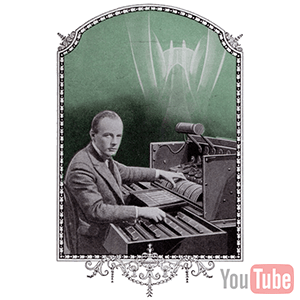
The term color organ refers to a tradition of mechanical (18th century), then electromechanical, devices built to represent sound or to accompany music in a visual medium—by any number of means. In the early 20th century, a silent color organ tradition (Lumia) developed. In the 60s and 70s, the term ‘color organ’ became popularly associated with electronic devices that responded to their music inputs with light shows. The term ‘light organ’ is increasingly being used for these devices; allowing ‘color organ’ to reassume its original meaning.
The dream of creating a visual music comparable to auditory music found its fulfillment in animated abstract films by artists such as Oskar Fischinger, Len Lye and Norman McLaren; but long before them, many people built instruments, usually called ‘color organs,’ that would display modulated colored light in some kind of fluid fashion comparable to music. In 1590, Gregorio Comanini described an invention by the Mannerist painter Arcimboldo of a system for creating color-music based on apparent luminosity (light-dark contrast) instead of hue.
read more »
Posted in Art, Technology |
Leave a Comment »
June 10, 2011
The term ‘Live Cinema‘ formerly described the live musical accompaniment of silent movies, but has grown to include the simultaneous creation of sound and image in real time by sonic and visual artists who collaborate to elaborate concepts on equal terms.
The traditional parameters of narrative cinema are expanded by a much broader conception of cinematographic space, the focus of which is no longer the photographic construction of reality as seen by the camera’s eye, or linear forms of narration. The term ‘Cinema’ is now to be understood as embracing all forms of configuring moving images, beginning with the animation of painted or synthetic images.
Posted in Art |
Leave a Comment »
June 8, 2011

The Carousel of Progress is an attraction located at the Disney Magic Kingdom Park in Orlando. Created by both Walt Disney and WED Enterprises as the prime feature of the General Electric Pavilion for the 1964 New York World’s Fair, the attraction was moved to Tomorrowland at Disneyland Park in Anaheim, California, remaining there from 1967 until 1973. It was replaced in Disneyland by America Sings in 1974, and reopened in its present home in 1975.
Steeped in both nostalgia and futurism, the attraction’s premise is an exploration of the joys of living through the advent of electricity and other technological advances during the 20th century via a ‘typical’ American family. To keep it up with the times, the attraction has been updated five times (in 1967, 1975, 1981, 1985, and 1994) and has had two different theme songs, both written by the Sherman Brothers (Disney’s Academy Award-winning songwriting team).
read more »
Posted in Art, Technology |
Leave a Comment »
June 8, 2011

Horizons was the name of an attraction at Disney’s Epcot theme park in Orlando. Located on the eastern side of the ‘Future World’ section of Epcot, the attraction used Disney’s Omnimover conveyance system, which took guests past show scenes depicting visions of the future. It is believed to be the sequel to Walt Disney’s Carousel of Progress, an attraction in Tomorrowland at Magic Kingdom. Horizons was the only attraction in Future World to showcase all of Epcot’s elements: communication, community interaction, energy, transportation, anatomy, physiology, along with man’s relationship to the sea, land, air, and space.
The attraction officially opened in 1983 and first closed in 1994 after General Electric ended sponsorship of the attraction. It was temporarily reopened in 1995 due to the closure of other attractions for refurbishment, but the attraction permanently closed in 1999, after which the attraction was dismantled and its structure demolished to make room for Mission: SPACE, a motion simulator thrill ride.
read more »
Posted in Technology |
Leave a Comment »
June 8, 2011

Captain EO is a 3-D film starring Michael Jackson and directed by Francis Ford Coppola (who based the name on Eos, the Greek goddess of dawn) that was shown at Disney theme parks from 1986 through the 1990s. The attraction returned in 2010, as a tribute after Jackson’s death. It is regarded as one of the first ‘4-D’ films (4-D being the name given to a 3-D film which incorporates in-theater effects, such as lasers, smoke, etc., frame synced to the film narrative). This innovation was suggested by producer-writer Rusty Lemorande who is, therefore, sometimes referred to as ‘The Father of 4-D.’ These effects resulted in the seventeen-minute film costing an estimated $30 million to produce. At the time, it was the most expensive film ever made on a per-minute basis, averaging out at $1.76 million per minute.
The film’s executive producer was George Lucas, and it was choreographed by Jeffrey Hornaday (who also choreographed ‘Flashdance’ and ‘A Chorus Line’) and Michael Jackson. The score was written by James Horner, and featured two songs (‘We Are Here to Change the World’ and ‘Another Part of Me’), both written and performed by Michael Jackson. The Supreme Leader was played by Anjelica Huston. The movie tells the story of Captain EO (Michael Jackson) and the ragtag crew of his spaceship on a mission to deliver a gift to ‘The Supreme Leader,’ who lives on a world of rotting, twisted metal and steaming vents. Captain EO’s alien crew consists of his small flying sidekick Fuzzball, the double-headed navigator and pilot Idey and Ody, robotic security officer Major Domo, a small robot Minor Domo (who fits like a module into Major Domo), and the clumsy elephant-like shipmate Hooter who always manages to upset the crew’s missions.
Posted in Art, Humor, Technology |
Leave a Comment »
June 7, 2011

Tecnocumbia [tek-noh-koom-bee-uh] is a style of Cumbia (Latin American folk music) were there is a fusion between electronic sounds generated by electronic musical instruments and traditional instruments. The term ‘tecnocumbia’ was coined in Mexico to describe this type of music, but the style of music was developed throughout South America with different names given to it. In Mexico, it developed as a variant of the Mexican cumbia that started in the early 80s. The style added electronic instruments along with samplers to the Mexican cumbia music. One of the first musical groups with electrical 80’s sounds was Super Show de los Vazkez from Veracruz, formed in 1981. In the early 90s Selena the ‘Tex-mex queen’ had hits in U.S. and Mexico in the tecnocumbia style.
In South America, where the Colombian Cumbia most easily expanded in popularity, different ‘modern’ styles of the original Colombian rhythm were started mainly in the countries of Peru, Ecuador and Bolivia. The Peruvian cumbia, developed in the early 60s, used electric guitars and synthesizers along with the other classical instruments of the Colombian cumbia in order to create a kind of tropical sound. Variations within the Peruvian cumbia added more tropical rhythms along with a more Andean flavor, which eventually resulted in the creation of the Andean cumbia (Commonly called ‘Chicha music’ in Peru).
Posted in Art, Technology, World |
Leave a Comment »
June 7, 2011


Cumbia [koom-bee-uh] is a Latin American music style that originated in Colombia’s Caribbean coastal region. Traditional cumbia and its associated dance is considered to be representative of Colombia, along with Vallenato, Bambuco and Pasillo. Cumbia originated in the Caribbean coast of eastern Colombia, but there are also folkloric variants in Panama.
During the mid-20th century, Colombian band leaders such as Pacho Galan and Lucho Bermudez orchestrated this Caribbean folklore and brought it to different parts of Latin America, where it gained particular popularity in Mexico, Argentina, and the Andean region. Cumbia began as a courtship dance practiced among the African slave population that was later mixed with European instruments and musical characteristics. Cumbia is very popular in the Andean region and the Southern Cone and was until the early 1980’s more popular in these regions than the salsa.
Posted in Art, Sex, World |
Leave a Comment »


 The Daily Omnivore