March 31, 2011

Sound from ultrasound refers to ultrasound (sound pressure with a frequency greater than the upper limit of human hearing, approx. 20 kilohertz) that has been modulated and demodulated. Ultrasound has wavelengths much smaller than audible sound and thus can be aimed in a much tighter narrow beam than any traditional audible loudspeaker system. A narrow beam of modulated ultrasound changes the speed of sound in the air that it passes through. The air within the beam extracts the signal from the ultrasound, resulting in sound that can be heard only along the path of the beam, or that appears to radiate from any surface that the beam strikes.
The practical effect of this technology is that a beam of sound can be projected over a long distance to be heard only in a small well-defined area. A listener outside the beam hears nothing. Anyone or anything that disrupts the path of the beam will interrupt the progression of the beam, like interrupting the illumination of a spotlight. For this reason, most systems are mounted overhead, like lighting. This technology was originally developed by the US Navy and Soviet Navy for underwater sonar in the mid-1960s, and was briefly investigated by Japanese researchers in the early 1980s, but these efforts were abandoned due to extremely poor sound quality (high distortion) and substantial system cost.
Posted in Money, Technology |
Leave a Comment »
March 31, 2011

A dog whistle is a type of whistle used in the training of dogs and cats. It was invented by British polymath, Francis Galton. The frequency range of a dog whistle is largely out of the range of human hearing. Typically, a dog whistle is within the range of 16 to 22 kHz with only the frequencies below 20 kHz audible to the human ear.
Some dog whistles have adjustable sliders for active control of the frequency produced. Depending on the way the whistle is used, a trainer may simply gather a dog’s attention or inflict pain for the purpose of behavior modification. The name dog whistle is often used for both lung-powered whistles as well as electronic devices that emit ultrasonic sound via piezoelectric emitters. The electronic variety are sometimes coupled with bark detection circuits in an effort to curb barking behavior.
Posted in Technology |
Leave a Comment »
March 31, 2011

Charles Bonnet syndrome (CBS) is a condition that causes patients with visual loss to have complex visual hallucinations, first described by Charles Bonnet in 1760, and first introduced into English-speaking psychiatry in 1982. Sufferers, who are mentally healthy people with often significant visual loss, have vivid, complex recurrent visual hallucinations. Often they come in the form of ‘lilliput hallucinations,’ in which objects are smaller than normal.
Sufferers understand that the hallucinations are not real, and the hallucinations are only visual. People suffering from CBS may experience a wide variety of hallucinations, such as images of complex colored patterns and images of people, or animals, plants or trees and inanimate objects. The hallucinations also often fit into the person’s surroundings. Oliver Sacks, a neurologist and author who suffers from a retinal tumor, gave a TED talk about this and other visual hallucinations.
Posted in Health, Science |
Leave a Comment »
March 31, 2011

Musical ear syndrome (MES) refers to auditory hallucinations subsequent to hearing loss. It is comparable to Charles Bonnet syndrome (visual hallucinations by visually impaired people) and some have suggested this phenomenon could be included under that diagnosis. The occurrence of MES has been suggested to be very high among the hearing impaired. Sufferers typically hear music or singing and the condition is more common in women. The hallucinatory experiences differ from psychotic disorders although there may be some overlap.
The likely cause is a small cerebrovascular event affecting the auditory cortex. The ‘hole’ in the hearing range is ‘plugged’ by the brain confabulating a piece of information – in this case a remembered melody. A similar occurrence is seen with strokes of the visual cortex where a visual field defect occurs and the brain confabulates a piece of visual data to fill the spot. Towards the end of his life, Robert Schumann said he heard angelic music and music from other composers, which formed the basis for his violin concerto (however, his symptoms may also have been caused by syphilis or mercury poisoning).
Posted in Art, Health, Science |
1 Comment »
March 30, 2011

Liquid light shows or psychedelic light shows surfaced in the mid 1960s and early 1970s in America and Europe. They were an integral part of the Progressive music scene well into the seventies. Shows could be as simple as a single operator and two or three modified slide or overhead projectors and a couple of color wheels or as complex as shows with ten or more operators, 70 plus projectors (including liquid slide, liquid overhead, movie and still image models plus a vast array of highly advanced (for the time) special effects equipment).
read more »
Posted in Art, Drugs, Technology |
Leave a Comment »
March 28, 2011

The deadlift is a weight training exercise where one lifts a loaded barbell off the ground from a stabilized bent-over position. It is one of the three gauges of powerlifting, and is an exercise for overall body development. The deadlift is a compound movement that works grip strength with the erector spinae, gluteus maximus, adductor magnus, hamstrings, and quadriceps serving as the primary muscles. The remaining muscles are involved in stability control. It is, in a sense, the purest test of strength because it is one of the few lifts of dead weight (weight lying on the ground).
In most other lifts there is an eccentric phase (lowering) followed by the concentric phase (lifting). The eccentric phase essentially stores some amount of energy in the stretched muscles and tendons, making the concentric phase somewhat easier. the deadlift, however, is solely a concentric movement. The lift begins at its most difficult point, with no inertia or stored energy. The record for a raw deadlift (a deadlift performed without the aid of a deadlift suit where only a belt is allowed) is 1015 lbs by Benedikt Magnússon of Iceland.
Posted in Games, Health |
Leave a Comment »
March 28, 2011

Shawn Nelson (1959 – 1995) was a U.S. Army veteran and unemployed plumber who stole an M60 Patton tank from a United States National Guard Armory in San Diego, California and went on a rampage, destroying cars, fire hydrants, and an RV before being shot dead by police. The tank’s weaponry was unloaded, but Nelson led police on a 23-minute, televised chase through the streets of San Diego. The tank had a top speed of just 30 miles per hour, but the 57-ton vehicle easily plowed through road signs, traffic lights, and crushed a van against a recreational vehicle, then plowed through the RV.
Nelson attempted to knock down a bridge by running in to the supports, but gave up after he failed to topple it with the first few hits. He eventually became caught on a concrete median of State Route 163, as he attempted to cross the median into the oncoming traffic. Four police officers climbed onto the tank and were able to open the hatch. The officers ordered Nelson to surrender, but he said nothing and began lurching the tank back and forth in attempt to free it from the median. Officer Paxton’s partner, Richard Piner, leaned in and shot Nelson. The bullet struck Nelson in the shoulder. Nelson later died in the hospital.
Posted in Technology, War |
Leave a Comment »
March 28, 2011

Marvin Heemeyer (1951 – 2004) was a welder and an automobile muffler repair shop owner. Outraged over the outcome of a zoning dispute, he armored a bulldozer with layers of steel and concrete and used it to demolish the town hall, a former judge’s home, and other buildings in Granby, Colorado.
The rampage ended when the bulldozer became stuck, and after a standoff with law enforcement agencies, Heemeyer killed himself with a handgun. He had been feuding with town officials, particularly over fines for violating city ordinances and a zoning dispute regarding a concrete factory constructed opposite to his muffler shop that caused his business to fail. Heemeyer took about a year and a half to prepare for his rampage.
read more »
Posted in Death, Technology |
Leave a Comment »
March 28, 2011

Hobart’s Funnies were a number of unusually modified tanks operated during World War II by the United Kingdom’s 79th Armored Division or by specialists from the Royal Engineers. They were designed in light of problems that more standard tanks experienced during the Allied attack on the German-occupied port of Dieppe on the northern coast of France in 1942.
These tanks played a major part on the Commonwealth beaches during the landings at Normandy. They may be considered the forerunners of the modern Combat engineering vehicle. They were named after their commander, British Military engineer Percy Hobart.
read more »
Posted in Technology, War |
Leave a Comment »
March 26, 2011

‘Wild Style‘ was the first hip hop motion picture. Released theatrically in 1983, featuring Fab Five Freddy, the Rock Steady Crew, The Cold Crush Brothers, and Grandmaster Flash. The protagonist ‘Zoro’ is played by the legendary NY subway graffiti artist Lee Quinones. An early version of the ‘Wild Style’ logo appeared in the Fall of 1981 when director Charlie Ahearn hired graffiti legend Dondi to paint the ‘window down’ subway car piece that appears in the film. The Dondi piece was the inspiration for the animated title sequence designed by the artist Zephyr in 1982.
The ‘Wild Style’ logo was designed by Zephyr and painted as a huge ‘burner’ mural by Zephyr, Revolt, and Sharp in the Summer of 1983. In addition to covering street artists, the film depicts several prominent figures from the early hip hop culture, engaging in activities such as MCing, turntablism, and breaking. The film has been sampled by many prominent hip hop artists (e.g. ‘Illmatic’ by Nas, ‘Midnight Marauders’ by A Tribe Called Quest, and ‘Check Your Head’ by Beastie Boys).
Posted in Art, Money, Politics |
Leave a Comment »
March 25, 2011

Holi [hoh-lee] is a spring religious festival celebrated by Hindus. It is primarily observed in India, Nepal, Sri Lanka, and countries with large Indic diaspora populations, such as Suriname, Malaysia, Guyana, South Africa, Trinidad, United Kingdom, United States, Mauritius, and Fiji.
The main day, Holi, is celebrated by people throwing colored powder and colored water at each other. Bonfires are lit the on the eve of the festival in memory of the miraculous escape that young Prahlad accomplished when Demoness Holika carried him into the fire. Holika was burnt but Prahlad, a staunch devotee of god Vishnu, escaped without any injuries due to his unshakable devotion.
Posted in Philosophy, World |
Leave a Comment »
March 24, 2011
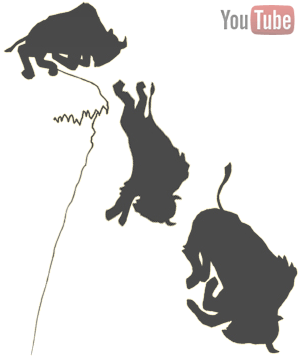
A buffalo jump is a cliff formation which North American Indians historically used in mass killings of plains bison. Hunters herded the bison and drove them over the cliff, breaking their legs and rendering them immobile. Tribe members waiting below closed in with spears and bows to finish the kills. The Blackfeet Indians called the buffalo jumps ‘pishkun,’ which loosely translates as ‘deep blood kettle.’
This type of hunting was a communal event which occurred as early as 12,000 years ago and lasted until at least 1500 CE, around the time of the introduction of horses. Buffalo jump sites are often identified by rock cairns, which were markers designating ‘drive lanes,’ by which bison would be funneled over the cliff. These drive lanes would often stretch for several miles.
Posted in Death, Food, Technology |
Leave a Comment »


 The Daily Omnivore