March 24, 2011
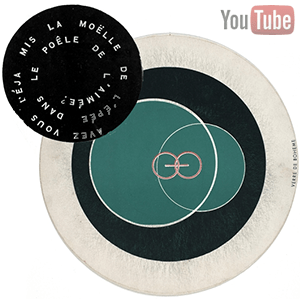
Kinetic art is art that contains moving parts or depends on motion for its effect. The moving parts are generally powered by wind, a motor or the observer. ‘Bicycle Wheel’ (1913) by Marcel Duchamp, is said to be the first kinetic sculpture. Besides being an example of kinetic art it is also an example of a readymade, a type of art of which Duchamp made a number of varieties throughout his life.
read more »
Posted in Art, Language, Money |
Leave a Comment »
March 24, 2011
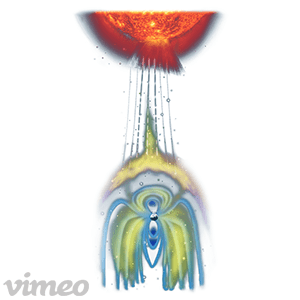
An aurora [uh-rawr-uh] is a flickering light caused by the sun’s radiation interacting with an atmosphere, usually found near the poles (Aurora borealis – Dawn of the North, or Aurora australis – Dawn of the South). They come in red, green and occasionally blue, and can sometimes resemble fire, and can be seen for a long way, many hundreds of kilometers or miles. Auroras can occur during the daytime, but are not visible to the naked eye.
The Sun emits a flow of charged particles into space called ‘solar wind.’ The Earth is shielded from these particles by its magnetosphere, a protective electromagnetic bubble created by the planet’s molten iron, outer core. The magnetic field is weakest at the cold areas, so at the poles some particles hit the atmosphere. They discharge their energy on impact, giving off light. An aurora can also happen in a coronal mass ejection, when charged particles are expelled so forcefully they that can penetrate electromagnetic fields.
Posted in Science, World |
Leave a Comment »
March 23, 2011


Conveyor belt sushi (kaiten-zushi) is the popular English translation for Japanese fast-food sushi sometimes called a ‘sushi-g0-round.’ In Australia, it is known as ‘sushi train’ In South Korea, conveyor belt sushi has become popular and is known as ‘revolving sushi.’
Plates with the sushi are placed on a rotating conveyor belt that winds through the restaurant and moves past every table and counter seat. Customers may place special orders, but most simply pick their selections from a steady stream of fresh sushi moving along the conveyor belt. The final bill is based on the number and type of plates of the consumed sushi.
read more »
Posted in Food, Money, Technology |
Leave a Comment »
March 23, 2011
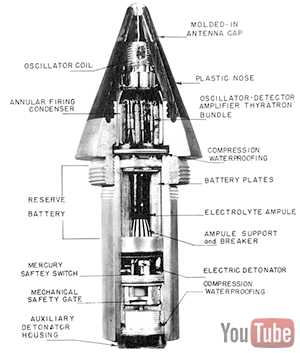
A proximity fuze is designed to detonate an explosive device automatically when the distance to target becomes smaller than a predetermined value or when the target passes through a given plane. A shell with a standard ‘contact fuze’ explodes upon impact, and a ‘time fuze’ after a specified number of seconds. A ‘proximity fuze,’ however uses a radio detection system, and explodes when within a certain distance from a target.
One of the first practical proximity fuzes was codenamed the ‘VT fuze,’ an acronym of ‘Variable Time fuze,’ as deliberate camouflage for its operating principle. The VT fuze concept in the context of artillery shells originated in the UK with British researchers (particularly Sir Samuel Curran) and was developed under the direction of physicist Merle A. Tuve at The Johns Hopkins University Applied Physics Lab. It is considered one of the most important technological innovations of World War II.
Posted in Technology, War |
Leave a Comment »
March 21, 2011
Virgin Galactic is a company within Richard Branson’s Virgin Group which plans to provide sub-orbital spaceflights to the paying public, along with suborbital space science missions and orbital launches of small satellites. Further in the future Virgin Galactic hopes to offer orbital human spaceflights as well. Tickets are priced at $200,000 per person with a $20,000 deposit. The vehicle is a six passenger, two pilot craft. Test launches are planned to take place from the Mojave Spaceport, where Scaled Composites is constructing the spacecraft.
The spacecraft, SpaceShipTwo, will be carried to about 16 kilometers or 52000 ft by a carrier aircraft, White Knight II. At that point, when the carrier aircraft reaches its maximum height, the SpaceShipTwo vehicle will separate and continue to over 100 km (the Kármán line, a common definition of where ‘space’ begins). The time from liftoff of the White Knight booster carrying SpaceShipTwo until the touchdown of SpaceShipTwo after the sub-orbital flight will be about 3.5 hours. The sub-orbital flight itself will only be a small fraction of that time. The weightlessness will last approximately 6 minutes.
Posted in Money, Technology |
Leave a Comment »
March 21, 2011
Colin Stetson, born in Ann Arbor, Michigan, is a bass saxophone player and touring member of Arcade Fire and Bell Orchestre. In addition to saxophone, he plays clarinet, bass clarinet, french horn, flute, and cornet.
Stetson has worked with dozens of artists, including David Byrne, Tom Waits, TV on the Radio, Sinéad O’Connor, and LCD Soundsystem. His solo album New History Warfare, Vol 1. was released in 2008. The follow up, New History Warfare, Vol. 2: Judges was released in 2011.
Posted in Art, Money |
Leave a Comment »
March 21, 2011

Hefty Records is an independent record label based in Chicago, founded in 1995 by John Hughes III (aka Slicker). The label has established itself as a home for innovative electronica, releasing post-rock, IDM, downtempo, nu jazz, experimental music, and hip-hop. The label was formed by Hughes (as well as Bill Ding and Dan Snazelle) as a way of releasing his own music from his Ohio University dorm room in 1995. Soon afterwards a demo was given to Hughes from Scott Herren who was added to the roster under the name Savath and Savalas.
Hefty released the ‘Immediate Action’ series in 2000, a limited collection of six vinyl records from various electronic artists. All the records were hand pressed by Hughes, with sleeves created by the Brooklyn graphics company Graphic Havoc (now known as GHAVA), which used a stencil and spray painting technique to create each album; with different stickers to tell them apart.
Posted in Art, Money |
Leave a Comment »
March 21, 2011

Telefon Tel Aviv is an American electronic music act formed in 1999. Formerly comprising Charles Cooper and Joshua Eustis, Telefon Tel Aviv continues with Eustis as the sole official member since Cooper’s death in 2009 from an accidental overdose of sleeping pills and alcohol. The two were high school friends whose four-song demo was picked up by John Hughes III’s music label, Hefty.
Posted in Art |
Leave a Comment »
March 21, 2011
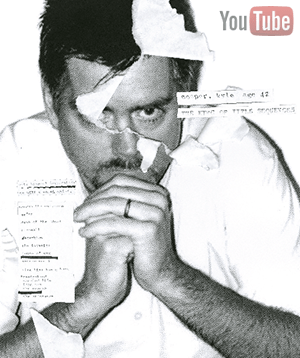
Kyle Cooper is an acclaimed modern designer of motion picture title sequences. He studied graphic design under Paul Rand at Yale University. In 1995 he designed the title sequence for the film Se7en, a seminal work which received critical acclaim and inspired a number of younger designers.
In 1996, he co-founded Imaginary Forces, a design firm, and in 2003 another firm, Prologue, based in Los Angeles. Cooper has also directed a feature film, New Port South (2001), a teen drama produced by John Hughes, based on a script written by Hughes’ son James. The project was filmed in Chicago and scored by Telefon Tel Aviv.
Posted in Art, Money |
Leave a Comment »
March 19, 2011

A kill screen is a stage or level in a video game (often an arcade game) that stops the player’s progress due to a programming error or design oversight. Rather than ‘ending’ in a traditional sense, the game will crash, freeze, or behave so erratically that further play is impossible. Pac-Man has a famous kill screen often referred to as the ‘Pac-Man Bomb Screen.’ The game’s level counter was a single 8-bit byte and could therefore store only 256 distinct values. Reaching the 256th level causes the counter that is used while drawing the fruit to overflow to zero, causing 256 fruits and seven blank spaces to be drawn.
Kill screens were much more common during the Golden Age of Arcade Games. Games from this era were often written with the assumption that the player would stop playing long before the numerical limits of the game code were reached; most games from this period were intended to continue until the players lost all of their lives. Additionally, the limited hardware of these early machines often meant that programmers could not spend memory on logical checks of the game state.
Posted in Games, Language, Technology |
Leave a Comment »
March 17, 2011


The threshold pledge or fund and release system is a way of making a fundraising pledge as a group of individuals, often involving charitable goals or financing the provision of a public good. An amount of money is set as the goal or threshold to reach for the specified purpose and interested individuals will pitch in, keeping the donation in an escrow fund. When the threshold is reached, the contributions are retired from the escrow fund and a contract is formed so that the collective good is supplied.
This system is often applied to creative works, both for financing new productions and for buying out existing works; in the latter cases, it’s sometimes known as ransom publishing model or Street Performer Protocol (SPP). Sometimes contributions are refunded to the donors if the threshold amount is not reached as of some expiration date, and no contract is signed: this variation is known as an assurance contract. Contributions to an assurance contract may also be collected as pledges which are only called-in when the threshold is reached.
read more »
Posted in Art, Language, Money |
Leave a Comment »
March 16, 2011

Joel Thomas Zimmerman (b. 1981), better known by his stage name deadmau5 (pronounced ‘dead mouse’), is a Canadian progressive, electro, and house producer based in Toronto, Ontario. His debut album, ‘Get Scraped,’ was released in 2006. He is known for often performing in a titular costume head which he originally created while learning to use a 3D program, which resembles a mouse head.
Posted in Art, Money, Technology |
Leave a Comment »


 The Daily Omnivore