January 28, 2011

In sports science theory, supercompensation [soo-per-kom-puhn-sey-shuhn] is the post training period during which the trained function/parameter has a higher performance capacity than it did prior to the training period. First put forth by Hungarian scientist Nikolai Jakowlew in 1976, this theory is a basic principle of athletic training.
read more »
Posted in Games, Health, Science |
Leave a Comment »
January 26, 2011

The term black fax refers to a prank fax transmission, consisting of one or more pages entirely filled with a uniform black tone and often made into a loop the sending machine will transmit endlessly. The sender’s intention is typically to consume as much of the recipient’s fax ink, toner or thermal paper or disk space as possible, thus costing the recipient money and/or denying the recipient the use of their machine (this is similar to computer-based denial of service attacks).
Black faxes can be particularly effective as the fax algorithm compresses the solid black image very well, so a very short fax call can produce many pages. They have been used to harass large institutions or government departments, to retaliate against the senders of junk faxes, or merely as simple pranks. In a black fax attack, one or more sheets are fed halfway through the sender’s fax machine and taped end to end, forming an endless loop that cycles through the machine. Not only can solid black be used, but also images which will repeat endlessly on the receiver’s machine until his or her toner runs out.
Posted in Humor, Politics, Technology |
Leave a Comment »
January 26, 2011

Thundersnow is a rare kind of thunderstorm with snow falling as the primary precipitation instead of rain. It typically falls in regions of strong upward motion within the cold sector of an extratropical cyclone, where the precipitation consists of ice pellets rather than snow. One unique aspect of thundersnow is that the snowfall acts as an acoustic suppressor of the thunder.
The thunder from a typical thunderstorm can be heard many miles away, while the thunder from thundersnow can usually only be heard within a two to three mile radius from the lightning. In the United States, March is their peak month of formation, and on average, only 6.3 events are reported per year.
Posted in Language, Science |
Leave a Comment »
January 25, 2011

Speed Golf is a sport started in California in 1979 by American runner Steve Scott and which involves completing a golf course in the lowest combination of strokes and time. Players run between shots and generally carry one to six clubs. A player’s score is calculated by adding minutes plus strokes, so a round of 90 completed in 50 minutes and 30 seconds would compute to a score of 140:30. The lowest score in competition is believed to have been shot by professional Christopher Smith at the Chicago Speedgolf Classic in 2005. Smith shot 65 in just 44:06 for a speed golf score of 109:06.
Rules and etiquette are generally the same for speed golf and regular golf with minor exceptions. Speed golfers are allowed to putt with the flagstick left in the hole, but are expected to rake bunkers, fix ball marks and conform to the dress code. Speed Golf is sometimes contrasted with Cross-country BigBall, in which players use soccer balls and baseball bats. Both sports require substantial physical stamina.
Posted in Games, Humor |
Leave a Comment »
January 25, 2011

‘Ambient 1: Music for Airports‘ is an ambient album by Brian Eno released in 1978. Of four albums released on Eno’s own, then new, Ambient label, ‘Music for Airports’ was the first to carry explicitly the name ‘ambient’ – a term which he coined to differentiate his minimalistic approach to the album’s material and ‘the products of the various purveyors of canned music.’ Notice of similarly quiet, unobtrusive music had been given on his albums such as ‘Evening Star,’ ‘Discreet Music,’ ‘Music for Films,’ and Harold Budd’s ‘The Pavilion of Dreams’ (which Eno produced), but in this album it was given precedence as a fully developed concept.
The music was designed to be continuously looped as a sound installation, with the intent to defuse the tense, anxious atmosphere of an airport terminal. Eno conceived this idea while being stuck at Cologne Bonn Airport in Germany in the mid 70s. He had to spend several hours there and was extremely annoyed by the uninspired sound atmosphere. It was installed at the Marine Air Terminal of New York’s LaGuardia Airport.
Posted in Art, Money, Technology |
Leave a Comment »
January 25, 2011

A robot jockey is commonly used on camels in camel racing. Early designs confused or frightened the camels, so the robots were modified to include more human-like features, including a mannequin-like face, sunglasses, hats, racing silks and even traditional perfumes used by human jockeys. Developed since 2004, the robotic jockeys are slowly phasing out the use of human jockeys, which, in the case of camel racing in the Middle East, often employs small children who reportedly suffer repeated systemic human rights abuses. In response to international condemnation of such abuses, the nations of Qatar and the UAE have banned the use of human jockeys in favor of robots.
Camel racing has been around for thousands of years. ‘The Sport of Sheiks’ almost exclusively utilized small children, usually boys around the age of four, to ride and direct the camels. Often, the boys would be starved to be as light as possible. Many of the boys used for the races were often sold to race organizers or camel owners, and there was an active child slave trade for camel jockeys, involving victims of kidnapping or the children of destitute families who sold them into servitude.
Posted in Politics, Technology, World |
Leave a Comment »
January 24, 2011

A keytar is a relatively lightweight keyboard that is supported by a strap around the neck and shoulders, similar to the way a guitar is supported by a strap. Keytars allow players a greater range of movement compared to conventional keyboards, which are placed on stands. The instrument has a musical keyboard for triggering musical notes and sounds. Controls for pitch bends, vibrato, portamento, and sustain are placed on the instrument’s ‘neck.’ Keytars may either contain their own synthesizers, or simply be controllers, triggering notes on another MIDI capable synthesizer.
In early 1970s, Edgar Winter often performed with keyboards slung around his neck, but they were not technically keytars because they had no ‘neck.’ One of the earliest keytars commercially released and widely known was be the Moog Liberation in 1980. Notable manufacturers of keytar models have included Moog, Roland, Yamaha, Korg and Casio. As of 2010, the Roland AX-Synth and the Roland Lucina are the only mass-manufactured keytars on the market, but with the Synthpop revival of the late 2000s, keytars are enjoying a mild resurgence.
Posted in Art, Technology |
Leave a Comment »
January 24, 2011

Electro (short for either electro-funk or electro-boogie) is a genre of electronic music directly influenced by the use of funk samples, Roland TR-808 synthesizers, and Moog keytars. Records in the genre typically feature drum machines and heavy electronic sounding deprived of vocals in general, although if present, they are delivered in a deadpan manner, often through an electronic distortion such as vocoding.
This is the main distinction of electro from previously prominent late-1970s genres such as disco and boogie, in which electronic sound was only part of the instrumentation rather than basis of the whole song. In 1982, Bronx based producer Afrika Bambaataa released the seminal track ‘Planet Rock,’ which contained elements of Kraftwerk’s Trans-Europe Express and ‘Numbers’ (from Kraftwerk’s Computer World album). ‘Planet Rock’ is widely regarded as a turning point in the electro genre.
read more »
Posted in Art, Language |
Leave a Comment »
January 24, 2011
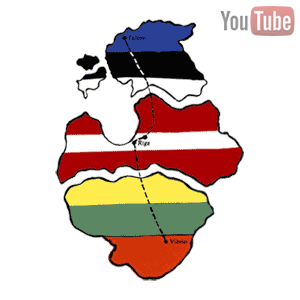
The Baltic Way was a peaceful political demonstration that occurred on August 23, 1989. Approximately two million people joined their hands to form a human chain spanning over 600 kilometres (370 mi) across the three Baltic states – Estonian SSR, Latvian SSR, and Lithuanian SSR, republics of the Soviet Union. It marked the 50th anniversary of the Molotov–Ribbentrop Pact between the Soviet Union and Nazi Germany. The pact and its secret protocols divided Eastern Europe into spheres of influence and led to the occupation of the Baltic states in 1940.
The event was organised by Baltic pro-independence movements: Rahvarinne of Estonia, Popular Front of Latvia, and Sąjūdis of Lithuania. The protest was designed to draw global attention by demonstrating a popular desire for independence for each of the entities. It also illustrated solidarity among the three nations. Within six months from the protest, Lithuania became the first of the Republics of the Soviet Union to declare independence.
Posted in Politics, World |
Leave a Comment »
January 24, 2011
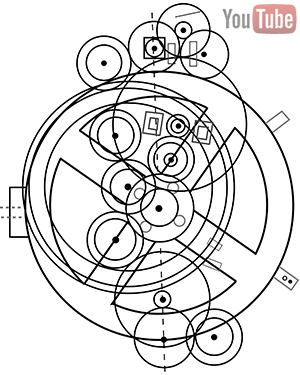
The Antikythera [an-ti-ki-theer-uh] mechanism is an incredibly old mechanical calculator, often described as the first mechanical computer. It was discovered in 1901 in a shipwreck off the coast of Antikythera, Greece. The device was used to figure out the positions of stars in the sky. It was probably made in about 150-100 BC, and is now on display in the Bronze Collection of the National Archaeological Museum of Athens.
Its significance and complexity were not understood until decades after its discovery. The degree of mechanical sophistication is comparable to a 19th century Swiss clock. Technological artifacts of similar complexity and workmanship did not reappear until the 14th century, when mechanical astronomical clocks were built in Europe.
Posted in Technology |
Leave a Comment »
January 24, 2011

A forest kindergarten is a type of preschool education for children between the ages of three and six that is held almost exclusively outdoors. Whatever the weather, children are encouraged to play, explore and learn in a forest or natural environment. The adult supervision is meant to assist rather than lead. It is also known as Waldkindergarten (in German), outdoor nursery, nature kindergarten, or nature preschool.
read more »
Posted in Education, World |
Leave a Comment »
January 21, 2011
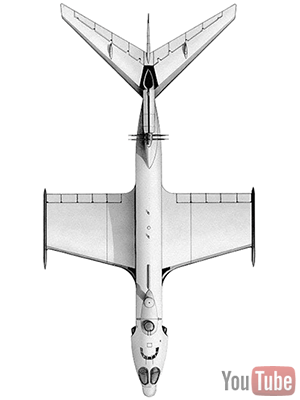
A ekranoplan, or ground effect vehicle (GEV), is a craft that attains level flight near the surface of the Earth, made possible by a cushion of high-pressure air created by the aerodynamic interaction between the wings and the surface known as ground effect. Also known as a wing-in-ground-effect (WIG) vehicle, flarecraft, sea skimmer, SkimMachine, or wing-in-surface-effect ship, a GEV can be seen as a transition between a hovercraft and an aircraft. However, the International Maritime Organization has classified the GEV as a ship.
Posted in Technology |
Leave a Comment »


 The Daily Omnivore