October 27, 2010

The clean and jerk is one of two olympic weightlifting events (the other being the snatch). It is a highly technical lift that is known as ‘the king of lifts’ because more weight can be lifted above one’s head as compared to any other known weightlifting technique. The clean portion of the lift refers to the lifter explosively pulling the weight from the floor to a racked position across deltoids and clavicles.
In early twentieth century weightlifting competitions, a variant movement called the ‘Continental’ (because it was practiced by Germans rather than the British) allowed the lifter to pull the barbell up to his belt, where it could rest. Then with several successive flips, the bar would be moved up the torso until it reached the position for the overhead jerk. The Continental gained a reputation as clumsy, slow, and nonathletic compared to the swift coordinated movement required to lift the bar ‘clean.’ Hence, the clean movement was adopted by the early weightlifting federations as the official movement.
Posted in Games, Health, Language |
Leave a Comment »
October 26, 2010
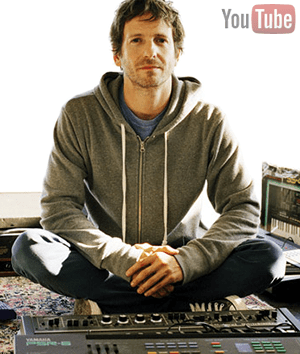
Lukasz Gottwald, better known as Dr. Luke, is an American songwriter, record producer, and remixer. Luke performed with the Saturday Night Live Band band for ten seasons until 2007. He has co-written and co-produced a string of commercially successful songs including Taio Cruz’s ‘Dynamite,’ Kelly Clarkson’s ‘Since U Been Gone,’ Pink’s ‘U + Ur Hand,’ Avril Lavigne’s ‘Girlfriend,’ Katy Perry’s ‘I Kissed a Girl,’ Britney Spears’ ‘Circus,’ Miley Cyrus’s ‘Party in the U.S.A.,’ and Ke$ha’s ‘Tik Tok.’
He was named one of the top ten producers of the decade by Billboard in 2009 and the Songwriter of the Year at the 2010 ASCAP Pop Music Awards. He is a frequent collaborator with Swedish music producer and songwriter Martin Karl Sandberg, aka Max Martin.
Posted in Art, Money |
Leave a Comment »
October 20, 2010

Pissaladiere or Pissaladina is a pizza-like dish made in southern France, around the Nice, Marseilles, Toulon and the Var District, and in the Italian region of Liguria, especially in the Imperia district. Believed to have been introduced to the area by Roman cooks during the time of the Avignon Papacy, it can be considered a type of white pizza, as no tomatoes are used. The dough is usually a bread dough thicker than that of the classic Italian pizza, although a pâte brisée (pastry) is sometimes used instead, and the traditional topping consist of sauteed (almost pureed) onions, olives, garlic and anchovies (either whole or in the form of pissalat, a type of anchovy paste).
No cheese is used in France; however in the nearby Italian town of San Remo, mozzarella is added. Now served as an appetizer, it was traditionally cooked and sold early each morning. The etymology of the word seems to be from Old French pescion from the Latin piscis, which in turn became the pissalat (‘salted fish’) anchovy paste mentioned above.
Posted in Food, World |
Leave a Comment »
October 19, 2010

Seed bombing or aerial reforestation is a technique of introducing vegetation to land by throwing or dropping compressed clods of soil containing live vegetation. Often, seed bombing projects are done with arid or off-limits (for example, privately-owned) land. The term ‘seed grenade’ was first used by NY artist, Liz Christy in 1973 when she started the ‘Green Guerrillas.’ The first seed grenades were made from condoms filled with local wildflower seeds, water and fertilizer. They were tossed over fences onto empty lots in New York City in order to make the neighborhoods look better. It was the start of the guerrilla gardening movement.
The earliest records of aerial reforestation date back from 1930. In this period, planes were used to distribute seeds over certain inaccessible mountains in Honolulu after forest fires. Seed bombing is also widely used in Africa in barren or simply grassy areas. Newer seed bombs use biodegradable shells which feed the sprout as it grows. Barren land can be turned into a garden in a little over a month. A variant of seed bombing, called tree bombing, involves dropping saplings from military aircraft, but has yet to be attempted.
Posted in Politics, Science |
Leave a Comment »
October 19, 2010

A saccade [suh-kahd] is a fast movement of an eye, head or other part of an animal’s body or device. It can also be a fast shift in frequency of an emitted signal or other quick change. Saccades are quick, simultaneous movements of both eyes in the same direction. Saccades serve as a mechanism for fixation and rapid eye movement. The word appears to have been coined in the 1880s by French ophthalmologist Émile Javal, who used a mirror on one side of a page to observe eye movement in silent reading, and found that it involves a succession of discontinuous individual movements.
Humans and many other animals do not look at a scene in fixed steadiness (as opposed to e.g., most birds); instead, the eyes move around, locating interesting parts of the scene and building up a mental, three-dimensional ‘map’ corresponding to the scene (as opposed to the graphical map of avians, that often relies upon detection of angular movement on the retina). One reason for the saccadic movement of the human eye is that the central part of the retina—known as the fovea—plays a critical role in resolving objects. By moving the eye so that small parts of a scene can be sensed with greater resolution, body resources can be used more efficiently. Saccades are the fastest movements produced by the human body
Posted in Health, Language |
Leave a Comment »
October 19, 2010

Cymande [sah-mahn-day] were an electric funk band who released several albums throughout the early 1970s. The group was formed in 1971 in London, England by musicians from Guyana and Jamaica. The name Cymande is derived from a Calypso word for Dove, which symbolizes peace and love. The group developed a subtle and complex, deep funk style influenced by calypso rhythms, jazz, African music, American soul and UK rock of the time. Cymande can now be seen as one of the most sophisticated of the funk acts that evolved in the early 1970s.
By the mid-70s the band members were going their separate ways and the group was disbanded in 1974. It wasn’t until 20 years later that they reaped any financial rewards, as their music became a popular source for samplers. Cymande’s original albums are still widely sought-after by DJs and funk aficionados. Perhaps the band’s best known recording is the soulful dancefloor filler called ‘Bra,’ which was later sampled by the American hip-hop group De La Soul and used as a breakbeat record by the godfathers of hip-hop Kool Herc and Grandmaster Flash.
Posted in Art, World |
Leave a Comment »
October 19, 2010

Isabella ‘Issy’ Blow (1958 – 2007) was an English magazine editor and international style icon. The muse of hat designer Philip Treacy, she is credited with discovering the models Stella Tennant and Sophie Dahl as well as the fashion designer Alexander McQueen. Blow battled with depression and bipolar disorder most of her adult life.
In 2006, Blow attempted suicide with an overdose of sleeping pills. Later that year, she again attempted suicide by jumping from the Hammersmith Flyover, which resulted in her breaking both ankles. In 2007, Blow made several more suicide attempts by driving her car into the rear of a truck, by attempting to obtain horse tranquilizers, by drowning in a lake and by overdosing while on a beach in India. She died in May of 2007 after ingesting a weedkiller, in what was later ruled a suicide.
Posted in Art, Language |
Leave a Comment »
October 18, 2010

Wetlook is the enjoyment of a person or people wearing wet clothing. It can also refer to the act of getting wet while wearing clothes or watching others do so. To many, it is a sexual fetish, where pleasure is derived from observation of wet-clothed persons as well as getting wet oneself, but other people enjoy getting wet themselves for entirely non-sexual reasons.
Those enjoying wetlook do so in different ways – some enjoy the act of getting wet, while others enjoy remaining wet. Some enjoy getting wet slowly, while others like the surprise. It can also refer to clothing that is shiny in appearance and thus is termed ‘wet-look.’
Posted in Sex |
Leave a Comment »
October 18, 2010

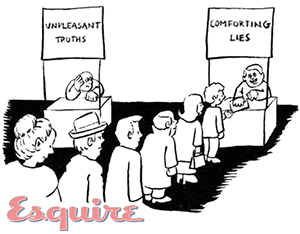
Radical Honesty is a technique and self-improvement program developed by Dr. Brad Blanton. The program asserts that lying is the primary source of modern human stress, and that practitioners will become happier by being more honest, even about painful or taboo subjects. Blanton claims this form of honesty can help all human relationships since it ‘creates an intimacy not possible if you are hiding something for the sake of someone’s feelings.’ The Radical Honesty technique includes having practitioners state their feelings bluntly, directly and in ways typically considered impolite.
People who practice Radical Honesty employ a collection of techniques to shift them out of acceptable norms of ‘white lying’ for the purpose of having a more truthful relationship with themselves and others. The material employed to communicate and teach Radical Honesty through books and workshops is drawn from an eclectic collection of sources including Sufism, clinical psychology, Gestalt therapy and the comic spiritual belief (developed by Blanton) called Futilitarianism. Futilitarianism claims it is futile to have any belief whatsoever.
Posted in Humor, Language, Philosophy |
Leave a Comment »
October 18, 2010

‘Cleatus the Robot,’ is the official mascot of Fox NFL Sunday, named by a viewer during a contest in the winter of 2007 in which fans were able to submit entries as to what they thought the robot’s name should be. Cleatus made his first appearance during the 2005-2006 NFL season, but was not used regularly until the following season. Cleatus mainly appears during the intro sequence of the show as well as brief commercials for movies and TV shows.
In commercials he commonly gets attacked by a CGI character from whatever the advertisement is about. He has thus far been attacked by Iron Man, a dragon, and a Terminator robot. Cleatus is also known to hop on two feet, play the electric guitar, shake out his limbs, and do dance moves such as the swim and the electric slide. In response to Cleatus, NASCAR on Fox created ‘Digger,’ an animated gopher mascot.
Posted in Games, Humor, Money |
Leave a Comment »
October 14, 2010


Zorbing is the recreation of rolling downhill in an orb, generally made of transparent plastic. Zorbing is generally performed on a gentle slope, but can also be done on a level surface, permitting more rider control. There are two types of orbs, harnessed and non-harnessed. Non-harness orbs carry up to three riders, while the harness orbs are constructed for one to two riders. The longer runs are approximately half a mile. The first zorbing site was established in Rotorua, New Zealand, by David Akers and Andrew Akers in 1994.
The zorb is double-sectioned, with one ball inside the other with an air layer between. This acts as a shock absorber for the rider, damping bumps while traveling. A typical orb is about 3 metres (9.8 ft) in diameter, with an inner orb size of about 2 metres (6 ft 6.7 in). The inner and outer orb are connected by numerous (often hundreds) small ropes. Orbs have one or two tunnel-like entrances.
Posted in Games, Money |
Leave a Comment »
October 13, 2010

Big Wave Surfing is a discipline within surfing in which experienced surfers paddle into or are towed onto waves which are at least 20 feet (6.2 m) high, on surf boards known as ‘guns’ or ‘rhino chasers.’ Sizes of the board needed to successfully surf these waves vary by the size of the wave as well as the technique the surfer uses to reach the wave. A larger, longer board allows a rider to paddle fast enough to catch the wave and has the advantage of being more stable, but it also limits maneuverability and surfing speed.
read more »
Posted in Games |
Leave a Comment »



 The Daily Omnivore