September 19, 2010


The Original Whizzinator is a product intended to fraudulently defeat drug tests. The Whizzinator comes as a kit complete with dried urine and syringe, heater packs (to keep the urine at body temperature), a false penis (available in several skin tones including white, tan, latino, brown, and black) and an instruction manual. The company also offered a female version of the Whizzinator, called ‘Number One.’
The device received media coverage in 2005 after Onterrio Smith, a former Minnesota Vikings running back, was caught with one at the Minneapolis-St. Paul International Airport, which resulted in his suspension. Actor Tom Sizemore was also caught with a Whizzinator that year. In 2008, federal prosecutors in Pittsburgh won a 19-count indictment against Puck Technology, maker of the Whizzinator, and its owners for fraud and selling drug paraphernalia. As of 2011, the Whizzinator-XXX is being marketed by Alternative Lifestyle Systems for $139.95 through ‘High Times’ magazine as a strap-on ‘wet sex simulator’ containing ‘synthetic urine,’ ostensibly for synthetic watersports activity.
Posted in Drugs, Politics, Sex |
Leave a Comment »
September 17, 2010


Omertà [aw-mer-tah] is a popular attitude and code of honor, common in areas of southern Italy where criminal organizations like the Mafia, ‘Ndrangheta, and Camorra are strong. A common definition is the ‘code of silence.’ Omertà implies ‘the categorical prohibition of cooperation with state authorities or reliance on its services, even when one has been victim of a crime.’ Even if somebody is convicted for a crime he has not committed, he is supposed to serve the sentence without giving the police any information about the real criminal, even if that criminal has nothing to do with the Mafia himself. Within Mafia culture, breaking omertà is punishable by death.
The code was adopted by Sicilians long before the emergence of Cosa Nostra (some observers date it to the 16th century as a way of opposing Spanish rule). It is also deeply rooted in rural Crete, Greece. The origin of the word is often traced to the Spanish word ‘hombredad,’ meaning manliness, through the Sicilian word ‘omu’ for man. According to a different theory, the word comes from Latin ‘humilitas’ (humility), which became ‘umirtà’ and then finally omertà in some southern Italian dialects.
Posted in Language, World |
Leave a Comment »
September 17, 2010
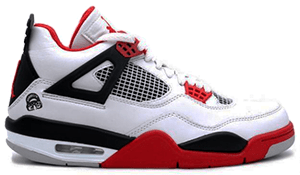

Mars Blackmon was a fictional character from the 1986 film ‘She’s Gotta Have It.’ He is also the alter-ego of filmmaker Spike Lee. In the film, he was a ‘Brooklyn-loving,’ die-hard New York Knicks fan. During the late 1980s and early 1990s, Blackmon became the primary pitchman in Nike commercials for Air Jordans, the basketball shoes worn by Michael Jordan. In these commercials, Mars Blackmon popularized the phrases ‘Is it the Shoes? Is it the Shoes? Is it the Shoes? … Money, it’s gotta be the shoes.’
Posted in Games, Humor, Money |
Leave a Comment »
September 16, 2010
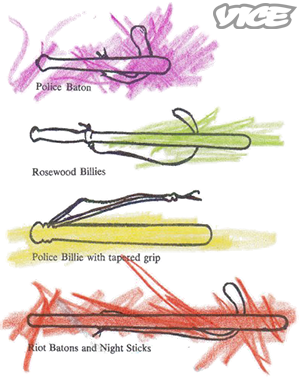
The Anarchist Cookbook, first published in 1971, is a book that contains instructions for the manufacture of explosives, rudimentary telecommunications hacking devices, and other quasi-legal and contraband items.
It was written by William Powell to protest United States involvement in the Vietnam War. Since writing the book, Powell has converted to Anglican Christianity and attempted to have the book removed from circulation.
Posted in Language, Politics, War |
Leave a Comment »
September 13, 2010

An announcer’s test is a test sometimes given to those wanting to be a radio or television announcer. The tests usually involve retention, memory, repetition, enunciation, diction, and using every letter in the alphabet a variety of times. One of the more well known announcer’s tests originated at Radio Central New York in the early 1940s as a cold reading test given to prospective radio talent to demonstrate their speaking ability.
There are many variants, but most begin thusly: One hen. One hen, two ducks. One hen, two ducks, three squawking geese. One hen, two ducks, three squawking geese, four limerick oysters… and so on.
Posted in Humor, Money |
1 Comment »
September 13, 2010

Washlet is a registered trademark of Japanese toilet industry giant TOTO, referring to electric toilets with bidet functions. The first toilet with an integrated bidet was produced in the United States in 1964. The age of the high-tech toilet in Japan started in 1980 with the introduction of the Washlet G Series by Toto, and since then the product name washlet has been used to refer to all types of Japanese high-tech toilets. As of 2002, almost half of all private homes in Japan have such a toilet, exceeding the number of households with a personal computer.
While the toilet looks like a Western-style toilet at first glance, there are numerous additional features—such as blow dryer, seat heating, massage options, water jet adjustments, automatic lid opening, automatic flushing, wireless control panel, room heating and air conditioning for the room—included either as part of the toilet or in the seat. Recently, researchers have added medical sensors into these toilets, which can measure the blood sugar based on the urine, and also measure the pulse, blood pressure, and the body fat content of the user.
Posted in Health, Technology, World |
2 Comments »
September 13, 2010
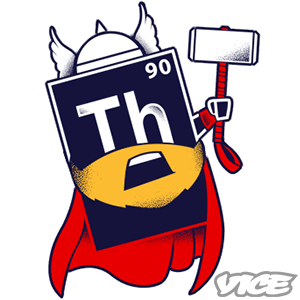
Thorium [thawr-ee-uhm] is a chemical element with the symbol Th and atomic number 90. It is a naturally occurring, lustrous white metal. It is estimated to be about three to four times more abundant than uranium in the Earth’s crust. It has been considered a waste product in mining rare earths, so its abundance is high and cost low. One ton of thorium produces the same energy as 200 tons of uranium, or 3.5 million tons of coal.
Edward Teller, co-founder and director of Lawrence Livermore National Laboratory, promoted thorium energy until his death, and scientists in the United States, France, Japan, India, and Russia are now creating their own thorium-based power plants.
Posted in Science, Technology |
Leave a Comment »
September 12, 2010

Bebop [bee-bop] or bop is a style of jazz characterized by fast tempo, instrumental virtuosity and improvisation based on the combination of harmonic structure and melody. It was developed in the early and mid-1940s. It first surfaced in musicians’ argot some time during the first two years of American involvement in WWII. This style of jazz ultimately became synonymous with modern jazz, as either category reached a certain final maturity in the 1960s.
read more »
Posted in Art, Language |
Leave a Comment »
September 12, 2010


Domo Kun is the official mascot of NHK television station, appearing in several 30 second stop-motion interstitial sketches shown as station identification during shows. NHK is Japan’s national public broadcasting organization. The name ‘Domo’ was acquired during the second episode of his show in which a TV announcer said, ‘dōmo, konnichiwa,’ which is a greeting meaning something along the lines of, ‘Well, hello there!” but which can also be interpreted as ‘Hello, Domo!’ The suffix ‘kun’ is a Japanese honorific often used with young males.
Posted in Art, Humor, World |
Leave a Comment »
September 11, 2010
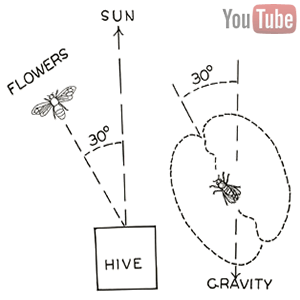
Waggle dance is a term used in beekeeping and ethology for a particular figure-eight dance of the honey bee. By performing this dance, successful foragers can share with their hive mates information about the direction and distance to patches of flowers yielding nectar and pollen, to water sources, or to new housing locations. Thus the waggle dance is a mechanism whereby successful foragers can recruit other bees in their colony to good locations for collecting various resources.
It was once thought that bees had two distinct recruitment dances — round dances and waggle dances — the former for indicating nearby targets and the latter for indicating distant targets, but it is now known that a round dance is simply a waggle dance with a very short waggle run. Austrian ethologist and Nobel laureate Karl von Frisch was one of the first who translated the meaning of the waggle dance.
Posted in Science |
Leave a Comment »
September 11, 2010
DJ-Kicks is a series of DJ mix albums, mixed by various artists for the independent record label !K7 Records. The series started out in 1995 as a compilation of electronic DJ club-style mixes in the techno or house genres, with the then-novel twist of being targeted to a home listening audience. Soon afterwards, both the choice of compilers and the genres included were expanded: In addition to DJs, more and more producers (like Terranova), remixers (like Kruder & Dorfmeister), bands (like the Stereo MCs) and musicians (like Nicolette) compiled DJ-Kicks albums. The actual music began to vary wildly as well, ranging from Trüby Trio’s downbeat jazz sound to Kemistry & Storm’s aggressive drum and bass. Still, all contributions remain broadly within the electronic music genre.
The first DJ-Kicks release was C.J. Bolland’s in 1995, and the series is still regularly expanded. As of October 2006, there are 28 releases in the series, with a release rate of roughly two to three new ones each year. Some of the DJ-Kicks mixes are very popular and counted among the regular albums of the compiler, most notably the one by Kruder & Dorfmeister. The DJ-Kicks series has been called ‘the most important DJ-mix series ever’ by Mixmag.
Posted in Art |
Leave a Comment »
September 10, 2010

Areva is a French public multinational industrial conglomerate formed in September of 2001, and is the world’s largest supplier of nuclear energy. It is the only company with a presence in each industrial activity linked to nuclear energy: mining, chemistry, enrichment, combustibles, services, engineering, nuclear propulsion and reactors, treatment, recycling, stabilization, and dismantling. The corporate name Areva is inspired by the Trappist Santa Maria de la Real monastery in Arevalo in Spain.
Posted in Money, Technology, World |
Leave a Comment »


 The Daily Omnivore