December 11, 2011
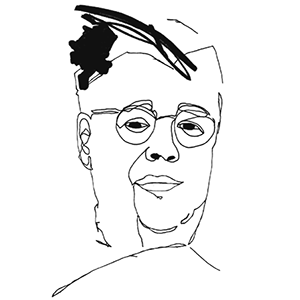
Stieg Larsson (1954 – 2004) was a Swedish journalist and writer, best known for his ‘Millennium series’ of crime novels, which were published posthumously.
Larsson lived and worked much of his life in Stockholm, in the field of journalism and as an independent researcher of right-wing extremism.
read more »
Posted in Art, Language, Politics |
Leave a Comment »
November 30, 2011
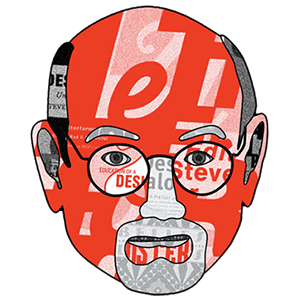
Steven Heller (b. 1950) is an American author, and editor who specializes on topics related to graphic design. He is author and co-author of many works on the history of illustration, typography, and many subjects related to graphic design. He has published more than eighty titles.
For thirty-three years Heller was a senior art director of ‘U&lc’ magazine, a publication devoted to typography. As of 2007, he is co-chair with Lita Talarico of the MFA Designer as Author program at the School of Visual Arts in New York City. He has collaborated on books with graphic designer, Louise Fili, who is his wife, as well as with others including the Design Dialogue series.
Posted in Art, Language, Money |
1 Comment »
September 8, 2011
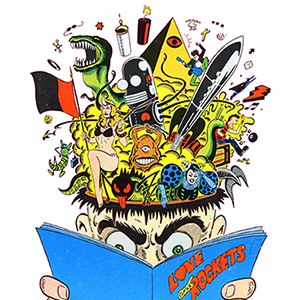
Gilberto Hernández (b. 1957), also known by the nickname Beto, is an American comics writer/artist. Along with his brothers Jaime and Mario he co-created the acclaimed independent comic book ‘Love and Rockets,’ published by Fantagraphics Books.
The style of Gilbert’s work has been described as magic realism or as a ‘magic-realist take on Central American soap opera.’ A common theme is the portrayal of independent women, and their strength, with the main example being Luba of Palomar, who character that appears in much of his work. His stories often deal with issues relevant to Latino culture in the United States.
read more »
Posted in Art, Humor, Language |
Leave a Comment »
August 23, 2011

David Foster Wallace (1962 – 2008) was an American author of novels, essays, and short stories, and a professor at Pomona College in Claremont, California. He was widely known for his 1996 novel ‘Infinite Jest.’ In 1997, Wallace received a MacArthur Fellowship. He was born in Ithaca, New York. His father teaches philosophy at the University of Illinois and his mother teaches English at a community college in Champaign. In fourth grade, he moved to Urbana, Illinois. As an adolescent, he was a regionally ranked junior tennis player.
He attended his father’s alma mater, Amherst College, and majored in English and philosophy, with a focus on modal logic and mathematics. His philosophy senior thesis on modal logic, titled ‘Richard Taylor’s ‘Fatalism’ and the Semantics of Physical Modality’ was awarded the Gail Kennedy Memorial Prize by Amherst. His other senior thesis, in English, would later become his first novel, ‘The Broom of the System,’ which centers on an emotionally challenged, 24-year-old telephone switchboard operator who has issues about whether or not she’s real.
read more »
Posted in Art, Language, Philosophy |
Leave a Comment »
August 4, 2011

Jack Herer (1939 – 2010) was an American cannabis activist and the author of ‘The Emperor Wears No Clothes,’ a book which has been used in efforts to decriminalize cannabis. A former Goldwater Republican, he believed that the cannabis plant should be decriminalized because it has been shown to be a renewable source of fuel, food, and medicine that can be grown in virtually any part of the world. A specific strain of cannabis has been named after Herer that has won several awards, including the 7th High Times Cannabis Cup. He ran for US President twice, in 1988 (1,949 votes) and 1992 (3,875 votes) as the Grassroots Party candidate. In July 2000, he suffered a minor heart attack and a major stroke, resulting in difficulties speaking and moving the right side of his body. He mostly recovered, and claimed in 2004 that treatment with amanita muscaria, a psychoactive mushroom had cured him. He died six years later, aged 70.
European experts on hemp, like Dr. Hayo Van der Werf and Dr. Ivan Bûcsa, criticized Herer’ for making unrealistic claims regarding the potential of hemp, for example: Herer claimed that hemp produces higher yields than other crops. Van der Werf argue that is simply wrong. Under most favorable growing conditions, other crops such as maize, sugar beet or potato produced similar dry matter yields. Herer also claimed that hemp hurds, which make up 60 to 80 % of the stem dry weight, contain 77 % cellulose. Van der Werf argue that is wrong. Cellulose content of hemp hurds has been found to vary between 32 and 38 %. Possibly, Herer confused the hurds, which form the woody core of the hemp stem, with the bark, which forms the outer layer of the hemp stem. The bark contains the long bast fibers which are used in textile manufacturing.
Posted in Drugs, Money, Politics |
1 Comment »
July 22, 2011

Shel Silverstein (1930 – 1999), was an American poet, musician, cartoonist, and author of children’s books. He styled himself as Uncle Shelby in his children’s books.
Silverstein grew up in Chicago: ‘When I was a kid—12 to 14, around there—I would much rather have been a good baseball player or a hit with the girls, but I couldn’t play ball. I couldn’t dance. Luckily, the girls didn’t want me. Not much I could do about that. So I started to draw and to write. I was also lucky that I didn’t have anybody to copy, be impressed by. I had developed my own style; I was creating before I knew there was a Thurber, a Benchley, a Price and a Steinberg. I never saw their work till I was around 30. By the time I got to where I was attracting girls, I was already into work, and it was more important to me. Not that I wouldn’t rather make love, but the work has become a habit.’
read more »
Posted in Art, Humor, Language |
Leave a Comment »
July 14, 2011

Ray Kurzweil (b. 1948) is an American author, inventor and futurist. He is involved in fields such as optical character recognition (OCR), text-to-speech synthesis, speech recognition technology, and electronic keyboard instruments. He is the author of several books on health, artificial intelligence (AI), transhumanism, the technological singularity, and futurism.
Ray Kurzweil grew up in Queens, NY. He was born to secular Jewish parents who had escaped Austria just before the onset of World War II, and he was exposed via Unitarian Universalism to a diversity of religious faiths during his upbringing. His father was a musician and composer and his mother was a visual artist. His uncle, an engineer at Bell Labs, taught young Ray the basics of computer science.
read more »
Posted in Language, Money, Technology |
1 Comment »
July 13, 2011

Hunter S. Thompson (1937 – 2005) was an American journalist and author. He is credited as the creator of Gonzo journalism, a style of reporting where reporters involve themselves in the action to such a degree that they become central figures of their stories.
He is known also for his unrepentant lifelong use of alcohol, LSD, mescaline, and cocaine (among other substances); his love of firearms; his inveterate hatred of Richard Nixon; and his iconoclastic contempt for authoritarianism. While suffering a bout of health problems, he committed suicide in 2005, at the age of 67.
read more »
Posted in Drugs, Humor, Language |
Leave a Comment »
July 12, 2011
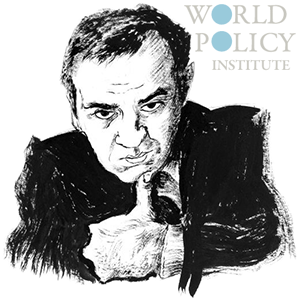
Garry Kasparov (b. 1963) is a Russian chess grandmaster, a former World Chess Champion, writer, political activist, and one of the greatest chess players of all time. Kasparov became the youngest ever undisputed World Chess Champion in 1985 at the age of 22. He held the official FIDE world title until 1993, when a dispute with FIDE led him to set up a rival organization, the Professional Chess Association. He continued to hold the ‘Classical’ World Chess Championship until his defeat by Vladimir Kramnik in 2000. He is also widely known for being the first world chess champion to lose a match to a computer under standard time controls, when he lost to IBM’s Deep Blue in 1997.
After his retirement from chess in 2005, Kasparov turned to politics and created the United Civil Front, a social movement whose main goal is to ‘work to preserve electoral democracy in Russia.’ He has vowed to ‘restore democracy’ to Russia by ousting Vladimir Putin, of whom he is an outspoken critic.
read more »
Posted in Games, Politics, World |
Leave a Comment »
July 11, 2011


Alexander Shulgin (b. 1925), known as Sasha, is an American pharmacologist. Shulgin is credited with the popularization of MDMA, commonly known as ecstasy, in the late 1970s and early 1980s, especially for psychopharmaceutical use and the treatment of depression and post-traumatic stress disorder. In subsequent years, Shulgin discovered, synthesized, and bioassayed over 230 psychoactive compounds.
In 1991 and 1997, he and his wife Ann Shulgin authored the books ‘PiHKAL’ and ‘TiHKAL’ on the topic of psychoactive drugs. Shulgin discovered many noteworthy phenethylamines including the 2C family. Additionally, Shulgin performed seminal work into the descriptive synthesis of compounds based on the organic compound tryptamine.
read more »
Posted in Drugs, Health, Politics |
1 Comment »
July 4, 2011


Robert Anton Wilson (1932 – 2007) was a futurist thinker, libertarian, and writer. He held a Ph.D in Psychology. At one time he was a writer for Playboy magazine. Wilson was the author of the ‘Schrödinger’s Cat’ trilogy (1979). He also co-wrote (with Robert Shea) the ‘Illuminatus!’ trilogy (1975), which took a humorous look at the American fear of conspiracies. These books mix true facts with fiction. In ‘The Cosmic Trigger’ (1976), he introduced Discordianism, Sufism, futurism, the Illuminati and other unusual subjects to the general public. He also worked with Timothy Leary to promote futurist ideas of space migration, life extension, and intelligence enhancement.
Recognized as an episkopos, pope, and saint of Discordianism, Wilson helped publicize the group. He described his work as an ‘attempt to break down conditioned associations, to look at the world in a new way, with many models recognized as models or maps, and no one model elevated to the truth.’ His goal being ‘to try to get people into a state of generalized agnosticism, not agnosticism about God alone but agnosticism about everything.’
read more »
Posted in Humor, Language, Philosophy |
Leave a Comment »
June 21, 2011
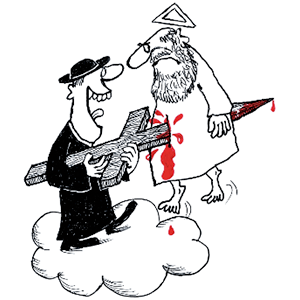
Jean Meslier (1664 – 1729) was a French Catholic priest who was discovered, upon his death, to have written a book-length philosophical essay promoting atheism. Described by the author as his ‘testament’ to his parishioners, the text denounces all religion.
He began learning Latin from a neighborhood priest in 1678 and eventually joined the seminary; he later claimed this was done to please his parents. At the end of his studies, he took Holy Orders and became priest in Champagne. One public disagreement with a local nobleman aside, Meslier was to all appearances generally unremarkable, and he performed his office without complaint or problem for 40 years. He lived like a pauper, and every penny left over was donated to the poor.
read more »
Posted in Language, Philosophy |
Leave a Comment »



 The Daily Omnivore