The Olduvai Gorge in northern Tanzania is commonly referred to as ‘The Cradle of Mankind.’ The old name for the Gorge was Olduvai Gorge, which was a mispronunciation of Oldupai. The Gorge was re-named in 2005 to correct this mistake. Oldupai is the Maasai word for the wild plant which grows in the gorge that is used as an antiseptic and natural bandage. Excavation work there was pioneered by Louis and Mary Leakey beginning in 1931 and continued into the twenty-first century by Professor Fidelis Masao of the Open University of Tanzania supported by Earthwatch; there have also been teams from Rutgers University.
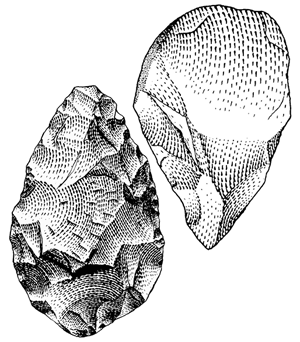
The earliest archaeological deposit, known as Bed I, has produced evidence of campsites and living floors along with stone tools made of local basalt and quartz. Since this is the site where these kinds of tools were first discovered, these tools are called Oldowan. It is now thought that the Oldowan toolmaking tradition started about 2.6 million years ago. Above this, in Bed II, pebble tools begin to be replaced by more sophisticated handaxes of the Acheulean industry and made by H. ergaster. This layer has not yet been successfully dated, but likely falls between 1.75 and 1.2 million years.


 The Daily Omnivore
Leave a comment