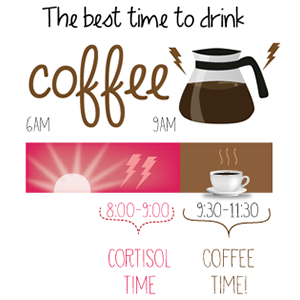
Cortisol, also called the ‘stress hormone,’ is an endogenous steroid that helps the body metabolize glucose, control blood pressure, suppress immunity, and respond to inflammation. The cortisol [kawr-tuh-sawl] awakening response (CAR) is an increase of about 50% in cortisol levels occurring 20–30 minutes after awakening in the morning in some people. This rise is superimposed upon the late-night rise in cortisol which occurs before awakening.
It is thought to be linked to the hippocampus’ preparation of the hypothalamic-pituitary-adrenal axis (HPA) to face anticipated stress. The HPA is a complex set of interactions among three endocrine glands. It is a major part of the neuroendocrine system that controls reactions to stress and regulates many body processes, including digestion, the immune system, and mood. The hippocampus is responsible for long term memory. CAR is hypothesized to be the stress response that occurs when your memories systems ‘wake up,’ forcing you to consider the challenges of the day ahead.
The function of cortisol awakening response is unknown but it has been suggested to link with a stress-related preparation in regard to the upcoming day by the hippocampus. One hypothesis is: ‘that the cortisol rise after awakening may accompany an activation of prospective memory representations at awakening enabling individual’s orientation about the self in time and space as well as anticipation of demands of the upcoming day… it is tempting to speculate that for the CAR, anticipation of these upcoming demands may be essential in regulating the CAR magnitude for the particular day. The hippocampus is, besides its established role in long-term memory consolidation, involved in the formation of a cohesive construct and representation of the outside world within the central nervous system processing information about space, time and relationships of environmental cues. This puts the hippocampus in a pivotal position for the regulation of the CAR.’
Shortly after awakening, a sharp 38–75% (average 50%) increase occurs in the blood level of cortisol in about 77% of healthy adults, and it occurs in people of all ages. The cortisol awakening response peaks approximately 30 minutes after awakening though it may still be heightened by 34% an hour after waking. The pattern of this response to waking is relatively stable for any individual. Twin studies show its pattern is largely genetically determined. Normally, the highest cortisol secretion happens in the second half of the night with peak cortisol production occurring in the early morning. Following this, cortisol levels decline throughout the day with lowest levels during the first half of the night. Cortisol awakening response is independent of this circadian variation in HPA axis activity; it is superimposed upon the daily rhythm of HPA axis activity; and it seems to be linked specifically to the event of awakening.
Changes in sleep affect cortisol levels. Waking up earlier in the morning increases the response. Shift work, such as nurses working on morning shifts with very early awakening, have a greater and prolonged cortisol awakening response than those on late day or night shifts. However another study attributed this greater response to increased stress and impaired sleep quality before an early work shift. A study of naps found that students taking a nap of one to two hours in the early evening hours had no cortisol awakening response, suggesting cortisol awakening response only occurs after night sleep. Cortisol awakening response is larger when people wake up in light rather than darkness. There is no cortisol rise after nights with traffic-like low-frequency noise. There is no difference on days when people wake up spontaneously or use an alarm clock. Aspirin has been found to reduce the response.
Morning types show a larger cortisol awakening response than evening types. Those suffering fatigue show a low rise and flat plateau. The response is reduced the more people are in pain. The lower a person’s socioeconomic status, the higher their response (this might link to the material hardship that occurs with low socioeconomic status). Cortisol awakening response is larger for those: waking up to a working day compared to work-free weekend day; experiencing chronic stress and worry; overloaded with work; in acute stress; or worn down by burnout.


 The Daily Omnivore