January 13, 2011

Watson, named after IBM’s founder, Thomas J. Watson, is an artificial intelligence program developed to answer questions posed in natural language. Watson competed on the TV game show ‘Jeopardy!’ in 2011, defeating past champions Ken Jennings and Brad Rutter. During the game, Watson had access to 200 million pages of content, including the full text of Wikipedia. Watson consistently outperformed its human opponents on the game’s signaling device, but had trouble responding to a few categories, notably those having short clues containing only a few words.
The original Watson was made up of a cluster of 2880 POWER7 processor cores and 16 Terabytes of RAM. IBM’s master inventor and senior consultant Tony Pearson estimated Watson’s hardware cost about $3 million and with 80 TeraFLOPs would be placed 94th on the Top 500 Supercomputers list in 2011. In 2013, IBM announced that Watson software system’s first commercial application would be for utilization management decisions in lung cancer treatment at Sloan–Kettering in conjunction with health insurance company WellPoint. Watson’s business chief Manoj Saxena says that 90% of nurses in the field who use Watson now follow its guidance.
Posted in Language, Money, Technology |
Leave a Comment »
January 13, 2011
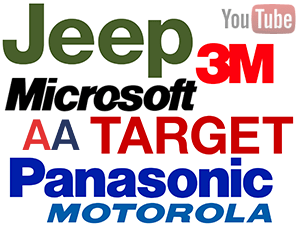

Helvetica is a widely used sans-serif typeface developed in 1957 by Swiss typeface designer Max Miedinger with Eduard Hoffmann to create a neutral typeface that had great clarity, no intrinsic meaning in its form, and could be used on a wide variety of signage. It’s original name was ‘Neue Haas Grotesk’; it was changed to ‘Helvetica’ (the Latin name for Switzerland) in 1960 in order to make it more marketable internationally. Generic versions of Helvetica have been made by various vendors; Monotype’s Arial, designed in 1982 has identical character widths and is indistinguishable by most non-specialists.
Helvetica is a popular choice for commercial wordmarks, including: 3M, American Airlines, American Apparel, BMW, Jeep, JCPenney, Lufthansa, Microsoft, Target, RE/MAX, Toyota, Panasonic, Motorola, Kawasaki, and Verizon Wireless. Apple Inc. has used Helvetica widely in its software. Helvetica is also widely used by the U.S. government; for example, federal income tax forms are set in Helvetica, and NASA uses the type on the Space Shuttle orbiter. New York City has been using Helvetica since 1989 for many of its subway signs. In 2007, director Gary Hustwit released a documentary, ‘Helvetica,’ to coincide with the fiftieth anniversary of the typeface.
Posted in Art, Language, Money |
Leave a Comment »
January 13, 2011

A toy library is a library from which toys, puzzles, and games are lent out, functioning like a lending library. Toy libraries offer play sessions for families and a wide range of toys appropriate for children at different stages in their development.
Toy libraries provide children with new toys every week or two, saving parents money and keeping children from getting bored. Popular in the French-speaking world, toy libraries are called ludothèques. A lekotek is a toy and play library with a specific focus on children with special needs.
Posted in Games, Health, Money |
Leave a Comment »
January 13, 2011

An itch is an unpleasant sensation that causes the desire or reflex to scratch. Itching has resisted many attempts to classify it as any one type of sensory experience. It has many similarities to pain and both are unpleasant, but their response patterns are different. Pain creates a withdrawal reflex while itch leads to a scratch reflex. The feeling of itchiness can be caused by a movement of hair or the release of a chemical (histamine) from cells under the skin. Itchiness is regarded as protective, as it helps creatures remove parasites that land on their skin.
Nerve fibers for itch and pain both originate in the skin; however, information for them is conveyed in two distinct systems on the same nerve bundle and tract. Many forms of pain inhibit itch, such as noxious heat, physical rubbing/scratching, noxious chemicals, and electric shock. A variety of over-the-counter and prescription anti-itch drugs are available. Non-chemical remedies include cooling, warming, soft stimulation. Sometimes scratching relieves isolated itches, hence the existence of devices such as the back scratcher. Often, however, scratching can intensify itching and even cause further damage to the skin, dubbed the ‘itch-scratch-itch cycle.’
Posted in Health, Science |
Leave a Comment »
January 13, 2011


Decaffeination is the act of removing caffeine from coffee beans, cocoa, or tea leaves. Decaffeinated drinks still have around 1-2% of the original caffeine remaining in them. In the case of coffee, the process is usually performed on unroasted (green) beans, and starts with steaming of the beans. They are then rinsed with a solvent that extracts the caffeine while leaving the other essential chemicals in the coffee beans. The process is repeated anywhere from 8 to 12 times until it meets either the international standard of having removed 97% of the caffeine in the beans or the EU standard of having the beans 99.9% caffeine-free by mass.
The first commercially successful decaffeination process was invented by Ludwig Roselius and Karl Wimmer in 1903. It involved steaming coffee beans with a salt water solution and then using benzene as a solvent to remove the caffeine. Coffee decaffeinated this way was sold as Kaffee HAG in most of Europe, as Café Sanka in France and later as Sanka brand coffee in the U.S. Due to health concerns regarding benzene, this process is no longer used commercially and Coffee Hag and Sanka are produced using a different process. Coffee contains over 400 chemicals important to the taste and aroma of the final drink: it is therefore challenging to remove only caffeine while leaving the other chemicals at their original concentrations.
Posted in Drugs, Food, Science |
1 Comment »
January 13, 2011

The Internet Corporation for Assigned Names and Numbers (ICANN) is a non-profit corporation headquartered in California that was incorporated in 1998 to oversee a number of Internet-related tasks previously performed directly on behalf of the U.S. Department of Defense, which created the Internet. ICANN manages the assignment of domain names and IP addresses. To date, much of its work is about making new generic top-level domains (e.g. .edu, .com, .gov, etc.).
Posted in Money, Politics, Technology |
Leave a Comment »
January 13, 2011

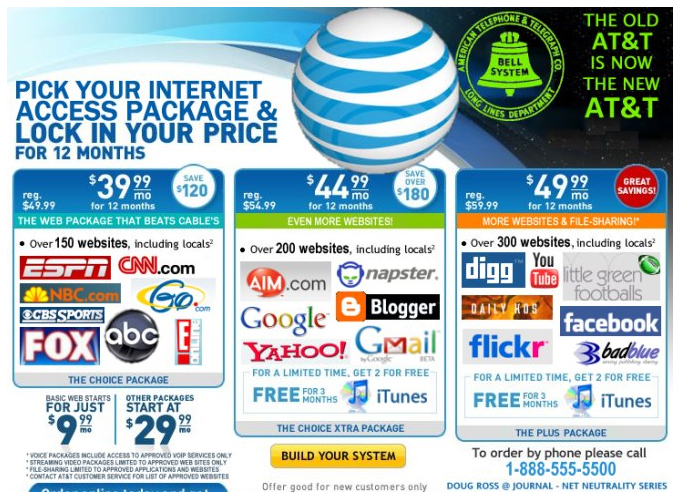
Network neutrality is a principle that restricts Internet Service Providers (ISP) and governments from giving some internet traffic (email, web, peer-to-peer, BitTorrent, etc.) priority over others. On a completely neutral network, all traffic is treated equally. On non-neutral network, ISPs could charge for access to types of traffic, instead of for access to the internet in general. Some degree of traffic management is necessary on any network, but where to draw the line is at issue presently. Many believe net neutrality to be primarily important as a preservation of current freedoms.
Vinton Cerf, considered a ‘father of the Internet’ and co-inventor of the Internet Protocol, Tim Berners-Lee, creator of the Web, and many others have spoken out in favor of network neutrality. Opponents of net neutrality contend that broadband service providers have no plans to block content or degrade network performance. In spite of this claim, some Internet service providers have intentionally slowed peer-to-peer communications. Still other companies have acted in contrast to these assertions of hands-off behavior and have begun to discriminate against P2P, FTP and online games, instituting a cell-phone style billing system of overages, free-to-telecom ‘value added’ services,’ and bundling.
Posted in Money, Politics, Technology |
Leave a Comment »
January 12, 2011
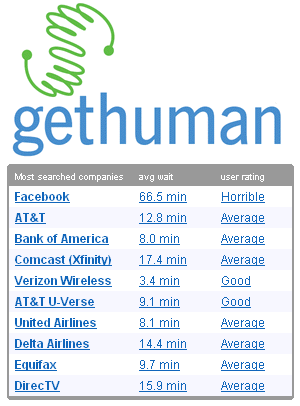
Paul English, cofounder and CTO of Kayak.com is also founder of the “gethuman” movement to restore personal contact in customer service. The most popular part of the gethuman.com website is a database of phone numbers and shortcuts to reach a humans at 500 major US corporations.
Posted in Money, Technology |
Leave a Comment »
January 12, 2011
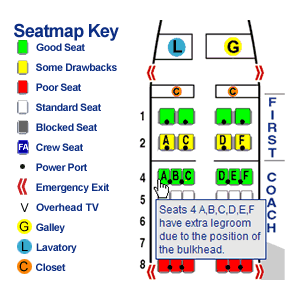
SeatGuru is a website that features aircraft seat maps, seat reviews, and a color-coded system to identify superior and substandard airline seats. It also features information about in-flight amenities and airline specific information regarding Check-in, Baggage, Unaccompanied Minors and Traveling with Infants and Pets. SeatGuru covers more than 700 aircraft seatmaps from more than 95 different airlines. In 2007, SeatGuru was purchased by Expedia subsidiary, TripAdvisor.
Posted in Money, Technology |
Leave a Comment »
January 12, 2011

A black light is a lamp that emits electromagnetic radiation almost exclusively in the soft near ultraviolet range that is only partially visible. It is mainly seen by humans using the low-light receptors in the eye, which are sensitive to near ultraviolet. The low-light receptors however also have the distinctive feature that they are more accurate in the peripheral vision, this means black light will always look out of focus when looked at directly. In medicine, forensics, and some other scientific fields, such a light source is referred to as a Wood’s lamp (named for American physicist, Robert Williams Wood).
Black light sources have many uses. They may be employed for decorative and artistic lighting effects, for diagnostic and therapeutic uses in medicine, for the eradication of microorganisms, for the observation or detection of substances tagged with other substances that exhibit a fluorescent effect, for the curing of plastic resins and for attracting insects. Strong sources of long-wave ultraviolet light are used in tanning beds. Black light lamps are used for the detection of counterfeit money.
Posted in Technology |
Leave a Comment »
January 12, 2011


Wunderwaffe (‘wonder weapon’) and was a term assigned during World War II by the German propaganda ministry to a few revolutionary ‘superweapons.’ Most of these weapons however remained more or less feasible prototypes, or reached the combat theatre too late, and in too insignificant numbers (if at all) to have a military effect. A derisive abbreviation of the term emerged: Wuwa, pronounced ‘voo-vah.’
The ‘V’-weapons (including the V-2 rocket), which were developed earlier, and saw considerable deployment especially against Great Britain, trace back to the same pool of highly inventive armament concepts. Although the Wunderwaffen failed to meet their strategic objective of turning the tides of World War II in Nazi Germany’s favor at a time when the war was already strategically lost, they represented designs and prototypes that were extremely advanced for their time including some of the the earliest work on rockets, jets, night vision, orbital weapons, and ballistic missile submarines.
Posted in Technology, War |
1 Comment »
January 12, 2011

Creative Commons (CC) is a non-profit organization headquartered in San Francisco, devoted to expanding the range of creative works available for others to build upon legally and to share. The organization has released several copyright-licenses known as Creative Commons licenses free of charge to the public. These licenses allow creators to communicate which rights they reserve, and which rights they waive for the benefit of recipients or other creators. Wikipedia is one of the notable web-based projects using one of its licenses.
The organization was founded in 2001 with support of the Center for the Public Domain. The first set of copyright licenses were released in late 2002. Creative Commons is governed by a board of directors and a technical advisory board. Joi Ito is currently the chair of the board and CEO. Creative Commons has been described as being at the forefront of the copyleft movement, which seeks to support the building of a richer public domain by providing an alternative to the automatic ‘all rights reserved’ copyright.
Posted in Money, Politics |
Leave a Comment »





 The Daily Omnivore