January 6, 2011


A telomere [tel-uh-meer] is a protective region of repetitive DNA at the end of a chromosome, The telomere regions deter the degradation of genes near the ends of chromosomes by allowing for the shortening of chromosome ends, which necessarily occurs during chromosome replication. The telomeres are disposable buffers blocking the ends of the chromosomes and are consumed during cell division and replenished by an enzyme, the telomerase reverse transcriptase.
The telomere shortening mechanism normally limits cells to a fixed number of divisions, and animal studies suggest that this is responsible for aging on the cellular level and sets a limit on lifespans. Telomeres also protect a cell’s chromosomes from fusing with each other or rearranging — abnormalities that can lead to cancer — and so cells are destroyed when their telomeres are consumed. Most cancers are the result of ‘immortal’ cells that have ways of evading this programmed destruction.
Posted in Death, Health, Science |
Leave a Comment »
January 6, 2011

Googie architecture (also known as populuxe or Doo-Wop) is a form of modern architecture and a subdivision of futurist architecture, influenced by car culture and the Space and Atomic Ages. Originating in Southern California during the late 1940s and continuing approximately into the mid-1960s, the types of buildings that were most frequently designed in a Googie style were motels, coffee houses and bowling alleys.
The school later became widely-known as part of the Mid-Century modern style, and some of those more notable variations represent elements of the populuxe aesthetic, as in Eero Saarinen’s TWA Flight Center. Features of Googie include upswept roofs, curvaceous, geometric shapes, and bold use of glass, steel and neon. Googie was also characterized by Space Age designs that depict motion, such as boomerangs, flying saucers, atoms and parabolas, and free-form designs such as ‘soft’ parallelograms and the ubiquitous artist’s palette motif.
Posted in Art |
Leave a Comment »
January 6, 2011

The TI-83 series of graphing calculators is manufactured by Texas Instruments. The original TI-83 is itself an upgraded version of the TI-82. Released in 1996, it is one of the most used graphing calculators for students. TI replaced the TI-83 with the TI-83 Plus calculator in 1999, which included flash memory, enabling the device’s operating system to be updated if needed, or for large new Flash Applications to be stored, accessible through a new Apps key.
The Flash memory can also be used to store user programs and data. In 2001 the TI-83 Plus Silver Edition was released, which featured approximately nine times the available Flash memory, and over twice the processing speed (15 MHz) of a standard TI-83 Plus.
Posted in Education, Money, Technology |
Leave a Comment »
January 6, 2011
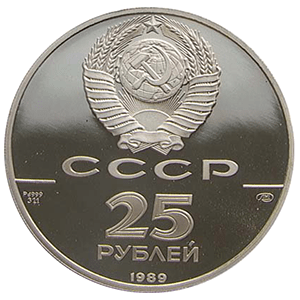
Palladium [puh-ley-dee-uhm] is a chemical element with the chemical symbol Pd and an atomic number of 46. Palladium is a rare and lustrous silvery-white metal that was discovered in 1803 by William Hyde Wollaston, who named it after the asteroid Pallas, which was named after the epithet of the Greek goddess Athena, acquired by her when she slew Pallas.
Palladium, along with platinum, rhodium, ruthenium, iridium and osmium form a group of elements referred to as the platinum group metals (PGMs). Platinum group metals share similar chemical properties, but palladium has the lowest melting point and is the least dense of these precious metals.
read more »
Posted in Money, Science |
Leave a Comment »
January 6, 2011


A hallmark is an official mark or series of marks struck on items made of precious metals — platinum, gold, silver and in some nations, palladium. In a more general sense, the term hallmark can also be used to refer to any distinguishing characteristic or trait Historically, hallmarks were applied by a trusted party: the ‘guardians of the craft’ or nowadays by an assay office.
Hallmarks are a guarantee of certain purity or fineness of the metal as determined by formal metal (assay) testing. Hallmarks are often confused with ‘trademarks’ or ‘maker’s mark.’ Hallmarks are an official mark of guaranteed metal content, trademarks are the mark of a manufacturer to distinguish his products from other manufacturers’ products.
Posted in Money, Politics |
Leave a Comment »
January 6, 2011

The MGB is a sports car launched by MG Cars in 1962 to replace the MGA and manufactured until 1980. The MGB was a relatively modern design at the time of its introduction. It utilized a monocoque structure that reduced both weight and manufacturing costs as well as adding chassis strength. This was a considerable improvement on traditional body-on-frame construction. The MGB’s performance was brisk for the period, with a 0–60 mph time of just over 11 seconds, aided by the relatively light weight of the car. Handling was one of the MGB’s strong points. The 3-bearing 1798 cc B-Series engine produced 95 hp (71 kW) at 5,400 rpm.
In 1974, as US air pollution emission standards became more rigorous, US-market MGBs were de-tuned for compliance. As well as a marked reduction in performance, the MGB gained an inch in ride height and the distinctive rubber bumpers which came to replace the chrome for all markets. Nearly half million MGBs were produced and about a third of them remain today (on the roads and garages of their owners). With plenty of cars available and a large supply of reasonably priced parts, MGBs are very inexpensive cars. Prices fluctuate depending of year and condition, early chrome-bumper cars and MGB GTs carrying a premium.
Posted in Money, Technology |
1 Comment »
January 6, 2011


Hammacher Schlemmer is a retailer and mail order dealer founded in 1848. They claim to be the oldest continuously published catalog in the United States, with annual catalog circulation exceeding 30 million.
read more »
Posted in Money, Technology |
Leave a Comment »
January 6, 2011

Herbert Vogel (b. 1922) and Dorothy Vogel (b. 1935) are American art collectors. Herbert worked as a clerk for the United States Postal Service. Dorothy was a librarian employed by the Brooklyn Public Library. Together they built a large and impressive contemporary art collection on their modest income. Though their focus is conceptual art and minimalist art, the collection also includes noteworthy post-minimalist work.
They amassed a collection of over 4,782 works, which they kept in their New York City apartment. In 1992, they decided to transfer the entire collection to the National Gallery of Art. More recently, in late 2008, they launched The Dorothy and Herbert Vogel Collection: Fifty Works for Fifty States along with the National Gallery of Art, the National Endowment for the Arts, and the Institute of Museum and Library Services. The program will donate 2,500 works to 50 institutions across 50 states and will be accompanied by a book with the same name.
Posted in Art, Money |
Leave a Comment »
January 6, 2011

The tomacco is a hybrid of tomato and tobacco plants first described in a 1959 ‘Scientific American’ article. Both plants are members of the same family, Solanaceae or nightshade. The name ‘tomacco’ was given to the plant by Homer Simpson in a 1999 episode of ‘The Simpsons.’ Homer accidentally created it when he planted and fertilized his tomato and tobacco fields with plutonium. The result is a tomato that apparently has a dried, brown tobacco center, and, although being described as tasting terrible by many characters, is also immediately and powerfully addictive.
A Simpsons fan, Rob Baur of Lake Oswego, Oregon, was inspired by the episode. Remembering the article in a textbook, Baur cultivated real tomacco in 2003. The plant produced offspring that looked like a normal tomato, but Baur suspected that it contained a lethal amount of nicotine and thus would be inedible. The tomacco plant bore tomaccoes until it died after 18 months, spending one winter indoors. Baur was featured on audio commentary in the Simpsons Season 11 DVD box set discussing the plant and resulting fame.
Posted in Art, Humor, Science |
Leave a Comment »
January 5, 2011

Guerrillero Heroico (‘Heroic Guerrilla’) is an iconic photo of Marxist revolutionary Che Guevara taken by Alberto Korda. It was taken on March 5, 1960, in Havana, Cuba, at a memorial service for victims of the La Coubre explosion and by the end of the 1960s turned the charismatic and controversial leader into a cultural icon. Korda has said that at the moment he shot the picture, he was drawn to Guevara’s facial expression, which showed ‘absolute implacability’ as well as anger and pain. Guevara was 31 at the time the photo was taken.
Versions of it have been painted, printed, digitized, embroidered, tattooed, silk-screened, sculpted or sketched on nearly every surface imaginable, leading the Victoria and Albert Museum to say that the photo has been reproduced more than any other image in photography.
Posted in Art, Politics |
Leave a Comment »
January 5, 2011

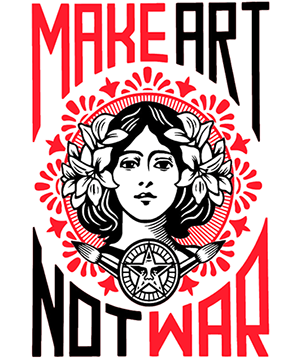
Shepard Fairey (b. 1970) is a contemporary artist, graphic designer, and illustrator who emerged from the American skateboarding scene. He first became known for his ‘André the Giant Has a Posse’ (…OBEY…) sticker campaign, in which he appropriated images from the comedic supermarket tabloid ‘Weekly World News.’ His work became more widely known in the 2008 U.S. presidential election, specifically his Barack Obama ‘HOPE’ poster.
Fairey’s first art museum exhibition, titled ‘Supply & Demand’ like his earlier book, was in Boston at the Institute of Contemporary Art in the summer of 2009. The exhibition featured over 250 works in a wide variety of media: screen prints, stencils, stickers, rubylith illustrations, collages, and works on wood, metal and canvas. As a complement to the ICA exhibition, Fairey created public art works around Boston. The artist explains his driving motivation: ‘The real message behind most of my work is ‘question everything.”
read more »
Posted in Art, Money, Politics |
Leave a Comment »
January 5, 2011

Andre the Giant Has a Posse is a street art campaign based on a design by Shepard Fairey created in 1989 in Providence, Rhode Island. Distributed by the skater community, the Andre stickers began showing up in many cities across the U.S. Over time the artwork has been reused in a number of ways and spread worldwide, following in the footsteps of World War II icon ‘Kilroy Was Here.’
Threat of a lawsuit from Titan Sports, Inc. in 1994 spurred Fairey to stop using the trademarked name ‘André the Giant,’ and to create a more styled image of the wrestler’s face, now most often with the equally iconic branding OBEY.
read more »
Posted in Art, Humor |
Leave a Comment »




 The Daily Omnivore