March 19, 2011

A kill screen is a stage or level in a video game (often an arcade game) that stops the player’s progress due to a programming error or design oversight. Rather than ‘ending’ in a traditional sense, the game will crash, freeze, or behave so erratically that further play is impossible. Pac-Man has a famous kill screen often referred to as the ‘Pac-Man Bomb Screen.’ The game’s level counter was a single 8-bit byte and could therefore store only 256 distinct values. Reaching the 256th level causes the counter that is used while drawing the fruit to overflow to zero, causing 256 fruits and seven blank spaces to be drawn.
Kill screens were much more common during the Golden Age of Arcade Games. Games from this era were often written with the assumption that the player would stop playing long before the numerical limits of the game code were reached; most games from this period were intended to continue until the players lost all of their lives. Additionally, the limited hardware of these early machines often meant that programmers could not spend memory on logical checks of the game state.
Posted in Games, Language, Technology |
Leave a Comment »
March 19, 2011

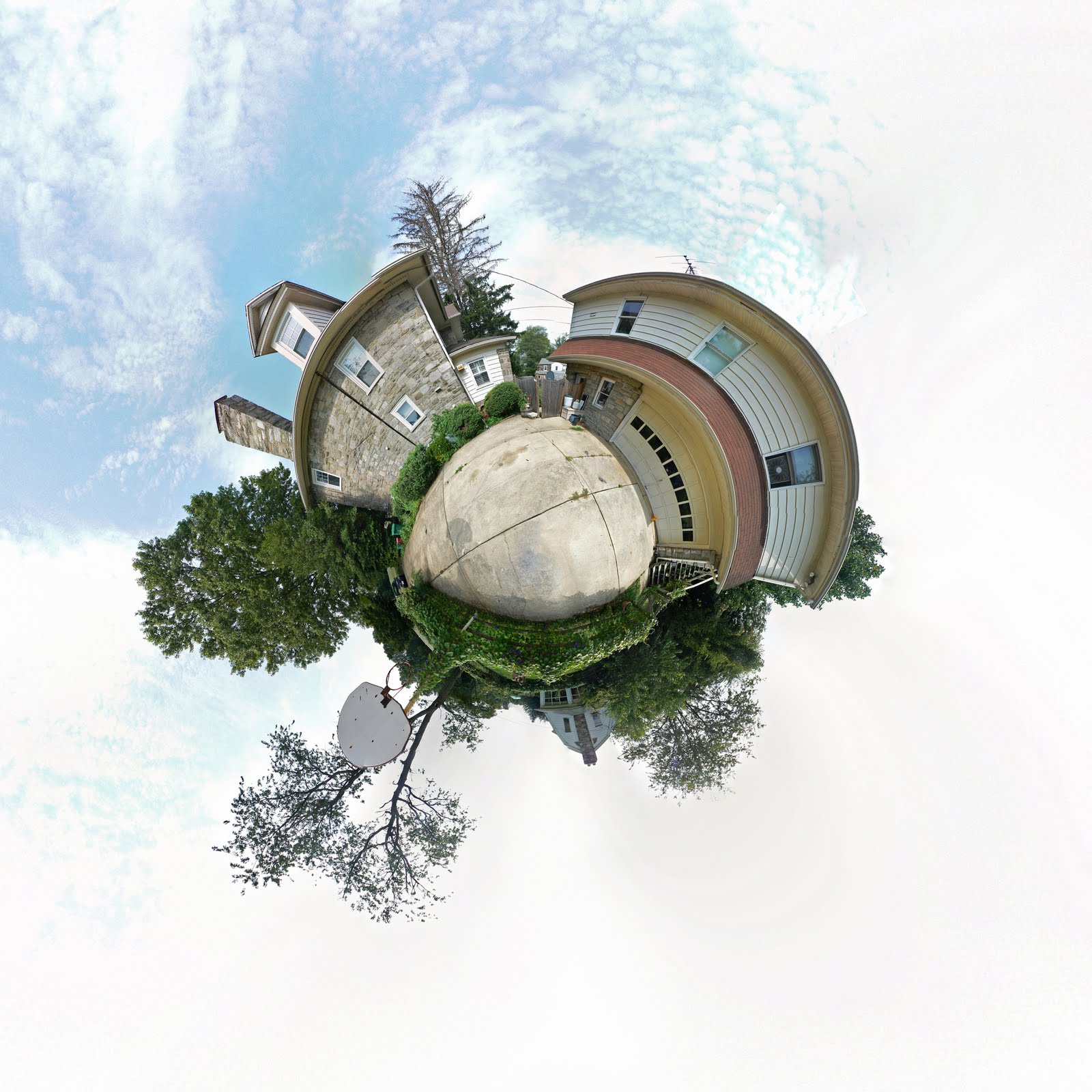
The stereographic projection, in geometry, is a particular mapping that projects a sphere onto a plane. The projection is defined on the entire sphere, except at one point — the projection point. Intuitively, then, the stereographic projection is a way of picturing the sphere as the plane, with some inevitable compromises. Because the sphere and the plane appear in many areas of mathematics and its applications, so does the stereographic projection; it finds use in diverse fields including complex analysis, cartography, geology, and photography.
The projection has been used to map spherical panoramas. This results in interesting effects: the area close to the point opposite to the center of projection becomes significantly enlarged, resulting in an effect known as little planet (when the center of projection is the nadir) and tube (when the center of projection is the zenith).
Posted in Art, Technology |
Leave a Comment »
March 19, 2011

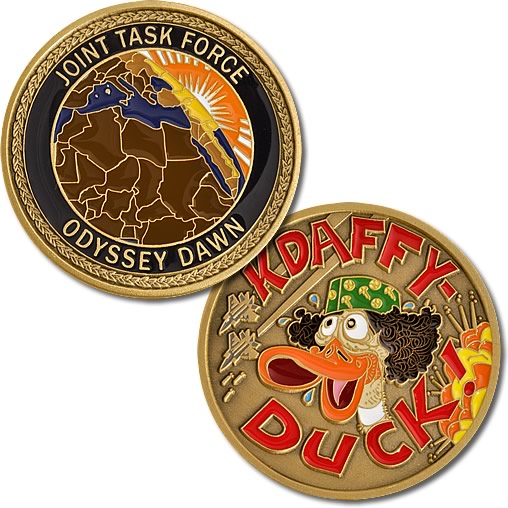
Operation Odyssey Dawn is the codename for the United States participation in a Libyan no-fly zone. The United Kingdom counterpart to this is Operation Ellamy, the French Opération Harmattan. The no-fly zone was proposed during the 2011 Libyan uprising to prevent government forces loyal to Muammar Gaddafi from carrying out air attacks on rebel forces.
Allied operations began with surveillance operations, air attacks and missiles aimed at Libyan military targets. It was reported by the Pentagon that the first strike involved the launch of over 100 Tomahawk cruise missile against shoreline air defenses of the Gaddafi regime.
Posted in Politics, War, World |
Leave a Comment »
March 17, 2011

The term foobar is used as a placeholder name in computer programming. It is used to name entities such as variables, functions, and commands whose purpose is unimportant and serve only to demonstrate a concept. The words themselves have no meaning in this usage. Foobar is sometimes used alone; ‘foo,’ ‘bar,’ and ‘baz’ are sometimes used in that order, when multiple entities are needed.
The origins of the terms are not known with certainty, and several anecdotal theories have been advanced to identify them. Foobar may have derived from the military acronym FUBAR (fucked up beyond all recognition) and gained popularity because it is pronounced the same. In this meaning it also can derive from the German word ‘furchtbar,’ which means awful and terrible and described the circumstances of the Second World War.
Posted in Language, Technology |
Leave a Comment »
March 17, 2011

Tuángòu [twangoo], which loosely translates as ‘team buying’ or ‘group buying’ (also known as store mobbing), is a recently developed shopping strategy originating in the People’s Republic of China.
Several people – sometimes friends, but possibly strangers connected over the internet – agree to approach a vendor of a specific product in order to haggle with the proprietor as a group in order to get discounts. The entire group agrees to purchase the same item. The shoppers benefit by paying less, and the business benefits by selling multiple items at once.
Posted in Money, Technology, World |
Leave a Comment »
March 17, 2011

Crowdsourcing is the act of outsourcing tasks, traditionally performed by an employee or contractor, to an undefined, large group of people or community (a ‘crowd’), through an open call. Jeff Howe, one of first authors to employ the term, established that the concept depends essentially on the fact that because it is an open call to an undefined group of people, it gathers those who are most fit to perform tasks, solve complex problems and contribute with the most relevant and fresh ideas.
For example, the public may be invited to develop a new technology, carry out a design task (community-based design and distributed participatory design), refine or carry out the steps of an algorithm (human-based computation), or help capture, systematize or analyze large amounts of data (citizen science). The term has become popular with businesses, authors, and journalists as shorthand for the trend of leveraging the mass collaboration enabled by Web 2.0 technologies to achieve business goals.
Posted in Language, Money, Technology |
Leave a Comment »
March 17, 2011

Kickstarter is an online threshold pledge system for funding creative projects, from indie film and music to journalism to consumer products, and food-related projects. One of a new set of fundraising platforms dubbed ‘crowdfunding,’ Kickstarter facilitates gathering monetary resources from the general public, a model which circumvents many traditional avenues of investment. It was founded in 2009 by Perry Chen, Yancey Strickler, and Charles Adler in Manhattan. Project owners choose a deadline and a target minimum of funds to raise. If the chosen target is not gathered by the deadline, no funds are collected (a provision point mechanism).
Money pledged by donors is collected using Amazon Payments, and initiating projects requires a US bank account. Kickstarter turns a profit by claiming 5% of the funds raised; Amazon takes an additional percentage (around two). Unlike many forums for fundraising or investment, Kickstarter claims no ownership over the projects and the work they produce. However, projects launched on the site are permanently archived and accessible to the public. After funding is completed, projects and uploaded media cannot be edited or removed from the site.
Posted in Art, Money, Technology |
Leave a Comment »
March 17, 2011


The threshold pledge or fund and release system is a way of making a fundraising pledge as a group of individuals, often involving charitable goals or financing the provision of a public good. An amount of money is set as the goal or threshold to reach for the specified purpose and interested individuals will pitch in, keeping the donation in an escrow fund. When the threshold is reached, the contributions are retired from the escrow fund and a contract is formed so that the collective good is supplied.
This system is often applied to creative works, both for financing new productions and for buying out existing works; in the latter cases, it’s sometimes known as ransom publishing model or Street Performer Protocol (SPP). Sometimes contributions are refunded to the donors if the threshold amount is not reached as of some expiration date, and no contract is signed: this variation is known as an assurance contract. Contributions to an assurance contract may also be collected as pledges which are only called-in when the threshold is reached.
read more »
Posted in Art, Language, Money |
Leave a Comment »
March 17, 2011

Freemium is a business model that works by offering a basic product or service free of charge (such as software, web services or other) while charging a premium for advanced features, functionality, or related products and services. The concept was articulated by venture capitalist Fred Wilson in 2006: ‘Give your service away for free, possibly ad supported but maybe not, acquire a lot of customers very efficiently through word of mouth, referral networks, organic search marketing, etc., then offer premium priced value added services or an enhanced version of your service to your customer base.’
After describing the business model, Wilson asked for suggestions as to what to call it. Within a matter of hours, more than 30 name suggestions were given by his blog readers. One such suggestion came from Jarid Lukin of Alacra, one of Wilson’s portfolio companies. Lukin coined the term ‘freemium,’ and Wilson and his audience adopted it for the business model.
Posted in Language, Money, Technology |
Leave a Comment »
March 17, 2011

A paywall blocks access to a webpage with a screen requiring payment. Web sites that use them include some owned by periodical publications. In 2002 the Financial Times started charging for Web access to published stories. The Wall Street Journal has almost one million paying online readers, which generates about $65 million a year.
Utilities to circumvent paywalls are available. RefSpoof for Mozilla Firefox spoofs the referrer to Google so that multiple ‘first click free’ links can be performed. BreakthePaywall adds an option to Internet Explorer’s context menu which uses various methods (referrer and user-agent spoofing, Cookie deletion, etc.).
Posted in Language, Money, Technology |
Leave a Comment »
March 17, 2011

Charley Harper (1922 – 2007) was a Cincinnati-based American Modernist artist. He was best known for his highly stylized wildlife prints, posters and book illustrations. During his career, Charley Harper illustrated numerous books, notably ‘The Golden Book of Biology,’ magazines such as ‘Ford Times,’ as well as many prints, posters, and other works.
As his subjects are mainly natural, with birds prominently featured, Charley often created works for many nature-based organizations, among them the National Park Service and the Cincinnati Zoo.
Posted in Art, Science |
Leave a Comment »
March 17, 2011
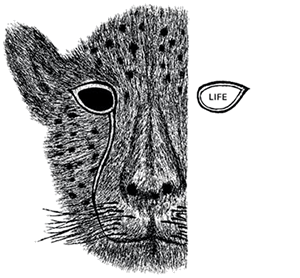
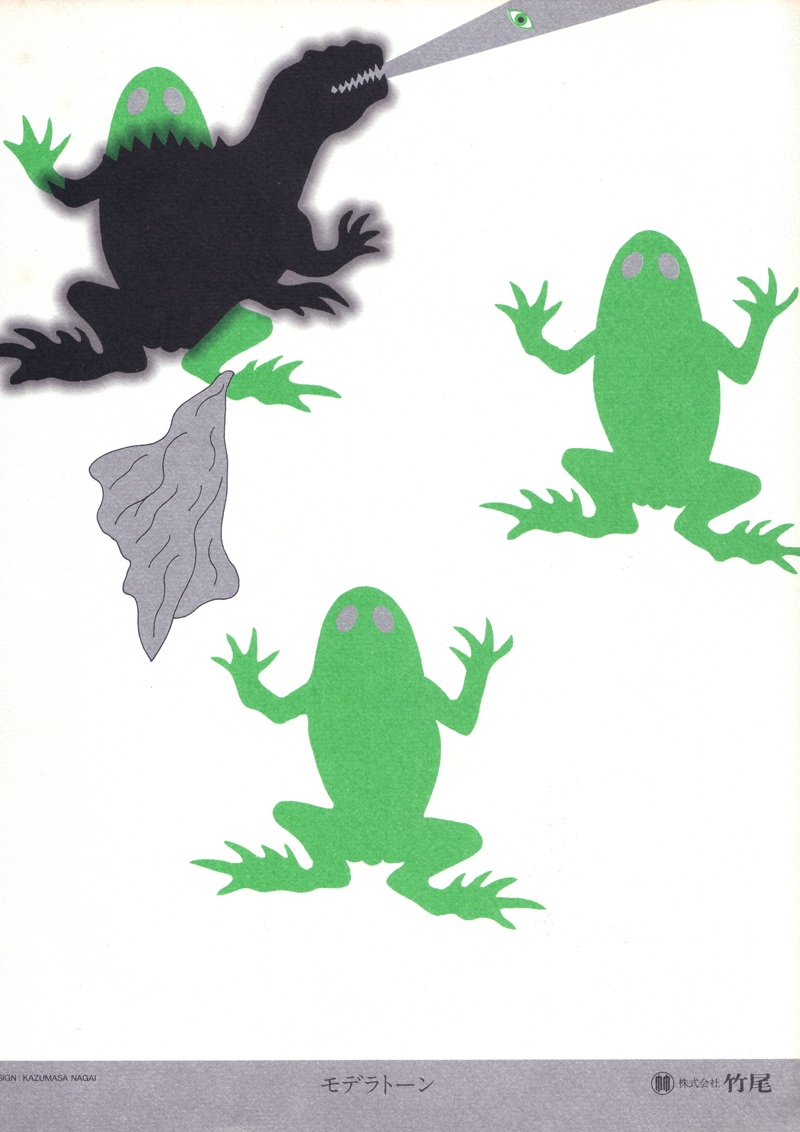
Kazumasa Nagai (b. 1929) is a Japanese graphic artist and poster designer. He co-founded the Nippon Design Center in Tokyo in 1960.
Posted in Art, Money, World |
Leave a Comment »



 The Daily Omnivore