March 9, 2011


The World Federalist Movement (WFM) is a global citizens movement with member and associate organizations around the world. The WFM International Secretariat is based in New York City across from the United Nations headquarters.
Founded in 1947 in Montreux, Switzerland, the Movement brings together organizations and individuals which support the establishment of a global federal system of strengthened and democratized global institutions with plenary constitutional power accountable to the citizens of the world and a division of international authority among separate global agencies.
read more »
Posted in Politics, World |
Leave a Comment »
March 9, 2011

Individual sovereignty (or self-ownership) is the concept of property in one’s own person, expressed as the moral or natural right of a person to be the exclusive controller of his own body and life. According to Marxist philosopher G. Cohen, the concept of self-ownership is that ‘each person enjoys, over himself and his powers, full and exclusive rights of control and use, and therefore owes no service or product to anyone else that he has not contracted to supply.’
Sovereign individuals have supreme authority over their own choices, without the interference of governing powers, provided they have not violated the rights of others. This notion is central to classical liberalism, abolitionism, libertarianism, objectivism, and anarchism. Sovereign-minded individuals would then seem to prefer an atmosphere consisting of decentralized administrative organizations acting as servants to the individual.
Posted in Language, Philosophy, Politics |
Leave a Comment »
March 9, 2011

Balkan Beat Box is an Israeli musical group founded by ex-Gogol Bordello member Tamir Muskat, Ori Kaplan of Firewater and Big Lazy, and Tomer Yosef. As a musical project they often cooperate with a host of other musicians both in the studio as well as live.
Co-founders Ori Kaplan and Tamir Muskat both met in Brooklyn, New York as teenagers. Both had grown up with music and Kaplan had been a klezmer clarinetist, while Muskat was a drummer in a punk band. They began playing together and had trouble finding a style that they felt represented themselves, so they decided to create one. They established their own unique sound by fusing the musical styles of Mediterranean and Balkan traditions with hip-hop and dancehall beats.
Posted in Art, World |
Leave a Comment »
March 9, 2011

Moog synthesizer [mohg] (pronounced like ‘vogue’) may refer to any number of analog synthesizers designed by Dr. Robert Moog or manufactured by Moog Music, and is commonly used as a generic term for analog and digital music synthesizers. The company pioneered the commercial manufacture of analog synthesizers in the early 1950s. The technological development that led to the creation of the Moog synthesizer was the invention of the transistor, which enabled researchers like Moog to build electronic music systems that were considerably smaller, cheaper and far more reliable than earlier vacuum tube-based systems.
The Moog synthesizer began to gain wider attention in the music industry after it was demonstrated at the Monterey International Pop Festival in 1967. The commercial breakthrough of a Moog recording was made by Wendy Carlos in the 1968 record ‘Switched-On Bach,’ which became one of the highest-selling classical music recordings of its era. In 1974 the German electronic group Kraftwerk further popularized the sound of the synthesizer with their landmark album ‘Autobahn,’ which used several types of synthesizer including a Minimoog. German-based Italian producer-composer Giorgio Moroder helped to shape the development of disco music also used Moog synthesizers.
Posted in Art, Money, Technology |
Leave a Comment »
March 9, 2011

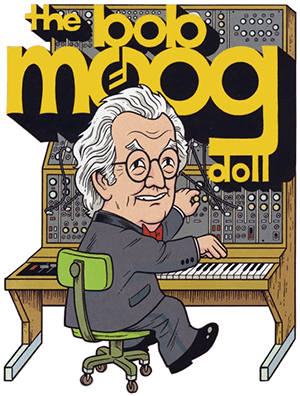
Wendy Carlos (b. 1939) is an American composer and electronic musician. Carlos first came to notice in the late 1960s with recordings made on the Moog synthesizer, then a relatively new and unknown instrument; most notable were LPs of synthesized Bach and the soundtrack for Stanley Kubrick’s film ‘A Clockwork Orange.’ Although the first Carlos Moog albums were interpretations of the works of classical composers, she later resumed releasing original compositions.
read more »
Posted in Art, Technology |
Leave a Comment »
March 9, 2011

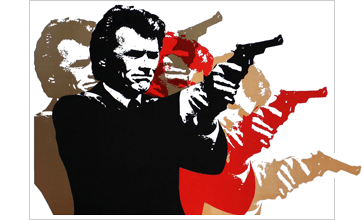
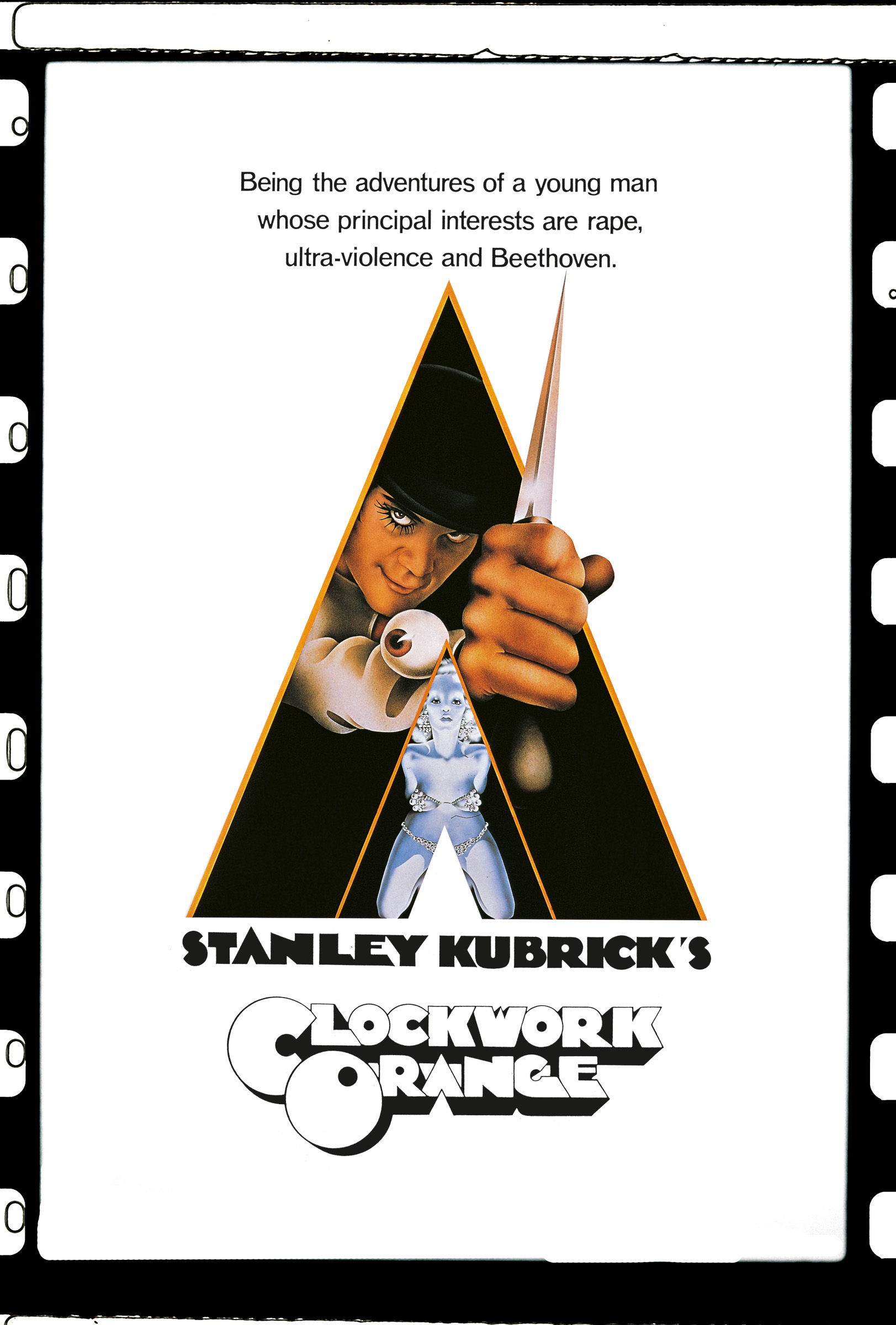
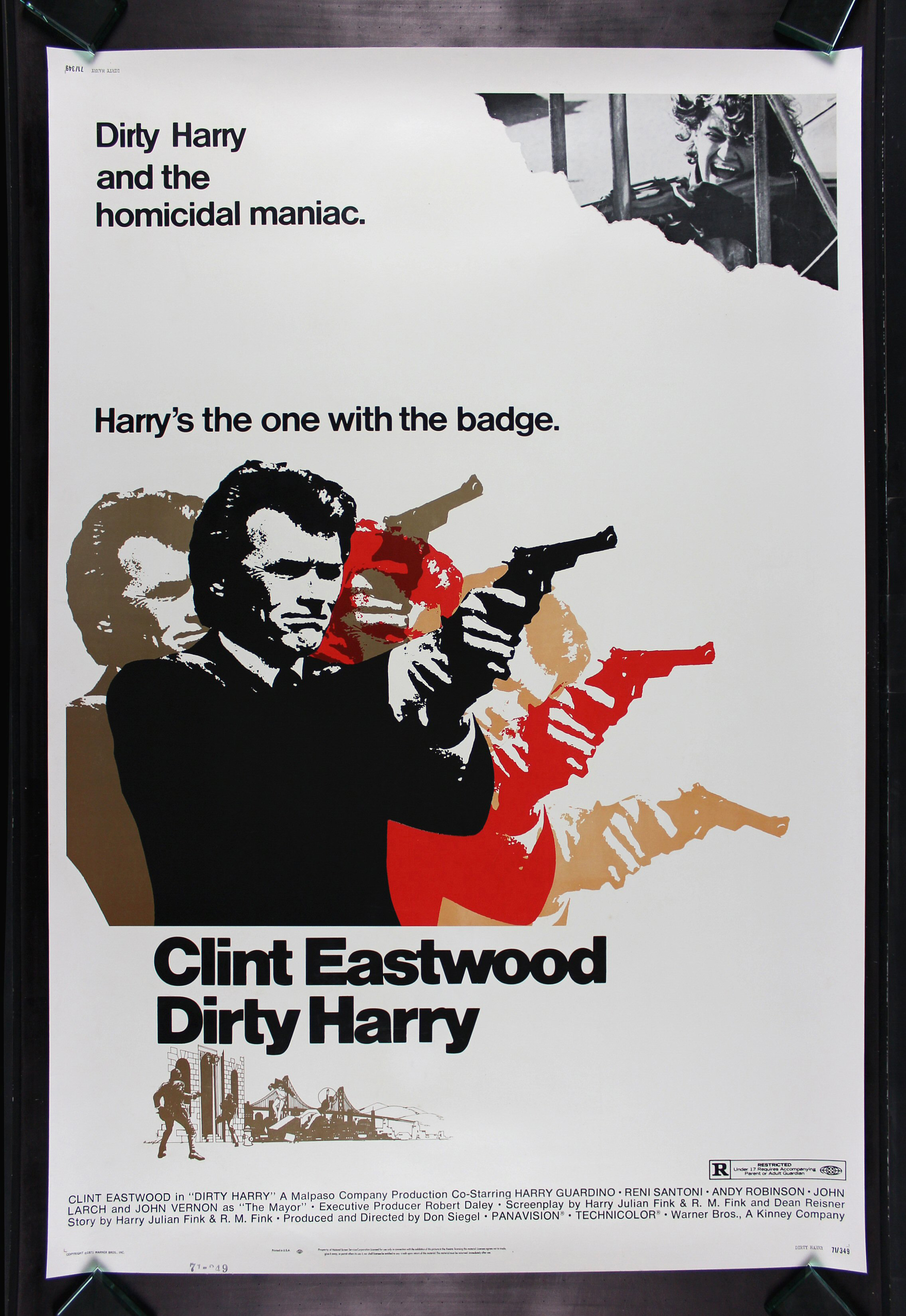
Bill Gold (b. 1921) is an American graphic designer best known for thousands of movie poster designs. During his 60-year career he worked with some of Hollywood’s greatest filmmakers, including Clint Eastwood, Alfred Hitchcock, Stanley Kubrick, Elia Kazan, Ridley Scott, and many more. Among his most famous film posters are those for Casablanca, A Clockwork Orange, and The Sting. Gold designed (and often photographed) posters for 35 consecutive Clint Eastwood films, from Dirty Harry (1971) to Mystic River (2004).
All of Gold’s posters have had a distinctive style. Each poster gave a film its unique identity, often creating the only lasting impression of a film that many would get. Gold’s ever-changing style reflected a wide range of current tastes, trends, and approaches, yet never strayed from the tried-and-true basics of film promotion. Together, Bill Gold’s poster art represents many of the most important American films since the advent of color photography.
Posted in Art, Money |
Leave a Comment »
March 9, 2011

The Ludovico technique is a fictional drug-assisted aversion therapy from the novel and film ‘A Clockwork Orange.’ It involves the patient being forced to watch violent images for long periods of time, while under the effect of drugs that cause a near death experience. The idea is that if the patient is forced to watch the horribly graphic rapes, assaults and other acts of violence while suffering from the drug effects, the patient will assimilate the sensations and then become incapacitated or very ill either attempting to perform or even just witnessing said acts of violence.
The concept is an artistic semblance of the psychological phenomenon known as classical conditioning which is a form of associative learning that was first demonstrated by Ivan Pavlov. The typical procedure for inducing classical conditioning involves presentation of a neutral stimulus along with either the presentation of a positive stimulus or the removal of an aversive stimulus. The neutral stimulus could be any event that does not result in an overt behavioral response from the organism under investigation.
Posted in Art, Politics, Science |
Leave a Comment »
March 9, 2011

A Clockwork Orange is a 1971 darkly satirical science fiction film adaptation of Anthony Burgess’s 1962 novel of the same name. The film, which was made in England, concerns Alex (Malcolm McDowell), a charismatic delinquent whose pleasures are classical music (especially Beethoven), rape, and so-called ‘ultra-violence.’He leads a small gang of thugs, whom he calls his droogs (Russian, ‘buddy’).
The film tells the horrific crime spree of his gang, his capture, and attempted rehabilitation via a controversial psychological conditioning technique. Alex narrates most of the film in Nadsat, a fractured, contemporary adolescent slang comprising Slavic (especially Russian), English, and Cockney rhyming slang.
read more »
Posted in Art, Politics |
Leave a Comment »
March 9, 2011

Nadsat is an argot (secret language) used by the teenagers in Anthony Burgess’s novel ‘A Clockwork Orange. ‘In addition to being a novelist, Burgess was also a linguist and he used this background to depict his characters as speaking a form of Russian-influenced English. The name itself comes from the Russian suffix equivalent of -‘teen.’
read more »
Posted in Art, Language |
Leave a Comment »
March 8, 2011

A Clockwork Orange is a 1962 dystopian novella by Anthony Burgess. The novel contains an experiment in language; Burgess creates teenage slang of the not-too-distant future called Nadsat. In a prefatory note to ‘A Clockwork Orange: A Play with Music,’ Burgess wrote that the title was a metaphor for ‘…an organic entity, full of juice and sweetness and agreeable odor, being turned into an automaton.’ and the ‘title would be appropriate for a story about the application of Pavlovian or mechanical laws to an organism which, like a fruit, was capable of color and sweetness.’
The title alludes to the protagonist’s positively conditioned responses to feelings of evil which prevent the exercise of his free will. To reverse this conditioning, he is subjected to a technique in which his emotional responses to violence are systematically paired with a negative stimulation in the form of nausea caused by an emetic medicine administered just before the presentation of films depicting violent, and ‘ultra-violent’ situations.
read more »
Posted in Art, Politics |
Leave a Comment »
March 8, 2011

Michel Fournier (b. 1944) is an adventurer and retired French Air Force colonel. He has been involved in planning several attempts to break freefall jumping height records, but has yet to be successful. In 1998, the French space agency chose Fournier to conduct a record jump to test the ability of astronauts to survive reentry without a space craft. This project was quickly canceled. In 2003, Fournier attempted his first privately-financed jump but the balloon ripped while being filled. ‘The New York Times’ reports that Fournier has spent nearly $20 million on his two private attempts.
Fournier was scheduled to carry out the Grand Saut (Big Jump) project in 2008, which would have seen him ascend to 40 km (25 mi) in a balloon and freefall 34 km (21 mi) to earth before opening his parachute at 6 km (3.7 mi). In the process he was expected to break the sound barrier, and reach speeds upward of 1,000 miles per hour. His freefall was expected to last 15 minutes. Joseph Kittinger set the previous parachute record by jumping from 31,333 meters (102,799 ft) in 1960 (with a small parachute for guidance) under Project Excelsior. Roger Eugene Andreyev from the Soviet Union holds the longest freefall record of 24,483 meters (80,325 ft) in 1962.
Posted in Games, Money, Technology |
Leave a Comment »
March 8, 2011

Yves Rossy (b. 1959) is a Swiss pilot and inventor. He is the first person to achieve sustained human flight using a jet-powered fixed wing strapped to his back. This jet pack has led to his being nicknamed Airman, Jetman, Rocketman and, later, Fusionman, according to his project steps. Rossy developed and built a system comprising a backpack with semi-rigid carbon-fiber wings with a span of about 2.4 metres (7.9 ft), powered by four attached Jet-Cat P200 jet engines modified from large-model, kerosene fueled, aircraft engines.
His first flight occurred in 2006, lasting nearly six minutes and nine seconds. Yves later successfully flew across the English Channel in 2008 in 9 minutes 7 seconds, reaching a speed of 299 km/h (186 mph) during the crossing. Later in 2008, he made a flight over the Alps, reaching a top descent speed of 304 km/h (189 mph) and an average speed of 124 mph.
Posted in Games, Technology |
Leave a Comment »



 The Daily Omnivore