March 7, 2011

Twin Peaks is an American TV drama created by David Lynch and Mark Frost. The series follows the investigation of the brutal murder of a popular teenager and homecoming queen, Laura Palmer, by FBI Special Agent Dale Cooper. The pilot episode was broadcast in April 1990 on ABC, which led to another seven episodes being produced and a second season, which aired until June 1991.
As with much of Lynch’s other work (notably ‘Blue Velvet’), ‘Twin Peaks’ explores the gulf between the veneer of small-town respectability and the seedier layers of life lurking beneath it. Each character from the town leads a double life that is slowly uncovered as the series progresses.
read more »
Posted in Art, Philosophy |
Leave a Comment »
March 7, 2011

Hungry ghost is a Western translation of an Eastern phrase representing beings who are driven by intense emotional needs in an animalistic way. In Buddhism, they are ghosts only in the sense of not being fully alive; not fully capable of living and appreciating what the moment has to offer. They are phantomlike creatures with withered limbs, grossly bloated bellies, and long thin necks.
They represent a fusion of rage and desire. Tormented by unfulfilled cravings and insatiably demanding of impossible satisfactions, the Hungry Ghosts are searching for gratification for old unfulfilled needs whose time has passed. They are beings who have uncovered a terrible emptiness within themselves, who cannot see the impossibility of correcting something that has already happened. Their ghostlike state represents their attachment to the past.
Posted in Language, Philosophy, World |
Leave a Comment »
March 7, 2011

Arzell ‘Z. Z.’ Hill (1935 – 1984) was an American blues singer, in the soul blues tradition, known for his 1970s and 1980s recordings for Malaco. His 1982 album, Down Home, stayed on the Billboard soul album chart for nearly two years. The track ‘Down Home Blues’ has been called the best-known blues song of the 1980s. This track plus the songs ‘Taxi,’ ‘Someone Else Is Steppin’ In,’ and ‘Open House’ have become R&B/Southern soul standards
Posted in Art |
Leave a Comment »
March 7, 2011

ZZ Top is an American rock band, sometimes referred to as ‘That Little Ol’ Band from Texas.’ Their style, which is rooted in the blues, has come to incorporate elements of arena, Southern, and boogie rock. The band is from Houston, Texas, formed in 1969. Musician Billy Gibbons and drummer Dan Mitchell, originally in a band called the ‘Moving Sidewalks,’ got together with bassist Lanier Greig, forming ZZ Top. In 1969, Greig and Mitchell were replaced by Dusty Hill and Frank Beard from the band ‘American Blues.’
They were signed to London Records in 1970 and released several albums. After years of touring, the band went on a two-year break in 1977, which resulted in Gibbons and Hill growing chest-length beards. The band’s name was rumored to have derived from Zig-Zag and TOP rolling papers. Gibbons, however it actually refers to an apartment Gibbons lived in, with a row of flyers on a wall, including Z. Z. Hill and B.B. King posters. Coming to the conclusion that B.B. King was on the ‘top,’ Gibbons settled with the name ‘ZZ Top.’
Posted in Art, Money |
Leave a Comment »
March 7, 2011

A psychic vampire is a mythological creature said to feed off the ‘life force’ of other living creatures. Psychic vampires are represented in the occult beliefs of various cultures and in fiction.
Terms used to describe the substance or essence that psychic vampires take or receive from others include: energy, qi (or ch’i), life force, prana, and vitality. There is no scientific or medical evidence supporting the existence of the bodily or psychic energy they allegedly drain.
read more »
Posted in Uncategorized |
Leave a Comment »
March 7, 2011
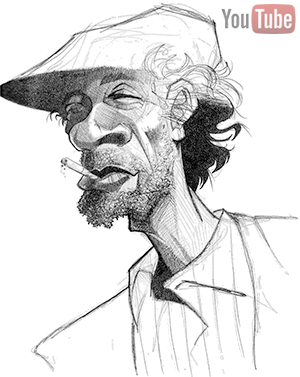
Gil Scott-Heron (b. 1949) is an American poet, musician, and author known primarily for his late 1970s and early 1980s work as a spoken word performer and his collaborative soul works with musician Brian Jackson, which featured a musical fusion of jazz, blues and soul music, as well as lyrical content concerning social and political issues of the time, delivered in both rapping and melismatic vocal styles by Scott-Heron.
The music of these albums, most notably ‘Pieces of a Man’ and ‘Winter in America’ in the early 1970s, influenced and helped engender later African-American music genres such as hip hop and neo soul. Scott-Heron’s recording work is often associated with black militant activism and has received much critical acclaim for one of his most well-known compositions ‘The Revolution Will Not Be Televised.’
Posted in Art, Money, Politics |
Leave a Comment »
March 7, 2011

Sarsaparilla [sas-puh-ril-uh] is a soft drink, originally made from the Smilax regelii plant, but now often made with artificial flavors. It was popular in the US in the 19th century. According to advertisements for patent medicines of the period, it was considered to be a remedy for skin and blood problems.
In Hollywood westerns from the 1930s to the 1950s, ordering sarsaparilla in a saloon (instead of whiskey) is often met with mockery by the manly cowboys nearby. Sarsaparilla drinks feature widely in American popular culture, particularly in works related to the American West. In the 1957-1961 ABC western television series, ‘Sugarfoot,’ the title character, Tom Brewster, played by Will Hutchins, is a teetotaler who orders sarsaparilla ‘with a dash of cherry’ whenever he enters a saloon.
read more »
Posted in Drugs, Food, Health |
Leave a Comment »
March 7, 2011

Spruce beer is a beverage flavored with the buds, needles, or essence of spruce trees. Spruce beer can refer to either alcoholic or non-alcoholic beverages. A number of flavors are associated with spruce-flavored beverages, ranging from floral, citrusy, and fruity to cola-like flavors to resinous and piney. This diversity in flavor likely comes from the choice of spruce species, the season in which the needles are harvested, and the manner of preparation.
The fresh shoots of many spruces and pines are a natural source of vitamin C. Captain Cook made alcoholic sugar-based spruce beer during his sea voyages in order to prevent scurvy in his crew. Though spruce has sometimes been used as a flavoring ingredient in beer, such as Alba Scots Pine Ale,[and the Alaskan Brewing Company’s Winter Ale, the only beer termed ‘spruce beer’ is Wigram Brewing Company’ Spruce Beer, which is based on Captain Cooks first beer brewed in New Zealand in 1773.
Posted in Drugs, Food, Health |
Leave a Comment »
March 7, 2011

Root beer is a carbonated, sweetened beverage, originally made using the root of a sassafras plant (or the bark of a sassafras tree) as the primary flavor. Root beer, popularized in North America, comes in two forms: alcoholic and soft drink. The historical root beer provided a drink with a very low alcohol content, like a small or ‘near beer’. Although roots are used as the source of many soft drinks in many countries throughout the world (and even alcoholic beverages/beers), the name root beer is rarely used outside North America, Britain, Ireland and the Philippines. Most other countries have their own indigenous versions of root-based beverages and small beers but with different names.
There are hundreds of root beer brands in the United States, and there is no standardized recipe. The primary ingredient, artificial sassafras flavoring, is complemented with other flavors, common ones being vanilla, wintergreen, cherry tree bark, licorice root, sarsaparilla root, nutmeg, acacia, anise, molasses, cinnamon, clove and honey. Homemade root beer is usually made from concentrate, though it can also be made from actual herbs and roots. Both alcoholic and non-alcoholic root beers have a thick and foamy head when poured, often enhanced by the addition of yucca extract.
Posted in Drugs, Food, Money |
Leave a Comment »
March 7, 2011
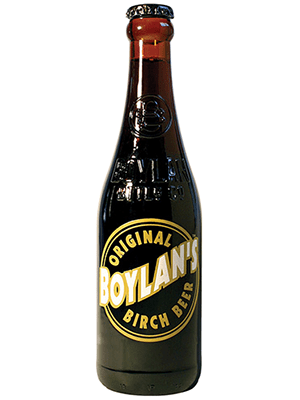
Birch beer is a carbonated soft drink made from herbal extracts, usually from birch bark. It has a taste similar to root beer. Various types of birch beer are available, distinguished by color. The color depends on the species of birch tree from which the sap is extracted (though enhancements via artificial coloring are not uncommon). Popular colors include brown, red, purple and clear (often called white birch beer), though others are possible.
After the sap is collected, it is distilled to make birch oil. The oil is added to the carbonated drink to give it the distinctive flavor. Black birch is the most common source of extract. In the dairy country of southeastern and central Pennsylvania, an ice cream soda made with vanilla ice cream and birch beer is called a Hot chocolate, while chocolate ice cream and root beer makes a Black Cow. Alcoholic birch beer, in which the birch sap is fermented rather than reduced to an oil, has been known in the region from at least the mid-nineteenth century.
Posted in Food |
Leave a Comment »
March 7, 2011

Brain lateralization [lat-er-uh-luh-zey-shuhn] is the distribution of function into right and left hemispheres. In most brains the left hemisphere is the center of language, logic, and rationality and controls the right side of the body, and the right hemisphere is the focus of creativity, intuition, holistic thought, and controls the left side of the body. In common speech lateralization is referred to as handedness, the preference for using either the left or the right side of the body for certain things.
Lateralization occurs in animals when one side of the brain is stronger (more dominant) than the other. Until fairly recently it was thought humans preferred the left or right sides of their body was because they could speak. However, it was later discovered that many nonverbal species display lateralization. For example, elephants often have preferences for whether they swing their trunks to the left or the right. Honeybees have right antennas that are more sensitive to smells. Parrots can be left- or right-footed, and some are ambidextrous. Chickens and minnows like to look for food with one eye and look out for predators with the other.
Posted in Health, Language, Science |
Leave a Comment »
March 6, 2011

Louis’ Lunch in New Haven, Connecticut, advertises itself as the first restaurant to serve hamburgers and as being the oldest hamburger restaurant still operating. Opened as a small lunch wagon in 1895, it was also one of the first places in the US to serve steak sandwiches. Louis Lassen, a butter dealer, operated a lunch wagon where he served steak and ground steak hamburger sandwiches, made from scrap trimmings, to local factory workers. According to family legend, one day in 1900 a local businessman dashed into the small New Haven lunch wagon and pleaded for a lunch to go. Lassen hurriedly sandwiched a broiled hamburger between two slices of bread and sent the customer on his way, so the story goes, with America’s first hamburger being served.
The fourth generation of Lassens own and operate Louis’ Lunch today. The restaurant flame broils the hamburgers, the original way, in antique 1898 vertical cast iron gas stove with hinged steel wire gridirons to hold the hamburgers in place while they cook simultaneously on both sides. The patties are hand formed from ground steak made from a secret blend of five different cuts of beef. The hamburgers are prepared with cheese, tomato or onion as the only condiments or garnish; never any mustard, ketchup or mayonnaise on two square pieces of toasted white bread.
Posted in Food, Money |
1 Comment »


 The Daily Omnivore