March 28, 2011

Polymer banknotes were developed by the Reserve Bank of Australia, Commonwealth Scientific and Industrial Research Organization, and The University of Melbourne and were first issued as currency in Australia in 1988. These banknotes are made from the polymer biaxially-oriented polypropylene which greatly enhances durability. They also incorporate many security features not available to paper banknotes, making counterfeiting much more difficult. As of 2010, eight countries have converted fully to polymer banknotes: Australia, Bermuda, Brunei, New Zealand, Nicaragua, Papua New Guinea, Romania, and Vietnam.
An alternative polymer of polyethylene fibres marketed as Tyvek by DuPont was developed for use as currency by the American Bank Note Company in the early 1980s. Tyvek did not perform well in trials; smudging of ink and fragility were reported as problems. Only Costa Rica and Haiti issued Tyvek banknotes. Additionally, English printers Bradbury Wilkinson produced a version on Tyvek but marketed as Bradvek for the Isle of Man in 1983; however, they are no longer produced and have become collectors’ items.
Posted in Money, Technology, World |
Leave a Comment »
March 28, 2011
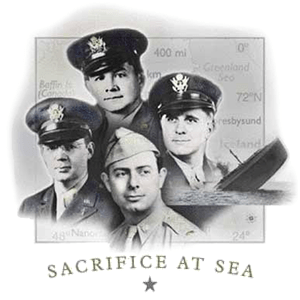
The Four Chaplains, also sometimes referred to as the ‘Immortal Chaplains,’ were four United States Army chaplains who gave their lives to save other civilian and military personnel during the sinking of the troop ship USAT Dorchester during World War II. They helped other soldiers board lifeboats and gave up their own life jackets when the supply ran out. The chaplains joined arms, said prayers, and sang hymns as they went down with the ship.
The four men were relatively new chaplains, who all held the rank of lieutenant. They included Methodist Reverend George L. Fox, Rabbi Alexander D. Goode, Roman Catholic Priest John P. Washington and Reformed Church in America Reverend Clark V. Poling. Their backgrounds, personalities, and faiths were different. They met at the Army Chaplains School at Harvard University.
Posted in Death, Philosophy, War |
Leave a Comment »
March 28, 2011

Aloe polyphylla, or Spiral Aloe, is a species in the genus Aloe. Native to Lesotho, in South Africa, this aloe is well known for its strikingly symmetrical, five-pointed spiral growth habit.
Posted in Science |
Leave a Comment »
March 28, 2011

Roadside Picnic is a science fiction novella written by Arkady and Boris Strugatsky in 1971. The film ‘Stalker’ directed by Andrei Tarkovsky is loosely based on the novel, with a screenplay written by the Strugatskys. The novella was refused publication in the Soviet Union for eight years due to government censorship, numerous delays and sabotage.
The heavily censored different versions published between 1980 and 2000 have little in common with the original version written by the authors. Soviet censors rewrote major plot points, changed names of characters and dialog to better reflect the Marxist ideology (removed language deemed as ‘rude’; heavier emphasis was placed on the exploitation of the Zones for ‘materialistic’ purposes by an elite bourgeois cabal as a means to oppress the proletariat masses, etc.).
read more »
Posted in Art, World |
Leave a Comment »
March 28, 2011
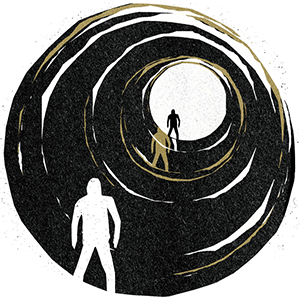
Stalker is a 1979 science fiction film directed by Andrei Tarkovsky, with a screenplay written by Boris and Arkady Strugatsky, loosely based on their novel ‘Roadside Picnic.’ It depicts an expedition led by the Stalker (guide) to bring his two clients to a site known as the Zone, which has the supposed potential to fulfil a person’s innermost desires. The title of the film, which is the same in Russian and English, is derived from the English word to stalk in the long-standing meaning of approaching furtively, much like a hunter.
The sparseness of exposition leads to ambiguity as to the nature of The Zone. Seven years after the making of the film, the Chernobyl accident led to the depopulation of an area rather like that in the film. Some of those employed to take care of the abandoned nuclear power plant refer to themselves as ‘stalkers’ and to the area around the damaged reactor as ‘The Zone.’
read more »
Posted in Art, World |
Leave a Comment »
March 28, 2011

Andrei Tarkovsky (1932 – 1986) was a Russian filmmaker, widely regarded as one of the finest of the 20th century. Tarkovsky’s films include ‘Andrei Rublev,’ ‘Solaris,’ ‘The Mirror,’ and ‘Stalker.’ He directed the first five of his seven feature films in the Soviet Union; his last two films were produced in Italy and Sweden, respectively. They are characterized by spirituality and metaphysical themes, long takes, lack of conventional dramatic structure and plot, and distinctively authored use of cinematography.
read more »
Posted in Art, Philosophy, World |
Leave a Comment »
March 28, 2011
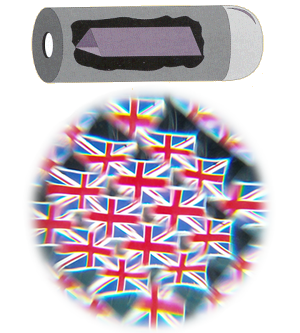
A teleidoscope [tel-ahy-duh-skohp] is a kind of kaleidoscope, with a lens and an open view, so it can be used to form kaleidoscopic patterns from objects outside the instrument, rather than from items installed as part of it. The lens at the end of the tube is not an optical requirement, but protects the internals of the teleidoscope. A spherical ball lens is often used. An advantage of using a sphere is that it will not press flat against the object being viewed, which would block all light and result in no image being seen.
The teleidoscope was invented by John Lyon Burnside III (1916 – 2008), and because he was also responsible for the rediscovery of the math behind kaleidoscope optics, for decades, every maker of optically correct kaleidoscopes sold in the US paid him royalties.
Posted in Games, Technology |
Leave a Comment »
March 28, 2011

A Spinthariscope [spin-thar-uh-skohp] is a device for observing individual nuclear disintegrations caused by the interaction of ionizing radiation with a phosphor (radioluminescence). It was invented by William Crookes in 1903. It consisted of a small screen coated with zinc sulfide affixed to the end of a tube, with a tiny amount of radium salt suspended a short distance from the screen and a lens on the other end of the tube for viewing the screen. Crookes named his device after the Greek word ‘spintharis’, meaning ‘a spark.’
It is said that for a short time after its invention, spinthariscopes were very popular among the social upper classes who gave them as gifts and used them in demonstrations to appear up to date with the most modern scientific advances of the day. Spinthariscopes were quickly replaced with more accurate and quantitative devices for measuring radiation in scientific experiments, but enjoyed a modest revival in the mid 20th century as children’s educational toys. They can still be bought today as instructional novelties, but they now use Americium or Thorium.
Posted in Games, Science |
Leave a Comment »
March 28, 2011
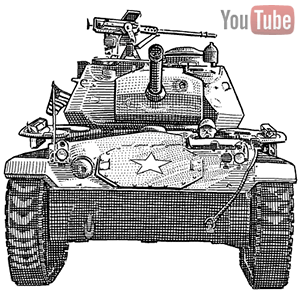
Shawn Nelson (1959 – 1995) was a U.S. Army veteran and unemployed plumber who stole an M60 Patton tank from a United States National Guard Armory in San Diego, California and went on a rampage, destroying cars, fire hydrants, and an RV before being shot dead by police. The tank’s weaponry was unloaded, but Nelson led police on a 23-minute, televised chase through the streets of San Diego. The tank had a top speed of just 30 miles per hour, but the 57-ton vehicle easily plowed through road signs, traffic lights, and crushed a van against a recreational vehicle, then plowed through the RV.
Nelson attempted to knock down a bridge by running in to the supports, but gave up after he failed to topple it with the first few hits. He eventually became caught on a concrete median of State Route 163, as he attempted to cross the median into the oncoming traffic. Four police officers climbed onto the tank and were able to open the hatch. The officers ordered Nelson to surrender, but he said nothing and began lurching the tank back and forth in attempt to free it from the median. Officer Paxton’s partner, Richard Piner, leaned in and shot Nelson. The bullet struck Nelson in the shoulder. Nelson later died in the hospital.
Posted in Technology, War |
Leave a Comment »
March 28, 2011

Marvin Heemeyer (1951 – 2004) was a welder and an automobile muffler repair shop owner. Outraged over the outcome of a zoning dispute, he armored a bulldozer with layers of steel and concrete and used it to demolish the town hall, a former judge’s home, and other buildings in Granby, Colorado.
The rampage ended when the bulldozer became stuck, and after a standoff with law enforcement agencies, Heemeyer killed himself with a handgun. He had been feuding with town officials, particularly over fines for violating city ordinances and a zoning dispute regarding a concrete factory constructed opposite to his muffler shop that caused his business to fail. Heemeyer took about a year and a half to prepare for his rampage.
read more »
Posted in Death, Technology |
Leave a Comment »
March 28, 2011
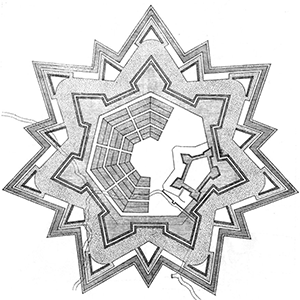
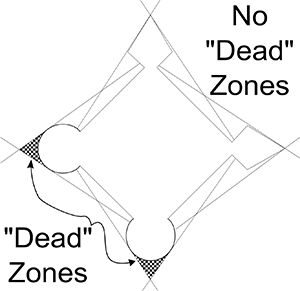
A star fort, or ‘trace italienne,’ is a fortification in the style that evolved during the age of gunpowder, when cannon came to dominate the battlefield, and was first seen in the mid-15th century in Italy. Passive ring-shaped (enceinte) fortifications of the Medieval era proved vulnerable to damage or destruction by cannon fire, when it could be directed from outside against a perpendicular masonry wall.
In addition, an attacking force that could get close to the wall was able to conduct undermining operations in relative safety, as the defenders could not shoot at them from nearby walls. In contrast, the star fortress was a very flat structure composed of many triangular bastions, specifically designed to cover each other, and a ditch. Further structures, such as ravelins, hornworks or crownworks, and detached forts could be added to create a complex symmetrical structure.
Posted in Technology, War |
Leave a Comment »
March 28, 2011

Sébastien Le Prestre, Seigneur de Vauban (1633 – 1707), commonly referred to as Vauban [voh-bahn], was a Marshal of France and the foremost military engineer of his age, famed for his skill in both designing fortifications and breaking through them. He also advised Louis XIV on how to consolidate France’s borders, to make them more defensible. Vauban made a radical suggestion of giving up some land that was indefensible to allow for a stronger, less porous border with France’s neighbors.
Vauban was born in Burgundy, to a family of minor nobility, but at the age of ten he was left an orphan, and his youth was spent amongst the peasantry of his native place. A fortunate event brought him under the care of a member of the Carmelites (a Catholic religious order), who undertook his education, and the grounding in mathematics, science and geometry.
Posted in Technology, War, World |
Leave a Comment »







 The Daily Omnivore