March 28, 2011
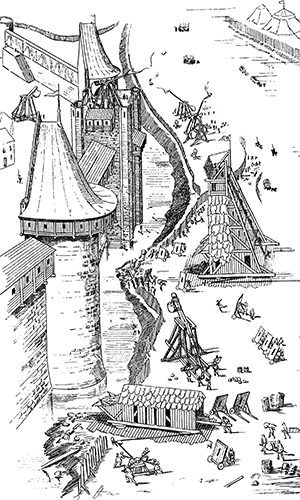
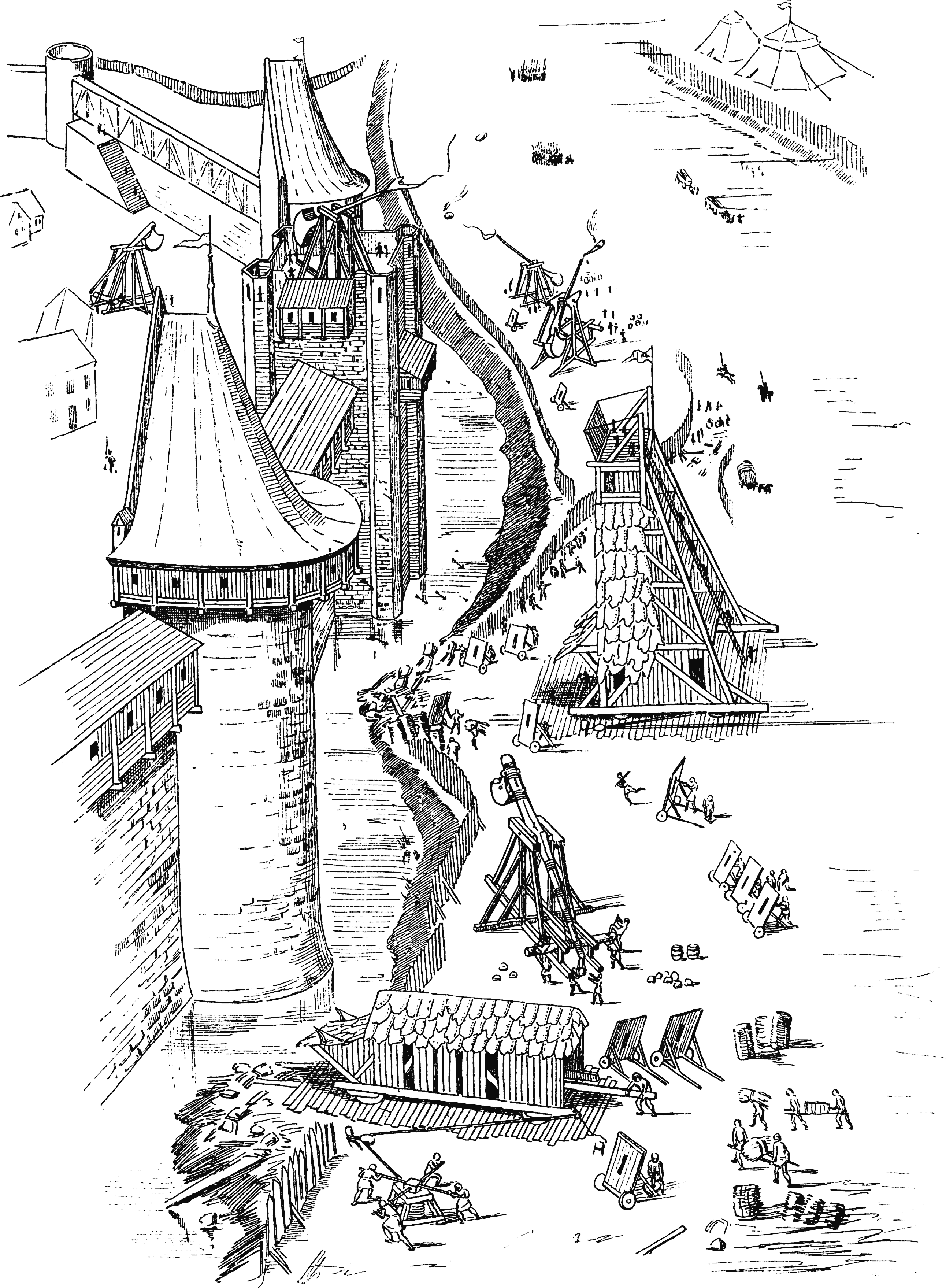
A siege engine is a device that is designed to break or circumvent city walls and other fortifications in siege warfare. Some are operated close to the fortifications, while others attack from a distance. From antiquity, siege engines were constructed largely of wood and tended to use mechanical advantage to fling stones and similar missiles. With the development of gunpowder and improved metallurgical techniques, siege engines became artillery. Collectively, siege engines or artillery combined with the necessary troops and transport vehicles to conduct a siege are referred to as a ‘siege-train.’
The earliest engine was the battering ram, developed by the Assyrians, followed by the catapult in ancient Greece. The Spartans used battering rams in the Siege of Plataea in 429 BCE, but it seems that the Greeks limited their use of siege engines to assault ladders, though Peloponnesian forces used something resembling flamethrowers. The Carthaginians used siege towers and battering rams against the Greek colonies of Sicily.
read more »
Posted in Technology, War |
Leave a Comment »
March 28, 2011
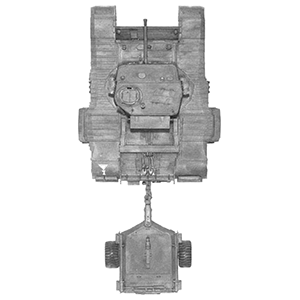
The Churchill Crocodile was a British flame-throwing tank of late Second World War. It was introduced as one of the specialized armored vehicles developed under Major-General Percy Hobart and known as one of ‘Hobart’s Funnies.’ It was produced from October 1943, in time for the Normandy invasion.
400 imperial gallons of fuel and the compressed nitrogen propellant, enough for eighty one-second bursts, were stored in a 6½ ton detachable armored trailer towed by the Crocodile. The trailer, connected to the tank by a three way armored coupling, could be jettisoned from within the tank if necessary. The thrower had a range of up to 120 yards.
read more »
Posted in Technology, War |
Leave a Comment »
March 28, 2011
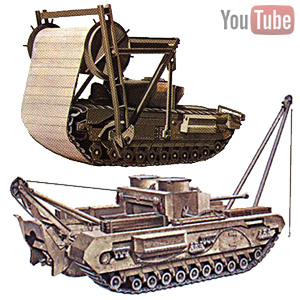
Hobart’s Funnies were a number of unusually modified tanks operated during World War II by the United Kingdom’s 79th Armored Division or by specialists from the Royal Engineers. They were designed in light of problems that more standard tanks experienced during the Allied attack on the German-occupied port of Dieppe on the northern coast of France in 1942.
These tanks played a major part on the Commonwealth beaches during the landings at Normandy. They may be considered the forerunners of the modern Combat engineering vehicle. They were named after their commander, British Military engineer Percy Hobart.
read more »
Posted in Technology, War |
Leave a Comment »
March 26, 2011
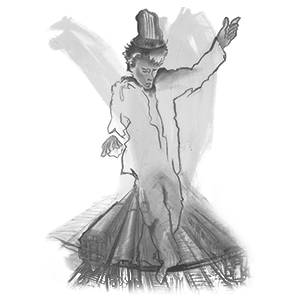
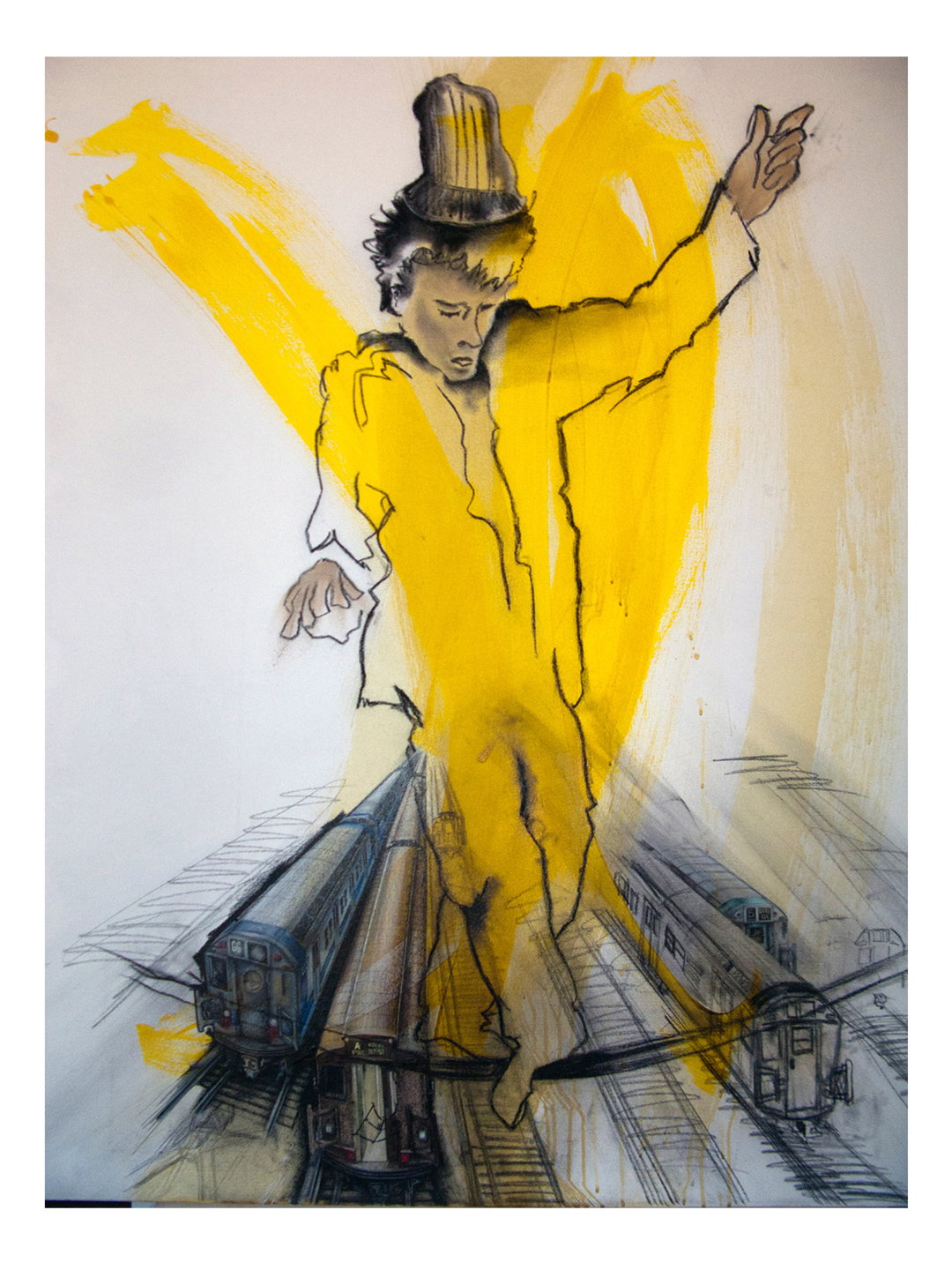
Lee Quiñones [kwi-nohn] (b. 1960) is one of several artists rising from the NYC subway graffiti movement. Born in Puerto Rico and raised in Lower East Side Manhattan, Lee was constantly drawing since the age of five and started with graffiti in 1974. By 1976, Lee was a legend, working in the shadow, leaving huge pieces of art across the subway system. His style is rooted in popular culture, often with political messages. Along with Keith Haring and Jean-Michel Basquiat, Lee Quiñones was one of the innovators of New York’s street-art movement and is considered the single most influential artist to emerge from the graffiti era.
As a subway graffiti artist, Lee almost exclusively painted whole cars (all together about 125), and he was a major contributor to the first-ever whole-train. In November 1976, ten subway cars were painted with a range of colorful murals and set a new benchmark for the scale of graffiti works. Quiñones often added poetic messages in his pieces such as: ‘Graffiti is art and if art is a crime, please God, forgive me.’ He was one of the first street artists to transition fine art. The 1979 exhibition of his canvases at Claudio Bruni’s Galleria Medusa in Rome introduced street art to the rest of the world.
Posted in Art, Money, Politics |
Leave a Comment »
March 26, 2011
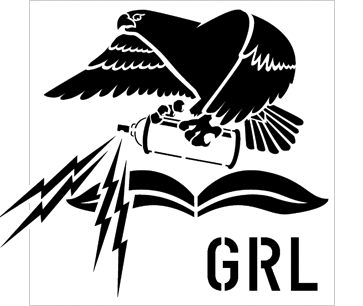
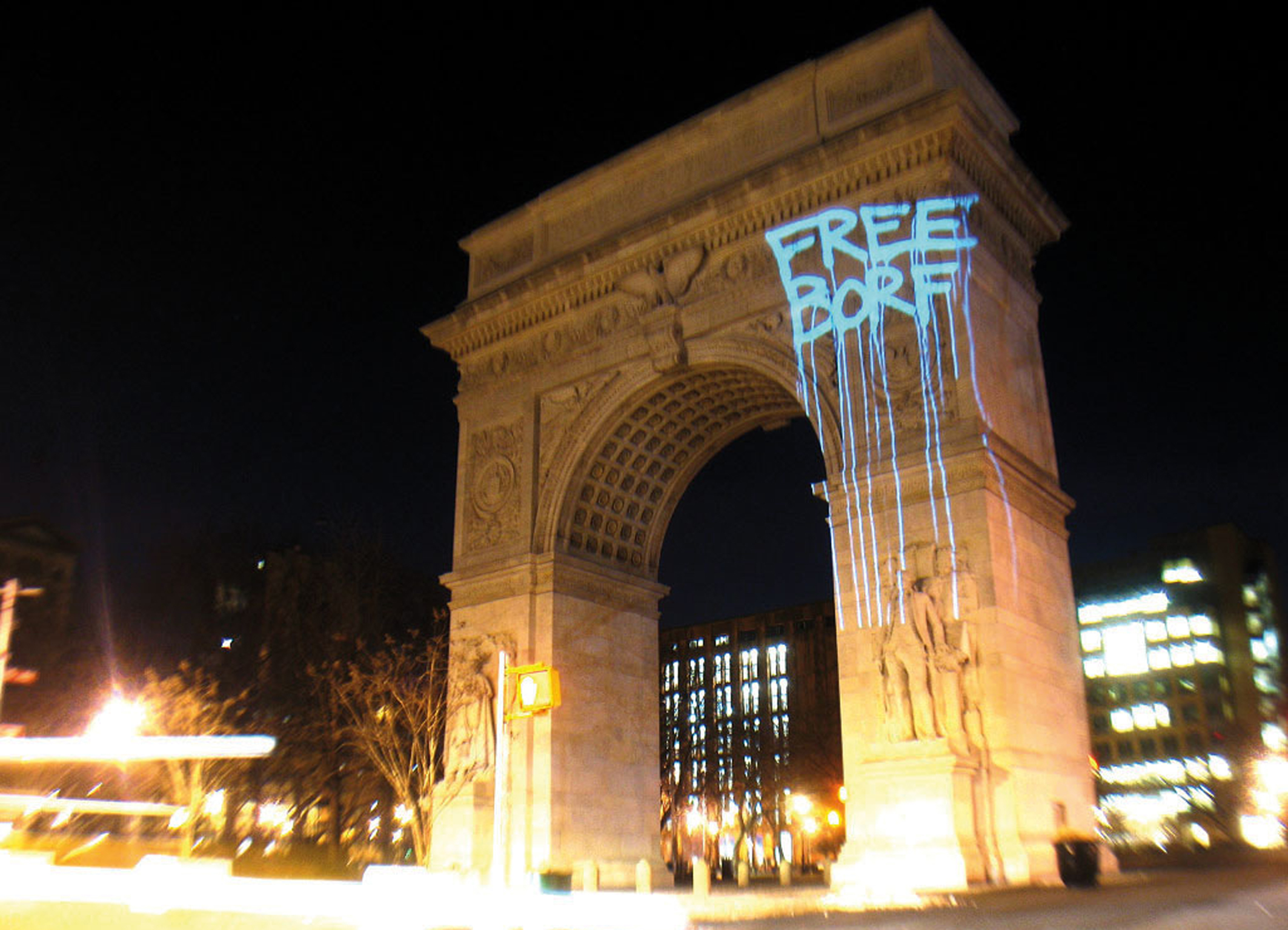
Graffiti Research Lab is a NYC art group dedicated to outfitting graffiti writers, artists and protesters with open source technologies for urban communication. The members of the group experiment in a lab and in the field to develop and test a range of experimental technologies.
The GRL is particularly well-known for inventing ‘LED Throwies.’ Each extension of Graffiti Research Lab is called a cell. Localized cells are found in Vienna, Amsterdam, and Mexico, copying and extending the work of the NY based organization. The cells cooperate and communicate, but are not one formal organization.
Posted in Art, Politics, Technology |
Leave a Comment »
March 26, 2011
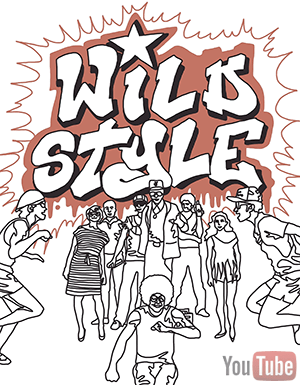
‘Wild Style‘ was the first hip hop motion picture. Released theatrically in 1983, featuring Fab Five Freddy, the Rock Steady Crew, The Cold Crush Brothers, and Grandmaster Flash. The protagonist ‘Zoro’ is played by the legendary NY subway graffiti artist Lee Quinones. An early version of the ‘Wild Style’ logo appeared in the Fall of 1981 when director Charlie Ahearn hired graffiti legend Dondi to paint the ‘window down’ subway car piece that appears in the film. The Dondi piece was the inspiration for the animated title sequence designed by the artist Zephyr in 1982.
The ‘Wild Style’ logo was designed by Zephyr and painted as a huge ‘burner’ mural by Zephyr, Revolt, and Sharp in the Summer of 1983. In addition to covering street artists, the film depicts several prominent figures from the early hip hop culture, engaging in activities such as MCing, turntablism, and breaking. The film has been sampled by many prominent hip hop artists (e.g. ‘Illmatic’ by Nas, ‘Midnight Marauders’ by A Tribe Called Quest, and ‘Check Your Head’ by Beastie Boys).
Posted in Art, Money, Politics |
Leave a Comment »
March 26, 2011
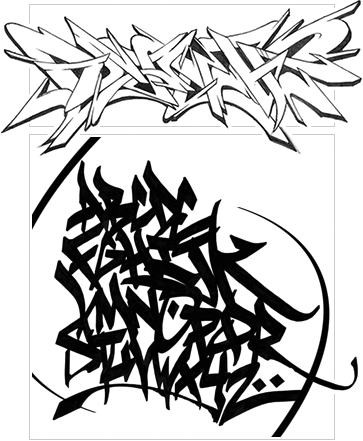
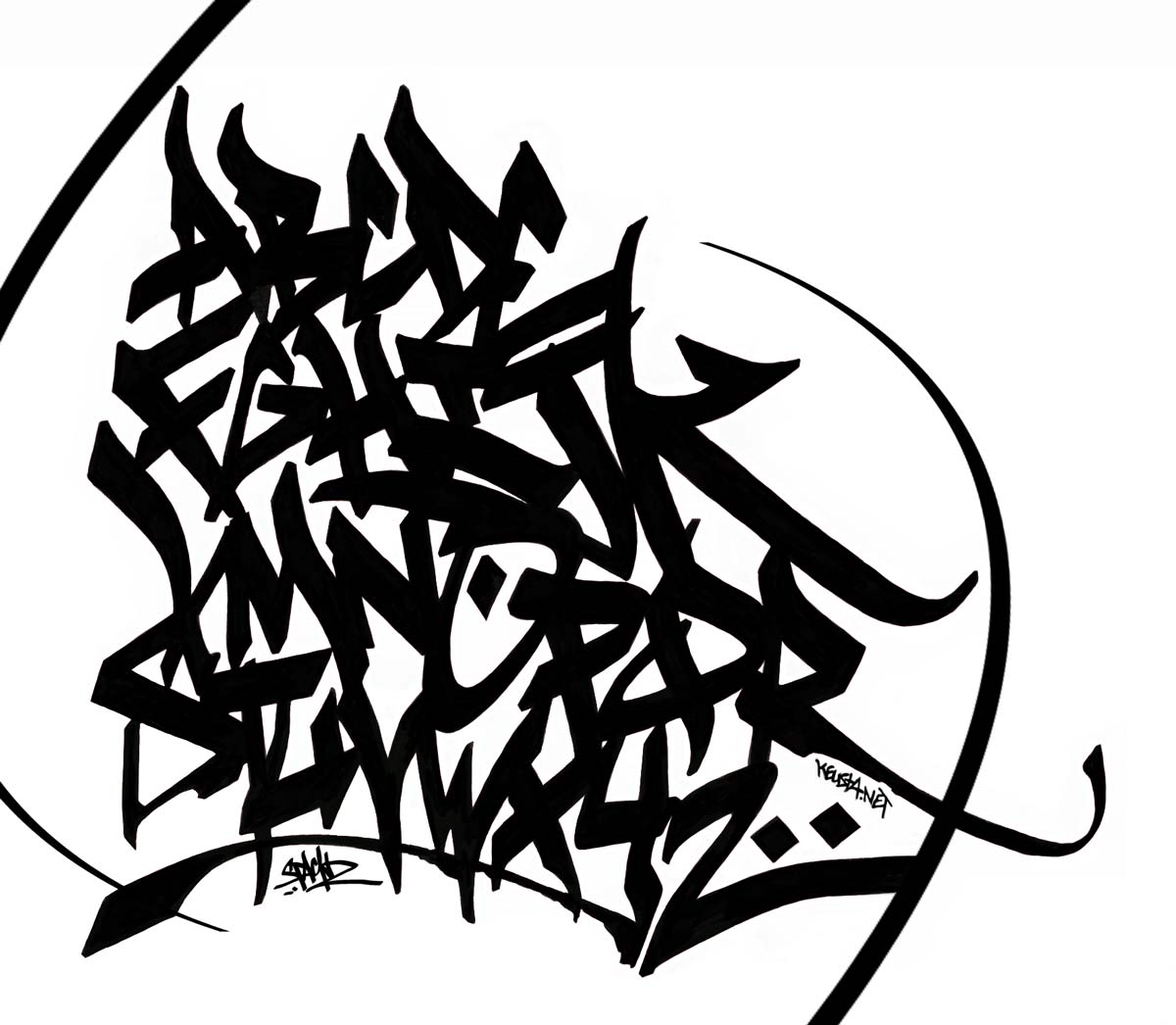
Wildstyle is a difficult and intricate form of graffiti. Due to its complexity, it is often very hard to read by people who are not familiar with it. It incorporates interwoven and overlapping letters and shapes, and may include arrows, spikes, and other decorative elements. It has also been common practice to incorporate 3D elements into the pieces, and even transform the whole letter structure into three dimensions, to add to the depth of visual perception of the work.
The numerous layers and shapes make this style extremely difficult to produce homogeneously, which is why developing an original style in this field is seen as one of the greatest artistic challenges to a graffiti writer. Wildstyle pieces are also known as ‘burners,’ meaning ‘hot’ as fire.
Posted in Art, Language |
Leave a Comment »
March 26, 2011


Graffiti refers to images or lettering scratched, scrawled, painted, or marked in any manner on property. Examples date back to Ancient Greece and the Roman Empire. The word ‘graffiti’ and the singular, ‘graffito,’ are from the Italian word ‘graffiato’ (‘scratched’).
The first known example of modern graffiti survives in the ancient Greek city of Ephesus (in modern-day Turkey). It is an advertisement for prostitution. Located near a mosaic and stone walkway, the graffiti shows a handprint that vaguely resembles a heart, along with a footprint and a number. This is believed to indicate that a brothel was nearby, with the handprint symbolizing payment and the number indicating the price.
read more »
Posted in Art, Language, Politics |
Leave a Comment »
March 25, 2011

Holi [hoh-lee] is a spring religious festival celebrated by Hindus. It is primarily observed in India, Nepal, Sri Lanka, and countries with large Indic diaspora populations, such as Suriname, Malaysia, Guyana, South Africa, Trinidad, United Kingdom, United States, Mauritius, and Fiji.
The main day, Holi, is celebrated by people throwing colored powder and colored water at each other. Bonfires are lit the on the eve of the festival in memory of the miraculous escape that young Prahlad accomplished when Demoness Holika carried him into the fire. Holika was burnt but Prahlad, a staunch devotee of god Vishnu, escaped without any injuries due to his unshakable devotion.
Posted in Philosophy, World |
Leave a Comment »
March 25, 2011

The Four Pests campaign was one of the first actions taken in the Great Leap Forward, a series of reforms in China from 1958 to 1962. The pests to be eliminated were rats, flies, mosquitoes, and sparrows. The masses of China were mobilized to eradicate the birds, and citizens took to banging pots and pans or beating drums to scare the birds from landing, forcing them to fly until they fell from the sky in exhaustion. Nests were torn down, eggs were broken, and nestlings were killed, resulting in the near-extinction of the birds in China. Non-material rewards and recognition were offered to schools, work units and government agencies in accordance with the volume of pests they had killed.
By April 1960, Chinese leaders realized that sparrows ate more insects than grains. Mao ordered the end of the campaign against sparrows, replacing them with bedbugs in the ongoing campaign against the Four Pests. By this time, however, it was too late. With no sparrows to eat them, locust populations ballooned, swarming the country and compounding the ecological problems already caused by the Great Leap Forward, including widespread deforestation and misuse of poisons and pesticides. Ecological imbalance is credited with exacerbating the Great Chinese Famine in which upwards of 30 million people died of starvation.
Posted in Food, Politics, World |
Leave a Comment »
March 25, 2011

Grisaille [gri-zahy] is a term for painting executed entirely in monochrome or near-monochrome, usually in shades of grey. It is particularly used in large decorative schemes in imitation of sculpture. Paintings executed in brown are sometimes referred to by the more specific term brunaille, and paintings executed in green are sometimes called verdaille.
A grisaille may be executed for its own sake, as underpainting for an oil painting (in preparation for glazing layers of color over it), or as a model for an engraver to work from. Full coloring of a subject makes many more demands of an artist, and working in grisaille was often chosen as being quicker and cheaper, although the effect was sometimes deliberately chosen for aesthetic reasons.
Posted in Art, Language |
Leave a Comment »
March 25, 2011

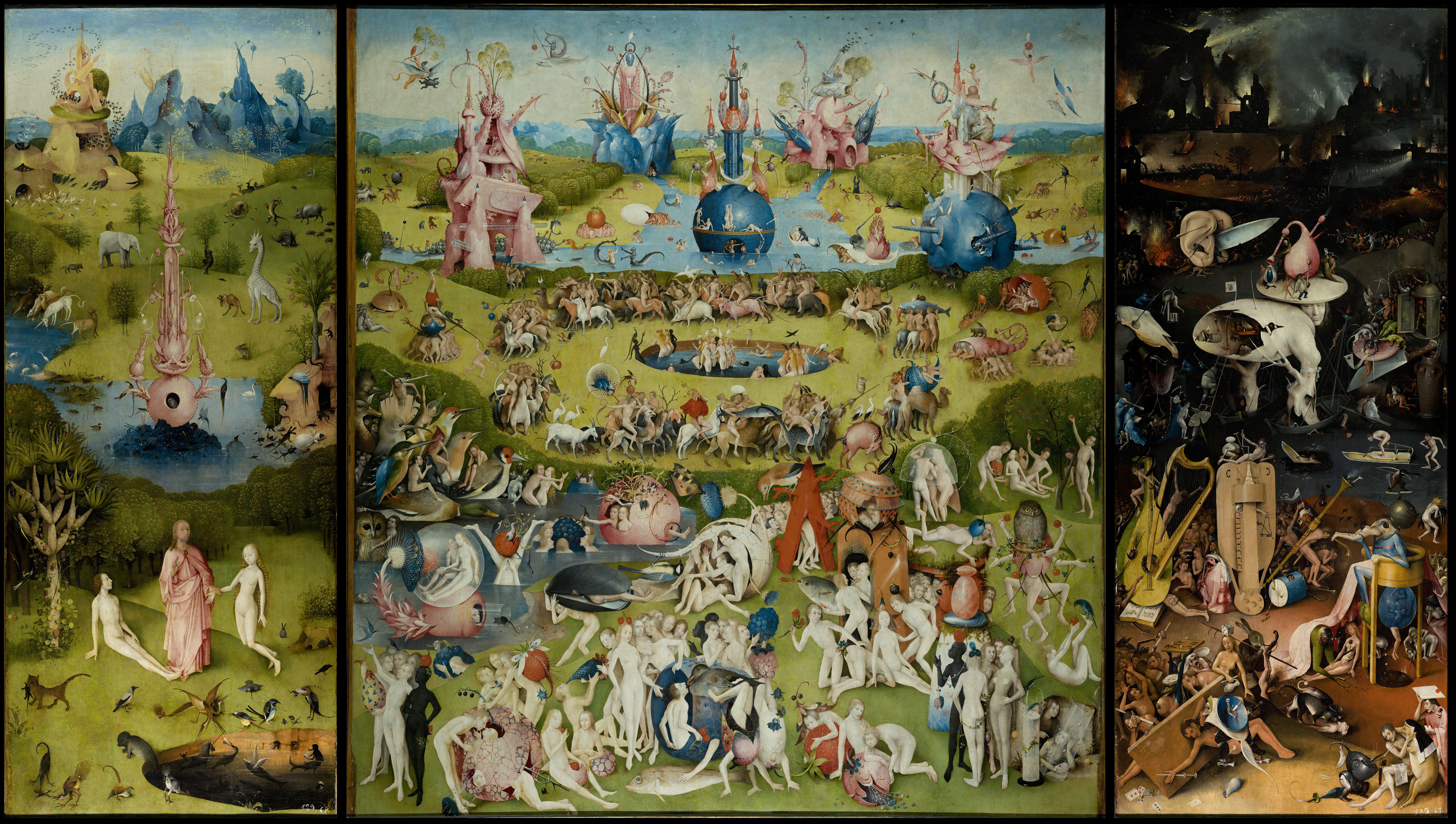
Hieronymus Bosch (c. 1450 – 1516) was an Early Netherlandish painter. His work is known for its use of fantastic imagery to illustrate moral and religious concepts and narratives. Little is known of his life or training. He left behind no letters or diaries, and nothing is known of his personality or his thoughts on the meaning of his art. Bosch produced several triptychs, panel paintings which are divided into three sections, which are hinged together and folded.
Among his most famous is ‘The Garden of Earthly Delights,’ which depicts paradise with Adam and Eve and many wondrous animals on the left panel, the earthly delights with numerous nude figures and tremendous fruit and birds on the middle panel, and hell with depictions of fantastic punishments of the various types of sinners on the right panel. When the exterior panels are closed the viewer can see, painted in grisaille (shades of grey), God creating the Earth.
Posted in Art, Philosophy |
Leave a Comment »



 The Daily Omnivore