March 25, 2011

Joe Coleman (born November 22, 1955) is an American painter, illustrator and performance artist. He is best known for intricately detailed portraits of subjects both famous and infamous: artists, outlaws, serial killers, movies stars, friends, and family. He paints with a single-hair brush and uses a jewelers loupe; much of the detail is not visible to the naked eye.
The majority of his portraits portray the central subject in the center of the canvas, while biographical scenes and details from the subject’s life ring the central image. His work draws as much from Coleman’s beginnings as a comic book artist as from historical precedents. His paintings are most often compared to those of Hieronymus Bosch, and his work has been exhibited alongside canvases by the Dutch master.
Posted in Art |
Leave a Comment »
March 25, 2011

Dunbar’s number is a theoretical cognitive limit to the number of people with whom one can maintain stable social relationships. These are relationships in which an individual knows who each person is, and how each person relates to every other person.
Proponents assert that numbers larger than this generally require more restrictive rules, laws, and enforced norms to maintain a stable, cohesive group. No precise value has been set for Dunbar’s number; it has been proposed to lie between 100 and 230, with a commonly used value of 150.
read more »
Posted in Money, Science |
Leave a Comment »
March 25, 2011

The Dilbert Principle refers to a 1990s satirical observation by ‘Dilbert cartoonist’ Scott Adams stating that companies tend to systematically promote their least-competent employees to management (generally middle management), in order to limit the amount of damage they are capable of doing. In the ‘Dilbert’ strip of February 5, 1995 Dogbert says that ‘leadership is nature’s way of removing morons from the productive flow.’ Adams expanded on the idea in a satirical 1996 book of the same name, which is required reading at some management and business programs.
The Dilbert principle is comparable to the Peter Principle (in a hierarchy every employee tends to rise to his level of incompetence). It assumes that people are promoted because they are competent, and that the tasks higher up in the hierarchy require skills or talents they do not possess. It concludes that due to this, a competent employee will eventually be promoted to, and remain at, a position at which he or she is incompetent. The Dilbert principle, by contrast, assumes that the upper echelons of an organization have little relevance to its actual production, and that the majority of real, productive work in a company is done by people lower in the power ladder.
Posted in Humor, Language, Money |
Leave a Comment »
March 25, 2011

The Peter Principle: ‘In a hierarchy every employee tends to rise to his level of incompetence.’
It was formulated by Dr. Laurence J. Peter and Raymond Hull in their 1969 book of the same name. It holds that in a hierarchy, members are promoted so long as they work competently.Therefore, sooner or later they are promoted to a position at which they are no longer competent (their ‘level of incompetence’), and there they remain, being unable to earn further promotions.
read more »
Posted in Humor, Money |
Leave a Comment »
March 25, 2011
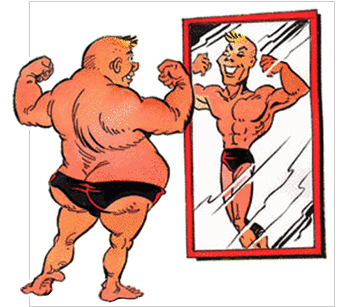
The Dunning–Kruger effect is a cognitive bias in which unskilled people make poor decisions and reach erroneous conclusions, but their incompetence denies them the metacognitive ability to appreciate their mistakes. The unskilled therefore suffer from illusory superiority, rating their ability as above average, much higher than it actually is, while the highly skilled underrate their own abilities, suffering from illusory inferiority.
This leads to the situation in which less competent people rate their own ability higher than more competent people. It also explains why actual competence may weaken self-confidence. Competent individuals falsely assume that others have an equivalent understanding. The miscalibration of the incompetent stems from an error about the self, whereas the miscalibration of the highly competent stems from an error about others.
read more »
Posted in Health, Science |
Leave a Comment »
March 25, 2011

Depressive realism is the proposition that people with depression actually have a more accurate perception of reality, specifically that they are less affected by positive illusions of illusory superiority, the illusion of control, and optimism bias.
The concept refers to people with borderline or moderate depression, suggesting that while non-depressed people see things in an overly positive light and severely depressed people see things in overly negative light, the mildly discontented grey area in between in fact reflects the most accurate perception of reality.
read more »
Posted in Health, Language, Science |
Leave a Comment »
March 25, 2011

The intelligence of the Ashkenazi [ahsh-kuh-nah-zee] Jews has been the subject of studies which report higher a average intelligence quotient than among the general population. They are greatly overrepresented in occupations and fields with the high cognitive demands. During the 20th century, Ashkenazi Jews made up about 3% of the US population but won 27% of the US science Nobel Prizes, and half of the world’s chess champions were among their ranks.
read more »
Posted in Education, Philosophy, Science |
Leave a Comment »
March 25, 2011

Inbreeding depression is the reduced fitness in a given population as a result of breeding of related individuals. It is often the result of a population bottleneck. In general, the higher the genetic variation within a breeding population, the less likely it is to suffer from inbreeding depression. Inbreeding depression seems to be present in most groups of organisms, but is perhaps most important in hermaphroditic species. The majority of plants are hermaphroditic and thus are capable of the most severe degree of inbreeding depression.
Although severe inbreeding depression in humans is uncommon, there have been several cases. As with animals, this phenomenon tends to occur in isolated, rural populations that are cut off to some degree from other areas of civilization. A notable example is the Vadoma tribe of western Zimbabwe, many of whom carry the trait of having only two toes due to a small gene pool.
Posted in Health, Language, Science |
Leave a Comment »
March 25, 2011

Heterosis, or hybrid vigor or outbreeding enhancement, is the increased function of any biological quality in a hybrid offspring. It is the occurrence of a genetically superior offspring from mixing the genes of dissimilar parents. Heterosis is the opposite of inbreeding depression, which occurs in the offspring of closely related parents.
The term often causes controversy, particularly in regard to selective breeding of domestic animals, because sometimes it’s inaccurately claimed, that all crossbred plants or animals are genetically superior to their parents. It’s only true in certain circumstances. When a hybrid is seen to be superior to its parents, this is known as hybrid vigor. When the opposite happens, and a hybrid inherits traits from its parents that makes it unfit for survival, the result is referred to as outbreeding depression. Typical examples of this are crosses between wild and hatchery fish that have incompatible adaptations.
Posted in Health, Language, Science |
Leave a Comment »
March 25, 2011

Miscegenation [mi-sej-uh-ney-shuhn] (Latin: miscere ‘to mix,’ genus ‘kind’) is the mixing of different racial groups, a social construct, through marriage, cohabitation, sexual relations, and procreation. The term miscegenation has been used since the 19th century to refer to interracial marriage and interracial sex, and more generally to the process of racial interbreeding, which has taken place since ancient history.
The term entered historical records during European colonialism, but societies such as China and Japan also had restrictions on marrying with peoples they considered different. Historically the term has been used in the context of laws banning interracial marriage and sex, so-called anti-miscegenation laws.
read more »
Posted in Language, Politics, Sex |
Leave a Comment »
March 24, 2011

Most ancient cultures had conceptions of a Flat Earth, including Greece until the fifth century BCE, the Near East until fourth century BCE, India until the fourth century CE. In ancient China, the prevailing belief was that the Earth was flat and square, while the heavens were round, an assumption virtually unquestioned until the introduction of European astronomy in the 17th century. It was also typically held in the aboriginal cultures of the Americas, and a flat Earth domed by the firmament in the shape of an inverted bowl is common in pre-scientific societies.
The paradigm of a spherical Earth was developed in Greek astronomy, beginning with Pythagoras (6th century BCE), although most Pre-Socratics retained the flat Earth model. Aristotle accepted the spherical shape of the Earth on empirical grounds around 330 BCE, and knowledge of the spherical Earth gradually began to spread beyond the Hellenistic world from then on. The misconception that educated people at the time of Columbus believed in a flat Earth, and that his voyages refuted that belief, has been referred to as ‘The Myth of the Flat Earth.’
Posted in Science, World |
Leave a Comment »
March 24, 2011
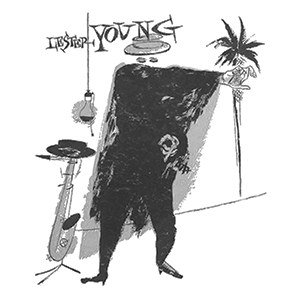
Lester Young (1909 – 1959), nicknamed ‘Prez,’ was an American jazz tenor saxophonist. He also played clarinet, trumpet, violin, and drums. Coming to prominence while a member of Count Basie’s orchestra, Young was one of the most influential players on his instrument, playing with a cool tone and using sophisticated harmonies. He invented or popularized much of the hipster ethos which came to be associated with the music. He is said to have popularized the term ‘cool’ as slang for something fashionable.
Another slang term he reputedly coined was the term ‘bread’ for money. He would ask ‘How does the bread smell?’ when asking how much a gig was going to pay. Young’s playing style influenced many other tenor saxophonists. Perhaps the most famous and successful of these were Stan Getz and Dexter Gordon, but he also influenced many in the cool movement such as Zoot Sims. Lester Young also had a direct influence on young Charlie Parker (‘Bird’), and thus the entire be-bop movement.
Posted in Art, Language, Money |
Leave a Comment »



 The Daily Omnivore