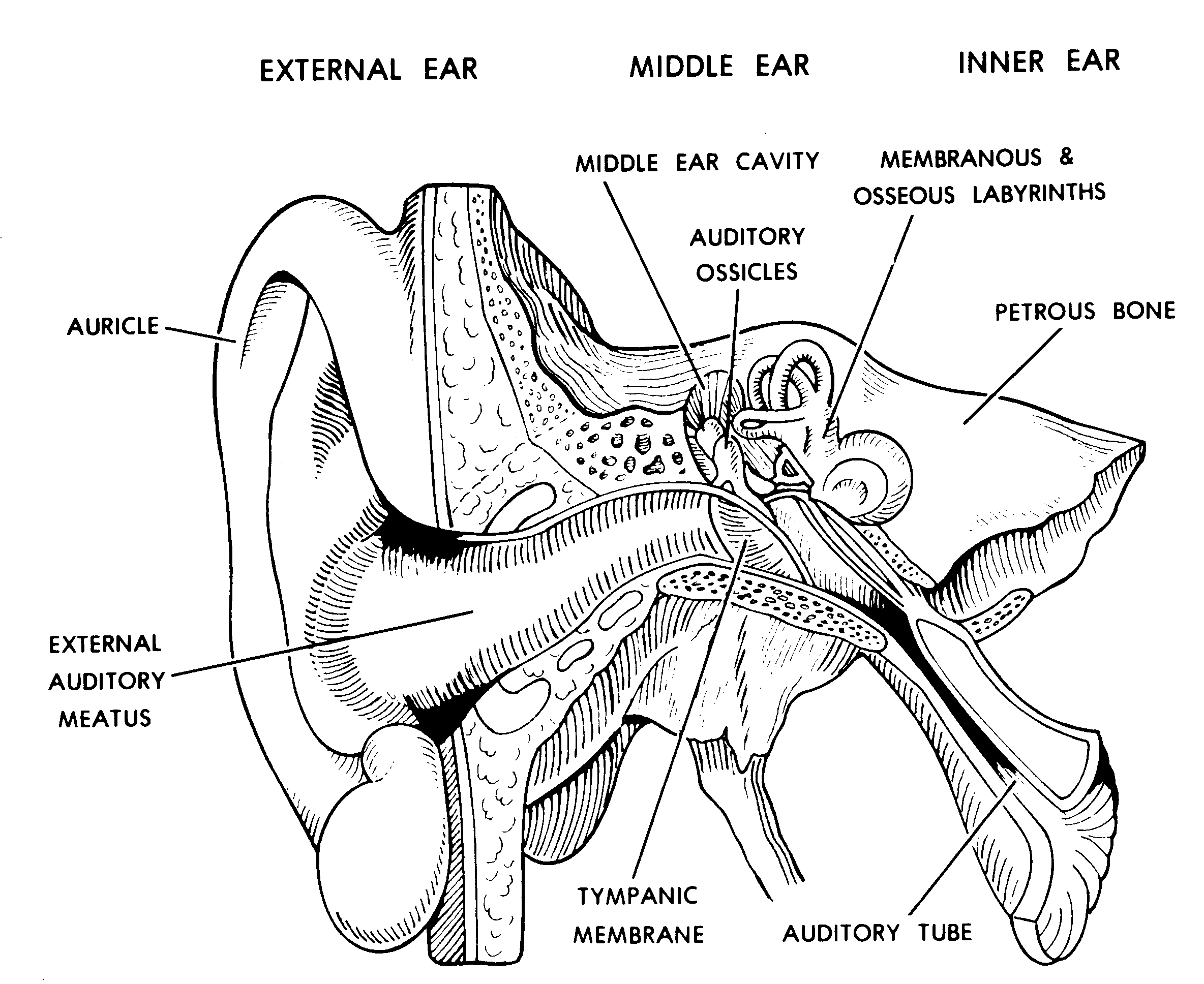

Hair cells are the sensory receptors of both the auditory system and the vestibular system (sense of balance) in all vertebrates. In mammals, the auditory hair cells are located in the cochlea, a spiral-shaped cavity in the skull. Unlike birds and reptiles, humans and other mammals are normally unable to regrow the cells of the inner ear that convert sound into neural signals when those cells are damaged by age or disease. Mammalian cochlear hair cells come in two anatomically and functionally distinct types: the outer and inner hair cells. Damage to these hair cells results in decreased hearing sensitivity.
The outer cells do not send neural signals to the brain, they mechanically amplify low-level sound that enters the cochlea. The inner hair cells transform the sound vibrations in the fluids of the cochlea into electrical signals that are then relayed to the brain. Nerve fiber innervation is much denser for inner hair cells than for outer hair cells. A single inner hair cell is innervated by numerous nerve fibers, whereas a single nerve fiber innervates many outer hair cells. Inner hair cell nerve fibers are also very heavily myelinated, which is in contrast to the unmyelinated outer hair cell nerve fibers.


 The Daily Omnivore
Leave a comment