April 7, 2011
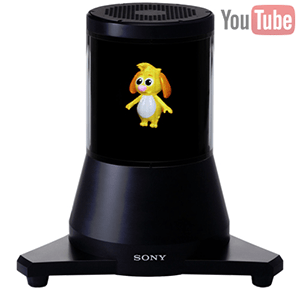
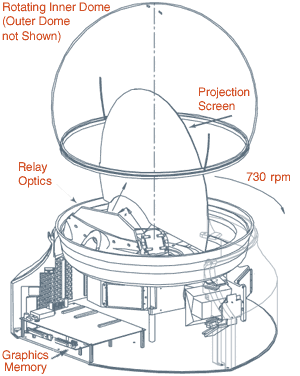
A volumetric [vol-yuh-me-trik] display is a device that forms a visual representation of an object in three physical dimensions, as opposed to the planar image of traditional screens that simulate depth through a number of different visual effects. One definition offered by pioneers in the field is that volumetric displays create 3-D imagery via the emission, scattering, or relaying of illumination from well-defined regions in (x,y,z) space. Though there is no consensus among researchers in the field, it may be reasonable to admit holographic and highly multiview displays to the volumetric display family if they do a reasonable job of projecting a three-dimensional light field within a volume.
Although first postulated in 1912, and a staple of science fiction, volumetric displays are still under development, and have yet to reach the general population. With a variety of systems proposed and in use in small quantities — mostly in academia and various research labs — volumetric displays remain accessible only to academics, corporations, and the military.
Posted in Money, Technology |
Leave a Comment »
April 7, 2011


Autostereoscopy [aw-toh-ster-ee-os-kuh-pee] is any method of adding the perception of 3D depth without the use of special glasses on the part of the viewer. Because headgear is not required, it is also called ‘glasses-free 3D.’
The technology also includes two broad approaches used in some of them to accommodate motion parallax (the perceived change in location of an object seen from two different places) and wider viewing angles: those that use eye-tracking, and those that display multiple views so that the display does not need to sense where the viewers’ eyes are located. Examples of autostereoscopic displays include parallax barrier, lenticular, volumetric, electro-holographic, and light field displays.
read more »
Posted in Money, Technology |
Leave a Comment »
April 6, 2011

The P/E ratio (price-to-earnings ratio) of a stock (also called its ‘multiple’) is a measure of the price paid for a share relative to the annual net income or profit earned by the firm per share. P/E is a financial ratio used for valuation: a higher P/E ratio means that investors are paying more for each unit of net income. P/E ratio shows current investor demand for a company share.
A P/E of 0-10 indicates stocks that are undervalued or where the company’s earnings are thought to be in decline. Alternatively, current earnings may be substantially above historic trends or the company may have profited from selling assets. A P/E of 10-17 is considered fair value. The average U.S. equity P/E ratio from 1900 to 2005 is 14. A P/E of 17-25 indicates that the stock is overvalued or that the company’s earnings have increased since the last earnings figure was published. The stock may also be a growth stock with earnings expected to increase substantially in the future. A company whose shares have a high P/E (over 25) may have high expected future growth in earnings or the stock may be the subject of a speculative bubble.
Posted in Money |
Leave a Comment »
April 6, 2011


A baseball cap is a type of hat with a long, stiff brim, that is a part of the traditional baseball uniform worn by players, with the brim pointing forward to shield the eyes from the sun.
In 1860, the Brooklyn Excelsiors wore the ancestor of the modern rounded-top baseball cap, and by 1900, the ‘Brooklyn style’ cap became popular. During the 1940s, latex rubber became the stiffening material inside the hat and the modern baseball cap was born. The ‘bill’ or ‘brim’ was designed to protect a player’s eyes from the sun. Typically, the brim was much shorter in the earlier days of the baseball hat. Also, the hat has become more structured, versus the overall ‘floppy’ cap of the 19th and early 20th centuries.
read more »
Posted in Art, Games, War |
Leave a Comment »
April 6, 2011

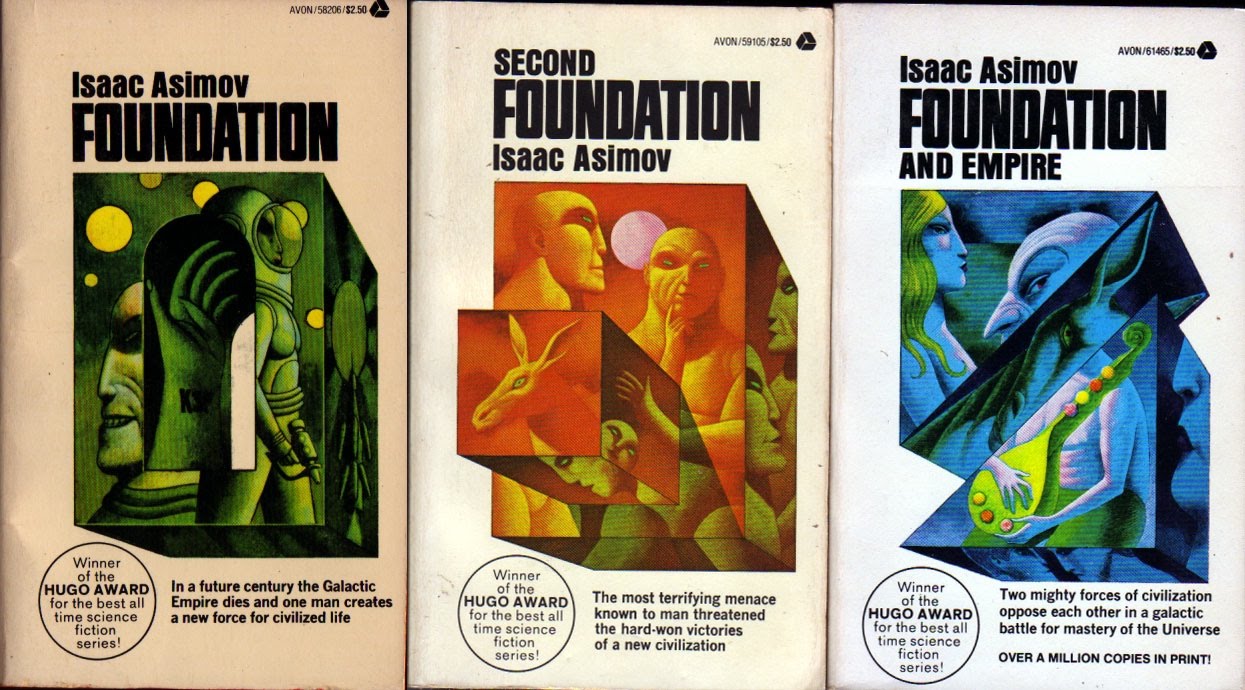
Foundation is the first book in Isaac Asimov’s Foundation Trilogy (and later Foundation Series). Foundation is a collection of five short stories, which were first published together as a book in 1951. It also appeared in 1955 under the title ‘The 1,000-Year Plan.’ The novel tells the story of a group of scientists who seek to preserve knowledge as the civilizations around them begin to regress. The first story is set on Trantor, the capital planet of the 12,000-year-old Galactic Empire. Whilst the empire gives the appearance of stability, beneath this façade it is suffering a slow decay. Hari Seldon, a mathematician, has developed ‘psychohistory,’ which equates all possibilities in large societies to mathematics, allowing predictable long term outcomes.
Seldon discovers a horrifying truth to the Empire’s decay, but his results are considered treasonable. On trial, Seldon shares the discoveries made through psychohistory, such as the collapse of the Empire within 500 years, followed by a 30,000-year period of barbarism. Seldon proposes an alternative to this future; one that would not avert the collapse but shorten the interregnum period to a mere 1000 years. But this plan would require a large group of people to develop a compendium of all human knowledge, titled the Encyclopedia Galactica. A still skeptical commission, not wanting to make a martyr of Seldon, exile him and his group of ‘Encyclopedists’ to a remote planet Terminus. There, they will carry out the Plan under an imperial decree, while Seldon would remain barred from returning to Trantor.
Posted in Art, Language, Technology |
Leave a Comment »
April 6, 2011

Isaac Asimov (b. 1920 – 1992) was an American author and professor of biochemistry at Boston University, best known for his works of science fiction and for his popular science books. Asimov was one of the most prolific writers of all time, having written or edited more than 500 books. His works have been published in nine of the ten major categories of the Dewey Decimal System (The sole exception being the 100s: philosophy and psychology). Isaac Asimov is widely considered a master of hard science fiction and, along with Robert A. Heinlein and Arthur C. Clarke, he was considered one of the ‘Big Three’ science fiction writers during his lifetime. Asimov’s most famous works are the ‘Foundation’ and ‘Robot’ series.
The prolific Asimov also wrote mysteries and fantasy, as well as much non-fiction. Most of his popular science books explain scientific concepts in a historical way, going as far back as possible to a time when the science in question was at its simplest stage. He often provides nationalities, birth dates, and death dates for the scientists he mentions, as well as etymologies and pronunciation guides for technical terms. Examples include his ‘Guide to Science,’ the three volume set ‘Understanding Physics,’ ‘Asimov’s Chronology of Science and Discovery,’ as well as numerous works on astronomy, chemistry, mathematics, the Bible, and William Shakespeare’s works.
Posted in Art, Language, Science |
Leave a Comment »
April 6, 2011

The Dewey Decimal System is a way to sort books. It’s usually used in public libraries and schools. It sorts the books by subject using numbers from 000 to 999. Each subject is broken up into 10 smaller, more specific categories, and has its own set of numbers. The system was created by American librarian Melvil Dewey in 1876.
Posted in Education, Language, Science |
Leave a Comment »
April 6, 2011

Laurence Tureau, known as Mr. T (b. 1951), is an American actor known for his roles as B. A. Baracus in the 1980s television series The A-Team, as boxer Clubber Lang in the 1982 film Rocky III.
Mr. T is known for his trademark African Mandinka warrior hairstyle, his gold jewelry, and his tough-guy image. In 2006 he starred in the reality show ‘I Pity the Fool,’ shown on TV Land, the title of which comes from his catchphrase from the film Rocky III.
read more »
Posted in Art, Money |
Leave a Comment »
April 5, 2011
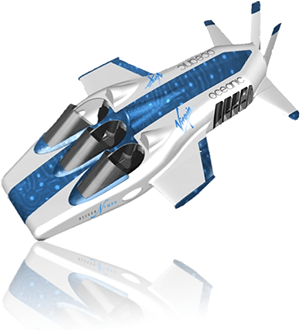
Virgin Oceanic, formerly Virgin Aquatic is a proposed undersea leisure venture of Sir Richard Branson’s Virgin Group. Currently the offering is limited to shallow water craft such as the Deep Flight Merlin (an open cockpit, three person submersible), named ‘Necker Nymph’ after Branson’s private island in the British Virgin Islands. Virgin plans to launch a deep sea version to carry passengers to extreme ocean depths.
Posted in Games, Money, Technology |
Leave a Comment »
April 5, 2011

Rumination [roo-muh-ney-shuhn] is a way of responding to distress that involves repetitively (and passively) focusing on the symptoms of distress, and on its possible causes and consequences. Rumination is more common in people who are pessimistic or neurotic. The tendency to ruminate is a stable constant over time and serves as a significant risk factor for clinical depression. There is also evidence that rumination is linked to general anxiety, post traumatic stress, binge drinking, eating disorders, and self-injurious behavior. Rumination is similar to worry except rumination focuses on bad feelings and experiences from the past, whereas worry is concerned over potential bad events in the future. Both rumination and worry are associated with anxiety and other negative emotional states.
Although rumination is generally unhealthy and associated with depression, thinking and talking about one’s feelings can be beneficial under the right conditions. Healthy self-disclosure can reduce distress and rumination when it leads to greater insight and understanding about the source of one’s problems. Thus, when people share their feelings with others in the context of supportive relationships, they are likely to experience growth. When people repetitively ruminate and dwell on the same problem without making progress, they are likely to experience depression.
Posted in Health, Science |
Leave a Comment »
April 5, 2011

Purely Obsessional Obsessive-Compulsive Disorder (Pure O) is a lesser-known form or manifestation of OCD. There are usually no observable compulsions (checking, counting, hand-washing, etc.). While ritualizing and neutralizing behaviors do take place, they are almost entirely in the form of excessive mental rumination. The nature and type of Purely Obsessional OCD varies greatly, but the central theme for all sufferers is the emergence of a disturbing intrusive thought or question, an unwanted/inappropriate mental image, or a frightening impulse that causes the person extreme anxiety because it is antithetical to closely-held religious beliefs, morals, or societal mores.
Neurotypicals instinctively respond to bizarre intrusive thoughts or impulses as insignificant and part of a normal variance in the human mind. Someone with Purely Obsessional OCD will respond with profound alarm followed by an intense attempt to neutralize the thought or avoid having it again. The person begins to ask themselves constantly ‘Am I really capable of something like that?’ or ‘Could that really happen?’ or ‘Is that really me?’ (even though they usually realize that their fear is irrational, which causes them further distress) and put tremendous effort into escaping or resolving the unwanted thought. They then end up in a vicious cycle of mentally searching for reassurance and trying to get a definitive answer.
Posted in Health, Language, Science |
Leave a Comment »
April 5, 2011

Stage fright or performance anxiety is the anxiety aroused by the requirement to perform in front of an audience, whether actually or potentially (for example, when performing before a camera). In the context of public speaking, this fear is termed glossophobia, one of the most common of phobias. Such anxiety may precede or accompany participation in any activity involving public self-presentation.
In some cases stage fright may be a part of a larger pattern of social phobia or social anxiety disorder, but many people experience stage fright without any wider problems. Quite often, stage fright arises in a mere anticipation of a performance, often a long time ahead. It has numerous manifestations: fluttering or pounding heart, tremor in the hands and legs, sweaty hands, diarrhea, facial nerve tics, dry mouth, and erectile dysfunction.
read more »
Posted in Art, Drugs, Health |
Leave a Comment »
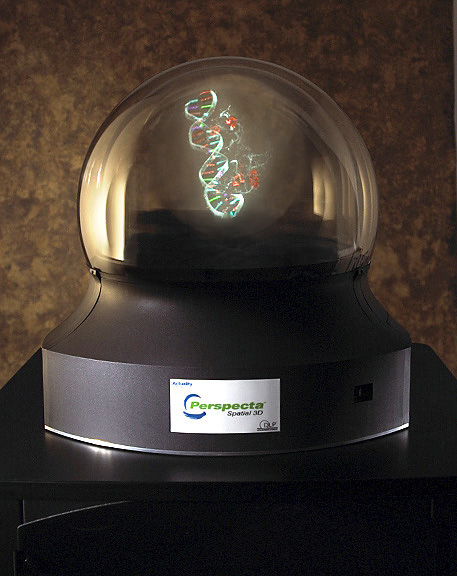




 The Daily Omnivore