April 2, 2011


DFA Records is an independent record label and production team, launched in September 2001 by Mo’ Wax co-founder Tim Goldsworthy, musician James Murphy, and manager Jonathan Galkin. The label has an exclusive distribution deal with major record label EMI.
James Murphy and Tim Goldsworthy met while working in New York on the David Holmes album ‘Let’s Get Killed.’ DFA Records began on a series of 12″ single vinyl releases starting with The Rapture’s ‘House of Jealous Lovers’ and The Juan Maclean’s ‘By The Time I Get To Venus.’ Notable releases include James Murphy’s band LCD Soundsystem Black Dice, Shit Robot, Delia Gonzalez & Gavin Russom, J.O.Y., Pixeltan, Black Leotard Front, and Hot Chip.
Posted in Art, Money |
Leave a Comment »
April 2, 2011

James Murphy (b. 1970) is an American musician, producer, DJ, and co-founder of record label DFA Records. His most well-known musical project is LCD Soundsystem. Murphy was a member of Falling Man from 1988 to 1989, Pony from 1992 to 1994, and Speedking from 1995 to 1997. He was also the sound engineer for Sub Pop band Six Finger Satellite. Former Six Finger Satellite member John Maclean is now on DFA records as The Juan Maclean. In 1999 he formed DFA with Tim Goldsworthy (formerly of UNKLE).
Starting in 1993, Murphy used the name ‘Death from Above’ when DJing, a nickname that was given to his signature PA setup while he was the sound setup for Six Finger Satellite. A two-man Canadian band originally called themselves ‘Death from Above’ before there was a dispute over the name. In response to the threat, the Canadian group changed the minimum number of characters legally required of them and became ‘Death from Above 1979.’
Posted in Art, Money |
Leave a Comment »
April 2, 2011

I Wanna Be The Guy: The Movie: The Game (IWBTG) is a 2D platform indie freeware video game. First released in October 2007 by Kayin (Michael O’Reilly).
It is best known for its unusually difficult platforming elements, unorthodox level design and utilizing sound effects, characters and music from many other games.
read more »
Posted in Art, Games, Humor |
Leave a Comment »
April 1, 2011

R.U.R. is a 1921 science fiction play in the Czech language by Karel Čapek. R.U.R. stands for Rossum’s Universal Robots, an English phrase used as the subtitle in the Czech original. The play begins in a factory that makes artificial people called ‘robots.’ Unlike the modern usage of the term, these creatures are closer to the modern idea of androids or even clones, as they can be mistaken for humans and can think for themselves.
They seem happy to work for humans, although that changes and a hostile robot rebellion leads to the extinction of the human race. After finishing the manuscript, Čapek realized that he had created a modern version of the Jewish Golem legend. The play introduced the word ‘Robot’ which displaced older words such as ‘automaton’ or ‘android’ in languages around the world. In its original Czech, ‘robota’ means forced labor of the kind that serfs had to perform on their masters’ lands, and is derived from rab, meaning ‘slave.’
Posted in Art, Language, Technology |
Leave a Comment »
April 1, 2011

In Jewish folklore, a golem [goh-luhm] is an animated anthropomorphic being, created entirely from inanimate matter. The word was used to mean an amorphous, unformed material in Psalms and medieval writing. The word golem is used in the Bible to refer to an embryonic or incomplete substance.
In modern Hebrew the word golem means ‘dumb’ or ‘helpless.’ The Mishnah (Jewish oral tradition) uses the term for an uncultivated person. Similarly, golems are often used today as a metaphor for brainless lunks or entities who serve man under controlled conditions, but are hostile to him in others. Similarly, it is a Yiddish slang insult for someone who is clumsy or slow.
read more »
Posted in Language, Philosophy |
Leave a Comment »
April 1, 2011

Jingle truck is US Military slang for colorfully decorated trucks, typically in central Asia. It is a slang term for the customised trucks and buses common throughout the region, including Afghanistan, Pakistan, and India. The name refers to a’ jingling’ sound made by chains hanging from the bumpers of the vehicles.
Posted in Art, Language, World |
1 Comment »
April 1, 2011

David Gonzales is a Mexican-American cartoonist from Richmond, California, currently living in nearby Hercules. He is the creator of the ‘Homies’ line of toys, a series of 2-inch figurines based upon Chicano (Mexican American) characters.
read more »
Posted in Art, Politics |
Leave a Comment »
April 1, 2011

Homies are a series of 2-inch figurines loosely based upon Chicano (Mexican American) characters in the life of artist David Gonzalez. First created in 1998, these plastic figurines were initially sold via vending machines typically positioned in supermarkets. Homies have become a highly collectible item among fans of the line, and many imitation toys have sprung up. The figures caused controversy after their initial release as members of the Los Angeles Police Department, argued that the figures glorified gang life. Many stores stopped selling the toys after the complaint.
Gonzales then created a story for each of the Homies’ characters, each of which had a positive view of the characters. Some became former jail mates who went on to educate children about how to avoid prison. Mainstream stores, such as Walmart, quickly returned the Homies to their stacks, and the toy branched out to include a line of diecast cars, among other things. By 2005, the Homies character line had women, as well as Filipino, Japanese and Puerto Rican, and even Evil Clown characters. The Puerto Ricans set, which includes twelve of the Homies, are nicknamed Los Boricuas.
Posted in Art, Games, Money |
Leave a Comment »
April 1, 2011

Gashapon [gosh-uh-pone] is a Bandai brand trademark widely used throughout the world for their capsule toys.
‘Gashapon’ is a Japanese onomatopoeia, made up of two sounds: ‘gasha’ for the turning of a crank on a toy vending machine, and ‘pon’ for the sound of the toy capsule dropping into the receptacle. It is used to describe both the machines themselves, and any toy obtained from them.
read more »
Posted in Art, Games, Money |
Leave a Comment »
April 1, 2011

Disney Vinylmation is a brand of vinyl toys sold at Disney theme parks and other locations. The toys all have a common shape (that of Mickey Mouse) but have different themed markings, colors and patterns.
The first figures were introduced in November 2008. The figures are sold in sealed packaging. The purchaser does not know which figure they are buying until they have opened it.
Posted in Art, Games, Money |
Leave a Comment »
April 1, 2011
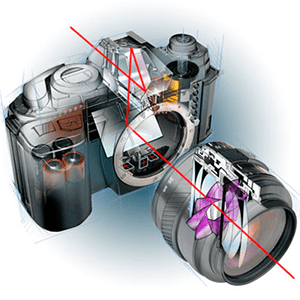
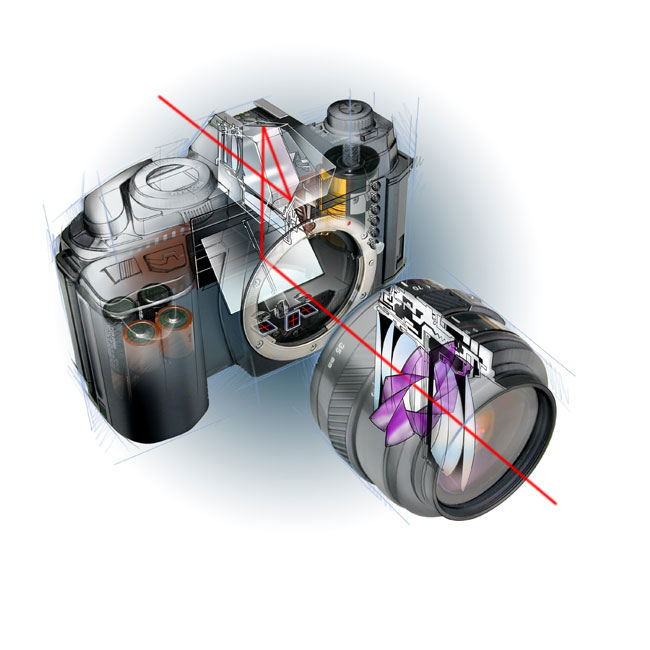
Digital single-lens reflex cameras (DSLR) are cameras that use a mechanical mirror system and pentaprism to direct light from the lens to an optical viewfinder on the back of the camera. The basic operation of a DSLR is as follows: for viewing purposes, the mirror reflects the light coming through the attached lens upwards at a 90 degree angle. It is then reflected three times by the roof pentaprism, rectifying it for the photographer’s eye.
During exposure, the mirror assembly swings upward, the aperture narrows (if stopped down, or set smaller than wide open), and a shutter opens, allowing the lens to project light onto the image sensor. A second shutter then covers the sensor, ending the exposure, and the mirror lowers while the shutter resets. All of this happens automatically over a period of milliseconds, with cameras designed to do this 3–10 times per second.
Posted in Money, Technology |
Leave a Comment »
April 1, 2011
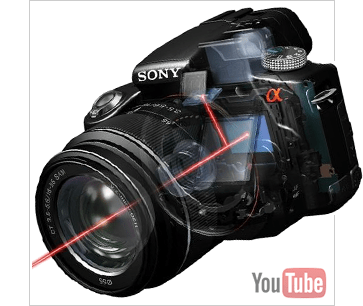
A Single-Lens Translucent (SLT) camera is similar to a Digital Single-Lens Relex (DSLR) but uses a beam splitter instead of a solid mirror. Unlike DSLRs SLT cameras do not have an optical viewfinder, instead they rely on an electronic viewfinder, using the image collected by the sensor. A DSLR mirror allows the user to directly view the image that is passing through the lens; in a SLT the mirror is only used for focusing.
A semi-translucent mirror allows the majority of the light to pass through to the sensor while reflecting a portion of the light onto a phase-detection autofocus sensor in the top of the camera, allowing the camera to take photos without any mirror movement (and associated vibrations), as well as full time auto focus. Since the autofocus array is constantly receiving light, SLT cameras are able to use phase-detection autofocus during video recording, while DSLR’s and other interchangeable lens cameras have to use slower contrast detect autofocus for video and live view.
Posted in Money, Technology |
Leave a Comment »









 The Daily Omnivore