April 21, 2011

Andrew Wakefield (b. 1957) is a British former surgeon and medical researcher known for his fraudulent claims of a causative connection between the measles, mumps and rubella (MMR) vaccine and autism. He also created the term ‘autistic enterocolitis’ to describe an unproven form of inflammatory bowel disease (not to be confused with irritable bowel syndrome).
In January 2011, an article by British investigative reporter, Brian Deer and its accompanying editorial in the British Medical Journal identified Wakefield’s work as an ‘elaborate fraud.’ In a follow-up article, Deer said that Wakefield had planned to launch a venture on the back of an MMR vaccination scare that would profit from new medical tests and ‘litigation driven testing.’ Wakefield’s study and public recommendations against the use of the combined MMR vaccine were linked to a steep decline in vaccination rates in the United Kingdom and a corresponding rise in measles cases, resulting in serious illness and several fatalities.
Posted in Health, Money, Politics |
Leave a Comment »
April 21, 2011

A diagnosis of exclusion (per exclusionem) is a medical condition whose presence cannot be established with complete confidence from examination or testing. Diagnosis is therefore by elimination of other reasonable possibilities. Perhaps the largest category of diagnosis by exclusion is seen among psychiatric disorders where the presence of physical or organic disease must be excluded as a prerequisite for making a functional diagnosis.
Diagnosis by exclusion tends to occur where scientific knowledge is scarce, specifically where the means to verify a diagnosis by an objective method is absent. As a specific diagnosis cannot be confirmed a fall back position is to exclude that group of known causes that may cause a similar clinical presentation.
read more »
Posted in Health, Language, Science |
Leave a Comment »
April 21, 2011

Mens rea [mens ray-uh] is Latin for ‘guilty mind.’ In jurisdictions with due process, there must be an actus reus (‘guilty act’) accompanied by some level of mens rea to constitute the crime with which the defendant is charge. As a general rule, criminal liability does not attach to a person who acted with the absence of mental fault. The exception is strict liability crimes.
In civil law, it is usually not necessary to prove a subjective mental element to establish liability for breach of contract or tort. However, if a tort is intentionally committed or a contract is intentionally breached, such intent may increase the scope of liability as well as the measure of damages payable to the plaintiff.
read more »
Posted in Language, Politics |
Leave a Comment »
April 21, 2011

A parahuman is a human-animal hybrid or chimera. Scientists have done extensive research into the mixing of genes or cells from different species, e.g. adding human (and other animal) genes to bacteria and farm animals to mass-produce insulin and spider silk proteins, and introducing human cells into mouse embryos. There is no scientific field of parahuman research. Ethical, moral, and legal issues of parahuman research are speculative extensions of existing issues that arise in actual research.
There are several reasons for which parahumans or chimeras might be created. The current forms of chimera exist for medical and industrial purposes. Other experiments aim to reveal knowledge about the function of the human body, e.g., by creating mice with a human-like immune system to study AIDS or with a brain incorporating human nerve cells. Restrictions on cloning and stem cell research have made chimera research an attractive alternative.
Posted in Politics, Science, Technology |
Leave a Comment »
April 21, 2011

The humanzee (or chuman) is a hypothetical chimpanzee/human hybrid. The chromosomal similarity of humans and chimps is roughly equivalent to that found in equines (horses, zebras, donkeys, etc.), leading to contested speculation that a hybrid is possible, though no specimen has ever been confirmed.
Geneticists adhere to the portmanteau word convention to indicate which species is the sire (e.g. tigon/liger) For geneticists, ‘Chuman’ therefore refers to a hybrid of male chimpanzee and female human, while ‘Humanzee’ refers to a hybrid of male human and female chimpanzee.
read more »
Posted in Language, Science, Sex |
1 Comment »
April 21, 2011

The Great Ape Project (GAP), founded in 1994, is an international organization of primatologists, anthropologists, ethicists, and other experts who advocate a UN ‘Declaration of the Rights of Great Apes’ that would confer basic legal rights on non-human great apes: chimpanzees, bonobos, gorillas, and orangutans. The rights suggested are the right to life, the protection of individual liberty, and the prohibition of torture. The organization also monitors individual great ape activity in the US through a census program. Once rights are established, GAP would demand the release of great apes from captivity; currently 3,100 are held in the U.S., including 1,280 in biomedical research.
The project is founded on the principle that great apes possess rationality and self-consciousness, and the ability to be aware of themselves as distinct entities with a past and future. Documented conversations (in sign languages) with individual great apes are the basis for this tenet. However, their biological similarity with humans is also key to the traits for which they are valuable as research subjects. For example, testing of antibody treatments can not be done in species less similar to humans than chimpanzees.
Posted in Philosophy, Politics, Science |
Leave a Comment »
April 21, 2011
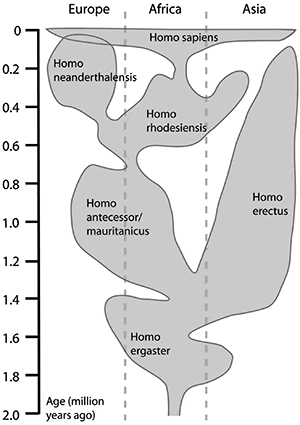
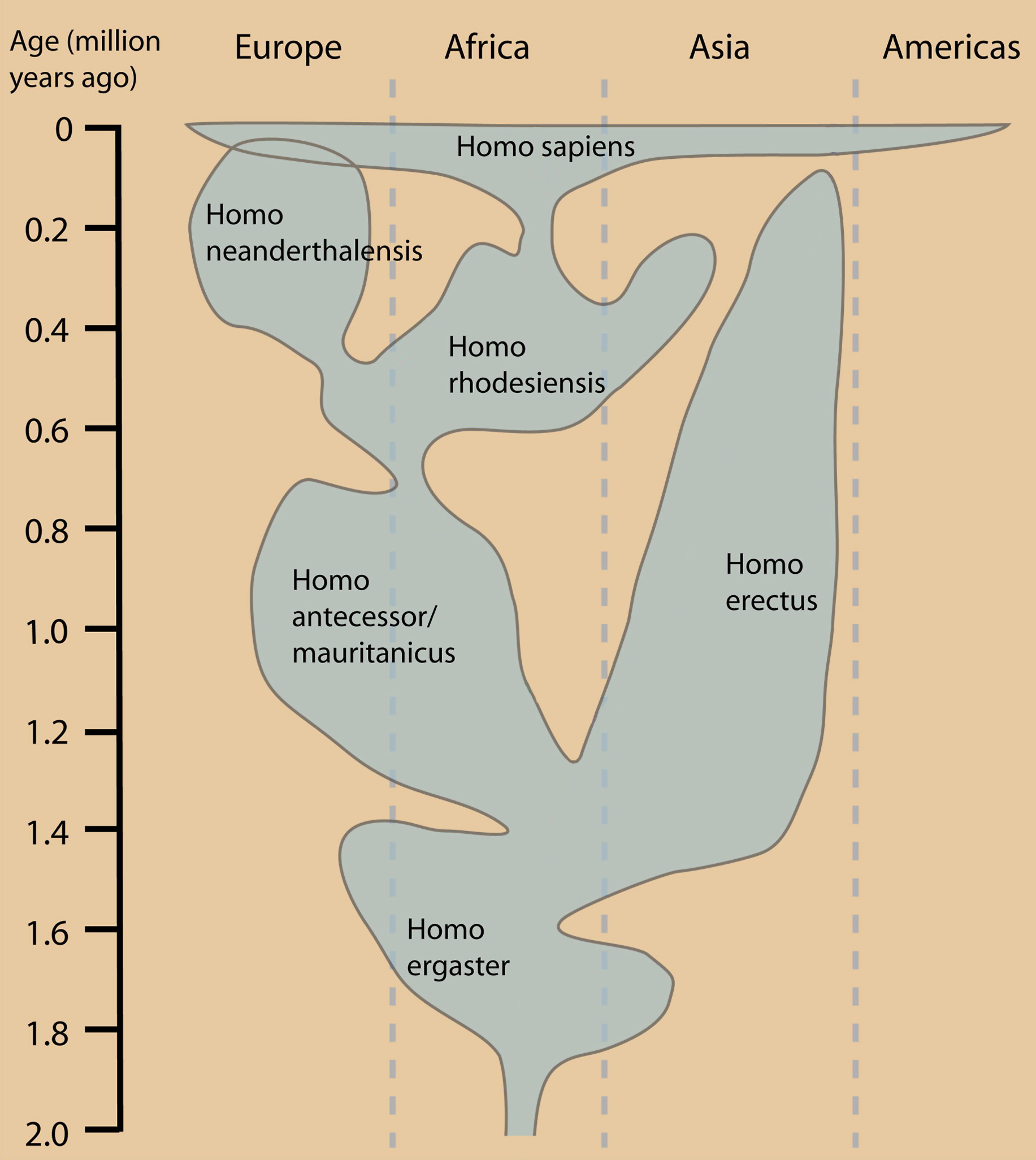
Homo (Latin for ‘man’) is the genus separated from the earlier hominids because of the emergence of tool use, language and culture. The genus begins about 2.3 million years ago. The characteristics of these species are bigger brain (above 1000 ml), the forehead rises straight up, the skull becomes rounder, the teeth are reduced, arms are shorter and legs are longer, and the skeleton becomes more delicate. It was Carolus Linnaeus, the father of modern taxonomy (the science of classification) who chose the name Homo for the genus humans are categorized in.
There is only one living species in the genus: Homo sapiens. All others are extinct (e.g. homo erectus, homo neanderthalensis). Anthropologists are still investigating the exact line of descent of the human species. The evolution of the genus Homo took place mostly in the Pleistocene (the epoch from 2,588,000 to 12,000 years BCE). The homo genus is characterised by its use of stone tools, initially crude, and becoming ever more sophisticated. So much so that in archaeology and anthropology the Pleistocene is usually referred to as the Palaeolithic, or the Stone Age.
Posted in Science, Technology |
Leave a Comment »
April 21, 2011

Pan prior is the name suggested by British -anthropologist Richard Wrangham for the last common ancestor of humans (Homo sapiens) and chimpanzees (Pan troglodytes). This species is supposed, on the basis of DNA reconstruction (no fossil remains have been found), to have existed prior to six million years ago, when the human and chimpanzee lines are thought to have diverged. Pan prior lived an arboreal existence in the forests of Africa.
It was initially thought that an Ice Age, around seven million years ago, caused forests to shrink thus prompting some members of the species to venture into the savannah, becoming the ancestors of humanity. However, the discovery of Ardipithecus ramidus shows that bipedal locomotion was used both on the ground and in the trees around 4.4 million years ago. Researchers infer from the form of her pelvis and limbs that she was bipedal when moving on the ground, but quadrupedal when moving about in tree branches.
Posted in Science |
Leave a Comment »
April 21, 2011
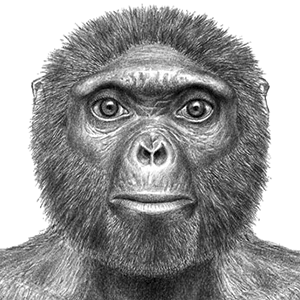
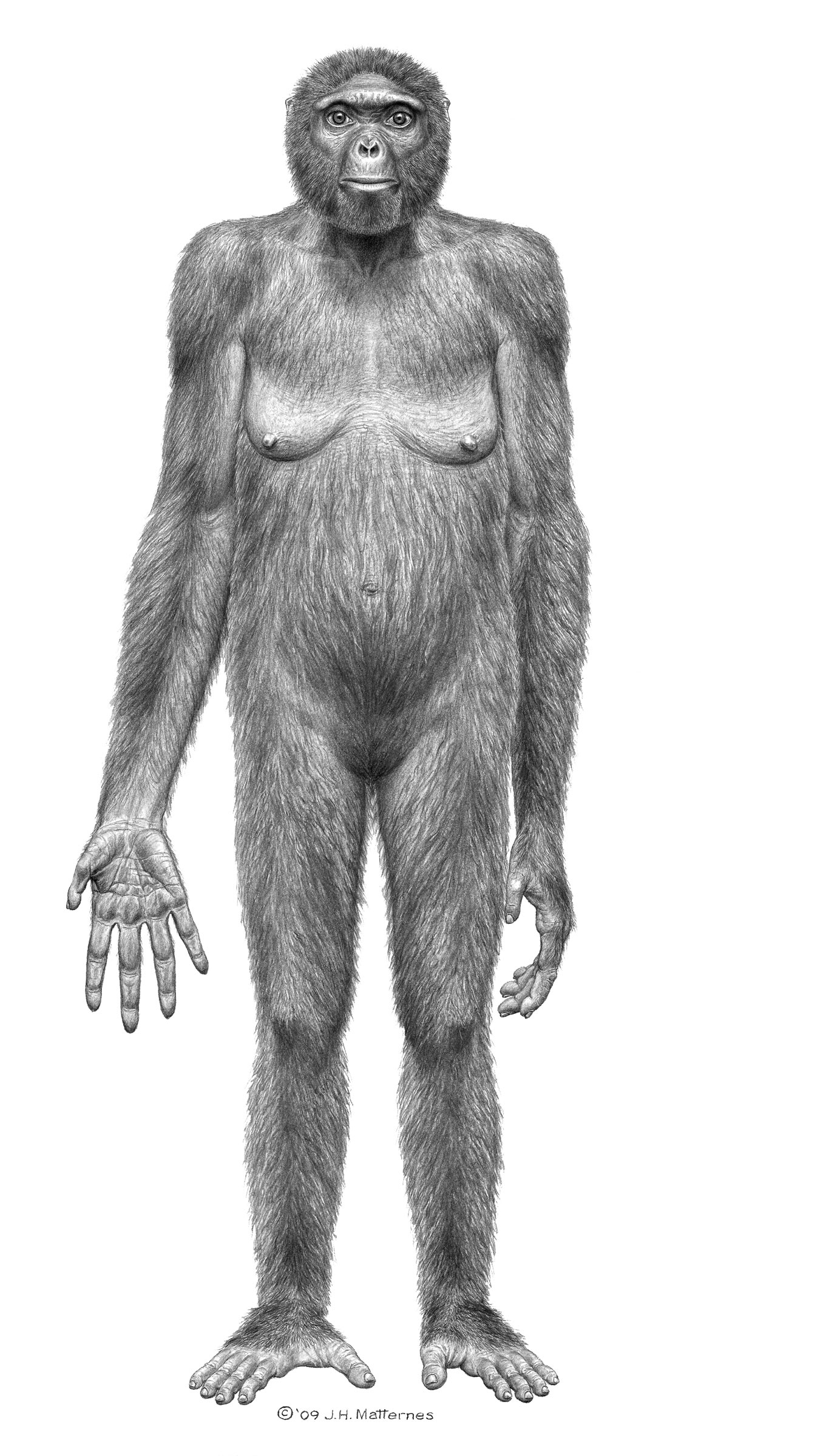
Ardi is the name given to the fossilized skeletal remains of a female Ardipithecus ramidus, an early human-like species 4.4 million years old. It is the most complete early hominid specimen discovered, with most of the skull, teeth, pelvis, hands and feet. The word Ardi means ‘ground floor’ and the word ramid means ‘root’ in the Afar language.
read more »
Posted in Science |
Leave a Comment »
April 21, 2011

Transitional fossils are the fossilized remains of intermediary forms of life that illustrate an evolutionary transition. They can be identified by their retention of certain primitive traits in comparison with their more derived relatives. Numerous examples exist, including those of primates and early humans.
read more »
Posted in Language, Science |
Leave a Comment »
April 20, 2011

Oaksterdam is a cultural district on the north end of downtown Oakland, California, where medical cannabis in a variety of competitively priced smokeable and edible preparations is available for purchase in multiple cafes, clubs, and patient dispensaries. Since 2005, cannabis has been legally available to patients with patient identification and physician recommendation at a dispensary in the neighborhood, one of Oakland’s four officially licensed dispensaries under the current municipal ordinance.
Measure Z clubs are businesses that sell cannabis to people over the age of 18. One private club in Oaksterdam sells cannabis and food containing cannabis to adults who do not hold valid physician recommendations for medical marijuana, which are needed to obtain county-issued patient identification cards in California. One such club is named after Oakland’s Measure Z, a city ballot initiative which makes the private sales, cultivation, and possession of cannabis the lowest police priority and mandates that the City of Oakland tax and regulate cannabis as soon as possible under state law.
Posted in Drugs, Health, Money |
Leave a Comment »
April 20, 2011

Hash oil is an evaporated solution of THC (tetrahydrocannabinol, the principal psychoactive constituent of the cannabis plant) and various other compounds. It is traditionally a dark, viscous liquid made by solvent (e.g. butane, alcohol, acetone) extraction of cannabis resin. Despite the similarity in names, it does not resemble hashish. It can be a very potent medication due to its high THC concentration, which generally varies between 60% and 90%.
Related honey oil is a specific type of hash oil. It can be vaporized off improvised devices; such as a an electric stove element, car cigarette lighter, or pressed between two heated knives (known as blades, spotting or hot knifing). The vapor can then be inhaled through a hollow tube, often an empty pen tube called a hooter.
Posted in Drugs, Science |
Leave a Comment »




 The Daily Omnivore