June 21, 2011

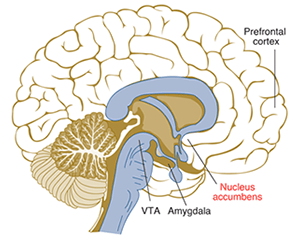
The nucleus [noo-klee-uhs] accumbens [uh-cum-benz] is a collection of neurons within the striatum, a component of the forebrain (prosencephalon). It is thought to play an important role in reward, pleasure, laughter, addiction, aggression, fear, and the placebo effect.
Each half of the brain has one nucleus accumbens, which, along with the olfactory tubercle collectively form the ventral striatum, which is part of the basal ganglia, part of the cerebrum vital to movement. The nucleus accumbens plays a role in rhythmic timing and is considered to be of central importance to the limbic-motor interface.
read more »
Posted in Drugs, Health, Sex |
Leave a Comment »
June 21, 2011
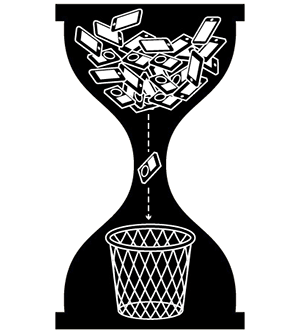
Planned obsolescence in industrial design is a policy of deliberately planning a product with a limited useful life, so it will become obsolete or nonfunctional after a certain period of time. Planned obsolescence has potential benefits for a producer because to obtain continuing use of the product the consumer is under pressure to purchase again, whether from the same manufacturer (a replacement part or a newer model), or from a competitor.
For an industry, planned obsolescence stimulates demand by encouraging purchasers to buy sooner if they still want a functioning product. Built-in obsolescence is used in many different products. There is, however, the potential backlash of consumers who learn that the manufacturer invested money to make the product obsolete faster; such consumers might turn to a producer (if any exists) that offers a more durable alternative.
read more »
Posted in Money, Technology |
1 Comment »
June 21, 2011

A false economy refers to an action which saves money at the beginning but which, over a longer period of time, results in more money being wasted than being saved. For example, if a city government decided to purchase the least expensive automobiles for use by city workers, it might be termed false economy, as cheap automobiles have a record of traditionally needing more frequent repairs in the long term and the repair costs will eradicate any initial savings garnered.
The concept is similar to planned obsolescence, whereby the lower initial cost of a false economy attracts buyers mostly on the basis of low cost, who may later be at a disadvantage.
read more »
Posted in Money |
Leave a Comment »
June 20, 2011

A Claude glass (or black mirror) is a small mirror, slightly convex in shape, with its surface tinted a dark color. Bound up like a pocket-book or in a carrying case, black mirrors were used by artists, travellers and connoisseurs of landscape and landscape painting.
Black Mirrors have the effect of abstracting the subject reflected in it from its surroundings, reducing and simplifying the colour and tonal range of scenes and scenery to give them a painterly quality.
read more »
Posted in Art, Technology |
Leave a Comment »
June 20, 2011

A camera lucida [loo-si-duh] (Latin: ‘light room’) is an optical device used as a drawing aid by artists. The camera lucida performs an optical superimposition of the subject being viewed upon the surface upon which the artist is drawing. The artist sees both scene and drawing surface simultaneously, as in a photographic double exposure. This allows the artist to duplicate key points of the scene on the drawing surface, thus aiding in the accurate rendering of perspective. At times, the artist can even trace the outlines of objects.
The camera lucida was patented in 1807 by William Hyde Wollaston. There seems to be evidence his idea was actually nothing but a reinvention of a device clearly described 200 years earlier by Johannes Kepler. By the 19th century, Kepler’s description had totally fallen into obscurity.
read more »
Posted in Art, Technology |
Leave a Comment »
June 20, 2011

Sexual anorexia is a term used to describe a loss of ‘appetite’ for romantic-sexual interaction. However, the term is used broadly and can be better defined as a fear of intimacy to the point that the person has severe anxiety surrounding sex with emotional content i.e. in an intimate relationship. The concept was first mentioned by psychologist Nathan Hare in 1975.
The term also applies to individuals who appear to have a sexual addiction which is expressed through a variety of behaviors such as the compulsive use of strip clubs, prostitutes,internet porn sites, etc. but more accurately fit the definition of sexual anorexic in that they seem to lack the ability to have a relationship of a sexual nature beyond a paid-for or anonymous experience.
read more »
Posted in Health, Sex |
Leave a Comment »
June 20, 2011
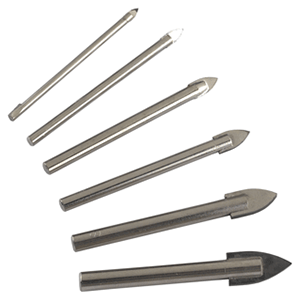
Scribing is a style of graffiti in which a sharp, metal scribe is used to tag a glass surfaces. Tagging refers to the application of a graffiti artist’s pseudonym to a surface, typically somewhere public and not permitted. There are two popular types: the ‘arrowhead scribe,’ held between the thumb and index finger, used for quick connectable-style tags on glass; and the ‘pen scribe,’ usually used for more detailed tagging. Scribing can be loud, especially when doing complicated pieces on glass. Etching is a related technique which uses acidic, caustic, or abrasive substances.
Scribing is also a technique used in the corporate world to visually-document concepts in a graphic format. Companies such as The WildWorks Group and Griot’s Eye take conversations and convert them in real time on whiteboard walls or storyboards surrounding participants. As the brainstorming session flows, ‘scribes’ translate the main ideas of the conversation into keywords and graphics. The exercise is dynamic in helping to capture concepts that are sometimes lost in a flow of words. It also helps to reinforce thoughts for people who are visual learners.
Posted in Art, Politics |
Leave a Comment »
June 17, 2011


An acquired taste often refers to an appreciation for a food or beverage that is unlikely to be enjoyed by a person who has not had substantial exposure to it, usually because of some unfamiliar aspect of the food or beverage, including a strong or strange odor. For example: stinky tofu or cheese, durian fruit, kimchi, haggis, hákarl (fermented shark), sulfur infused black salt, asafoetida (a spice also called devil’s ding). Unfamiliar tastes (such as bitter teas or natto, fermented soybeans) and appearance can also be off-putting to many. Acquired taste may also refer to aesthetic tastes, such as taste in music or other forms of art.
Intentionally changing one’s preferences can be hard to accomplish. It usually requires a deliberate effort, such as acting as if one likes something in order to have the responses and feelings that will produce the desired taste. The risk in this acting is that it can lead to all sorts of excesses such as self-deception and pretentiousness. The challenge becomes one of distinguishing authentic or legitimate acquired tastes resulting from deeply considered preference changes from inauthentic ones motivated by, for example, status or conformity.
Posted in Art, Food, Language |
Leave a Comment »
June 17, 2011


Chuck Palahniuk [pall-uh-nik] (b. 1962) is an American transgressional fiction novelist, a genre of literature that focuses on characters who feel confined by the norms and expectations of society and who break free of those confines in unusual and/or illicit ways. Because they are rebelling against the basic norms of society, protagonists of transgressional fiction may seem mentally ill, anti-social, or nihilistic. The genre deals extensively with taboo subject matters such as drugs, sex, violence, incest, pedophilia, and crime.
He is best known for the award-winning novel ‘Fight Club,’ which was later made into a film directed by David Fincher.
read more »
Posted in Art, Language |
Leave a Comment »
June 17, 2011
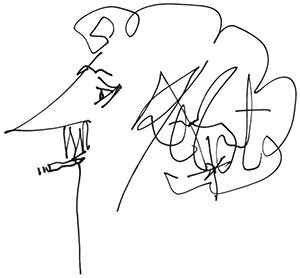
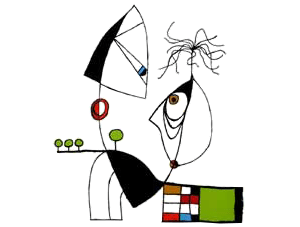
Kurt Vonnegut (1922 – 2007) was an American writer of the 20th century. He wrote such works as ‘Mother Night’ (1961), ‘Slaughterhouse-Five’ (1969), and ‘Breakfast of Champions’ (1973) blending satire, gallows humor, and science fiction. He was known for his humanist beliefs and was honorary president of the American Humanist Association. Vonnegut’s experience in WWII as a soldier and prisoner of war had a profound influence on his later work.
He was captured during the Battle of the Bulge. ‘The other American divisions on our flanks managed to pull out: We were obliged to stay and fight. Bayonets aren’t much good against tanks…’ Imprisoned in Dresden, Vonnegut was chosen as a leader of the POWs because he spoke some German. After telling the German guards ‘…just what I was going to do to them when the Russians came…’ he was beaten and had his position as leader taken away. While a prisoner, he witnessed the fire bombing of Dresden in February 1945 which destroyed most of the city.
read more »
Posted in Art, Humor, Language |
Leave a Comment »
June 16, 2011
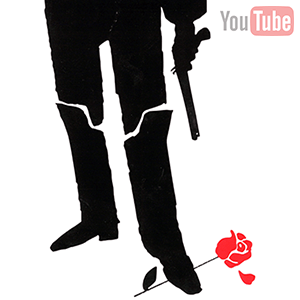
Barry Lyndon is a 1975 period film directed by Stanley Kubrick based on the 1844 novel ‘The Luck of Barry Lyndon’ by William Makepeace Thackeray which recounts the exploits of an 18th century a man of the Irish gentry trying to become a member of the English aristocracy.
The film is divided into two halves each headed with a title card: ‘I. By What Means Redmond Barry Acquired the Style and Title of Barry Lyndon.’ ‘II. Containing an Account of the Misfortunes and Disasters Which Befell Barry Lyndon.’ The epilogue read: ‘It was in the reign of King George III that the aforesaid personages lived and quarreled; good or bad, handsome or ugly, rich or poor, they are all equal now.’
read more »
Posted in Art, Money |
Leave a Comment »
June 16, 2011

Jimmy Joe Roche is an American visual artist and underground filmmaker, based in Baltimore, Maryland. He is a long-time collaborator of the Baltimore-based musician Dan Deacon. His recent collaboration, ‘Ultimate Reality’, with musician Dan Deacon has gained critical attention.
In 2006 he shot and edited the Neil Young ‘Heart of Gold: Behind the Scenes’ featurette. Recently Roche’s short film ‘Baltimore Shopping Network’ was featured on the New Museum’s website Rizhome, and his music video for Deacon’s ‘Crystal Cat’ was featured on the front page of YouTube, gathering over a million views.
Posted in Art, Technology |
Leave a Comment »




 The Daily Omnivore