July 8, 2011
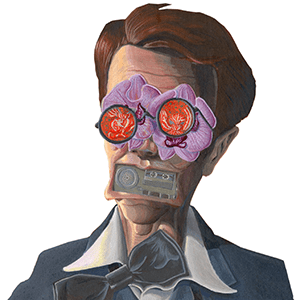
The Doors of Perception is a 1954 book by Aldous Huxley detailing his experiences when taking mescaline, a hallucinogen found naturally in the peyote cactus.
The book takes the form of Huxley’s recollection of a drug trip which took place over the course of an afternoon, and takes its title from William Blake’s poem ‘The Marriage of Heaven and Hell.’ Huxley recalls the insights he experienced, which range from the ‘purely aesthetic’ to ‘sacramental vision.’ He also incorporates later reflections on the experience and its meaning for art and religion.
read more »
Posted in Drugs, Language, Philosophy |
1 Comment »
July 8, 2011

Beatnik [beet-nik] was a media stereotype of the 1950s and early 1960s that displayed the more superficial aspects of the Beat Generation literary movement of the 1950s and violent film images, along with a cartoonish misrepresentation of the real-life people and the spirituality found in Jack Kerouac’s autobiographical fiction. Kerouac spoke out against this detour from his original concept.
Kerouac introduced the phrase ‘Beat Generation’ in 1948, generalizing from his social circle to characterize the underground, anti-conformist youth gathering in New York at that time. The name came up in conversation with the novelist John Clellon Holmes who published an early Beat Generation novel, ‘Go’ (1952), along with a manifesto in The New York Times Magazine: ‘This Is the Beat Generation.’
read more »
Posted in Language, Money, Politics |
Leave a Comment »
July 8, 2011


Counterculture is a term used in psychology and sociology to describe a set of views that are not of the mainstream. It is a neologism attributed to American historian Theodore Roszak. Although distinct countercultural undercurrents have existed in many societies, here the term refers to a more significant, visible phenomenon that reaches critical mass and persists for a period of time.
A countercultural movement expresses the ethos, aspirations, and dreams of a specific population during an era—a social manifestation of zeitgeist. The term came to prominence in the news media, as it was used to refer to the social revolution that swept North America, Western Europe, Japan, Australia, and New Zealand during the 1960s and early 1970s.
read more »
Posted in Language, Politics, Sex |
Leave a Comment »
July 8, 2011

A gurn or chuck is a distorted facial expression, and a verb to describe the action. A typical gurn might involve projecting the lower jaw as far forward and up as possible, and covering the upper lip with the lower lip. Another common form of gurning is the ‘duck face’ which is characterized by outwardly splayed lips. Gurn has also been defined as ‘to snarl as a dog; to look savage; to distort the countenance.’ The derivation may originally be Scottish, related to ‘grin.’ In Northern Ireland, the verb ‘to gurn’ means ‘to cry,’ and crying is often referred to as ‘gurnin’.’
Gurning contests are a rural English tradition. By far the most notable is that held annually at the Egremont Crab Fair, which dates back to 1267 when King Henry III granted the fair a Royal Charter. The competitions are held regularly in some villages, with contestants traditionally framing their faces through a horse collar — known as ‘gurnin’ through a braffin’.’ The World Gurning Championship takes place annually at the same crab fair in Egremont, Cumbria. Those with the greatest gurn capabilities are often those with no teeth, as this provides greater room to move the jaw further up. In some cases, the elderly or otherwise toothless can be capable of spectacular gurns covering the entire nose.
Posted in Games, Humor, Language |
1 Comment »
July 7, 2011

A skeleton watch is a mechanical watch (although occasionally quartz), in which all of the moving parts are visible through either the front of the watch, the back of the watch or a small cut outlining the dial.
Many watchmakers have skeleton watches, but Rolex has rarely made them (apart from the 1930s and early 1940s) and never made tourbillon skeletons. For this reason, one should exercise caution when buying a skeleton watch marked as a Rolex as it is likely a counterfeit.
Posted in Money, Technology |
Leave a Comment »
July 7, 2011
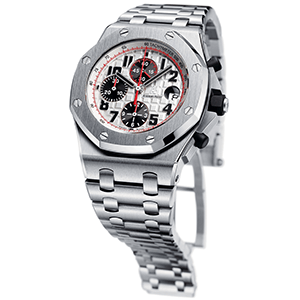
Audemars [awe-de-marr] Piguet [pee-gay] (AP) is a manufacturer of prestige Swiss watches which compete with Patek Philippe and Vacheron Constantin. The roots of the company date back to 1874, when the 23-year-old Jules-Louis Audemars met Edward-Auguste Piguet, then only 21, at Vallée de Joux, in western Switzerland, which is considered to be the cradle of prestige watch-making. Thus Audemars started producing component parts for movements and Piguet got the job of a repasseur, whose job it was to make the final regulation of the timepiece.
In 1875 they founded a firm later known as Audemars, Piguet et Cie, and since 1882, members of the Audemars and Piguet families have always been on the board of directors. Between 1894 and 1899 the company produced about 1,200 timepieces, including some very complex watches. When Audemars and Piguet died, in 1918 and 1919 respectively, the company was already quite famous. As the success of the company’s business was rising its customers became Tiffany & Co, Cartier and Bulgari, who rebranded and sold Audemars Piguet watches under their own house names. Today these watches are only identifiable as Audemars Piguet products by their serial numbers.
read more »
Posted in Money, Technology |
Leave a Comment »
July 7, 2011

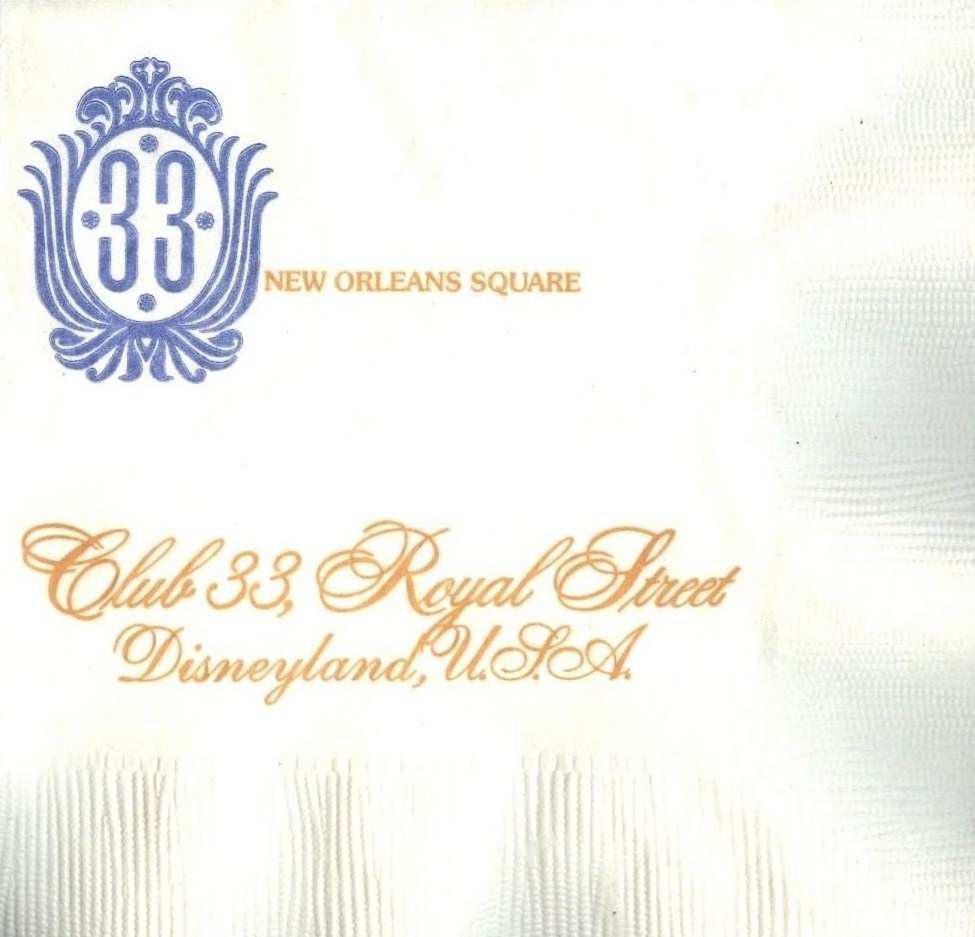
Club 33 is a private club located in the heart of the New Orleans Square section of Disneyland. Officially maintained as a secret feature of the theme park, the entrance of the club is located next to the Blue Bayou Restaurant at ’33 Royal Street’ with the entrance recognizable by an ornate address plate with the number 33 engraved on it. Club 33 members and their guests have exclusive access to the club’s restaurant, and the premises are not open to the public at large. It is the only location within Disneyland to offer alcoholic beverages.
Members get free access to both Disney parks whenever they are open, plus early park admission several days each week. In addition, members are provided with valet parking to the overall Disney resort and access to Lilly Belle, the presidential caboose car on the Disneyland Railroad.
read more »
Posted in Food, Money |
Leave a Comment »
July 6, 2011

The EcoSphere is sealed blown-glass miniature aquarium produced by Ecosphere Associates, Inc., of Tucson, Arizona, United States. Spherical or ovoid, the aquaria range from roughly baseball-size to soccer-ball-size. They are sold worldwide as scientific novelties and decorative objects. The spheres are populated by tiny red-pink shrimp, which swim energetically around the aquarium, eat the brown bacterial and algal scum on the glass, consume the filamentous green algae which sometimes forms a globular pillow in the water, and perch on a fragment of coral.
Each EcoSphere is a materially closed ecological systems which is self-sustaining over a period of years. At room temperature, and with only low inputs of light, the algae produce oxygen which supports the shrimp and bacteria. Bacteria break down the shrimps’ wastes. The breakdown products provide nutrients to the algae and bacteria upon which the shrimp feed. The manufacturer states that shrimp live in the EcoSphere for an average of 2 to 3 years, and are known to live over 10 years.
read more »
Posted in Art, Science |
Leave a Comment »
July 5, 2011

Granny Takes a Trip was a boutique opened in 1966 in Chelsea, London. The shop remained open until the mid-70s and has been called the ‘first psychedelic boutique in the ‘Swinging London’ in the 1960s.” It was also the name of a Purple Gang song of the 1960s named after the store and banned by the BBC.
The boutique was the brainchild of two young Londoners, Nigel Waymouth and Sheila Cohen, who were looking for an outlet for Cohen’s ever-increasing collection of antique clothes. By the spring of 1966 the shop had achieved worldwide renown. They paved the way for many of the designer boutiques that followed, such as Mr. Freedom, Alkasura, Let It Rock, and later the more ambitious enterprises of Malcolm McLaren and Vivienne Westwood and Paul Smith.
read more »
Posted in Art, Money, World |
Leave a Comment »
July 5, 2011

Korean tacos are a fusion dish popular in California, often as street food, consisting of a Korean-style filling, typically bulgogi (marinated barbecued beef), placed on top of small traditional Mexican corn tortillas. Korean burritos are a similarly themed dish, using larger flour tortillas as a wrap.
Although nearly any savory dish can and has been used as filling for a taco, burrito, or sandwich wrap, and other restaurants have occasionally served dishes they called Korean tacos, the present popularity of the dish is generally traced to the use of Twitter by the proprietors of the Kogi Korean BBQ, a food truck in Los Angeles, to announce their schedule and itinerary.
Posted in Food, World |
Leave a Comment »
July 5, 2011

Polara Golf is brand for a line of golf balls that correct hooks and slices, based on the physics of their design. The new design, released August 2010, utilizes state-of-the-art aerodynamics and a principle axis of inertia. The ball has shallow truncated dimples around its equator and has deep spherical and small spherical dimples on each of the ball’s poles. Officially sanctioned balls are designed to be as symmetrical as possible.
This symmetry is the result of a dispute that stemmed from the original Polara, that had six rows of normal dimples on its equator but very shallow dimples elsewhere. This asymmetrical design helped the ball self-adjust its spin-axis during the flight. The United States Golf Association refused to sanction it for tournament play and, in 1981, changed the rules to ban aerodynamic asymmetrical balls.
Posted in Games, Money, Technology |
Leave a Comment »
July 5, 2011

The Maschinenmensch [muh-sheen-en-mench] (German: ‘machine-human’) from ‘Metropolis,’ is a gynoid played by German actress Brigitte Helm in both her robotic and human incarnations. The haunting blank face and pronounced female curves have been the subject of disgust and fascination alike. The Maschinenmensch has many names given her through the years : Parody, Ultima, Machina, Futura, and Robotrix. The Maschinenmensch’s back story is detailed in Thea von Harbou’s original 1927 novel. It is described as a very delicate, but faceless, transparent figure made of crystal flesh with silver bones and its eyes filled with an expression of calm madness. Futura is perfectly obedient and the ideal agent-provocateur, able to become any woman and tempt men to their doom.
The memorable transformation scene was an early miracle of special effects, using a series of matte cutouts of the robot’s silhouette and a number of circular neon lights. All effects were filmed directly into the camera rather than edited separately. As a result the film had to be rewound and exposed many tens of times over to include the plates showing the heart and circulatory systems as well as cuts between the robot form and Maria showing her gradual transformation. The Maschinenmensch is an archetypal example of the Frankenstein complex, where artificial creations turn against their creator and go on a rampage. Artificial beings with a malevolent nature were a popular theme at the time. Original designs by Ralph McQuarrie for C-3PO in Star Wars were largely based on the Maschinenmensch, albeit in a male version. The design was later refined, but retains clear Art Deco influences.
Posted in Art, Language, Technology |
1 Comment »




 The Daily Omnivore