Whole body vibration (WBV) therapy was explored by Russian scientist Vladimir Nazarov, who tested vibration on cosmonauts in an effort to decrease the loss of muscle and bone mass in space. As there is minimal gravitational force in space, muscles and bones are not loaded as they normally are on earth. Humans in space lose their muscular strength very quickly, which is why they are not able to easily walk when they come back to earth. The decrease of bone density increases the risk of bone fractures, so it’s not safe to stay in space for extended periods. The aerospace industry in the former Soviet Union worked with vibration training. Before their departure, cosmonauts were subjected to special training sessions so that the density of their bones would increase and their muscular strength would rise.
A particular form of WBV is vibration training, which is becoming increasingly popular. Initially, vibration training was mainly used in the fitness industry, but the use of vibration equipment is expanding quickly. It is now widely used in physical therapy, rehabilitation and professional sports, but it is also increasingly used for beauty and wellness applications.
The first applications of vibration for the improvement of human performance were developed in ancient Greece; a saw covered in cotton was used as a tool to transmit mechanical vibrations to the part of the body that was not functioning properly. In the 1880s, Dr. John Harvey Kellogg was utilizing vibrating chairs, platforms and bars at his Battle Creek, Michigan sanitarium. These methods were part of his ‘wellness’ strategies for inpatient and outpatient populations.
The immediate predecessor of modern vibration training is Rhythmic Neuromuscular Stimulation (RNS), which was studied in the 1960s in East Germany. In that same era the Russian scientist Nazarov translated RNS findings into practical uses for athletes. He observed a substantial increase in flexibility and strength after the application of vibrations in the athletes he studied. The Russians also carried out experiments with ‘Biomechanical Stimulation’ for the benefit of their athletes as well as in their space program, which unlike WBV devices on which the user stands, vibration stimulation is directly applied to muscles or tendons.
Whole-body vibration platforms enable the user to train various skeletal muscles, and trigger other body reactions. The effects are used in sports, fitness, aesthetics, rehabilitation and medical therapies. Several hundred peer-reviewed papers have been published on the effects of WBV, and the number of research studies conducted every year is accelerating. Effects described in the studies include: muscle strength and toning, cellulite reduction, improved bone density, heightened secretion of hormones associated with exercise, and depressed response of hormones associated with stress. Several inventions regarding whole body vibration devices have also been patented.
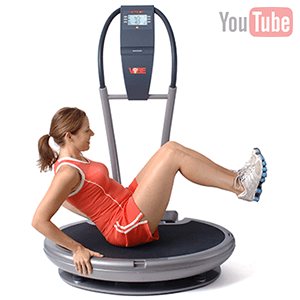
As apparent from its name, in WBV, the entire body is exposed to vibration, as opposed to local vibration (Biomechanical Stimulation, BMS), where an isolated muscle or muscle group is stimulated by the use of a vibration device. Whole body vibration is implemented through the use of a vibrating platform on which static poses are held or dynamic exercises can be performed depending on the type and force of the machine. The vibrations generated by motors underneath the platform are transmitted to the person on the machine. The intensity, defined by the parameters frequency, amplitude, magnitude (light vibration versus heavy vibration) and the direction of these vibrations are essential for their effect.


 The Daily Omnivore
Leave a comment