September 9, 2011

Malingering [muh-ling-ger-ing] is a medical term that refers to fabricating or exaggerating the symptoms of mental or physical disorders for a variety of ‘secondary gain’ motives, which may include financial compensation (often tied to fraud); avoiding school, work or military service; obtaining drugs; getting lighter criminal sentences; or simply to attract attention or sympathy. A common form of malingering in legal procedure prosecution is sometimes referred to as fabricated mental illness or feigned madness.
Malingering remains separate from somatization disorders and factitious disorders in which primary and secondary gain, such as the relief of anxiety or the assumption of the ‘patient role,’ is the goal. The symptoms most commonly feigned include those associated with mild head injury, fibromyalgia, chronic fatigue syndrome, and chronic pain. Failure to detect actual cases of malingering imposes a substantial economic burden on the health care system, and false attribution of malingering imposes a substantial burden of suffering on a significant proportion of the patient population.
read more »
Posted in Health, Politics, War |
1 Comment »
September 9, 2011


Freeter is a Japanese expression for people between the ages of 15 and 34 who lack full time employment or are unemployed, excluding housewives and students. The term originally included young people who deliberately chose not to become salary-men, even though jobs were available at the time. Freeters may also be described as underemployed or freelance workers.
These people do not start a career after high school or university, but instead earn money from low skilled and low paid jobs. The low income makes it difficult for freeters to start a family, and the lack of qualifications makes it difficult to start a career at a later point in life. Freeters have sometimes been glamorized as people pursuing their dreams and trying to live life to the fullest.
read more »
Posted in Language, Money, World |
1 Comment »
September 9, 2011
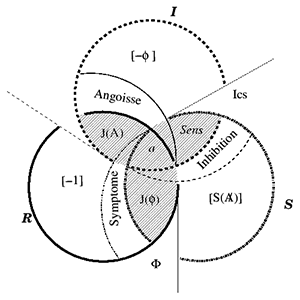
In Freudian psychology, the pleasure principle is the psychoanalytic concept describing people seeking pleasure and avoiding suffering (pain) in order to satisfy their biological and psychological needs. Furthermore, the counterpart concept, the ‘reality principle,’ describes people choosing to defer gratification of a desire when circumstantial reality disallows its immediate gratification. In infancy and early childhood, the Id (one of the three components of Freud’s model of the psyche) rules behavior by obeying only the pleasure principle. Maturity is learning to endure the pain of deferred gratification, when reality requires it; thus, the psychoanalitic Sigmund Freud proposes that ‘an ego thus educated has become ‘reasonable’; it no longer lets itself be governed by the pleasure principle, but obeys the reality principle, which also, at bottom, seeks to obtain pleasure, but pleasure which is assured through taking account of reality, even though it is pleasure postponed and diminished.’
Sigmund Freud discusses this idea, pleasure principle, and its limits in more details in his book, ‘Beyond the Pleasure Principle,’ published in 1921. In his discussion of the opposition between Eros, the life instinct, and the Thanatos, the death instinct, he examines the role of the repetition compulsion caused by the pleasure principle and of the sexual instincts.
Posted in Health, Language, Science |
Leave a Comment »
September 9, 2011

Laziness (also called indolence) is a disinclination to activity or exertion despite having the ability to do so. It is often used as a pejorative; related terms for a person seen to be lazy include couch potato, slacker, and in Australian slang, bludger.
Despite Sigmund Freud’s discussion of the pleasure principle, American psychologist Leonard Carmichael notes that ‘laziness is not a word that appears in the table of contents of most technical books on psychology… It is a guilty secret of modern psychology that more is understood about the motivation of thirsty rats and hungry pecking pigeons as they press levers or hit targets than is known about the way in which poets make themselves write poems or scientists force themselves into the laboratory when the good golfing days of spring arrive.’
read more »
Posted in Health, Language, Money |
Leave a Comment »
September 9, 2011

Acedia [uh-see-dee-uh] (Greek: ‘negligence’) describes a state of listlessness or torpor, of not caring or not being concerned with one’s position or condition in the world. It can lead to a state of being unable to perform one’s duties in life. Its spiritual overtones make it related to but distinct from depression. Acedia was originally noted as a problem among monks and other ascetics who maintained a solitary life. In the medieval Latin tradition of the seven deadly sins, acedia has generally been folded into the sin of sloth.
Moral theologians, intellectual historians and cultural critics have variously construed acedia as the ancient depiction of a variety of psychological states, behaviors or existential conditions: primarily laziness, ennui or boredom. The demon of acedia manifests itself in a range of psychological and somatic symptoms that is far broader and more complex than the familiar tradition in the West.
read more »
Posted in Health, Language, Philosophy |
Leave a Comment »
September 8, 2011

PFFR (or Pre-natal Fighting Frightening Remembrances Forever Ltd.) is a Brooklyn based production company/art collective/electro-rock band consisting of Alyson Levy, Vernon Chatman, Jim Tozzi, and John Lee. The group has been active since 2000. The group’s portfolio of work includes albums, live performances, various art exhibits such as ‘An Attack On All Americans Or The Tyranny Of Weed’ shown at the LFL Galley in New York, and the script for the film ‘Final Flesh.’
PFFR are also active in television comedy. They wrote, directed, produced and starred in the MTV2 variety program ‘Wonder Showzen’ (2005–2006) and the Adult Swim CGI series ‘Xavier: Renegade Angel.’ For both these shows, Chatman and Lee are the directors and main voice talent, whilst Tozzi and Levy are the animation/character designer and art director, respectively. Levy provides additional voices for both shows whilst Tozzi does only for ‘Xavier.’ PFFR are also responsible for producing, directing and co-writing Jon Glaser’s Adult Swim show ‘Delocated.’
read more »
Posted in Art, Humor |
Leave a Comment »
September 8, 2011
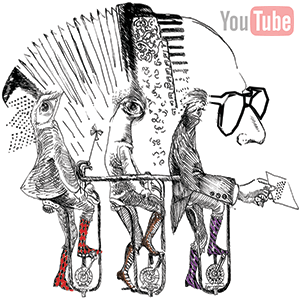
Motion Trio is a Polish accordion trio founded in 1996 by Janusz Wojtarowicz. The group has worked with such artists as Bobby McFerrin and Michał Urbaniak.
Its members consist of accordionists Janusz Wojtarowicz, Paweł Baranek, and Marcin Gałażyn.
Posted in Art, World |
Leave a Comment »
September 8, 2011

Luba is a comic book character created by Los Bros Hernandez, featured mainly in the ‘Love and Rockets’ series by these authors. She first appeared in ‘BEM,’ found in the ‘Love and Rockets’ collection ‘Music for Mechanics.’ Created by Gilbert Hernandez, Luba was the protagonist for his main contribution to Hernandez Brothers groundbreaking indie comic ‘Love and Rockets.’ Based largely in a small Central American village named Palomar, the Luba stories follow the progress of Luba and her ever increasing family through the years. Gilbert developed a rich cast of residents, who over the years developed an intricate series of relations with each other.
From the outset Luba is portrayed as a beautiful, fiery-tempered woman with enormous breasts and an eye for younger men, often depicted in random panels inexplicably carrying a hammer. This, in conjunction with Jaime Hernandez’ ‘Maggie and Hopey’ tales, differentiated ‘Love And Rockets’ from other comics in that the principal characters were all strong women who, whilst being independent, were also fallible. Through some twenty odd years Gilbert has taken the character of Luba through her infancy as the illegitimate child of a woman married into organized crime, through to life as a middle-aged migrant to America. The bulk of the tales dealt with what happened after Luba and her family moved from Palomar to California to escape the mafia and be near her half sisters Fritz and Petra. These stories comprise the books that make up the Luba Trilogy: ‘Luba in America,’ ‘The Book Of Ofelia’ and ‘The Three Daughters.’
Posted in Art, Language |
1 Comment »
September 8, 2011

Love and Rockets (often abbreviated L&R) is a black and white comic book series by Gilbert Hernandez and Jaime Hernandez, sometimes cited jointly as Los Bros Hernandez. Their brother Mario Hernandez is an occasional contributor. It was one of the first comics in the alternative comics revolution of the 1980s.
The Hernandez brothers self-published the first issue of ‘Love and Rockets’ in 1981, but since 1982 it has been published by Fantagraphics Books. The magazine temporarily ceased publication in 1996 after the release of issue #50, while Gilbert and Jaime went on to do separate series involving many of the same characters. However, in 2001 Los Bros revived the series as ‘Love and Rockets Volume 2’.
read more »
Posted in Art, Humor, Language |
Leave a Comment »
September 8, 2011

Gilberto Hernández (b. 1957), also known by the nickname Beto, is an American comics writer/artist. Along with his brothers Jaime and Mario he co-created the acclaimed independent comic book ‘Love and Rockets,’ published by Fantagraphics Books.
The style of Gilbert’s work has been described as magic realism or as a ‘magic-realist take on Central American soap opera.’ A common theme is the portrayal of independent women, and their strength, with the main example being Luba of Palomar, who character that appears in much of his work. His stories often deal with issues relevant to Latino culture in the United States.
read more »
Posted in Art, Humor, Language |
Leave a Comment »
September 7, 2011

Hilti develops, manufactures, and markets products for the construction and building maintenance industries, primarily to the professional end-user. It concentrates primarily on hammer drills, firestops, and installation systems, but manufactures and markets an array of tools (including cordless electric drills, heavy angle drills, laser levels, power saws, and fasteners). Hilti is based in Liechtenstein, and is the principality’s largest employer. The company employs more than 20,000 people worldwide with over 2,500 employees in the United States. Hilti’s North American headquarters has been located in Tulsa, Oklahoma, since 1979.
The Hilti Group invests over US$160 million annually in researching and developing safer and more efficient building technologies. A recent example of this R&D in power tool technology is Hilti’s TPS (Theft Protection System), which relies on RF technology to prevent unauthorized users from activating power tools, thus discouraging theft. Similarly, Hilti’s ATC (Active Torque Control) technology monitors tool-body movement to prevent equipment from twisting out of the operator’s grip and causing injury. Other developments include improved design of chemical and mechanical anchors for better durability during seismic events, thus helping to save lives during natural disasters.
Posted in Money, Technology |
1 Comment »
September 7, 2011

Kingdom Tower is a supertall skyscraper approved for construction in Jeddah, Saudi Arabia at a preliminary cost of US$1.23 billion. It will be the centerpiece and first phase of a US$20 billion proposed development known as Kingdom City that will be located along the Red Sea on the north side of Jeddah. If completed as planned, the tower will reach unprecedented heights, becoming the tallest building in the world, as well as the first structure to reach the one-kilometer mark. The design, created by American architect Adrian Smith, incorporates many unique structural and aesthetic features.
The creator and leader of the project is Saudi Arabian Prince Al-Waleed bin Talal, the wealthiest Arab in the Middle East, and nephew of King Abdullah. Talal is the chairman of Kingdom Holding Company (KHC), the largest company in Saudi Arabia, which owns the project, and a partner in Jeddah Economic Company (JEC), which was formed in 2009 for the development of Kingdom Tower and City. Reception of the proposal has been highly polarized, receiving high praise from some as a culturally significant icon that will symbolize the nation’s wealth and power, while others question its socioeconomic motives, and forecast that it will actually have negative financial consequences.
Posted in Money, Technology, World |
1 Comment »




 The Daily Omnivore