November 19, 2011

Drunk dialing is a pop-culture term denoting an instance in which an intoxicated individual places phone calls that he or she would not likely place if sober. The term often refers to a lonely individual calling former or current love interests. Kurt Vonnegut once said, ‘I have this disease late at night sometimes, involving alcohol and the telephone. I get drunk, and I drive my wife away with breath like mustard gas and roses.
And then, speaking gravely and elegantly into the telephone, I ask the telephone operators to connect me with this friend or that one, from whom I have not heard in years.’ ‘Drunk texting’ is a related phenomenon, and potentially yet more embarrassing for the sender as, once the message is sent, it cannot be retrieved; the message will most likely be misspelled (due to being drunk), and it might be reviewed and shared among many.
read more »
Posted in Drugs, Humor, Technology |
Leave a Comment »
November 19, 2011
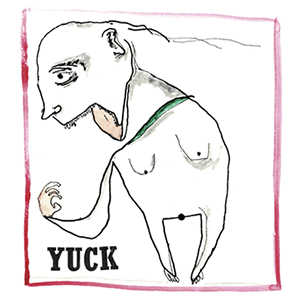
The wisdom of repugnance is the belief that an intuitive (or ‘deep-seated’) negative response to some thing, idea or practice should be interpreted as evidence for the intrinsically harmful or evil character of that thing. Furthermore, it refers to the notion that wisdom may manifest itself in feelings of disgust towards anything which lacks goodness or wisdom, though the feelings or the reasoning of such ‘wisdom’ may not be immediately explicable through reason.
The term was coined in 1997 by Leon Kass, chairman of the President’s Council on Bioethics, in an article in ‘The New Republic.’ Kass stated that disgust was not an argument per se, but went on to say that ‘in crucial cases…repugnance is the emotional expression of deep wisdom, beyond reason’s power fully to articulate it.’ The term remains largely confined to discussions of bioethics, and is somewhat related to the term ‘yuck factor.’ However, unlike the latter, it is used almost exclusively by those who accept its underlying premise; i.e., that repugnance does, in fact, indicate wisdom. It is thus often viewed as loaded language, and is primarily used by certain bioconservatives to justify their position.
read more »
Posted in Philosophy |
Leave a Comment »
November 19, 2011


A hacker is a member of the computer programmer subculture originated in the 1960s in the United States academia, in particular around the MIT’s Tech Model Railroad Club (TMRC) and MIT Artificial Intelligence Laboratory. Some members of the ‘hacker’ community most emphatically differentiate the term ‘hacker’ from malicious hackers (whom they very strongly prefer to call ‘crackers’).
Other hackers make no such distinction. The latter hackers’ view that hackerdom is not inherently moral/immoral or ethical/unethical is broadly similar to the concept or attitude of a ‘grey hat’ hacker. By contrast, ‘white hat’ hackers use their computer security related skills and knowledge to learn more about how systems and networks work and to help to discover and fix security holes, and ‘black hat’ hackers use the same skills to author harmful software (like viruses, trojans, etc.) and illegally infiltrate secure systems with the intention of doing harm to the system.
read more »
Posted in Language, Technology |
Leave a Comment »
November 19, 2011

Hacktivism (a portmanteau of hack and activism) is the use of computers and computer networks as a means of protest to promote political ends. The term was first coined in 1998 by a member of the Cult of the Dead Cow hacker collective. If hacking as ‘illegally breaking into computers’ is assumed, then hacktivism could be defined as ‘the nonviolent use of illegal or legally ambiguous digital tools in pursuit of political ends.’ These tools include web site defacements, redirects, denial-of-service (DoS) attacks, information theft, web site parodies, virtual sit-ins, typosquatting, and virtual sabotage.
If hacking as ‘clever computer usage/programming’ is assumed, then hacktivism could be understood as the writing of code to promote political ideology: promoting expressive politics, free speech, human rights, and information ethics through software development. Acts of hacktivism are carried out in the belief that proper use of code will be able to produce similar results to those produced by regular activism or civil disobedience.
read more »
Posted in Humor, Politics, Technology |
Leave a Comment »
November 19, 2011


Patriot hacking is a term for computer hacking or system cracking in which citizens or supporters of a country, traditionally industrialized Western countries but increasingly developing countries, attempts to perpetrate attacks on, or block attacks by, perceived enemies of the state. Recent media attention has focused on efforts related to terrorists and their own attempts to conduct an online or electronic intifada – cyberterrorism.
Patriot hacking is illegal in countries such as the United States yet is on the rise elsewhere. ‘”The FBI said that recent experience showed that an increase in international tension was mirrored in the online world with a rise in cyber activity such as web defacements and denial of service attacks,’ according to the BBC. At the onset of the War in Iraq in 2003, the FBI was concerned about the increase in hack attacks as the intensity of the conflict grew. Since then, it has been becoming increasingly popular in the North America, Western Europe and Israel, the countries which have the greatest threat to Islamic terrorism and its aforementioned digital version.
Posted in Politics, Technology, War |
Leave a Comment »
November 19, 2011

A lip dub is a type of music video that combines lip synching and audio dubbing. It is made by filming individuals or a group of people lip synching while listening to a song or any recorded audio then dubbing over it in post editing with the original audio of the song. There is often some form of mobile audio device used such as an MP3 player. Often they look like simple music videos, although many involve a lot of preparation and production. Lip dubs can be done in a single unedited shot that often travels through different rooms and situations within a building. They have become popular with the advent of mass participatory video content sites like YouTube.
Jake Lodwick, the co-founder of video sharing website Vimeo, coined the term in 2006, in a video entitled ‘Lip Dubbing: Endless Dream.’ In the video’s description, he wrote, ‘I walked around with a song playing in my headphones, and recorded myself singing. When I got home I opened it in iMovie and added an MP3 of the actual song, and synchronized it with my video. Is there a name for this? If not, I suggest ‘lip dubbing’.’ Lodwick also directed the ‘Flagpole Sitta’ ‘office lip dub’ in 2007.
Posted in Art, Humor, Technology |
Leave a Comment »
November 18, 2011

‘The Man‘ is a slang phrase that may refer to the government or to some other authority in a position of power. In addition to this derogatory connotation, it may also serve as a term of respect and praise. The phrase ‘the Man is keeping me down’ is commonly used to describe oppression. The phrase ‘stick it to the Man’ encourages resistance to authority, and essentially means ‘fight back’ or ‘resist,’ either openly or via sabotage.
The term ‘the Man’ in the American sense dates back to the late 19th Century. In the Southern U.S. states, the phrase came to be applied to any man or any group in a position of authority, or to authority in the abstract. From about the 1950s the phrase was also an underworld code word for police, the warden of a prison or other law enforcement or penal authorities.
read more »
Posted in Humor, Language, Politics |
Leave a Comment »
November 18, 2011

Polybius is a supposed arcade game featured in an Internet urban legend. According to the story, the Tempest-style game was released to the public in 1981, and drove its players insane, causing them to suffer from intense stress, horrific nightmares, and even suicidal tendencies. A short time after its release, it supposedly disappeared without a trace. Not much evidence for the existence of such a game has ever been discovered. Polybius gets its name from the Greek historian who’s works are are relevant to modern cryptography.
According to the story, an unheard-of new arcade game appeared in several suburbs of Portland, Oregon in 1981, something of a rarity at the time. The game, ‘Polybius,’ proved to be incredibly popular, to the point of addiction, and lines formed around the machines, often resulting in fighting over who played next. This was followed by clusters of visits from men in black. Rather than the usual marketing data collected by company visitors to arcade machines, they collected some unknown data, allegedly testing responses to the psychoactive machines. The players themselves suffered from a series of unpleasant side-effects, including amnesia, insomnia, nightmares, night terrors, and even suicide in some versions of the legend.
read more »
Posted in Games, Humor |
Leave a Comment »
November 18, 2011


A fictional currency is some form of defined or alluded currency in works of fiction. The names of such units of currency are sometimes based on extant or historic currencies (e.g. ‘Altairian dollars’ or ‘Earth yen’) while others, such as ‘Kalganids’ in Asimov’s ‘Foundation’ series, may be wholly invented. A particularly common type, especially in science fiction, is electronically managed ‘credits.’ In some works of fiction, exchange media other than money are used. These are not currency as such, but rather nonstandard media of exchange used to avoid the difficulties of ensuring ‘double coincidence of wants’ in a barter system.
Authors have to take care when naming fictional currencies because of the associations between currency names and countries; recognizable names for currencies of the future may be used to imply how history has progressed, but would appear out of place in an entirely alien civilization. Historical fiction may need research. Writers need not explain the exact value of their fictional currencies or provide an exchange rate to modern money; they may rely on the intuitive grasp of their readers, for instance that one currency unit is probably of little value, but that millions of units will be worth a lot.
read more »
Posted in Art, Language, Money |
Leave a Comment »
November 18, 2011
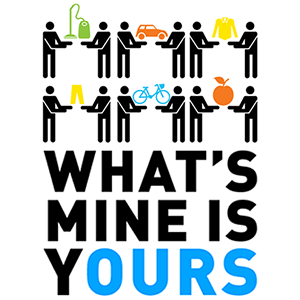
The term collaborative consumption is used to describe an economic model based on sharing, swapping, bartering, trading or renting access to products as opposed to ownership. Technology and peer communities are enabling these old market behaviors to be reinvented in ways and on a scale never possible before.
From enormous marketplaces such as eBay and Craigslist, to emerging sectors such as social lending (Zopa), peer-to-peer travel (CouchSurfing, Airbnb) and car sharing (Zipcar or peer-to-peer RelayRides), Collaborative Consumption is disrupting outdated modes of business and reinventing not just what people consume but how they consume it.
read more »
Posted in Money, Technology |
Leave a Comment »
November 17, 2011

The Zazous were a subculture in France during World War II. They were young people expressing their individuality by wearing big or garish clothing (similar to the zoot suit fashion in America a few years before) and dancing wildly to swing jazz and bebop. Men wore large striped lumber jackets, while women wore short skirts, striped stockings and heavy shoes, and often carried umbrellas.
During the German occupation of France, the Vichy regime, in collaboration with the Nazis, and fascist itself in policies and outlook, had an ultra-conservative morality and started to use a whole range of laws against a youth that was restless and disenchanted. These young people expressed their resistance and nonconformity through aggressive dance competitions, sometimes against soldiers from the occupying forces.
read more »
Posted in Politics, War, World |
Leave a Comment »
November 17, 2011

Pocho [poh-choh] is a term used by native-born Mexicans to describe Chicanos who are perceived to have forgotten or rejected their Mexican heritage to some degree. Typically, pochos speak English and lack fluency in Spanish.
Among some pochos, the term has been embraced to express pride in having both a Mexican and an American heritage asserting their place in the diverse American culture. The word derives from the Spanish word ‘pocho,’ used to describe fruit that has become rotten or discolored.
read more »
Posted in Language, Politics, World |
Leave a Comment »


 The Daily Omnivore