March 20, 2012
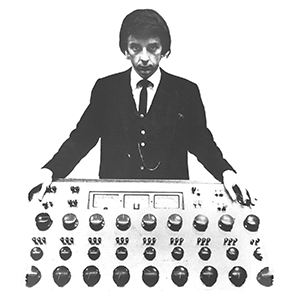
Overproduction is the excessive use of audio effects, layering, or digital manipulation in music production. Common traits include: audio processing effects such as reverb, delay, or dynamic range compression; heavy layering or multi-tracking (in the context of pop and rock music, this may refer to the addition of elements such as chorused vocals or backing strings).
Other modifications include pitch correction, time correction, and quantization (correcting to perfect notes). Records are sometimes overseen by a producer who ‘imposes’ his or her own distinctive ‘sound’ or techniques on a band or artist (producers frequently accused of this kind of ‘overproduction’ include Phil Spector and Mutt Lange). The term ‘overproduction’ implies that a producer or mastering engineer has made ‘unnecessary’ additions or changes to a record in the production process, and in doing so has decreased the quality or enjoyability of the music.
Posted in Art, Money, Technology |
Leave a Comment »
March 20, 2012
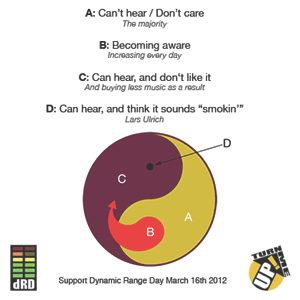
The loudness war is a pejorative term for the apparent competition to digitally master and release recordings with increasing loudness. Older music typically has a very diverse dynamic, that is, there are quiet parts of the track and much louder parts. For example, acoustic interludes leading up to the body of a song might be produced at a very quiet level, with some of the loudest sounds being snare drums and other kinds of percussion.
While the rationale for the loudness war is often described as an attempt to make the quieter parts of music more accessible to a listener, the overall effect is that that dynamic between sounds becomes leveled out, with no sound standing out from the track as a much louder sound. This results in a loss of clarity, where it’s no longer possible to experience music as a distinct interplay of louder and quieter parts.
read more »
Posted in Art, Money, Technology |
Leave a Comment »
March 20, 2012


A needle drop is a common term used to describe a version of a music album that has been transferred from a vinyl record to digital audio or other formats. Needle drops are sometimes traded among music collectors, especially when the original vinyl recording has not been released officially on a subsequent consumer format.
Other reasons for trading needle drops include the lack of availability of certain recordings on digital media, the non-availability of less compressed versions in digital form, or the lack of availability of certain versions or mixes of that record, e.g. mono or stereo versions, or the loss of the master tape. The term is thought to have been coined in 1949 by recording engineer Peter Goldmark during the first rush of transfers of lacquer and 78 rpm records to the then-new long playing 33 ⅓ RPM format.
Posted in Art, Technology |
Leave a Comment »
March 19, 2012
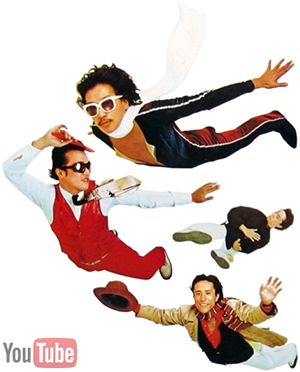
Sadistic Mika Band was a Japanese rock group formed in 1972. Its name is a parody of the ‘Plastic Ono Band.’ Produced by Masatoshi Hashiba on Toshiba-EMI Records (now EMI Music Japan), the band was led by the then husband and wife team of guitarist Kazuhiko Kato, and his wife, singer Mika Fukui. The word ‘sadistic’ is reported to be inspired by her insensitive sense of humor.
Kazuhiko Kato moved to London in 1972 and impressed by the burgeoning glam rock scene led by T. Rex and David Bowie, he set about forming a new group in Japan to emulate the style. Kato passed the album to Malcolm McLaren who at the time had a shop with Vivienne Westwood, and McLaren passed it on to Bryan Ferry, whose band Roxy Music would later support on a tour.
Posted in Art, Humor, World |
Leave a Comment »
March 19, 2012
The Centurion Card, known informally as the ‘black card,’ is a charge card first issued by American Express in 1999. The card was initially only available to select users of the Platinum Card. Cardholders are required to pay an annual fee, and in some countries also an initiation fee. In addition to a variety of exclusive benefits, the card itself is made of anodized titanium (although the plastic version is still available in some markets).
American Express created the card line amid rumors and urban legends in the 1980s that it produced an ultra-exclusive black card for elite users who could purchase anything with it.
read more »
Posted in Money |
1 Comment »
March 19, 2012

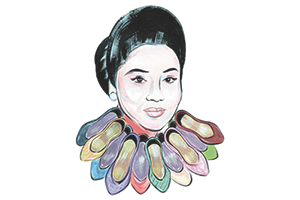
Kleptocracy (‘rule by thieves’) is a form of political and government corruption where the government exists to increase the personal wealth and political power of its officials and the ruling class at the expense of the wider population, often without pretense of honest service. This type of government corruption is often achieved by the embezzlement of state funds.
Kleptocracy is most common in third world countries where the economy (often as a legacy of colonialism) is dominated by resource extraction. Such incomes constitute a form of economic rent and are therefore easier to siphon off without causing the income itself to decrease (for example, due to capital flight as investors pull out to escape the high taxes levied by the kleptocrats).
read more »
Posted in Money, Politics, World |
1 Comment »
March 19, 2012

The Banana Wars were a series of occupations, police actions, and interventions involving the United States in Central America and the Caribbean. This period started with the Spanish-American War in 1898 and the subsequent Treaty of Paris, which gave the United States control of Cuba and Puerto Rico. Between the time of the war with Spain and 1934, the US conducted military operations and occupations in Panama, Honduras, Nicaragua, Mexico, Haiti, and the Dominican Republic. The series of conflicts ended with the withdrawal of troops from Haiti and President Franklin D. Roosevelt’s Good Neighbor Policy in 1934. Reasons for these conflicts were varied but were largely economic in nature.
The term ‘Banana Wars’ arises from the connections between these interventions and the preservation of American commercial interests in the region. Most prominently, the United Fruit Company had significant financial stakes in production of bananas, tobacco, sugar cane, and various other products throughout the Caribbean, Central America and Northern South America. The U.S. was also advancing its political interests, maintaining a sphere of influence and controlling the Panama Canal which it had recently built, critically important to global trade and naval power.
read more »
Posted in Money, Politics, War |
Leave a Comment »
March 19, 2012

Banana republic is a pejorative name for a country which has an unstable government, high corruption and which largely depends on agriculture, such as growing bananas. There are subject to frequent coups. The ‘original Banana republic is Honduras. In the early 20th century the United Fruit Company had much influence in the country, even deposing a president and installing a new one over taxes.
The first known use of the term was by American author O. Henry in his 1904 book of linked short stories, ‘Cabbages and Kings.’ The book is based on Henry’s 1896-97 stay in Honduras, while hiding from federal authorities for embezzlement in the United States. O.Henry used the term to refer to a ‘servile dictatorship’ which directly supported large-scale plantation agriculture in return for payments or gifts.
read more »
Posted in Food, Money, Politics |
Leave a Comment »
March 19, 2012

Molvanîa (subtitled ‘A Land Untouched by Modern Dentistry’) is a book parodying travel guidebooks. The guide describes the fictional country Molvanîa, in Eastern Europe, a nation described as ‘the birthplace of the whooping cough’ and ‘owner of Europe’s oldest nuclear reactor.’
It was created by Australians Tom Gleisner, Santo Cilauro and Rob Sitch (of ‘The D-Generation,’ a popular and influential Australian TV sketch comedy show). The book became a surprise success after its initial publication in Australia, sparking a bidding war for the international publication rights. Qantas has even run the half-hour video segment produced in association with the book on its international flights.
read more »
Posted in Humor, Politics, World |
Leave a Comment »
March 19, 2012
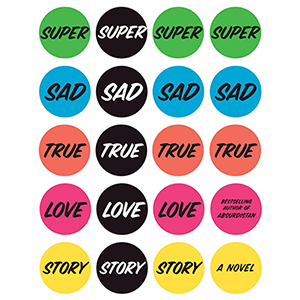
Gary Shteyngart (b. 1972) is an American writer born in Leningrad, USSR. Much of his work is satirical and relies on the invention of elaborately fictitious yet somehow familiar places and times. Shteyngart spent the first seven years of his childhood living in a square dominated by a huge statue of Vladimir Lenin in what is now St. Petersburg, Russia; (he alternately calls it ‘St. Leningrad’ or ‘St. Leninsburg’). He comes from a Jewish family and describes his family as typically Soviet. His father worked as an engineer in a LOMO camera factory; his mother was a pianist. Shteyngart emigrated to the United States in 1979 and was brought up with no television in the apartment in which he lived, where English was not the household language. He did not shed his thick Russian accent until the age of 14.
Shteyngart took a trip to Prague, and this experience helped spawn his first novel, set in the fictitious European city of Prava. He is a graduate of Stuyvesant High School in New York City, Oberlin College in Ohio, where he earned a degree in politics, and Hunter College of the City University of New York, where he earned an MFA in Creative Writing. Shteyngart now lives in the Lower East Side of Manhattan. He has taught writing at Hunter College, and currently teaches writing at Columbia University and Princeton University. Shteyngart’s novels include ‘The Russian Debutante’s Handbook’ (2002), ‘Absurdistan’ (2006), and ‘Super Sad True Love Story’ (2010).
Posted in Art, Humor, Language |
Leave a Comment »
March 19, 2012

Absurdistan is a term sometimes used to satirically describe a country in which absurdity is the norm, especially in its public authorities and government. The expression was originally used by Eastern bloc dissidents to refer to parts (or all) of the Soviet Union and its satellite states. Today, the term is most often reserved for Russia and states formerly in the Soviet sphere of influence which have retained Soviet-style authoritarian governments, such as Azerbaijan, Uzbekistan, Turkmenistan, or Belarus.
The first printed use of the word, in any language, can be found in a 1971 German monthly periodical ‘Politische Studien.’ Later, in Czech, the term was often used by the dissident and later president Václav Havel. This seems to indicate that use of the term began during perestroika (restructuring of the Soviet economy). The first recorded printed use of the term in English was in ‘Spectator’ in 1989, in an article about Czechoslovakia (Czechoslovakians have taken to calling their country ‘Absurdistan’ because everyday life there has long resembled the ‘Theatre of the Absurd’).
Posted in Humor, Politics, World |
Leave a Comment »
March 19, 2012
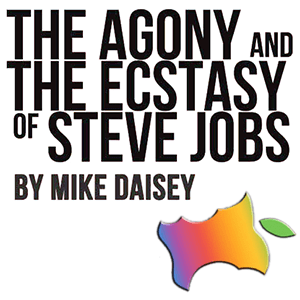
Mike Daisey (b. 1976) is an American monologist, author, and actor best known for his full-length extemporaneous monologues, particularly ‘The Agony and the Ecstasy of Steve Jobs.’ The story was subsequently retracted following allegations that many of the events were fabricated. ‘The Agony and the Ecstasy of Steve Jobs’ (2010) is a one-man show. It debuted at Portland’s TBA Festival in 2010
. It purports to examine globalization by exploring the exploitation of Chinese workers through the lens of ‘the rise and fall and rise of Apple, industrial design, and the human price we are willing to pay for our technology, woven together in a complex narrative.’ Excerpts from the show were presented as an exposé of conditions at a Foxconn factory in China on the Public Radio International show ‘This American Life’ in 2012. After it was retracted, Daisey apologized for presenting his work as journalism, saying it is actually theater, but refused to acknowledge that he had lied — even in the face of obvious discrepancies.
Posted in Art, Money, Politics |
Leave a Comment »



 The Daily Omnivore